Kirjahaku
Etsi kirjoja tekijän nimen, kirjan nimen tai ISBN:n perusteella.
1000 tulosta hakusanalla Colin Cooper
Individual Differences and Personality provides a student-friendly introduction to both classic and cutting-edge research into personality, mood, motivation and intelligence, and their applications in psychology and in fields such as health, education and sporting achievement.Including a new chapter on 'toxic' personality traits, and an additional chapter on applications in real-life settings, this fourth edition has been thoroughly updated and uniquely covers the necessary psychometric methodology needed to understand modern theories. It also develops deep processing and effective learning by encouraging a critical evaluation of both older and modern theories and methodologies, including the Dark Triad, emotional intelligence and psychopathy. Gardner’s and hierarchical theories of intelligence, and modern theories of mood and motivation are discussed and evaluated, and the processes which cause people to differ in personality and intelligence are explored in detail. Six chapters provide a non-mathematical grounding in psychometric principles, such as factor analysis, reliability, validity, bias, test-construction and test-use.With self-assessment questions, further reading and a companion website including student and instructor resources, this is the ideal resource for anyone taking modules on personality and individual differences.
Research into abilities is one of the great success stories of psychology. Ability tests are widely used and there is continued interest in the origins of abilites (enes or environment?) and their links to social phenomena such as crime and welfare dependecy. Intelligence and Abilities explains what is known about the processes associated with mental abilities and the relationship of abilities to behaviour. It also provides a clear and up-to-date guide to the main areas of research.
Colin Cooper has been a Christian for over 40 years. He has been involved with youth and children's ministries for 30 of those years, during which time he also studied at Moore Theological College to further his biblical training.Cooper comments that he has read many bible books to his grandchildren but there were always words that they didn't understand. In his book Jesus is our Friend, he explains who Jesus is and takes the reader through some of the most well know events of Jesus' life. He clearly articulates the gospel in words any child aged 3 and up can understand. To set this book apart Cooper introduces 3 teaching techniques: The reader asks questions to the young listener to heighten their focus and memory retention.The story structure provides early cognitive exercises in numbers, colours and recognition as a precursor for the young child's formal education and After each chapter, Cooper lays the first foundation stone in learning what prayer is and by echoing the reader, the young child begins their prayer life a few words at a time.
An Introduction to Psychometrics and Psychological Assessment
Colin Cooper
TAYLOR FRANCIS LTD
2023
sidottu
An Introduction to Psychometrics and Psychological Assessment is the successor to Cooper’s prize-winning book Psychological Testing: Theory and Practice. This expanded and updated volume shows how psychological questionnaires and tests can be chosen, administered, scored, interpreted and developed. In providing students, researchers, test users, test developers and practitioners in the social sciences, education and health with an evaluative guide to choosing, using, interpreting and developing tests, it provides readers a thorough grasp of the principles (and limitations) of testing, together with the necessary methodological detail.This book has three distinctive features. First, it stresses the basic logic of psychological assessment without getting bogged down with mathematics; the spreadsheet simulations and utilities which are integrated into the text allow users to explore how numbers behave, rather than reading equations. Readers will "learn by doing". Second, it covers both the theory behind psychological assessment and the practicalities of locating, designing and using tests and interpreting their scores. Finally, it is evaluative. Rather than just describing concepts such as test reliability or adaptive testing, it stresses the underlying principles, merits and drawbacks of each approach to assessment, and methods of developing and evaluating questionnaires and tests. Unusually for an introductory text, it includes coverage of several cutting-edge techniques, and this new edition expands the discussion on measurement invariance, methods of detecting/quantifying bias and hierarchical factor models, and features added sections on:Best practices for translation of tests into other languages and problems of cultural biasAutomatic item generationThe advantages, drawbacks and practicalities of internet-based testingGeneralizability theoryNetwork analysisDangerous assumptions made when scoring testsThe accuracy of tests used for assessing individualsThe two-way relationship between psychometrics and psychological theoryAimed at non-mathematicians, this friendly and engaging text will help you to understand the fundamental principles of psychometrics that underpin the measurement of any human characteristic using any psychological test. Written by a leading figure in the field and accompanied by additional resources, including a set of spreadsheets which use simulated data and other techniques to illustrate important issues, this is an essential introduction for all students of psychology and related disciplines. It assumes very little statistical background and is written for students studying psychological assessment or psychometrics, and for researchers and practitioners who use questionnaires and tests to measure personality, cognitive abilities, educational attainment, mood or motivation.
An Introduction to Psychometrics and Psychological Assessment
Colin Cooper
TAYLOR FRANCIS LTD
2023
nidottu
An Introduction to Psychometrics and Psychological Assessment is the successor to Cooper’s prize-winning book Psychological Testing: Theory and Practice. This expanded and updated volume shows how psychological questionnaires and tests can be chosen, administered, scored, interpreted and developed. In providing students, researchers, test users, test developers and practitioners in the social sciences, education and health with an evaluative guide to choosing, using, interpreting and developing tests, it provides readers a thorough grasp of the principles (and limitations) of testing, together with the necessary methodological detail.This book has three distinctive features. First, it stresses the basic logic of psychological assessment without getting bogged down with mathematics; the spreadsheet simulations and utilities which are integrated into the text allow users to explore how numbers behave, rather than reading equations. Readers will "learn by doing". Second, it covers both the theory behind psychological assessment and the practicalities of locating, designing and using tests and interpreting their scores. Finally, it is evaluative. Rather than just describing concepts such as test reliability or adaptive testing, it stresses the underlying principles, merits and drawbacks of each approach to assessment, and methods of developing and evaluating questionnaires and tests. Unusually for an introductory text, it includes coverage of several cutting-edge techniques, and this new edition expands the discussion on measurement invariance, methods of detecting/quantifying bias and hierarchical factor models, and features added sections on:Best practices for translation of tests into other languages and problems of cultural biasAutomatic item generationThe advantages, drawbacks and practicalities of internet-based testingGeneralizability theoryNetwork analysisDangerous assumptions made when scoring testsThe accuracy of tests used for assessing individualsThe two-way relationship between psychometrics and psychological theoryAimed at non-mathematicians, this friendly and engaging text will help you to understand the fundamental principles of psychometrics that underpin the measurement of any human characteristic using any psychological test. Written by a leading figure in the field and accompanied by additional resources, including a set of spreadsheets which use simulated data and other techniques to illustrate important issues, this is an essential introduction for all students of psychology and related disciplines. It assumes very little statistical background and is written for students studying psychological assessment or psychometrics, and for researchers and practitioners who use questionnaires and tests to measure personality, cognitive abilities, educational attainment, mood or motivation.
Choice Recommended ReadPsychological research into human intelligence and abilities presents us with a number of difficult questions: Are human abilities explained by a single core intelligence or by multiple intelligences? How should abilities be assessed? With tests unlike the problems which people normally have to solve, or with practical problems closer to those encountered in life, school and work? Do ability tests predict how a person will behave? If so, can they predict whether a person will succeed at school and at work?Intelligence and Human Abilities critically evaluates research evidence from the past 100 years to consider these and other issues. It shows that, despite the apparent contradictions in this research, the evidence in fact supports one coherent model, a fact which has clear implications for researchers, educators and test-users.This clear and engaging text provides an up-to-date evaluation of what the empirical evidence tells us about the number, nature and origins of human abilities. It will be essential reading for students and practitioners of psychology and education, and also for users of ability tests such as applied psychologists and personnel managers.
COLIN C. COOPER: NY PUBLIC LIBRARY 1000E
POMEGRANATE EUROPE
2019
cd
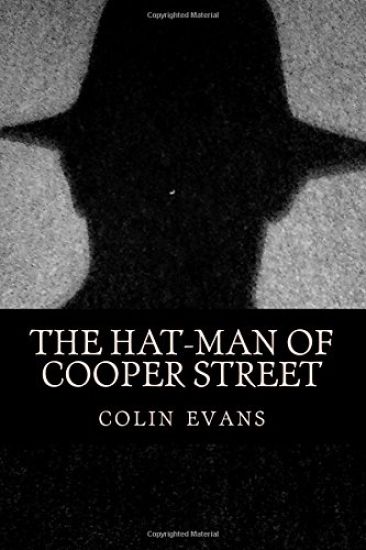
The hat-man of Cooper Street: and associated tales
Colin D. Evans
Createspace Independent Publishing Platform
2015
nidottu
Assessing Security Cooperation as a Preventive Tool
Michael J. McNerney; Angela O'Mahony; Thomas S. Szayna; Derek Eaton; Caroline Baxter; Colin P. Clarke; Emma Cutrufello; Michael McGee; Heather Peterson; Leslie Adrienne Payne; Calin Trenkov-Wermuth
RAND
2014
pokkari
The report tested the assertion that U.S. security cooperation (SC) can help reduce fragility in partner states. Based on an analysis of SC data and state fragility scores for 107 countries in 1991 2008, the study found a correlation between provision of SC by the United States and a reduction in partner state fragility, though the presence and degree of correlation depended on partner country characteristics and the type of SC provided."
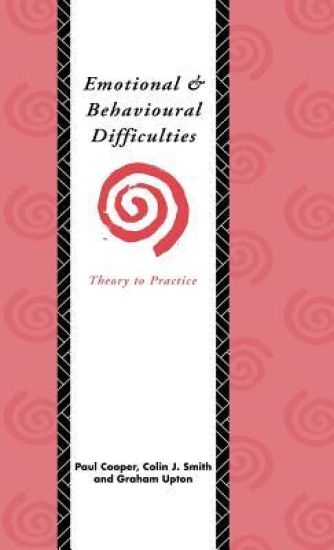
Emotional and Behavioural Difficulties
Paul Cooper; Colin J. Smith; Graham Upton
Routledge
1994
nidottu
Teachers in mainstream schools are increasingly confronted with children with severe emotional and behavioural difficulties, for whose performance and effect on the rest of the class they are held accountable. Often exclusion seems to be the only option. This book shows that it is not. It provides a concise, clearly written guide to the major approaches which can be used to deal with emotional and behavioural difficulties - their possibilities and their pitfalls. It will be invaluable reading for special needs coordinators, individual teachers reflecting on the issue in their own classrooms and heads wishing to establish whole school approaches to the problem.
Emotional and Behavioural Difficulties
Paul Cooper; Colin J. Smith; Graham Upton
Routledge
2015
sidottu
Teachers in mainstream schools are increasingly confronted with children with severe emotional and behavioural difficulties, for whose performance and effect on the rest of the class they are held accountable. Often exclusion seems to be the only option. This book shows that it is not. It provides a concise, clearly written guide to the major approaches which can be used to deal with emotional and behavioural difficulties - their possibilities and their pitfalls. It will be invaluable reading for special needs coordinators, individual teachers reflecting on the issue in their own classrooms and heads wishing to establish whole school approaches to the problem.
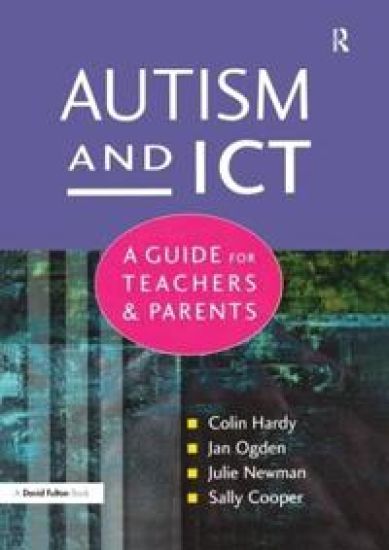
This book offers a practical approach for staff and carers who want to develop the use of ICT for children on the autistic spectrum and for those with language and communication difficulties. It combines descriptions of current research and literature on the subject of autism and ICT with practical guidance on software and hardware. A practical approach encourages experimentation, values the skills and attributes that participants bring and minimizes the technical barrier to ICT use. It includes concise information on what autism is, and examples of a range of pupils and their typical learning behaviors. It offers advice on how ICT can relate to various aspects of autism, information on concept keyboards and touch-sensitive screens and switches, and help with buying a computer and using the internet. Teachers, carers and parents of children with autism or language and communication problems will find lots of useful suggestions and advice on how to use ICT to help access the curriculum.
Autism and ICT
Colin Hardy; Jan Ogden; Julie Newman; Sally Cooper
David Fulton Publishers Ltd
2002
nidottu
This book offers a practical approach for staff and carers who want to develop the use of ICT for children on the autistic spectrum and for those with language and communication difficulties. It combines descriptions of current research and literature on the subject of autism and ICT with practical guidance on software and hardware. A practical approach encourages experimentation, values the skills and attributes that participants bring and minimizes the technical barrier to ICT use. It includes concise information on what autism is, and examples of a range of pupils and their typical learning behaviors. It offers advice on how ICT can relate to various aspects of autism, information on concept keyboards and touch-sensitive screens and switches, and help with buying a computer and using the internet. Teachers, carers and parents of children with autism or language and communication problems will find lots of useful suggestions and advice on how to use ICT to help access the curriculum.
SOA Patterns with BizTalk Server 2013 and Microsoft Azure -
Richard Seroter; Mark Brimble; Johann Cooper; Colin Dijkgraaf; Mahindra Morar
Packt Publishing Limited
2015
nidottu
Warning: "Don't buy this book unless you're ready for hours of top-of-the-bill entertainment. Colin's uncensored tsunami of showbiz shenanigans is outrageous, hilarious, and quite unmissable."-Chris Roycroft Davis-Former Executive Editor, The SunA rollicking tour through the world of showbiz: downing illicit drinks on a film set with the stars, crooning 'My Way' for a mobster's wife, and falling asleep mid-performance on stage in the West End. Col's stories of his life as an actor and dancer and with the internationally acclaimed band, Wall Street Crash, cartwheel off the page - oozing energy and sheer delightful naughtiness.
Clinical Exercise Electrocardiography
Shel Levine; Brian J Coyne; Lisa Cooper Colvin
Jones and Bartlett Publishers, Inc
2015
sidottu
Each new print copy includes Navigate 2 Advantage Access that unlocks a comprehensive and interactive eBook, student practice activities and assessments, a full suite of instructor resources, and learning analytics reporting tools. Written for the Exercise Physiologist, Clinical Exercise Electrocardiography address the needs of Exercise Physiologists working in a clinical setting and addresses static interpretation of rhythm strips and 12-leads. It concentrates on the physiology and etiology of arrhythmia, as well as the treatment of arrhythmia. It includes not only the traditional basic ECG, arrhythmia, myocardial infarction and pacemaker chapters but goes on to provide easy to read chapters on Cardiac Pathophysiology, Cardiovascular testing procedures, Cardiac Pharmacology and Structural Heart Disease, and Inflammatory Processes. The authors explore differences in ECG interpretation in women, children, and athletes, and look at the use of ECG’s in exercise stress testing situations. Key Features: - Provides tips and hints on how to evaluate an ECG dynamically - The first text of its kind to offer a specific educational experience in a clinical education for Exercise Physiologists - Over 100 test strips allow students to evaluate ECGs of different age groups, genders, and athletic abilities - A bulleted points format helps students better understand and retain key information - Also, a great study tool for those preparing for the ACSM CES Certification Exam, as well as a great reference tool for the cardiac rehabilitation professional, physician, physician assistant or nurse - Includes learning objectives, key terms glossary, clinical case studies, and over 100 practice ECGs. - Instructor resources include Presentations in PowerPoint format and Test Bank. With Navigate 2, technology and content combine to expand the reach of your classroom. Whether you teach an online, hybrid, or traditional classroom-based course, Navigate 2 delivers unbeatable value. Experience Navigate 2 today at www.jblnavigate.com/2
Slow Cooker Guru: Top 25 Delicious Crockpot Recipes for Everyday Easy Cooking Low-Salt and Low-Fat Stew Meals
Colin Rivera
Createspace Independent Publishing Platform
2016
nidottu