Kirjojen hintavertailu. Mukana 11 590 110 kirjaa ja 12 kauppaa.

Kirjahaku

Etsi kirjoja tekijän nimen, kirjan nimen tai ISBN:n perusteella.

1000 tulosta hakusanalla Colin Flint

Introduction to Geopolitics

Introduction to Geopolitics

Colin Flint

Routledge
2021
sidottu
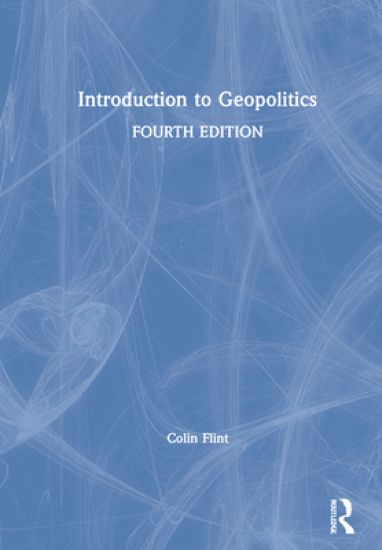
This new updated edition presents the overarching themes of geopolitical structures and agents in an engaging and accessible manner, which requires no previous knowledge of theory or current affairs. It helps readers understand the geopolitical implications of COVID-19, China’s pronounced role in the world, the relative decline of the US, and the Black Lives Matter movement. Using new pertinent case studies and guided exercises, the title explains the contemporary global power of the United States and the challenges it is facing, the changing foreign policy of China and other countries, the persistence of nationalist conflicts, migration, cyberwar and cyberactivism, terrorism, energy geopolitics, and environmental geopolitics. Expanded case studies of the South China Sea disputes and China’s Belt and Road Initiative emphasize the multi-faceted nature of conflict. The book raises questions by incorporating international and long-term historical perspectives and introduces readers to different theoretical viewpoints, including feminist contributions. The new edition features fresh discussion of island geopolitics, the Anthropocene age, and geoeconomics.Introduction to Geopolitics will provide its readers with a set of critical analytical tools for understanding the actions of states as well as non-state actors acting in competition over resources and power. Both students and general readers will find this book an essential stepping-stone to a deeper and critical understanding of contemporary conflicts.The companion website will enable readers to apply the themes of the book to the constant shifts in current affairs to enable deeper understanding. It will provide access to weekly essays showing how the themes explain current events.
Introduction to Geopolitics

Introduction to Geopolitics

Colin Flint

Routledge
2021
nidottu
This new updated edition presents the overarching themes of geopolitical structures and agents in an engaging and accessible manner, which requires no previous knowledge of theory or current affairs. It helps readers understand the geopolitical implications of COVID-19, China’s pronounced role in the world, the relative decline of the US, and the Black Lives Matter movement. Using new pertinent case studies and guided exercises, the title explains the contemporary global power of the United States and the challenges it is facing, the changing foreign policy of China and other countries, the persistence of nationalist conflicts, migration, cyberwar and cyberactivism, terrorism, energy geopolitics, and environmental geopolitics. Expanded case studies of the South China Sea disputes and China’s Belt and Road Initiative emphasize the multi-faceted nature of conflict. The book raises questions by incorporating international and long-term historical perspectives and introduces readers to different theoretical viewpoints, including feminist contributions. The new edition features fresh discussion of island geopolitics, the Anthropocene age, and geoeconomics.Introduction to Geopolitics will provide its readers with a set of critical analytical tools for understanding the actions of states as well as non-state actors acting in competition over resources and power. Both students and general readers will find this book an essential stepping-stone to a deeper and critical understanding of contemporary conflicts.The companion website will enable readers to apply the themes of the book to the constant shifts in current affairs to enable deeper understanding. It will provide access to weekly essays showing how the themes explain current events.
Introduction to Geopolitics

Introduction to Geopolitics

Colin Flint

Routledge
2016
nidottu
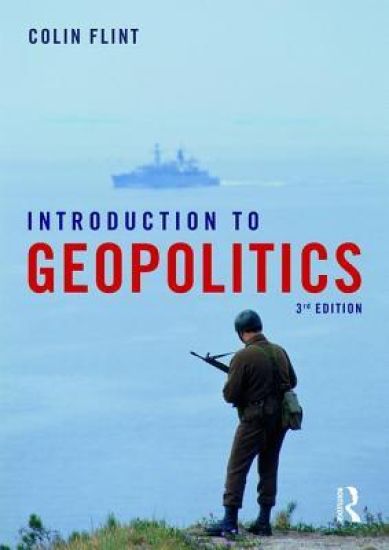
This new updated edition of Introduction to Geopolitics presents the overarching themes of geopolitical structures and agents in an engaging and accessible manner, which requires no previous knowledge of theory or current affairs.Using new pertinent case studies and guided exercises the title explains the contemporary global power of the United States and the challenges it is facing, the persistence of nationalist conflicts, migration, cyberwar, terrorism, and environmental geopolitics. Case studies of the rise of the so-called Islamic State, the South China Sea disputes, the Syrian civil war, the Korean conflict, and Israel-Palestine emphasize the multi-faceted nature of conflict. The book raises questions by incorporating international and long term historical perspectives and introduces readers to different theoretical viewpoints, including feminist contributions. The new edition features expanded sections on network geopolitics and non-state actors, a new section on geopolitics of transnational business, cyberwar, an interpretation of ISIS within historical geopolitical trends, as well as expanded discussion of the relevance of Boserup and neo-Malthusians to environmental geopolitics.Introduction to Geopolitics will provide its readers with a set of critical analytical tools for understanding the actions of states as well as non-state actors acting in competition over resources and power. Both students and general readers will find this book an essential stepping-stone to a deeper and critical understanding of contemporary conflicts.
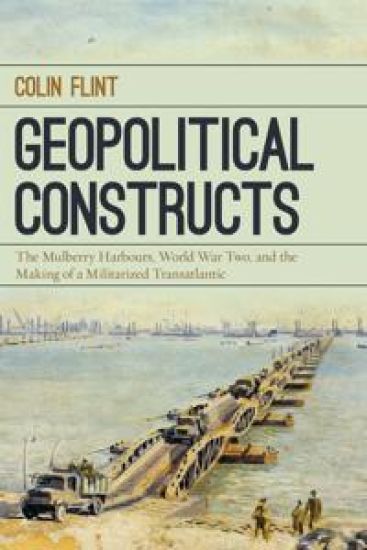
Geopolitical Constructs

Geopolitical Constructs

Colin Flint

Rowman Littlefield
2016
sidottu
This innovative book tells a unique story about D-Day, one that does not concentrate on the soldiers who hit the beaches or the admirals and generals who commanded them. Instead, Colin Flint brings engineers, businessmen, and bureaucrats to center stage. Through them, he offers a different way of thinking about war, one that sees war as an ongoing set of processes in which seemingly isolated acts are part of broader historical developments. Developing the concept of geopolitical constructs to understand wars, the author connects specific events to long-term and global geopolitical arrangements. Focusing on the construction of the Mulberry Harbours—massive artificial structures dragged across the English Channel in the immediate wake of the invading force—Flint illustrates how the process of making war links a vast array of people, institutions, and places, as well as past events and future outcomes. He argues that the people who designed and built the Harbours became geopolitical subjects by producing pieces of engineering that helped shape the course of World War Two and the Cold War that followed, which created a militarized trans-Atlantic that remains today. Using previously unpublished archival material to give voice to those who made the Mulberry Harbours and wartime strategy, this original study broadens the historical and geographical scope of how we understand war, showing how the everyday actions of individuals made, and were made by, geopolitical settings.
Near and Far Waters

Near and Far Waters

Colin Flint

STANFORD UNIVERSITY PRESS
2024
sidottu
Seapower has been a constant in world politics, a tool through which powerful countries have policed the seas for commercial advantage. Political geographer Colin Flint highlights the geography of seapower as a dynamic, continual struggle to gain control of near waters—those parts of the oceans close to a country's shoreline—and far waters—parts of the oceans beyond the horizon and that neighbor the shorelines of other countries. A forceful and clarifying challenge to conventional accounts of geopolitics, Near and Far Waters offers an accessible introduction to the combination of economic and political relations that are the reason behind, and the result of, the development of seapower to control near waters and project force into far waters. Examining the histories of three naval powers (the Netherlands, Britain, and the United States), this book distills the past and present patterns of seapower and their tendency to trigger repercussive conflict and war. Readers will gain an appreciation for how geopolitics works, the importance of seapower in economic competition, the motivations behind China's desire to become a global naval force, and the risks of current and future wars. Drawing on decades of experience, Flint urges readers to take seriously the dilemma of near/far waters as a context for an alternative understanding of global politics.
Near and Far Waters

Near and Far Waters

Colin Flint

STANFORD UNIVERSITY PRESS
2024
pokkari
Seapower has been a constant in world politics, a tool through which powerful countries have policed the seas for commercial advantage. Political geographer Colin Flint highlights the geography of seapower as a dynamic, continual struggle to gain control of near waters—those parts of the oceans close to a country's shoreline—and far waters—parts of the oceans beyond the horizon and that neighbor the shorelines of other countries. A forceful and clarifying challenge to conventional accounts of geopolitics, Near and Far Waters offers an accessible introduction to the combination of economic and political relations that are the reason behind, and the result of, the development of seapower to control near waters and project force into far waters. Examining the histories of three naval powers (the Netherlands, Britain, and the United States), this book distills the past and present patterns of seapower and their tendency to trigger repercussive conflict and war. Readers will gain an appreciation for how geopolitics works, the importance of seapower in economic competition, the motivations behind China's desire to become a global naval force, and the risks of current and future wars. Drawing on decades of experience, Flint urges readers to take seriously the dilemma of near/far waters as a context for an alternative understanding of global politics.
Political Geography

Political Geography

Colin Flint; Peter J. Taylor

TAYLOR FRANCIS LTD
2025
nidottu
The new and updated eighth edition of Political Geography once again shows itself fit to tackle a frequently and rapidly changing geopolitical landscape. It retains the intellectual clarity, rigour, and vision of previous editions based upon its world-systems approach and is complemented by the perspective of feminist geography. The book successfully integrates the complexity of individuals with the complexity of the world-economy by merging the compatible, but different, research agendas of the co-authors.This edition explores political geography within the context of US–China competition, Russia’s war with Ukraine, global climate change, new technologies, and challenges to democracy. It advances the discussion from the previous editions on the dynamics of the capitalist world-economy and the constant tension between the global scale of economic processes and the territorialization of politics in the current context of geopolitical change. The chapters have been updated with new examples – new sections on global climate change, populism, and the growing threat of global war. The book offers a framework to help students make their own judgements of how we got where we are today, and what may or should be done about it.Political Geography remains a core text for students of political geography, geopolitics, international relations, and political science, as well as more broadly across human geography and the social sciences.
Political Geography

Political Geography

Colin Flint; Peter J. Taylor

TAYLOR FRANCIS LTD
2025
sidottu
The new and updated eighth edition of Political Geography once again shows itself fit to tackle a frequently and rapidly changing geopolitical landscape. It retains the intellectual clarity, rigour, and vision of previous editions based upon its world-systems approach and is complemented by the perspective of feminist geography. The book successfully integrates the complexity of individuals with the complexity of the world-economy by merging the compatible, but different, research agendas of the co-authors.This edition explores political geography within the context of US–China competition, Russia’s war with Ukraine, global climate change, new technologies, and challenges to democracy. It advances the discussion from the previous editions on the dynamics of the capitalist world-economy and the constant tension between the global scale of economic processes and the territorialization of politics in the current context of geopolitical change. The chapters have been updated with new examples – new sections on global climate change, populism, and the growing threat of global war. The book offers a framework to help students make their own judgements of how we got where we are today, and what may or should be done about it.Political Geography remains a core text for students of political geography, geopolitics, international relations, and political science, as well as more broadly across human geography and the social sciences.
Political Geography

Political Geography

Colin Flint; Peter J. Taylor

Routledge
2018
nidottu
The new and updated seventh edition of Political Geography once again shows itself fit to tackle a frequently and rapidly changing geopolitical landscape. It retains the intellectual clarity, rigour and vision of previous editions based upon its world-systems approach, and is complemented by the perspective of feminist geography. The book successfully integrates the complexity of individuals with the complexity of the world-economy by merging the compatible, but different, research agendas of the co-authors. This edition explores the importance of states in corporate globalization, challenges to this globalization, and the increasingly influential role of China. It also discusses the dynamics of the capitalist world-economy and the constant tension between the global scale of economic processes and the territorialization of politics in the current context of geopolitical change. The chapters have been updated with new examples – new sections on art and war, intimate geopolitics and geopolitical constructs reflect the vibrancy and diversity of the academic study of the subject. Sections have been updated and added to the material of the previous edition to reflect the role of the so-called Islamic State in global geopolitics. The book offers a framework to help students make their own judgements of how we got where we are today, and what may or should be done about it.Political Geography remains a core text for students of political geography, geopolitics, international relations and political science, as well as more broadly across human geography and the social sciences.
Videnskabsteori

Videnskabsteori

Finn Collin; Lene Koch; Lotte Bøgh Andersen; Carsten Bagge Laustsen; Heine Andersen; Kasper Lippert-Rasmussen; Merete Watt Boolsen; Svend Brinkmann; Søren Flinch Midtgaard; Peter Nedergaard; Kristian Vengsgaard; Asger Sørensen; Anders Esmark; Peter Wad; Luise Li Langergaard

Gyldendal
2015
sidottu
Samfundsvidenskab er en mangfoldig størrelse præget af uenighed omkring, hvordan vi opnår viden, og hvad der kan betegnes som videnskab. Disse spørgsmål er ikke kun vigtige på et teoretisk niveau, men spiller en afgørende rolle for, hvordan man anlægger en samfundsvidenskabelig analyse. Denne bog præsenterer samfundsvidenskabernes videnskabsteori fra tre perspektiver. For det første præsenteres to centrale teoretiske og metodiske tilgange: hypotesetest og forståelse/fortolkning. Dernæst gennemgås de vigtigste videnskabsteoretiske traditioner og positioner: positivisme, kritisk rationalisme, videnskabsparadigmer, hermeneutik, fænomenologi, pragmatisme, kritisk teori, poststrukturalisme, socialkonstruktivisme og kritisk realisme. Endelig sættes der fokus på en række vigtige temaer i det samfundsvidenskabelige arbejde: rationalitet, forklaring, værdier, metodologisk perspektiv, sandhed, relativisme samt samfundsforskningens indlejring i samfundet. Bogen er skrevet af førende kræfter på området, og der præsenteres løbende eksempler på de forskellige positioner og temaers betydning for samfundsvidenskabelig forskning. I den foreliggende 3. udgave af bogen er kapitlerne om hermeneutik/fænomenologi, kritisk teori, strukturalisme/poststrukturalisme og kritisk realisme nyskrevne. De øvrige kapitler er gennemgående revideret og ajourført. Bogens redaktører: Michael Hviid Jacobsen er professor på Aalborg Universitet, Kasper Lippert-Rasmussen er professor på Aarhus Universitet, og Peter Nedergaard er professor på Københavns Universitet.
Colin

Colin

Bobbie Kaald

Independently Published
2019
pokkari
Following Colin and Felicia's return home, he and his boss have it out. However, his boss sends Tory to Felicia's and they end up flying back to Greece and Aella. Drama follows drama, but how will it end?
Colin

Colin

Egmont Books Ltd
2009
nidottu
Colin the crane doesn't have wheels like the engines so can't travel to the winter party. Then Freddie has an idea to bring Colin some winter cheer.
Colin

Colin

E F Benson

Bibliotech Press
2022
pokkari
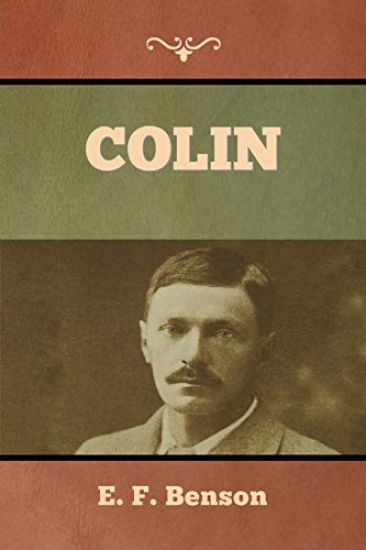
E.F. Benson, in full Edward Frederic Benson, (born July 24, 1867, Wellington College, Berkshire, Eng.-died Feb. 29, 1940, London), writer of fiction, reminiscences, and biographies, of which the best remembered are his arch, satirical novels and his urbane autobiographical studies of Edwardian and Georgian society. The son of E.W. Benson, an archbishop of Canterbury (1883-96), the young Benson was educated at Marlborough School and at King's College, Cambridge. After graduation he worked from 1892 to 1895 in Athens for the British School of Archaeology and later in Egypt for the Society for the Promotion of Hellenic Studies. In 1893 he published Dodo, a novel that attracted wide attention. It was followed by a number of other successful novels-such as Mrs. Ames (1912), Queen Lucia (1920), Miss Mapp (1922), and Lucia in London (1927)-and books on a wide range of subjects, totaling nearly 100. Among them were biographies of Queen Victoria, William Gladstone, and William II of Germany. In 1938 he was made an honorary fellow of Magdalene College, Cambridge. Benson's reminiscences include As We Were (1930), As We Are (1932), and Final Edition (1940). (britannica.com)
Colin

Colin

E F Benson

Bibliotech Press
2022
sidottu
E.F. Benson, in full Edward Frederic Benson, (born July 24, 1867, Wellington College, Berkshire, Eng.-died Feb. 29, 1940, London), writer of fiction, reminiscences, and biographies, of which the best remembered are his arch, satirical novels and his urbane autobiographical studies of Edwardian and Georgian society. The son of E.W. Benson, an archbishop of Canterbury (1883-96), the young Benson was educated at Marlborough School and at King's College, Cambridge. After graduation he worked from 1892 to 1895 in Athens for the British School of Archaeology and later in Egypt for the Society for the Promotion of Hellenic Studies. In 1893 he published Dodo, a novel that attracted wide attention. It was followed by a number of other successful novels-such as Mrs. Ames (1912), Queen Lucia (1920), Miss Mapp (1922), and Lucia in London (1927)-and books on a wide range of subjects, totaling nearly 100. Among them were biographies of Queen Victoria, William Gladstone, and William II of Germany. In 1938 he was made an honorary fellow of Magdalene College, Cambridge. Benson's reminiscences include As We Were (1930), As We Are (1932), and Final Edition (1940). (britannica.com)