
Kirjahaku
Etsi kirjoja tekijän nimen, kirjan nimen tai ISBN:n perusteella.
1000 tulosta hakusanalla Cook Elizabeth

Informed by Jurgen Habermas's public sphere theory, this book studies the popular eighteenth-century genre of the epistolary narrative through readings of four works: Montesquieu's Lettres persanes (1721), Richardson's Clarissa (1749-50), Riccoboni's Lettres de Mistriss Fanni Butlerd (1757), and Crevecoeur's Letters from an American Farmer (1782).The author situates epistolary narratives in the contexts of eighteenth-century print culture: the rise of new models of readership and the newly influential role of the author; the model of contract derived from liberal political theory; and the techniques and aesthetics of mechanical reproduction. Epistolary authors used the genre to formulate a range of responses to a cultural anxiety about private energies and appetites, particularly those of women, as well as to legitimate their own authorial practices. Just as the social contract increasingly came to be seen as the organising instrument of public, civic relations in this period, the author argues that the epistolary novel serves to socialise and regulate the private subject as a citizen of the Republic of Letters.
An eclectic collection of poetry, prose, and politics, Notebooks of Elizabeth Cook-Lynn is a text, a narrative, a song, a story, a history, a testimony, a witnessing. Above all, it is a fiercely intelligent, brave, and sobering work that re-examines and interrogates our nation's past and the distorted way that its history has been written. In topics including recent debates over issues of environmental justice, the contradictions surrounding the Crazy Horse Monument, and the contemporary portrayal of the Lewis and Clark Expedition as one of the great American epic odysseys, Elizabeth Cook-Lynn stitches together a patchwork of observations of racially charged cultural materials, personal experiences, and contemporary characterizations of this country's history and social climate. Through each example, she challenges the status quo and piques the reader's awareness of persistent abuses of indigenous communities. The voices that Cook-Lynn brings to the texts are as varied as the genres in which she writes. They are astute and lyrical, fierce and heartbreaking. Through these intonations, she maintains a balance between her roles as a scholar and a poet, a popular teacher and a woman who has experienced deep personal loss. A unique blend of form and content that traverses time, space, and purpose, this collection is a thoroughly original contribution to modern American Indian literature. Moreover, it presents an alternative narrative of the nation's history and opens an important window into the political challenges that Natives continue to face.
From one of the writers of the twentieth-century Native American Literary Renaissance comes a remarkable tale about how to acknowledge the past and take a chance on the future. Rooted in tribal-world consciousness, That Guy Wolf Dancing is the story of a young tribal wolf-man becoming a part of his not-sonatural world of non-tribal people. Twenty-something Philip Big Pipe disappears from an unsettled life he can hardly tolerate and ends up in an off-reservation town.When he leaves, he doesn’t tell anyone where he is going or what his plans, if he has any, might be. Having never taken himself too seriously, he now faces a world that feels very foreign to him. As he struggles to adapt to the modern universe, Philip, ever a "wolf dancer", must improvise, this time to a sound others provide for him. Like the wolf, Philip sometimes feels hunted, outrun, verging on extinction.Only by moving rhythmically in a dissident, dangerous, and iconic world can Philip Big Pipe let go of the past and craft a new future.
Challenging received American history and forging a new path for Native American studies Addressing Native American Studies' past, present, and future, the essays in New Indians, Old Wars tackle the discipline head-on, presenting a radical revision of the popular view of the American West in the process. Instead of luxuriating in its past glories or accepting the widespread historians' view of the West as a shared place, Elizabeth Cook-Lynn argues that it should be fundamentally understood as stolen. Firmly grounded in the reality of a painful past, Cook-Lynn understands the story of the American West as teaching the political language of land theft and tyranny. She argues that to remedy this situation, Native American studies must be considered and pursued as its own discipline, rather than as a subset of history or anthropology. She makes an impassioned claim that such a shift, not merely an institutional or theoretical change, could allow Native American studies to play an important role in defending the sovereignty of indigenous nations today.
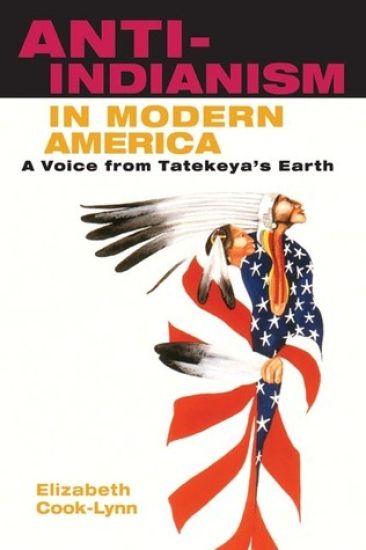
Addressing Native American studies past, present, and future, the essays in New Indians, Old Wars tackle the discipline head-on, presenting a radical revision of the popular view of the American West in the process. Instead of luxuriating in the West's past glories or accepting the widespread historians' view of it as a shared place, Elizabeth Cook-Lynn argues that the American West should be fundamentally understood as stolen. Cook-Lynn says that the Indian Wars of Resistance to the nineteenth- and twentieth-century colonial effort to seize native lands and resources must be given standing in the face of the ever-growing imperial narrative of America--because the terror the world is now witnessing may be the direct consequence of events which began in America's earliest dealings with the natives of this continent. Cook-Lynn's story examines the ongoing and perennial relationship of conflict between colonizers and indigenous people, and it is a story that every American must read.Cook-Lynn understands that the story of the American West teaches the political language of land theft and tyranny. She argues that to remedy this situation, Native American studies must be considered and pursued as its own discipline, rather than as a subset of history or anthropology. She makes an impassioned claim that such a shift, not merely an institutional or theoretical change, could allow Native American studies to play an important role in defending the sovereignty of indigenous nations today.
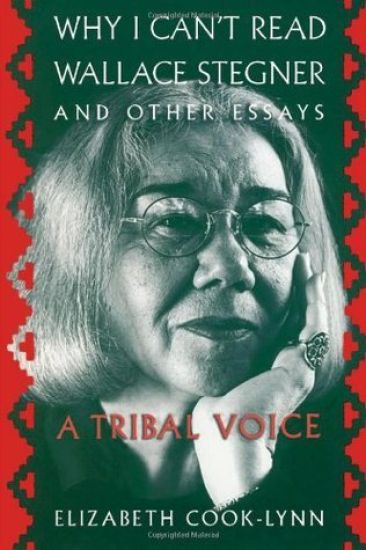
Why I Can't Read Wallace Stegner, and Other Essays
Lynn Elizabeth Cook
University of Wisconsin Press
1996
nidottu
This collection of essays reveals the thoughts of a Native American feminist intellectual. A poet and literary scholar, Elizabeth Cook-Lyyn grapples with issues she encountered as a Native American in academia. She asks questions of critical importance to tribal people.
Born of god and king and hidden as a girl until Odysseus discovers him, Achilles becomes the Greeks' greatest warrior at Troy. Into his story comes a cast of fascinating characters among them Hector, Helen, Penthiselaia the Amazon Queen, and the centaur Chiron; and finally John Keats, whose writings form the basis of a meditation on the nature of identity and shared experience. "Achilles "is an affirmation of the story's enduring power to reach across centuries and cultures to the core of our imagination."

Elizabeth Cook's mesmerising poetic voice weaves the interlocking stories of Achilles and the central figures of his legend into a many-layered exploration of achievement and loss, of choice and inescapable destiny. Born of the sea-nymph Thetis by the mortal King Peleus, hidden as a girl on Skiros until Odysseus discovers him, Achilles becomes the Greeks' greatest warrior at Troy. Into his story come others - among them Hector, Helen, Penthiseleia the Amazon Queen and the centaur Chiron; and finally John Keats, whose writings form the basis of a meditation on identity and shared experience. An unforgettable and deeply moving work of fiction, Achilles also affirms of the story's enduring power to reach across centuries and cultures to the core of our imagination.
Forever Beth Lost and Found: Lost and Found
Elizabeth Cook-Howard
Elizabeth Cook-Howard
2013
nidottu
A continued love story between a NYPD Detective and a Domestic Violence Social Worker, Our Love is the 2nd installment of the Forever Beth Series that picks up from Beth and Kevin's New Year's wedding, where close family and friends gathered. Although a joyous occasion Kevin knows the danger Beth is still in and makes the decision to shelter her from information that will rock her to the core. But as Kevin continues to protect his new bride his own past becomes evident and secrets are reveled. What Beth and Kevin go through can make or break them as a union. Find out who is responsible for the killing of Rosie and Rosa. Discover what brings a woman to the brink of destroying her own life for "her man". But you have to read between the lines to understand who ultimately is responsible for all. Forever Beth Our Love complete with romance, a bit of humor and whole lot of mystery.


The fifteen stories contained in The Power of Horses portray, each in a different way, the sensitive and enduring culture of the Dakota of the Upper Plains and convey many of the basic truths that have sustained Elizabeth Cook-Lynn's people for countless generations. Though the stories are often filled with violence and grief, they are also brimming with beauty, gentleness, charm, and humor. In these striking and memorable tales of Dakota country, Joseph grieves that the body of his middle son will never be returned to his native shores from the distant World War I battlefields where he was killed; family members gather to bury their father and barely survive their own weaknesses and bickering; a grandmother takes her grandchild for a walk and imparts to the child some of the old wisdom of times past; a whining hound dogprimordial to the Dakota?competes unwittingly with Reverend Tileston's efforts to bring the word of the Christian God to a tight-knit family, and wins; Magpie is a poet but is also on parole, and just as his friends have begun to rethink the finality of justice, he is , ccidentally shot and killed in the white man's jail. Cook-Lynn writes unsparingly yet compassionately of reservation life in the last century. In each of these gemlike stories she reveals something of the mystery and essential toughness of the Dakota people.
Elizabeth Cook-Lynn takes academia to task for its much-touted notion that "postcoloniality" is the current condition of Indian communities in the United States. She finds the argument neither believable nor useful—at best an ivory-tower initiative on the part of influential scholars, at worst a cruel joke. In this fin de career retrospective, Cook-Lynn gathers evidence that American Indians remain among the most colonized people in the modern world, mired in poverty and disenfranchised both socially and politically. Despite Native-initiated efforts toward seeking First Nationhood status in the U. S., Cook-Lynn posits, Indian lands remain in the grip of a centuries-old English colonial system—a renewable source of conflict and discrimination. She argues that proportionately in the last century, government-supported development of casinos and tourism—peddled as an answer to poverty—probably cost Indians more treaty-protected land than they lost in the entire nineteenth century. Using land issues and third-world theory to look at the historiography of the American Plains Indian experience, she examines colonization's continuing assault on Indigenous peoples. Also 04 Activeable in cloth, 978-0-89672-734-2, $65.00
Elizabeth Cook-Lynn takes academia to task for its much-touted notion that "postcoloniality" is the current condition of Indian communities in the United States. She finds the argument neither believable nor useful—at best an ivory-tower initiative on the part of influential scholars, at worst a cruel joke. In this fin de career retrospective, Cook-Lynn gathers evidence that American Indians remain among the most colonized people in the modern world, mired in poverty and disenfranchised both socially and politically. Despite Native-initiated efforts toward seeking First Nationhood status in the U. S., Cook-Lynn posits, Indian lands remain in the grip of a centuries-old English colonial system—a renewable source of conflict and discrimination. She argues that proportionately in the last century, government-supported development of casinos and tourism—peddled as an answer to poverty—probably cost Indians more treaty-protected land than they lost in the entire nineteenth century. Using land issues and third-world theory to look at the historiography of the American Plains Indian experience, she examines colonization's continuing assault on Indigenous peoples.


How to Milk an Almond, Stuff an Egg, and Armor a Turnip
Elizabeth Cook; David Friedman
Createspace Independent Publishing Platform
2011
pokkari
A Miscellany
Elizabeth Cook; David Friedman
Createspace Independent Publishing Platform
2012
pokkari
A collection of recipes, articles, poems, and stories related to historical recreation of the Middle Ages and Renaissance, especially within the Society for Creative Anachronism. It includes more than three hundred period recipes, each with both the original and worked out version, articles on medieval cooking, making tents, transportable period furniture, hardened leather armor, Germanic lyres, period jewelry and how to make it, and many other things. Part I contains the same material as How to Milk an Almond, Stuff an Egg, and Armor a Turnip: A Thousand Years of Recipes, published separately by the same authors.
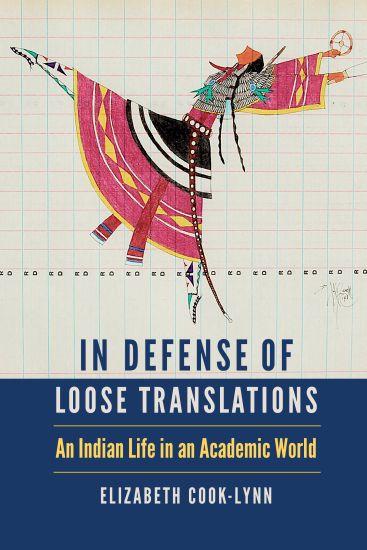
In Defense of Loose Translations is a memoir that bridges the personal and professional experiences of Elizabeth Cook-Lynn. Having spent much of her life illuminating the tragic irony of being an Indian in America, this provocative and often controversial writer narrates the story of her intellectual life in the field of American Indian studies. Drawing on her experience as a twentieth-century child raised in a Sisseton Santee Dakota family and under the jurisdictional policies that have created significant social isolation in American Indian reservation life, Cook-Lynn tells the story of her unexpectedly privileged and almost comedic “affirmative action” rise to a professorship in a regional western university. Cook-Lynn explores how different opportunities and setbacks helped her become a leading voice in the emergence of American Indian studies as an academic discipline. She discusses lecturing to professional audiences, activism addressing nonacademic audiences, writing and publishing, tribal-life activities, and teaching in an often hostile and, at times, corrupt milieu. Cook-Lynn frames her life’s work as the inevitable struggle between the indigene and the colonist in a global history. She has been a consistent critic of the colonization of American Indians following the treaty-signing and reservation periods of development. This memoir tells the story of how a thoughtful critic has tried to contribute to the debate about indigenousness in academia.