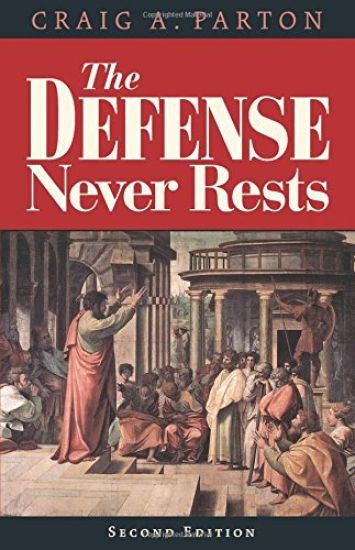
This powerful critique of American Christianity chronicles the spiritual pilgrimage of one man and provides a defense of the pure Gospel. In the first half of the book, Parton explains his spiritual autobiography. Follow his journey from unbelief to American Evangelicalism and Campus Crusade staff work, to his discovery of the Lutheran church. In the chapters after his arrival at an understanding of Lutheranism, he presents a hard-hitting critique of shallow, pop-style worship and theology. Readers will also appreciate Parton's honest, systematic approach to apologetics that tackles the tough questions of how to explain the Christian faith in a way that always points back to Christ's work. This new edition features sections dealing with the challenges of New Atheism, Bart Ehrman, and the new wave of biblical criticism.
With ten thousand religions in the world today and two being added every day, how are we to know which, if any, is true?Religion on Trial takes a serious look at whether all religions are saying nearly the same thing and ultimately lead to the same destination-and if not, whether any of the world's religions can withstand a closer examination using the evidentiary methods developed in law, history, and science.For if any religions are to be left standing, they (or it) must have claims made not in a corner immune from rigorous examination but testable by all serious inquirers using methods that have been employed in other fields dealing with truth claims. Religion on Trial is a relentless search for the truth that puts religious claims to rigorous cross-examination-nothing less than eternity is at stake.Free discussion questions when you order the book A free downloadable PDF of study questions will be automatically added to your cart when you buy Religion on Trial.
In a concise and devastating style, Craig Parton, an experienced trial lawyer versed in the laws of legal evidence, argues that religions uniformly fail the simplest tests of admissibility for their respective claims. Few religions even bother to make testable assertions, relying instead at best on subjective and existential appeals. The stunningly few historical, and thus verifiable, claims of a precious few religions can be swiftly sorted out, and the result is an astounding vindication of the central nonhearsay claims of the first-century eyewitnesses to the life and work of Jesus Christ. This work challenges the prevailing viewpoint that all religions are making the same, or even similar, allegations. More troubling than this prevailing view is that the religions of the world remain diametrically opposed on the issues of the nature of humanity, the reality of evil, the nature of history, and the way of salvation. Sorting out the clashing claims of religions is the task of this book, and a trial lawyer well schooled in the laws of admissible evidence brings insight and clarity to matters normally thought to be solely in the domain of philosophers and theologians. ""Religion on Trial is a thoughtful analysis of religious truth claims and the need to base faith and beliefs on evidence."" --Oliver Wilder-Smith Associate Professor of Medicine at Radboud University, The Netherlands ""Here is one author capable of combining his expertise in three disciplines--jurisprudence, theology, and literature--to build a brilliant and much needed case, a superb blend of courtroom, classroom and prose "" --Uwe Siemon-Netto International Journalist, Gurat, France Craig Parton is a lawyer who has been involved in the trial of some of the largest natural-resource cases in California. He is a partner with the law firm of Price, Postel and Parma LLP of Santa Barbara, California, and is the United States director of the International Academy of Apologetics, which conducts its annual July sessions in Strasbourg, France (www.apologeticsacademy.eu). Parton teaches and debates on the issues surrounding the facticity of the first-century events recorded in the primary source documents (i.e., the New Testament) and has traveled to over one hundred university campuses to lecture and debate on the topic of religious truth claims. He is the author of two previous works relating to the examination and defense of the Christian assertions, and is a regular contributor to the Global Journal of Classical Theology and Logia: A Journal of Lutheran Theology, as well as a contributing scholar to Modern Reformation magazine.
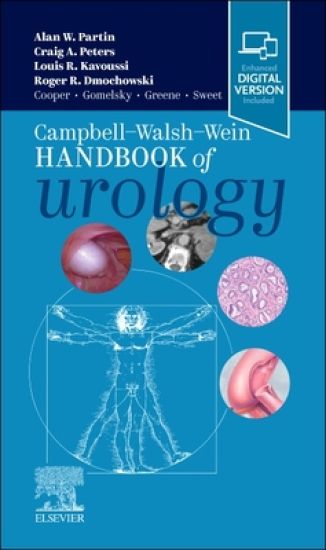
Brush up on important clinical topics and prepare for exams or recertification with this easily accessible handbook. Campbell Walsh Wein Handbook of Urology contains essential, reliable information from the same author team as Campbell Walsh Wein Urology, 12th Edition, providing practical, well-illustrated diagnosis and treatment information on a wide range of urological conditions. It's an ideal resource for residents, practitioners, and nurse practitioners in urology who need quick access to key clinical information in a concise, easy-to-read format. Find information quickly and easily with a high-yield, templated format that includes numerous algorithms, tables, and figures. Effectively review for the boards or recertification using the self-assessment questions at the end of each chapter. Stay abreast of new AUA and ICI incontinence guidelines as well as up-to-date information on incontinence treatment recommendations, therapy for castrate-resistant prostate cancer, and active surveillance for prostate cancer. Focus on hot topics in urology including stress and mixed urinary incontinence, therapy for prolapse, overactive bladder, male subfertility and androgen deficiency, and renal cell carcinoma. Review the major categories of urologic diseases along with integrated content on radiology, radiation therapy, nephrology, pediatric urology, transplantation surgery, and vascular surgery. Enhanced eBook version included with purchase. Your enhanced eBook allows you to access all of the text, figures, and references from the book on a variety of devices.
The quasi-federal European Union stands out as the major exception in the thinly institutionalized world of international politics. Something has led Europeans—and only Europeans—beyond the nation-state to a fundamentally new political architecture. Craig Parsons argues in A Certain Idea of Europe that this "something" was a particular set of ideas generated in Western Europe after the Second World War. In Parsons's view, today's European Union reflects the ideological (and perhaps visionary) project of an elite minority. His book traces the progressive victory of this project in France, where the battle over European institutions erupted most divisively. Drawing on archival research and extensive interviews with French policymakers, the author carefully traces a fifty-year conflict between radically different European plans. Only through aggressive leadership did the advocates of a supranational "community" Europe succeed at building the EU and binding their opponents within it. Parsons puts the causal impact of ideas, and their binding effects through institutions, at the center of his book. In so doing he presents a strong logic of "social construction"—a sharp departure from other accounts of EU history that downplay the role of ideas and ideology.
The quasi-federal European Union stands out as the major exception in the thinly institutionalized world of international politics. Something has led Europeans—and only Europeans—beyond the nation-state to a fundamentally new political architecture. Craig Parsons argues in A Certain Idea of Europe that this "something" was a particular set of ideas generated in Western Europe after the Second World War. In Parsons's view, today's European Union reflects the ideological (and perhaps visionary) project of an elite minority. His book traces the progressive victory of this project in France, where the battle over European institutions erupted most divisively. Drawing on archival research and extensive interviews with French policymakers, the author carefully traces a fifty-year conflict between radically different European plans. Only through aggressive leadership did the advocates of a supranational "community" Europe succeed at building the EU and binding their opponents within it. Parsons puts the causal impact of ideas, and their binding effects through institutions, at the center of his book. In so doing he presents a strong logic of "social construction"—a sharp departure from other accounts of EU history that downplay the role of ideas and ideology.
Edward Gordon Craig's ideas regarding set and lighting have had an enormous impact on the development of the theatre we know today. In this new and updated edition of his well-known study of Edward Gordon Craig, Professor Christopher Innes shows how Craig's stage work and theoretical writings were crucial to the development of modern theatre. This book contains extensive documentation and re-evaluates his significance as an artist, actor, director and writer. Craig is placed in historical context, and his productions are reconstituted from unpublished prompt-books, sketches, journals and correspondence. Most of the designs and photographs, and many of Craig's writings cited, are not available elsewhere in print. Readers will gain insight into a key period of theatrical history, the life of one of its most fascinating individuals, the nature of stage performance, and into revolutionary ideas that are still challenging today.
Edward Gordon Craig's ideas regarding set and lighting have had an enormous impact on the development of the theatre we know today. In this new and updated edition of his well-known study of Edward Gordon Craig, Professor Christopher Innes shows how Craig's stage work and theoretical writings were crucial to the development of modern theatre. This book contains extensive documentation and re-evaluates his significance as an artist, actor, director and writer. Craig is placed in historical context, and his productions are reconstituted from unpublished prompt-books, sketches, journals and correspondence. Most of the designs and photographs, and many of Craig's writings cited, are not available elsewhere in print. Readers will gain insight into a key period of theatrical history, the life of one of its most fascinating individuals, the nature of stage performance, and into revolutionary ideas that are still challenging today.
This major collection of essays by senior colleagues and friends of Craig A. Evans recognizes his contribution to the field of biblical studies by concentrating upon his areas of research and writing interest. These include: the emergence and characteristics of early Judaism, Jesus and the apostolic tradition, and a variety of other supporting areas in New Testament studies. These essays include both focused studies and challenging theoretical explorations.
He has been called the greatest surgeon of the 20th century. The son of Lebanese immigrants, Michael DeBakey rose from humble beginnings in a backwater Louisiana town to dominate the landscape of modern medicine. His contributions to our understanding and treatment of cardiovascular disease, in particular, were innumerable and epoch-making. DeBakey led a life of high drama, from the streets of Jazz Age New Orleans and the operating theaters of pre-war Europe, to the battlefields of World War II and the floodwaters of Hurricane Katrina. An advisor to Presidents, a health care statesman, and a physician to royalty and commoner alike, he helped build Houston's Texas Medical Center into a jewel of the medical world. Yet DeBakey's own family paid a tremendous cost for his commitment to his fellow man. Buoyed by unique access to primary resources, A Time for All Things: The Life of Michael E. DeBakey is the first to tell the remarkable story of a driven genius who led a scientific and therapeutic revolution in all its dramatic depth.
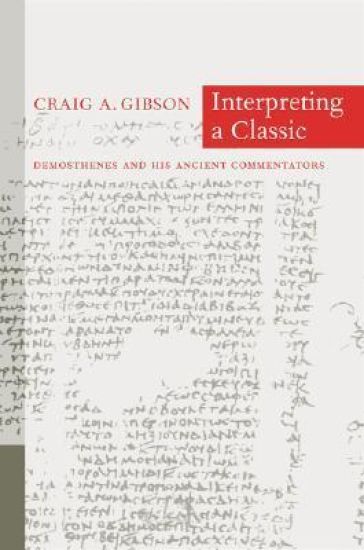
Demosthenes (384-322 b.c.) was an Athenian statesman and a widely read author whose life, times, and rhetorical abilities captivated the minds of generations. Sifting through the rubble of a mostly lost tradition of ancient scholarship, Craig A. Gibson tells the story of how one group of ancient scholars helped their readers understand this man's writings. This book collects for the first time, translates, and offers explanatory notes on all the substantial fragments of ancient philological and historical commentaries on Demosthenes. Using these texts to illuminate an important aspect of Graeco-Roman antiquity that has hitherto been difficult to glimpse, Gibson gives a detailed portrait of a scholarly industry that touched generations of ancient readers from the first century b.c. to the fifth century and beyond. In this lucidly organized work, Gibson surveys the physical form of the commentaries, traces the history of how they were passed down, and explains their sources, interests, and readership. He also includes a complete collection of Greek texts, English translations, and detailed notes on the commentaries.
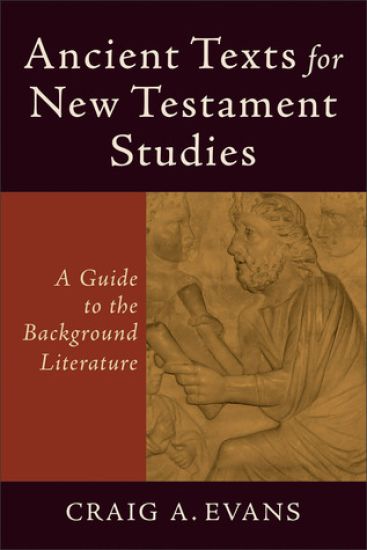
One of the daunting challenges facing the New Testament interpreter is achieving familiarity with the immense corpus of related literatures. Scholars and students alike must have a fundamental understanding of the content, provenance, and utility for New Testament interpretation of a wide range of pagan, Jewish, and diversely Christian documents.Ancient Texts for the Study of the New Testament provides descriptions of all ancient literature that is relevant for serious study of the New Testament writings. Readers can quickly survey the literature clustered under various headings (such as the Apocrypha, Dead Sea Scrolls, or early Rabbinic literature), easily access brief definitions and descriptions, and then consider examples of how the literature sheds light on the background and interpretation of specific passages in the New Testament. There are several helpful appendices, including one that lists, beginning with Matthew and ending with Revelation, potentially significant parallels between New Testament passages and the ancient writings treated in the book.This thoroughly revised and significantly expanded edition of Noncanonical Writings and New Testament Interpretation examines a vast range of ancient literature, masterfully distilling details of date, language, text, and translation into an eminently usable handbook. Craig Evans evaluates the materials' relevance for interpreting the New Testament and provides essential biographies. Although the book is written at an introductory level, its comprehensive scope makes it useful even for the seasoned scholar.
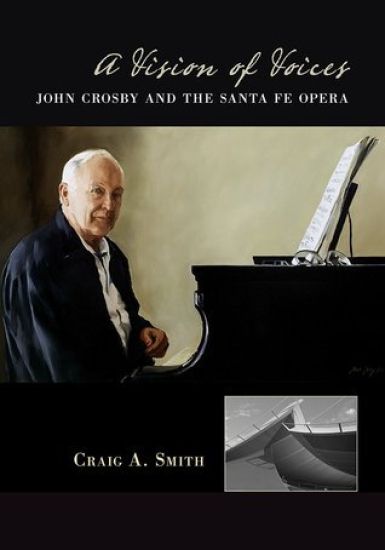
A destination for thousands of opera lovers every year and the anchor of Santa Fe’s thriving arts scene, the Santa Fe Opera owes its existence to the vision and hard work of one man: John O’Hea Crosby (1926–2002), who created the company when he was only thirty years old and guided its fortunes for the next forty-five years. This book, the first in-depth exploration of Crosby’s career, shows how the Opera reflected his passions for music and the arts.A Vision of Voices depicts the many sides of Crosby—a dreamer and tough-minded businessman, an artistic explorer and conservative programmer, and a competent conductor and sharp critic. His devotion to quality and his obsessive oversight bore an enduring harvest that forever changed Santa Fe, the state of New Mexico, and the operatic world.