
Kirjahaku
Etsi kirjoja tekijän nimen, kirjan nimen tai ISBN:n perusteella.
1000 tulosta hakusanalla Cyril Methodius Jansky

Electrical Meters provides a detailed examination of the principles, construction, and practical applications of electrical measuring instruments. Written by Cyril Methodius Jansky, this comprehensive guide delves into the intricacies of various meter types, including moving-coil, electrodynamometer, and induction meters. The book elucidates the mechanisms behind accurate electrical measurement, covering both direct current (DC) and alternating current (AC) systems. Originally published in 1917, this work is a valuable resource for students, engineers, and anyone interested in understanding the fundamentals of electrical instrumentation. It offers a blend of theoretical knowledge and practical insights, making it an essential addition to any technical library. Explore the historical context and enduring relevance of electrical measurement techniques with this classic text. This work has been selected by scholars as being culturally important, and is part of the knowledge base of civilization as we know it. This work was reproduced from the original artifact, and remains as true to the original work as possible. Therefore, you will see the original copyright references, library stamps (as most of these works have been housed in our most important libraries around the world), and other notations in the work. This work is in the public domain in the United States of America, and possibly other nations. Within the United States, you may freely copy and distribute this work, as no entity (individual or corporate) has a copyright on the body of the work. As a reproduction of a historical artifact, this work may contain missing or blurred pages, poor pictures, errant marks, etc. Scholars believe, and we concur, that this work is important enough to be preserved, reproduced, and made generally available to the public. We appreciate your support of the preservation process, and thank you for being an important part of keeping this knowledge alive and relevant.
Elements of Storage Batteries
Cyril Methodius Jansky; Harry Peterman Wood
Literary Licensing, LLC
2012
nidottu
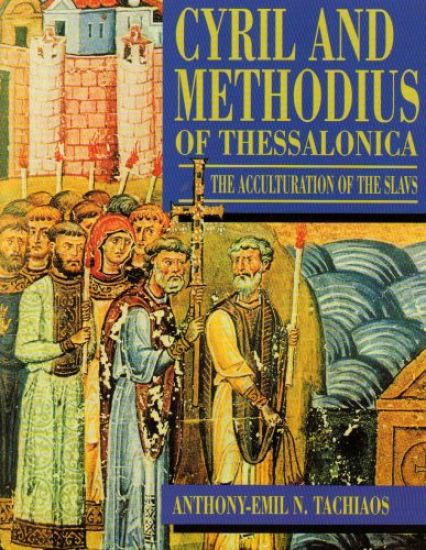
At the height of the tumultuous developments taking place in Central and Eastern Europe in the ninth century, two Greek missionaries from Thessalonica came to the fore. Through their work of acculturation among the Slavs, these brothers Constantine-Cyril and Methodius wrought far-reaching and lasting changes upon European life. This book looks back over the life and work of these two figures and analyzes their ecclesiastical and cultural mission. Life in ninth-century Thessalonica was strongly affected by the presence of Slav raiders presenting a problem for the Empire. To deal with it the Byzantine policymakers devised the Slavonic project and invited the brothers to play a part in it. They embarked upon careers in the service of the Church and the State, undertaking missions of vital importance to both. Their presence in the Crimea was closely bound up with several aspects of Byzantium's ecclesiastical policy and programme of acculturation, as also with the Russians' first encounter with Christianity. Working intensively, Cyril and Methodius created an alphabet for the Slavs and gave them the written word on a high intellectual level. In presenting the Slavs with an alphabet and the written word, the brothers transmitted to them the world; and thus it was in Cyril and Methodius' time, and thanks to their work, that Great Moravia reached the height of its vigour and prosperity as a central European state. The Cyrillo-Methodian tradition lived on, spreading out among the Slavic peoples and laying the foundations of their spiritual life.
Saints Cyril and Methodius, Apostles of the Slavs
Cyril J. Potocek; George Waskovich; Stanislaus F. Gmuca
Literary Licensing, LLC
2011
nidottu
Steps in Elementary Slovak
Sisters of Saints Cyril and Methodius
Literary Licensing, LLC
2013
sidottu
Steps in Elementary Slovak is a comprehensive guidebook for learning the Slovak language, written by the Sisters of Saints Cyril and Methodius. The book is designed to help beginners learn the basics of Slovak grammar, vocabulary, and pronunciation. It covers all the essential topics such as nouns, verbs, adjectives, adverbs, prepositions, and conjunctions. The book includes numerous exercises and activities to practice the language skills and build fluency. The lessons are structured in a step-by-step manner, starting with basic concepts and gradually moving towards more advanced topics. The book also includes cultural notes and insights into Slovak traditions, history, and customs. The authors have used a simple and easy-to-understand language, making it accessible to learners of all levels. Overall, Steps in Elementary Slovak is an excellent resource for anyone interested in learning the Slovak language, whether for personal or professional reasons.This scarce antiquarian book is a facsimile reprint of the old original and may contain some imperfections such as library marks and notations. Because we believe this work is culturally important, we have made it available as part of our commitment for protecting, preserving, and promoting the world's literature in affordable, high quality, modern editions, that are true to their original work.
Quantitative Methods for ESG Finance
Cyril Shmatov; Cino Robin Castelli
JOHN WILEY SONS INC
2022
sidottu
A quantitative analyst’s introduction to the theory and practice of ESG finance In Quantitative Methods for ESG Finance, accomplished risk and ESG experts Dr. Cyril Shmatov and Cino Robin Castelli deliver an incisive and essential introduction to the quantitative basis of ESG finance from a quantitative analyst’s perspective. The book combines the theoretical and mathematical bases underlying risk factor investing and risk management with accessible discussions of ESG applications. The authors explore the increasing availability of non-traditional data sources for quantitative analysts and describe the quantitative/statistical techniques they’ll need to make practical use of these data. The book also offers: A particular emphasis on climate change and climate risks, both due to its increasing general importance and accelerating regulatory change in the spacePractical code examples in a Python Jupyter notebook that use publicly available data to demonstrate the techniques discussed in the bookExpansive discussions of risk factor investing, portfolio construction, ESG scoring, new ESG-driven financial products, and new financial risk management applications, particularly those making use of the proliferation of “alternative data”, both text and imagesA must-read guide for quantitative analysts, investment managers, financial risk managers, investment bankers, and other finance professionals with an interest in ESG-driven investing, Quantitative Methods for ESG Finance will also earn a place on the bookshelves of graduate students of business and finance.
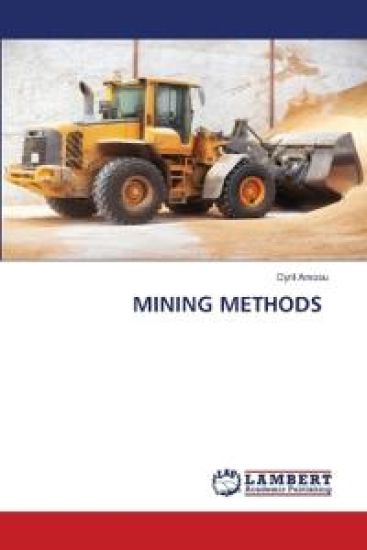
The book points out the conceptual ideas and basic principles of mining in general. Mining begins from mineral exploration to ore exploitation which is later processed and applied. It is inclusive of the application of equipment and tools for surface and underground mining. Different terminologies have been outlined. The pertinent process for extraction of minerals from an outcrop of rocks are outlined. This is a book written for both beginners and experts in their respective fields. The author takes the readers from the basics to the more advanced concepts which spans across terminologies of mining engineering, methods and machineries applied in it.

How do We Know? Applyimg theories and methods for Anthropology
Cyril Belshaw
Webzines of Vancouver
2011
pokkari
The Works of Saint Cyril of Jerusalem, Volume 1
Cyril
The Catholic University of America Press
2005
nidottu
Cyril's life of some seventy years, placed in the very center of the fourth century, epitomizes much that was characteristic of the period and the locale. Bishop of Jerusalem for nearly forty years, he experienced three expulsions from his see, these due as much to politico-ecclesiastical rivalry as to his participation in the contemporary theological controversies, in which Cyril played an important and still disputed role. The present volume carries about half of the bishop's most valuable production, a series of catechetical lectures for Lent and Easter week.The introductory lecture (the Procatechesis) admitted the catechumens to the instructions to follow. Of these, the Catecheses proper, the first twelve appear in this first volume, the remaining six, with the five Mystogogical Lectures (for Easter Week), to come in Volume 2. The conferences are based firmly in the sacraments and in the successive articles of the Creed. It is upon the Creed and the various forms of it with which Cyril was involved that much of the extended Introduction centers. Cyril's body of catechetical lectures, which has been called "one of the most precious treasures of Christian antiquity," can make a telling contribution to the catechetical renewal within the Church of today and to the study and devotion of clergy and layfolk alike.

It is sad but true that no one is ever pleased to see Cyril the cloud. He's always being blamed for ruining everyone's fun: casting shadows over everywhere he goes, and making things look dull and miserable. So, one day, Cyril drifts far, far away in search of a friendly face: over farmland, towns, and an ocean . . . Eventually he arrives in a new land whose ground is baking hot. Here everyone welcomes the shade Cyril gives. This makes Cyril so happy that he cries big glorious tears of joy. And his tears soak the land and everything seems to smile. And that is all Cyril ever wanted - to look down on the world and see a happy smile. A beautiful story that taps right into what Tim Hopgood's books are all about: celebrating the natural world and promoting a positive outlook on life.
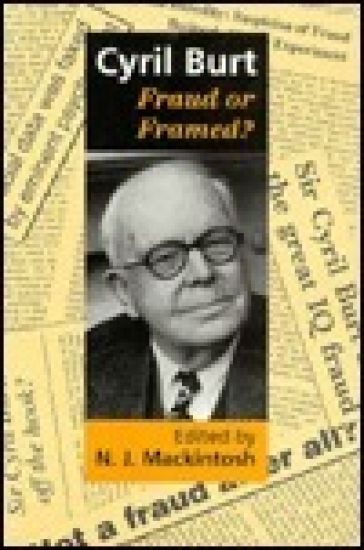
Cyril Burt: Fraud or Framed?
Oxford University Press
1995
sidottu
When Cyril Burt died in 1971, he was widely regarded as Britain's most eminent educational psychologist. Within five years of his death, however, he was being publicly denounced as a fraud who had fabricated data purporting to show that human intelligence is inherited. Was he really a fraud? Or was he accused of fraud by critics anxious to dismiss such a politically unacceptable scientific theory? Where does the truth lie? The contributors to this book examine the evidence carefully and dispassionately and conclude that both the defence and the prosecution cases are seriously flawed. This is a rigorous reanalysis of the data, which has turned up new instances of potential fraud which were not evident before. "The Bell Curve" (Murray & Hearnshaw), published last year, has re-ignited the controversy over the heritability of intelligence. This book provides the most modern and unbiased analysis available of one of the most notorious scandals in science; this is an important re-examination of an issue of great public and scientific interest.
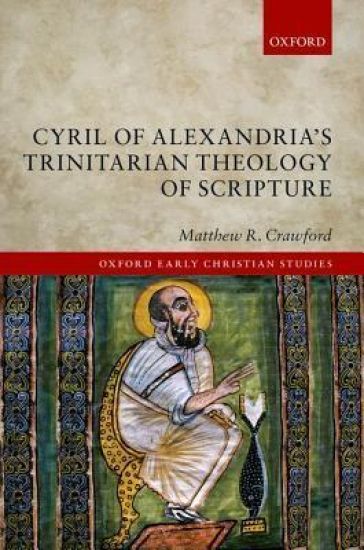
Cyril of Alexandria's Trinitarian Theology of Scripture
Matthew R. Crawford
Oxford University Press
2014
sidottu
More exegetical literature survives from the hand of Cyril of Alexandria than nearly any other Greek patristic author, yet this sizable body of work has scarcely received the degree of attention it deserves. In this work, Matthew R. Crawford reconstructs the intellectual context that gave rise to this literary output and highlights Cyril's Trinitarian theology, received as an inheritance from the fourth century, as the most important defining factor. Cyril's appropriation of pro-Nicene Trinitarianism is evident in both of his theology of revelation and his theology of exegesis, the two foci that comprise his doctrine of Scripture. Revelation, in his understanding, proceeds from the Father, through the Son, and in the Spirit, following the order of Trinitarian relations. Moreover, this pattern applies to the inspiration of Scripture as well, insofar as inspiration occurs when the Son indwells human authors by the Spirit and speaks the words of the Father. Although Cyril's interpretation of revelation may consequently be called 'Trinitarian', it is also resolutely Christological, since the divine and incarnate Son functions as the central content and mediator of all divine unveiling. Corresponding to this divine movement towards humanity in revelation is humanity's appropriation of divine life according to the reverse pattern--in the Spirit, through the Son, unto the Father. Applied to exegesis, this Trinitarian pattern implies that the Spirit directs the reader of Scripture to a Christological interpretation of the text, through which the believer beholds the incarnate Son, the exemplar of virtue and the perfect image of the Father, and accordingly advances in both virtue and knowledge. This process continues until the final eschatological vision when the types and riddles of Scripture will be done away with in light of the overwhelming clarity of the Christologically-mediated Trinitarian vision.
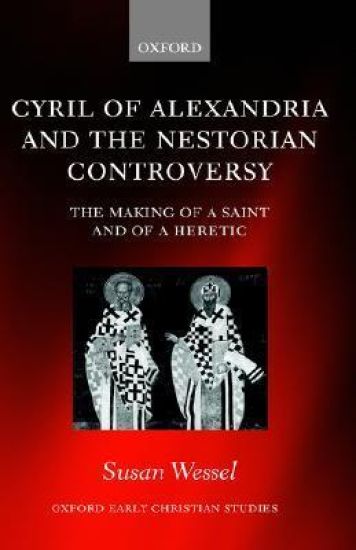
What were the historical and cultural processes by which Cyril of Alexandria was elevated to canonical status while his opponent, Nestorius, bishop of Constantinople, was made into a heretic? In contrast to previous scholarship, Susan Wessel concludes that Cyril's success in being elevated to orthodox status was not simply a political accomplishment based on political alliances he had fashioned as opportunity arose. Nor was it a dogmatic victory, based on the clarity and orthodoxy of Cyril's doctrinal claims. Instead, it was his strategy in identifying himself with the orthodoxy of the former bishop of Alexandria, Athanasius, in his victory over Arianism, in borrowing Athanasius' interpretive methods, and in skilfully using the tropes and figures of the second sophistic that made Cyril a saint in the Greek and Coptic Orthodox Churches.

"Big fat hairy ones, long-legged scary ones!"When you think about spiders, you think about fly-crunching creepy crawlies.But there are some spiders who are just born different: Cyril is one of those spiders.He can do magical things with his spider silk, but sadly, spiders don't really care about this. In the spider world, it's all about 'who has the most flies and who has the longest legs.'Cyril can't find a home, he's too different.But maybe there's hope for Cyril if he can just stay true to his heart.
This reference guide to the life and work of the prolific British composer, Cyril Scott, includes a brief biography and detailed bibliography and discography sections. Sometimes referred to as the British Debussy, Scott was one of the first English composers to incorporate a noticeable modern style. He composed in virtually every genre and for every instrument and ensemble. His works, as detailed in the discography, include three operas, two symphonies, five concertos, chamber music, piano music, and over 100 songs. The bibliography section includes writings both by and about Scott. This comprehensive reference will appeal to music scholars and to those with an interest in Cyril Scott's music. As a useful research tool, each section of the volume is cross-referenced. Two appendices list Scott's compositions, one alphabetically by genre and the other chronologically.
As a ruler of the church of Alexander and president of the Third Ecumenical Council of 431, Cyril was one of the most powerful men of the fifth century. Not only did he define the concept of christological orthodoxy for the next two centuries, but he is also often regarded as an unscrupulous cleric who was responsible for the murder of the female philosopher Hypatia and for the overthrow of the archbishop Nestorius.Cyril of Alexandria presents key selections of Cyril's writings in order to make his thought accessible to students. The writings are all freshly translated and an extended introduction outlines Cyril's life and times, his scholastic method, his christology, his ecclesiology, his eucharistic doctrine, his spirituality, and his influence on the Christian tradition.