Kirjahaku
Etsi kirjoja tekijän nimen, kirjan nimen tai ISBN:n perusteella.
1000 tulosta hakusanalla D Ben Rees

(A history of the Labour party in Welsh by one of its longest standing activists)A hithau wedi dominyddu Gwleidyddiaeth Cymru ers dechrau'r ugeinfed ganrif, y Blaid Lafur Gymreig yw un o'r pleidiau gwleidyddol fwyaf llwyddiannus mewn unrhyw wlad, ac mae ganddi ran hollol ganolog yn hanes Cymru dros y ganrif a hanner ers ei sefydlu. Mae gan Gymru ei hun lle hynod bwysig yn hanes y Blaid Lafur, gan mai yng Nghymru yr ennillodd y Blaid ei buddugoliaethau etholaethol cyntaf, a Chymru fu ei chadarnle hynaf a chryfaf erioed.Serch hynny, cyn nawr ni fu ymdrech i olrhain a chrynhoi hanes cyflawn y Blaid Lafur yng Nghymru yn yr Iaith Gymraeg, o'i rhagflaenwyr ymysg Cristnogion sosialaidd fel Robert Owen drwy at fuddugoliaethau ffurfiol cyntaf y blaid ar ddechrau'r ugeinfed ganrif, cyfnodau cythryblus mewn llywodraeth ac fel gwrthblaid, a'i chyfnodau o lwyddiant ac o fethiant yn ystod ail hanner yr ugeinfed ganrif. Telir sylw teilwng i ffigyrrau Cymreig blaenllaw'r blaid ac i'r cwestiynau hynny oedd o ddiddordeb neilltuol iddynt megis datganoli a'r Iaith Gymraeg. Mae D. Ben Rees wedi bod yn weithgar gyda'r Blaid Lafur ers y 1950au ac eisoes wedi cyhoeddi bywgraffiadau i amrywiaeth o unigolion ag iddynt ran flaenllaw yn y gyfrol hon, fel Cledwyn Hughes a Jim Griffiths.

There is no doubt among the experts that Jimmy Wilde of Wales in the United Kingdom must be the greatest fighting man between 1911 and 1923, indeed some maintain that he was the greatest boxer that has ever lived. He was a huge sensation and the various names that were bestowed on him tell a fascinating story. The best known of these must be THE MIGHTY ATOM and THE GHOST WITH A HAMMER. Brought up in a miner's cottage in the Rhondda Valley he was taught his craft while working as a coal miner with his father and in the evenings in the boxing booth . He was fortunate in his family, his wife Elizabeth, his father-in-law Dai Davies and his trainer Ted Lewis. Jim Driscoll, another boxing giant from Cardiff taught him the finer points of the craft As he was so thin and never exceeded seven stones he always fought with great deal disadvantage before heavy boxers . Wilde provided every boxing venue from Edinburgh to Dublin, London to New York, Philadelphia to Liverpool with drama and excitement . The fans were dazzled by his speed, skill and dexterity. Seen in action in his Army service in the First World War, he travelled everywhere with plenty of energy Wilde would never shirk from his challenger and exhibited at all times superb courage and knock out punches He was unique in his day . Professor Dr. D Ben Rees has produced a readable, well produced account which will be of a huge interest to those who love reading of the golden age of boxing, and how Wilde was able to show his ability in the home of boxing, the United States of America.

Aneurin Bevan - The Creator of the National Health Service
D. Ben Rees
Modern Welsh Payments
2024
nidottu


This volume is the fruit of decades of research by the Revd D Ben Rees into the unique story of the Welsh people living in Liverpool and on the banks of the Mersey. It is a treasury of information about people and events in one of the most interesting cities in relation to Welsh history, its people and language. Over 100 photographs.

A biography of Gwilym Prys-Davies, an astute and hard working politician who had a massive influence on Welsh politics and culture. Written by his friend of over half a century, D. Ben Rees.

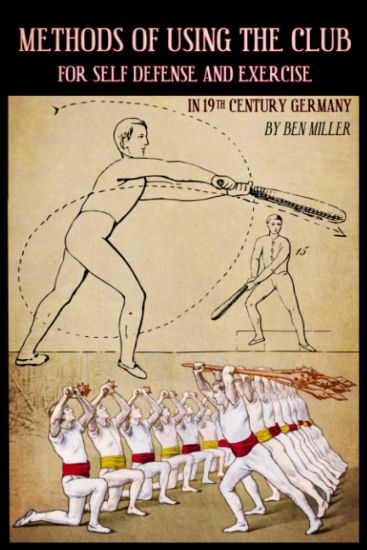
Methods of Using the Club for Self-Defense and Exercise in 19th Century Germany
D Ben Miller
Hudson Society Press
2022
pokkari
Since the dawn of human history, the club has been popularly regarded as the most primitive of weapons-the first that early man was able to crudely fashion using his own two hands, for the purposes of self-defense, hunting, and war. However, as the millennia progressed, the club developed a romantic allure, becoming associated with heroic figures such as Hercules, medieval fencing masters, and European strongmen as well as strongwomen. Later, the use of the club was also advocated by military authors of fencing treatises as physical conditioning for saber fencing. In this book, we examine the use of the club as both a weapon of self-defense and an exercise tool-with particular regard to its use in the nineteenth century Germanic speaking world-and examine a number of obscure technical sources that have hitherto escaped the notice of modern scholars and historians. Among the most interesting, and reprinted in a full bilingual version within this book, is a concise fencing treatise detailing the use of the massive, two-handed club. Published in 1855 in Germany, but with Scandinavian roots, this method looks at the use of the club for its serviceability as a tool of both self-defense and self-development (i.e., the cultivation of body, mind, and spirit). This club-method was part of a larger, holistic fencing system, that was intended to inculcate in the practitioner a knowledge of fencing theory and mechanics that could be applied to any weapon. As the author of the treatise explains: "The mere technical or regulatory exercises in the use of the club would indeed appear to be useful, in that one would be practicing the appropriate handling of that two-handed and massive cutting weapon and, in the event of an emergency, a club (or a club-like weapon), such as may be at hand, would then be able to be used with skill and safety... at the same time, they contain aesthetic elements which the trained gymnast can easily make use of." Methods of Using the Club contains extensive footnotes, more than sixty-five drawings, paintings, and photographs from history, and both an English translation and the original German version of the aforementioned treatise. CONTENTS Acknowledgments - viiI: Introduction - 1II: Notes on the Treatise - 47III: Treatise (English Translation) - 61IV: Treatise (German Transcription) - 89V: Additional Club Exercises - 103VI: Epilogue - 109Bibliography - 111About the Author - 115Additional Works - 116



The Descendants of Conrad Keller: A republication of the almost lost 1951 edition by Ben D. Keller (1889-1961), with enhancements to the format. Scann
Ben D. Keller
Independently Published
2019
nidottu
A republication of the almost lost 1951 edition by Ben D. Keller (1889-1961), with enhancements to the format. Scanned and edited by his Great Nephew, David Keller Bowman.