Kirjahaku
Etsi kirjoja tekijän nimen, kirjan nimen tai ISBN:n perusteella.
1000 tulosta hakusanalla D W Small
Based on Graetz's model that strategic thinking is "to seek innovation and imagine new and very different futures that lead to redefining of strategy", Selling The Cow takes a look at the parable of Jack and The Beanstalk as the archetype for disruptive thinking. This book identifies five key principles found within this parable that are the cornerstone of disruptive thinking. By using metaphorical comparisons such as the unobserved history of why Jack and his mother were struggling in the first place, to the final outcome, Selling The Cow uses a novel concept to introduce the need for disruptive thinking in individuals and organizations.
Kids Step by Step Sudoku Book: Small Print 5 0 - E a s y, M e d i u m, H a r d & F i e n d i s h Unicorn S u d o k u W i t h S o l u t i o n F o r K
Second Language Journal
Independently Published
2019
nidottu
Sudoku puzzle books small print for KidsThis book contains 50 SUDOKU puzzles of varying easy to difficult, meant to take you to a journey of discovery and eventually mastery of this century's most addictive game.6x9 inches50 Sudoku Puzzles and AnswerEasy=20Medium =10Hard= 10 F i e n d i s h =10
Standard Operating Procedures for Small Business: Leveraging Mobile Devices
David Ward; W. D. Patterson
Createspace Independent Publishing Platform
2018
nidottu
This instruction provides small businesses across the globe with an approach to generating standard operating procedures (SOP). Standard operating procedures are used to nail down a process, so it can be repeated consistently, always yielding the intended result for the customer. SOPs are also a key component to a highly reliable, mindful and safe work culture.
Legal Forms for Everyone: Wills, Probate, Trusts, Leases, Home Sales, Divorce, Contracts, Bankruptcy, Social Security, Patents, Copyrights, and More
Carl W. Battle; Andrea D. Small
Allworth
2024
nidottu
"Reproducible, ready-to-use forms are accompanied by step-by-step descriptions of the process involved in over twenty common legal issues. ... Well designed and easy to use." --American Libraries Legal Forms for Everyone is the ultimate self-help legal guide to saving research time and money in legal fees. Written by two experienced attorneys, this book is complete with the most commonly needed, ready-to-use legal forms, along with precise instructions and checklists on how and when to use them--and advice for when you should hire an attorney. The forms are also available from a supplemental website to directly download to your device and customize for your individual needs. Legal situations covered include preparing a will, avoiding probate, buying and selling real estate, handling divorce or formal separation, getting a new name, copyrights and trademarks, bankruptcy, and much more. Due to the ever-evolving legal system and technological developments, this seventh edition features new sections covering the following topics: How to apply for a passport, including advice on compiling evidence of citizenship How to apply for and claim Social Security benefits How timing of retirement can effect Social Security retirement benefits How to get a certified copy of a birth or death certificate, including state-by-state advice Assigning a medical proxy Legal Forms for Everyone is a comprehensive tool for assistance with legal situations without having to pay for a costly attorney.
Combined Ritual, Floor-Work and Lectures of Ancient Craft Masonry for the State of Vermont
W. Aaron H. Grout; Jr. R. W. D. Burleigh Smalley
Literary Licensing, LLC
2013
nidottu
The University Of Chicago War Papers (1918)
Harry Pratt Judson; Albion W. Small; Frederick D. Bramhall
KESSINGER PUBLISHING, LLC
2008
nidottu
Inside Doctoring provides a behind-the-scenes look at what it is like to become and be a physician. From pre-med to resident, the effective doctor to the incompetent one, Inside Doctoring presents autobiographical accounts and real-life case studies in insightful and fascinating detail.
Victorian Fiction
Robert Ashley; James D Barry; Bradford A Booth; Wayne Burns; Mildred G Christian; C L Cline; Curtis Dahl; George S Fayen Jr; W J Harvey; Jacob Korg; Ada Nisbet; Donald Smalley
Harvard University Press
1964
sidottu
In this deeply researched and vividly written volume, Melvyn Stokes illuminates the origins, production, reception and continuing history of this ground-breaking, aesthetically brilliant, and yet highly controversial movie landmark. By going back to the original archives, particularly the NAACP and D. W. Griffith Papers, Stokes explodes many of the myths surrounding The Birth of a Nation (1915). Yet the story that remains is fascinating: the longest American film of its time, Griffith's film incorporated many new features, including the first full musical score compiled for an American film. It was distributed and advertised by pioneering methods that would quickly become standard. Through the high prices charged for admission and the fact that it was shown, at first, only in "live" theaters with orchestral accompaniment, Birth played a major role in reconfiguring the American movie audience by attracting more middle-class patrons. But if the film was a milestone in the history of cinema, it was also undeniably racist. Stokes shows that the darker side of this classic movie has its origins in the racist ideas of Thomas Dixon, Jr. and Griffith's own Kentuckian background and earlier film career. The book reveals how, as the years went by, the campaign against the film became increasingly successful. In the 1920s, for example, the NAACP exploited the fact that the new Ku Klux Klan, which used Griffith's film as a recruiting and retention tool, was not just anti-black, but also anti-Catholic and anti-Jewish, as a way to mobilize new allies in opposition to the film. This crisply written book sheds light on both the film's racism and the aesthetic brilliance of Griffith's filmmaking. It is a must-read for anyone interested in the cinema.
In this deeply researched and vividly written volume, Melvyn Stokes illuminates the origins, production, reception and continuing history of this ground-breaking, aesthetically brilliant, and yet highly controversial movie. By going back to the original archives, particularly the NAACP and D. W. Griffith Papers, Stokes explodes many of the myths surrounding The Birth of a Nation (1915). Yet the story that remains is fascinating: the longest American film of its time, Griffith's film incorporated many new features, including the first full musical score compiled for an American film. It was distributed and advertised by pioneering methods that would quickly become standard. Through the high prices charged for admission and the fact that it was shown, at first, only in "live" theaters with orchestral accompaniment, Birth played a major role in reconfiguring the American movie audience by attracting more middle-class patrons. But if the film was a milestone in the history of cinema, it was also undeniably racist. Stokes shows that the darker side of this classic movie has its origins in the racist ideas of Thomas Dixon, Jr. and Griffith's own Kentuckian background and earlier film career. The book reveals how, as the years went by, the campaign against the film became increasingly successful. In the 1920s, for example, the NAACP exploited the fact that the new Ku Klux Klan, which used Griffith's film as a recruiting and retention tool, was not just anti-black, but also anti-Catholic and anti-Jewish, as a way to mobilize new allies in opposition to the film. This crisply written book sheds light on both the film's racism and the aesthetic brilliance of Griffith's filmmaking. It is a must-read for anyone interested in the cinema.
D.W. Griffith and the Origins of American Narrative Film
Tom Gunning
University of Illinois Press
1993
nidottu
The legendary filmmaker D. W. Griffith directed nearly 200 films during 1908 and 1909, his first years with the Biograph Company. While those one-reel films are a testament to Griffith's inspired genius as a director, they also reflect a fundamental shift in film style from "cheap amusements" to movie storytelling complete with characters and narrative impetus. In this comprehensive historical investigation, drawing on films preserved by the Library of Congress and the Museum of Modern Art, Tom Gunning reveals that the remarkable cinematic changes between 1900 and 1915 were a response to the radical reorganization within the film industry and the evolving role of film in American society. The Motion Picture Patents Company, the newly formed Film Trust, had major economic aspirations. The newly emerging industry's quest for a middle-class audience triggered Griffith's early experiments in film editing and imagery. His unique solutions permanently shaped American narrative film.
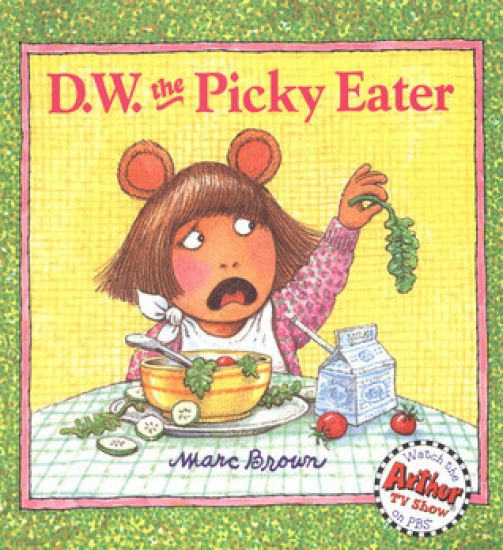
There's a whole slew of edibles that D.W. finds disgusting, but spinach is at the top of her list. Dining out with her family, she causes a scene when her parents suggest that she give her salad greens a try - no more restaurants for the picky little aardvark after that. Staying home with a sitter is boring, though, so when she hears about her grandmother's birthday dinner at a fancy restaurant, she wants to come, too. She orders the Little Bo Peep Pot Pie, devours it with relish, amazing everybody, including herself, and learns a lesson. The text is spare and funny, and while all the coloured-pencil illustrations reflect Brown's sense of humour and familiarity with the little details of childhood, some are downright hilarious. Charming endpapers feature some of the foods D.W. loves to hate. Although she wears an expression of pure horror when she discovers the main ingredient of her pie, readers will suspect that she'll keep that delicious spinach down and her mind and mouth open to new eating possibilities in the future.
A distillation of painstaking research into the life of Donald Winnicott, tracing his life from his childhood in Plymouth, through his career in paediatrics, to his election as President of the British Psycho-Analytic Society. The author makes many interesting links between Winnicott's life and the development of his theories.
A critical study of the background of D.W. Griffith's film masterpiece, the 1916 epic Intolerance. The most expensive ($2,000,000) film made prior to 1920, Intolerance was critically acclaimed and is now considered a classic. The book traces the artistic and political influences that shaped the director's vision, discusses the influences of the Progressive movement, and connects the film to the social and political climate of the early 20th century.
`The importance of Michael Jacobs' book lies in his attempt to convey... Winnicott's profound influence.... Jacobs rightly delights in the creativity and imagination of his subject and illustrates these with numerous quotations and descriptions from Winnicott's writings.... What is conveyed throughout the book is the essence of Winnicott.... [whose] gift was to make psychoanalytic language, methods and concepts more widely available, accepted and appreciated to a nonpsychoanalytic world' - British Psychological Society Counselling Psychology Review One of the best-known British psychoanalysts, D W Winnicott attracts the interest of counsellors and psychotherapists far beyond the strict psychoanalytic tradition in which he was trained. He coined many phrases that have entered the discourse of therapy, such as `good enough mother', `transitional object' and `facilitating environment'. Winnicott has had a profound impact on research into the mother-baby relationship, and his unorthodox manner and sparkling writing style have attracted enthusiastic acclaim. In this book, Michael Jacobs summarizes Winnicott's life and explains his major theoretical concepts. He also rigorously evaluates his practice as a clinician - for example, the holding and management of deeply regressed patients. While highlighting Winnicott's brilliance and creativity, Jacobs is not afraid to scrutinize his contributions more critically. He also discusses criticisms others have made of Winnicott, notably within the psychoanalytic movement. The final chapter assesses the influence of Winnicott's thinking in other countries as well as in Britain.
"This magnificent and important biography...is the best ever written on the man." -The New Republic "Mr. Schickel's excellent and important biography makes it clear that when the movers of our century are tallied, D.W. Griffith, flawed genius that he was, can never lose his eminent position." -Peter Bogdanovich, The New York Times Book Review
An Oration on the Death of Mr. Eli Kelsey, a Senior in Yale College. by D.W. Lewis. [Three Lines from Shakespeare].
D W Lewis
Gale Ecco, Print Editions
2010
pokkari
A Texas Scrap-Book. Made up of the history, biography, and miscellany of Texas and its people. Compiled by D. W. C. Baker. [With plates, including portraits.]
D W C Baker
British Library, Historical Print Editions
2011
pokkari
Title: A Texas Scrap-Book. Made up of the history, biography, and miscellany of Texas and its people. Compiled by D. W. C. Baker. With plates, including portraits.]Publisher: British Library, Historical Print EditionsThe British Library is the national library of the United Kingdom. It is one of the world's largest research libraries holding over 150 million items in all known languages and formats: books, journals, newspapers, sound recordings, patents, maps, stamps, prints and much more. Its collections include around 14 million books, along with substantial additional collections of manuscripts and historical items dating back as far as 300 BC.The GENERAL HISTORICAL collection includes books from the British Library digitised by Microsoft. This varied collection includes material that gives readers a 19th century view of the world. Topics include health, education, economics, agriculture, environment, technology, culture, politics, labour and industry, mining, penal policy, and social order. ++++The below data was compiled from various identification fields in the bibliographic record of this title. This data is provided as an additional tool in helping to insure edition identification: ++++ British Library Baker, D W. C.; 1875 xii. 657 p.; 8 . 10412.ee.8.
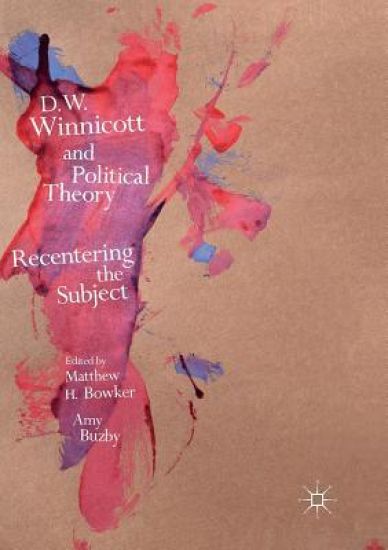
D.W. Winnicott and Political Theory
Palgrave Macmillan
2018
nidottu
In this volume, the work of British psychoanalyst D.W. Winnicott is set in conversation with some of today’s most talented psychodynamically-sensitive political thinkers. The editors and contributors demonstrate that Winnicott’s thought contains underappreciated political insights, discoverable in his reflections on the nature of the maturational process, and useful in working through difficult impasses confronting contemporary political theorists. Specifically, Winnicott’s psychoanalytic theory and practice offer a framework by which the political subject, destabilized and disrupted in much postmodern and contemporary thinking, may be recentered. Each chapter in this volume, in its own way, grapples with this central theme: the potential for authentic subjectivity and inter-subjectivity to arise within a nexus of autonomy and dependence, aggression and civility, destructiveness and care. This volume is unique in its contribution to the growing field of object-relations-oriented political and social theory. It will be of interest to political scientists, psychologists, and scholars of related subjects in the humanities and social sciences.