Kirjojen hintavertailu. Mukana 12 371 047 kirjaa ja 12 kauppaa.

Kirjahaku

Etsi kirjoja tekijän nimen, kirjan nimen tai ISBN:n perusteella.

1000 tulosta hakusanalla Daniel B. Levin

The Mosaic

The Mosaic

Daniel B. Levin

Waterside Publishing
2018
sidottu
A ground-breaking book in the tradition of The Alchemist and The Celestine Prophecy, The Mosaic, by marketing expert and activist Daniel Bruce Levin invites you to see the world from a new point-of-view— one that focuses on what connects us to each other and brings us happiness. The Mosaic follows the journey of Mo, a boy who loses his parents two years apart on the same day. When he asks the adults where his parents went, they tell him they are in heaven. Mo sets out to find the place called heaven and along the way, he meets an assortment of ordinary people, who are anything but ordinary. The Mosaic is a magical book that will inspire conversation around the possibilities that exist when we are able to see what we do not see. It will entertain and uplift you through the magic of connection, and it will linger with you well after you finish its story. “The most profound and lasting way to learn is through story, and a story that reflects so many aspects of our shared human journey keeps the lessons learned alive in the heart forever. This is one such beautiful and lasting story.“ — Sonia Choquette New York Times best-selling author of The Answer is Simple...Love yourself, Live your Spirit! .

Flow Art: Unedited Stream of Conscious B&w Illustrations for Advanced Colorists

Flow Art: Unedited Stream of Conscious B&w Illustrations for Advanced Colorists

Daniel Z. Levin

Createspace Independent Publishing Platform
2018
nidottu
Coloring book featuring 26 abstract black and white illustrations ready for the advanced colorist.Each drawing was done with out planning, in ink. Any "mistakes" were incorporated into the final image to create a series of complex patterned visuals. Or, in other words, advanced doodling. The intent was to mimic a stream of conscious writing exercise in visual form. What resulted was a series of images ideal for advanced to expert colorists. Each image has been paired with a poem in lieu of any kind of title or heading. You are discouraged from caring about the poetry. It doesn't matter in the slightest. Seriously. Don't even bother reading them, they are nonsense. You ARE encouraged however, to color outside the lines, or add to the patterns or structures; to make this book unique to your artistic intent.
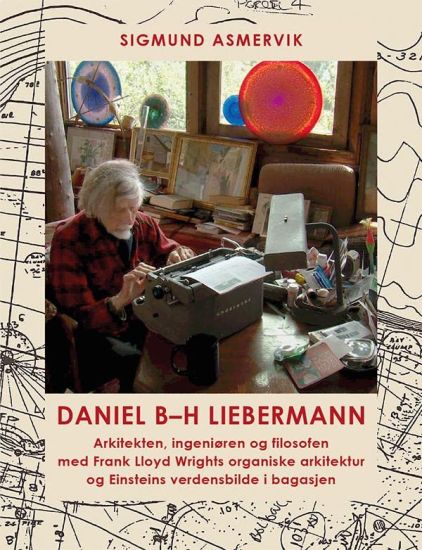
Daniel B-H Liebermann

Daniel B-H Liebermann

Sigmund Asmervik

Kolofon
2019
nidottu
Modernisme med sjel og poesi Daniel B-H Liebermann var født i 1930 og døde i 2015. Han vokste opp i Middletown og senere bodde familien noen få steinkast fra Albert Einsteins hus i Princeton. Han fortalte gjerne om når han som beskjeden tenåring sammen med sin mor hadde lunsj med Albert Einstein. I perioden 1956-58 arbeidet han hos Frank Lloyd Wright i Taliesin West i Arizona. Begge deler har hatt betydelig innflytelse på hans tenkning om arkitektur. Han var et viktig bindeledd for utviklingen av modernismen innen arkitektur fra midten av 1950-tallet og fram til han døde i 2015. Liebermann hadde et spesielt forhold til Norge, hvor han bodde i årene 1967-1975. Han underviste ved NTH høsten 1967 og våren 1968. Selv mener han at han har hentet mye inspirasjon fra norske og nordiske arkitekter som Knut Knutsen, Wenche Selmer, Alvar Aalto og Reima Pietelä. Han var en genuin humanistisk modernist, og allerede på slutten av 1950-tallet viste han interesse for tema som; klima, økologi, energiøkonomisering, og gjenbruk, som er svært aktuelle tema for dagens arkitekter, landskapsarkitekter, og designere. Når han tegnet prototypen Pine II, som eget hus i Marin Valley like nord for San Francisco på slutten av 1950-tallet, var det omfattende gjenbruk av tre, tegl, og et toalett i rustfritt stål fra et fengsel. Under norgesoppholdet arbeidet han også nyskapende med plast, og da spesielt med epoxy. Dette resulterte i oppgaver som bord, stoler og lamper på flere norskeide cruiseskip. Utdanning Johns Hopkins University Harvard University University of Colorado Boulder Taliesin Fellowship Arizona, Frank Lloyd Wright Praksis Liebermann drev stort sett egen praksis fra slutten av 1950 tallet, og i hovedsak med utgangspunkt i Berkeley, California. Han prosjekterte lite i perioden han bodde i Europa fra 1966 til midten av 1970-tallet.
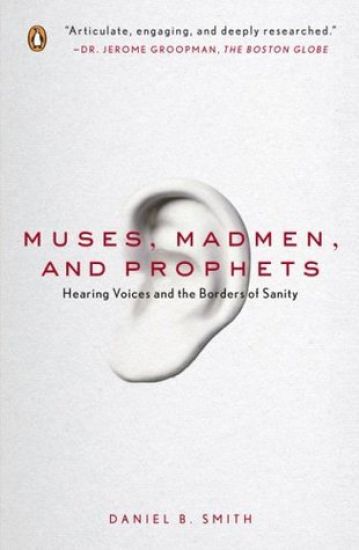
Muses, Madmen, and Prophets: Hearing Voices and the Borders of Sanity
An inquiry into hearing voices-one of humanity's most profound phenomena Auditory hallucination is one of the most awe-inspiring, terrifying, and ill- understood tricks of which the human psyche is capable. In the age of modern medical science, we have relegated this experience to nothing more than a biological glitch. Yet as Daniel B. Smith puts forth in Muses, Madmen, and Prophets, some of the greatest thinkers, leaders, and prophets in history heard, listened to, and had dialogues with voices inside their heads. In a fascinating quest for understanding, Smith examines the history of this powerful phenomenon, and delivers a ringing defense of the validity of unusual human experiences.
The Reinvention of Atlantic Slavery

The Reinvention of Atlantic Slavery

Daniel B. Rood

Oxford University Press Inc
2017
sidottu
The Reinvention of Atlantic Slavery shows how, at a moment of crisis after the Age of Revolutions, ambitious planters in the Upper US South, Cuba, and Brazil forged a new set of relationships with one another to sidestep the financial dominance of Great Britain and the northeastern United States. They hired a transnational group of chemists, engineers, and other "plantation experts" to assist them in adapting the technologies of the Industrial Revolution to suit "tropical" needs and maintain profitability. These experts depended on the know-how of slaves alongside whom they worked. Bondspeople with industrial craft skills played key roles in the development of new production technologies like sugar mills. While the very existence of skilled enslaved workers contradicted the racial ideologies underpinning slavery and allowed black people to wield new kinds of authority within the plantation world, their contributions reinforced the economic dynamism of the slave economies of Cuba, Brazil, and the Upper South. When separate wars broke out in all three locations in the 1860s, the transnational bloc of masters and experts took up arms to perpetuate the Greater Caribbean they had built throughout the 1840s and 1850s. Slaves played key wartime roles on the opposing side, helping put an end to chattel slavery. However, the worldwide racial division of labor that emerged from the reinvented plantation complex has proved more durable.
The Reinvention of Atlantic Slavery

The Reinvention of Atlantic Slavery

Daniel B. Rood

Oxford University Press Inc
2020
nidottu
The period of the "second slavery" was marked by geographic expansion of zones of slavery into the Upper US South, Cuba, and Brazil and chronological expansion into the industrial age.As The Reinvention of Atlantic Slavery shows, ambitious planters throughout the Greater Caribbean hired a transnational group of chemists, engineers, and other "plantation experts" to assist them in adapting industrial technologies to suit their "tropical" needs and increase profitability. Not only were technologies reinvented so as to keep manufacturing processes local but slaveholders' adaptation of new racial ideologies also shaped their particular usage of new machines. Finally, these businessmen forged a new set of relationships with one another in order to sidestep the financial dominance of Great Britain and the northeastern United States. In addition to promoting new forms of mechanization, the technical experts depended on the know-how of slaves alongside whom they worked. Bondspeople with industrial craft skills played key roles in the development of new production processes and technologies like sugar mills. While the very existence of such skilled slaves contradicted prevailing racial ideologies and allowed black people to wield power in their own interest, their contributions grew the slave economies of Cuba, Brazil, and the Upper South. Together reform-minded planters, technical experts, and enslaved people modernized sugar plantations in Louisiana and Cuba; brought together rural Virginia wheat planters and industrial flour-millers in Richmond with the coffee-planting system of southeastern Brazil; and enabled engineers and iron-makers in Virginia to collaborate with railroad and sugar entrepreneurs in Cuba. Through his examination of the creation of these industrial bodies of knowledge, Daniel B. Rood demonstrates the deepening dependence of the Atlantic economy on forced labor after a few revolutionary decades in which it seemed the institution of slavery might be destroyed. The reinvention of this plantation world in the 1840s and 1850s brought a renewed movement in the 1860s, especially from enslaved people themselves in the United States and Cuba, to end chattel slavery. This account of capitalism, technology, and slavery offers new perspectives on the nineteenth-century Americas.
Jewish Biomedical Law

Jewish Biomedical Law

Daniel B. Sinclair

Oxford University Press
2003
sidottu
Jewish Biomedical Law deals with the controversial issues of abortion, assisted reproduction, genetics, the obligation to heal, patient autonomy, treatment of the terminally ill, the definition of death, organ donations, and the allocation of scarce medical resources in Jewish Law. The volume focuses upon the complex interplay between legal and moral elements in the decision-making process, particularly when questions of life and death (such as abortion and treatment of the terminally ill) are involved. Sinclair argues that the moral element in Jewish biomedical law is of a universal, rational nature, and its theoretical basis may be located in a weak form of Natural law theory regarding the value of human life in the Jewish legal tradition. The concept of patient autonomy in Jewish biomedical law is more limited than in contemporary liberal jurisprudence, and is based upon theological as well as strictly legal elements. The influence of scientific thinking upon the decision-making process in Jewish biomedical law is illustrated in a discussion of the contemporary debate concerning the permissibility of heart transplants. In most chapters, Jewish law is compared and contrasted with Canon and Common Law, and the volume also discusses the role played by Jewish biomedical law in modern, secular Israeli law. In this context, it addresses the thorny issue of combining religious law with democratic principles within the framework of a secular legal system.
Knowledge and Coordination

Knowledge and Coordination

Daniel B. Klein

Oxford University Press Inc
2014
nidottu
Adam Smith and Friedrich Hayek saw the liberty principle as focal and accorded it strong presumption, but their wisdom invokes how little we can know. In Knowledge and Coordination, Daniel Klein re-examines the elements of economic liberalism. He interprets Hayek's notion of spontaneous order from the aestheticized perspective of a Smithian spectator, real or imagined. Klein addresses issues economists have had surrounding the notion of coordination by distinguishing the concatenate coordination of Hayek, Ronald Coase, and Michael Polanyi from the mutual coordination of Thomas Schelling and game theory. Clarifying the meaning of cooperation, he resolves debates over whether entrepreneurial innovation enhances or upsets coordination, and thus interprets entrepreneurship in terms of discovery or new knowledge. Beyond information, knowledge entails interpretation and judgment, emergent from tacit reaches of the "society of mind," itself embedded in actual society. Rejecting homo economicus in favor of the "deepself," Klein offers a distinctive formulation of knowledge economics, entailing asymmetric interpretation, judgment, entrepreneurship, error, and correction-and kinds of discovery-which all serve the cause of liberty. This richness of knowledge joins agent and analyst, and meaningful theory depends on tacit affinities between the two. Knowledge and Coordination highlights the recurring connections to underlying purposes and sensibilities, of analysts as well as agents. Behind economic talk of market communication and social error and correction lies Klein's Smithian allegory, with the allegorical spectator representing a conception of the social. Knowledge and Coordination instructs us to declare such allegory. Knowledge and Coordination is an authoritative take on how, by confessing the looseness of its judgments and the by-and-large status of its claims, laissez-faire liberalism makes its economic doctrines more robust and its presumption of liberty more viable.
Knowledge and Coordination

Knowledge and Coordination

Daniel B. Klein

Oxford University Press Inc
2012
sidottu
Adam Smith and Friedrich Hayek saw the liberty principle as focal and accorded it strong presumption. But their wisdom invokes how little we can know. In Knowledge and Coordination, Daniel Klein re-examines the elements of economic liberalism. He interprets Hayek's notion of spontaneous order from the aestheticized perspective of a Smithian spectator, real or imagined. Klein addresses issues economists have had surrounding the notion of coordination by distinguishing the concatenate coordination of Hayek, Ronald Coase, and Michael Polanyi from the mutual coordination of Thomas Schelling and game theory. Clarifying the meaning of cooperation, he resolves debates over whether entrepreneurial innovation enhances or upsets coordination, and thus interprets entrepreneurship in terms of discovery, or new knowledge. Beyond information, knowledge entails interpretation and judgment, emergent from tacit reaches of the "society of mind," itself embedded in actual society. Rejecting homo economicus in favor of the "deepself," Klein offers a distinctive formulation of knowledge economics, entailing asymmetric interpretation, judgment, entrepreneurship, error, and correction-and kinds of discovery-which all serve the cause of liberty. This richness of knowledge joins agent and analyst, and meaningful theory depends on tacit affinities between the two. Knowledge and Coordination highlights the recurring connections to underlying purposes and sensibilities, of analysts as well as agents. Behind economic talk of market communication and social error and correction lies Klein's Smithian allegory, with the allegorical spectator representing a conception of the social. Knowledge and Coordination instructs us to declare such allegory. Knowledge and Coordination is an authoritative take on how, by confessing the looseness of its judgments and the by-and-large status of its claims, laissez-faire liberalism makes its economic doctrines more robust and its presumption of liberty more viable.