Kirjojen hintavertailu. Mukana 11 244 527 kirjaa ja 12 kauppaa.

Kirjahaku

Etsi kirjoja tekijän nimen, kirjan nimen tai ISBN:n perusteella.

1000 tulosta hakusanalla Daniel C. Dennett

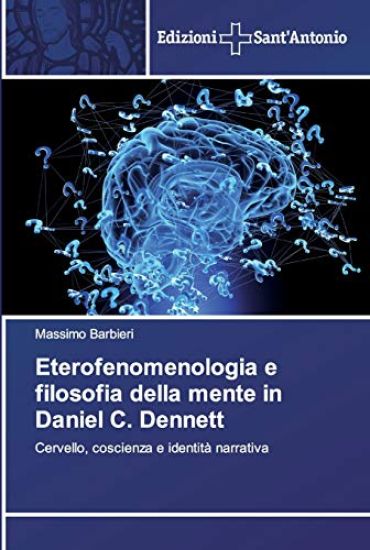
Eterofenomenologia e filosofia della mente in Daniel C. Dennett
Il rapporto tra consapevolezza e cervello (Mind-Body Problem) centrale nella riflessione sul 'mentale' in filosofia e psicologia. L'influente filosofo Daniel Dennett, discutendo una serie di dati sperimentali ottenuti con particolari tecniche di indagine, critica la concezione di un 'Io' centrale, l'idea di identit personale unitaria caratterizzata da continuit della coscienza. Proponendo una metodologia interpretativa detta 'eterofenomenologia', come approccio oggettivo scientifico al mondo introspettivo del parlante (i fenomeni della sua esperienza soggettiva e la sua trama di autonarrazioni), designa il 'S ' come baricentro narrativo del corpo. E definisce 'atteggiamento intenzionale' l'attribuzione di credenze, giudizi, desideri e aspettative, al titolare degli atti linguistici, ritenuto come agente razionale che regola la scelta dei suoi comportamenti. Il rapporto tra l'eterofenomenologo e il soggetto narrante assimilabile alla relazione psicoterapeutica tra terapeuta e paziente. L'originale e singolare teoria di Dennett riveste specifico interesse per filosofi, psicologi, formatori e chiunque opera nel campo delle neuroscienze, della clinica e della didattica.
Irreduzibilität des Bewusstseins und dessen Implikationen bei David J. Chalmers und Daniel C. Dennett
Bachelorarbeit aus dem Jahr 2021 im Fachbereich Philosophie - Philosophie der Gegenwart, Note: 1,7, Ludwig-Maximilians-Universit t M nchen (Fakult t f r Philosophie), Sprache: Deutsch, Abstract: Die Frage nach dem Wesen des Bewusstseins ist eine der zentralen und auch verbl ffendsten Fragen der Menschheit, die wahrscheinlich seit der Zeit gestellt wird, als der Geist im Menschen erwacht ist und nach Erkenntnis rief. In der t glichen Erfahrung ist das Bewusstsein allgegenw rtig und subjektive Erlebnisse sind auf so einer direkten Art und Weise gegeben, dass niemand unter normalen Umst nden deren Existenz in Frage stellen w rde. Die Neurowissenschaften versuchen seit langer Zeit erfolglos, ein Korrelat des Bewusstseins im menschlichen Gehirn zu finden, und es ist fraglich, ob das jemals gelingen kann. Ren Descartes, sah das Bewusstsein gar nicht im Gehirn verortet, sondern postulierte eine res cogitans, eine eigene Substanz des denkenden Geistes, unabh ngig von der res extensa, der K rperwelt. David J. Chalmers, mit dessen 1996 erschienenen Buch "The Conscious Mind - In Search of a Fundamental Theory" diese Bachelorarbeit sich haupts chlich besch ftigt, fragt nach dem subjektiven Charakter des Bewusstseins und dessen Status in einer vor allem naturwissenschaftlich, physikalisch gepr gten Welt. Im Verlauf dieser Arbeit wird sich zeigen, dass die Existenz des Bewusstseins von Chalmers nicht in Frage gestellt wird, aber es schwierig ist, Bewusstsein zu fassen, da es eben nicht aus der Perspektive der dritten Person erkl rt werden kann. Mit Hilfe u. a. des Zombiearguments zeigt er, dass consciousness nicht global logisch ber dem Physikalischen superveniert, nicht auf das Physikalische reduzierbar ist und das der Physikalismus falsch ist. Er beschreibt einen "Naturalistic dualism", einen speziellen Eigenschaftsdualismus der consciousness als grundlegendes Prinzip "over and above" des Physikalismus betrachtet. Die Darstellung von David Chalmers negativer Theorie im Te
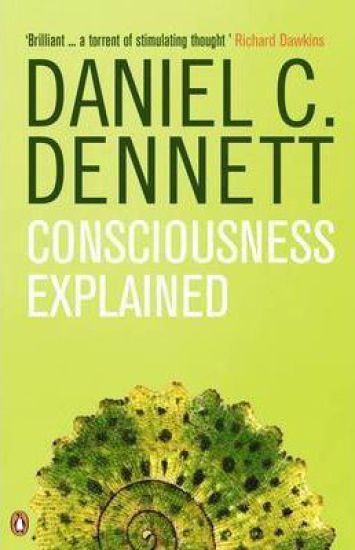
Consciousness Explained

Consciousness Explained

Daniel C. Dennett

Penguin Books Ltd
1993
pokkari
In Consciousness Explained, Daniel C. Dennett reveals the secrets of one of the last remaining mysteries of the universe: the human brain.Daniel C. Dennett's now-classic book blends philosophy, psychology and neuroscience - with the aid of numerous examples and thought-experiments - to explore how consciousness has evolved, and how a modern understanding of the human mind is radically different from conventional explanations of consciousness.What people think of as the stream of consciousness is not a single, unified sequence, the author argues, but 'multiple drafts' of reality composed by a computer-like 'virtual machine'. Dennett explains how science has exploded the classic mysteries of consciousness: the nature of introspection, the self or ego and its relation to thoughts and sensations, the problems posed by qualia, and the level of consciousness of non-human creatures. 'Brilliant ... a torrent of stimulating thought' Richard Dawkins 'Revolutionary ... one of the most mentally agile, intellectually resourceful books you are likely to read' Guardian 'A masterful tapestry of deep insights ... Dennett has written a profound and important book that is also clear, exciting and witty' Douglas R. Hofstadter, author of Gödel, Escher, Bach
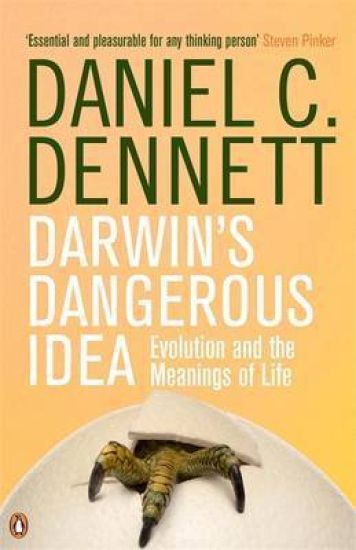
Darwin's Dangerous Idea

Darwin's Dangerous Idea

Daniel C. Dennett

Penguin Books Ltd
1996
pokkari
In Darwin's Dangerous Idea: Evolution and the Meanings of Life Daniel C. Dennett argues that the theory of evolution can demystify the miracles of life without devaluing our most cherished beliefs. From the moment it first appeared, Charles Darwin's theory of evolution by natural selection has been controversial: misrepresented, abused, denied and fiercely debated. In this powerful defence of Darwin, Daniel C. Dennett explores every aspect of evolutionary thinking to show why it is so fundamental to our existence, and why it affirms - not threatens - our convictions about the meaning of life. 'Essential and pleasurable for any thinking person'Stephen Pinker 'A surpassingly brilliant book. Where creative, it lifts the reader to new intellectual heights. Where critical, it is devastating'Richard Dawkins 'A brilliant piece of persuasion, excitingly argued and compulsively readable'The Times Higher Education Supplement 'Superb ... This is the best single-author overview of all the implications of evolution by natural selection available ... deserves a place on the bookshelves of every thinking person'John Gribbin, Sunday Times 'Dennett's book brings together science and philosophy with wit, complex clarity and an infectious sense that these ideas matter, to us and the way we live now'A.S. Byatt, Sunday Times Books of the Year Daniel C. Dennett is one of the most original and provocative thinkers in the world. A brilliant polemicist and philosopher, he is famous for challenging unexamined orthodoxies, and an outspoken supporter of the Brights movement. His books include Brainstorms, Brainchildren, Elbow Room, Breaking the Spell, Darwin's Dangerous Idea, Consciousness Explained and Freedom Evolves.
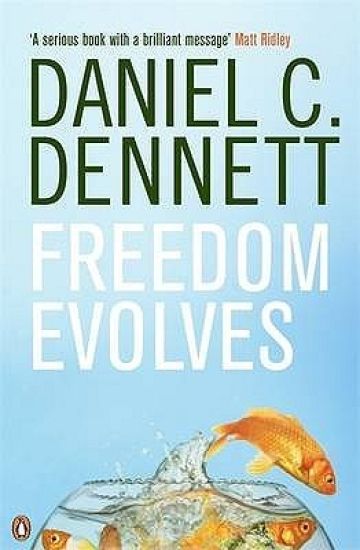
Freedom Evolves

Freedom Evolves

Daniel C. Dennett

Penguin Books Ltd
2004
pokkari
Daniel C. Dennett's Freedom Evolves tackles the most important question of human existence - is there really such a thing as free will? How can humans make genuinely independent choices if we are just a cluster of cells and genes in a world determined by scientific laws? Here, Daniel Dennett provides an impassioned defense of free will. But rather than freedom being an eternal, unchanging condition of our existence, in reality, he reveals, it has evolved: just like life on the planet and the air we breathe. Evolution is the key to resolving this greatest of philosophical questions - and to understanding our place in the world as uniquely free agents. Dennett shows that far from there being an incompatibility between contemporary science and the traditional vision of freedom and morality, it is only recently that science has advanced to the point where we can see how we came to have our unique kind of freedom. 'A serious book with a brilliant message' Matt Ridley, author of The Red Queen 'Powerful and ingenious ... The definitive argument that the human mind is a product of evolution' John Gray, Independent 'A book of sparkling brio and seemingly effortless panache ... Dennett at his best is as good as it gets' Spectator Daniel C. Dennett is one of the most original and provocative thinkers in the world. A brilliant polemicist and philosopher, he is famous for challenging unexamined orthodoxies, and an outspoken supporter of the Brights movement. His books include Brainstorms, Brainchildren, Elbow Room, Breaking the Spell, Darwin's Dangerous Idea and Freedom Evolves.
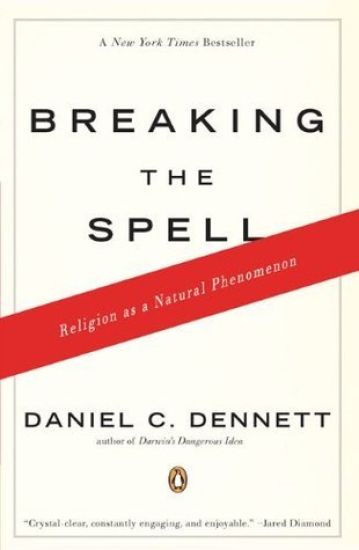
Breaking the Spell

Breaking the Spell

Daniel C. Dennett

Penguin Books Ltd
2007
pokkari
What is religion and how did it evolve? Is it the product of blind evolutionary instinct or of rational choice? Is the only way to live a good life through religion? In this title, the author explores how the great ideas of religion have enthralled us for thousands of years - and whether we could (or should) break free.
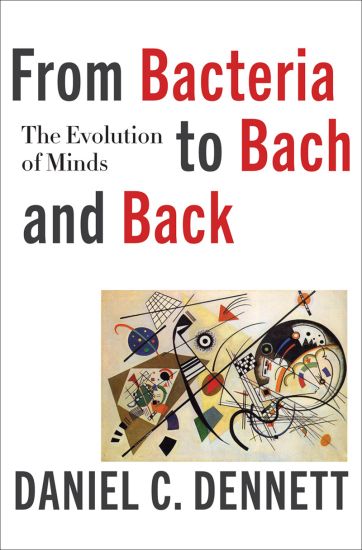
From Bacteria to Bach and Back

From Bacteria to Bach and Back

Daniel C. Dennett

Penguin Books Ltd
2018
pokkari
'Required reading for anyone remotely curious about how they came to be remotely curious' Observer'Enthralling' Spectator What is human consciousness and how is it possible? These questions fascinate thinking people from poets and painters to physicists, psychologists, and philosophers. This is Daniel C. Dennett's brilliant answer, extending perspectives from his earlier work in surprising directions, exploring the deep interactions of evolution, brains and human culture. Part philosophical whodunnit, part bold scientific conjecture, this landmark work enlarges themes that have sustained Dennett's career at the forefront of philosophical thought. In his inimitable style, laced with wit and thought experiments, Dennett shows how culture enables reflection by installing a profusion of thinking tools, or memes, in our brains, and how language turbocharges this process. The result: a mind that can comprehend the questions it poses, has emerged from a process of cultural evolution. An agenda-setting book for a new generation of philosophers and thinkers, From Bacteria to Bach and Back is essential for anyone who hopes to understand human creativity in all its applications.
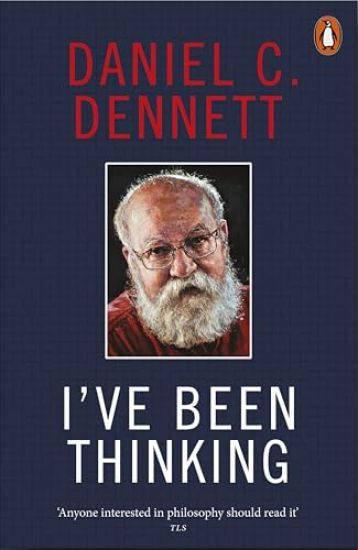
I've Been Thinking

I've Been Thinking

Daniel C. Dennett

PENGUIN BOOKS LTD
2025
pokkari
'A generous book written by a figure who has made a significant impact on philosophy ... Anyone interested in philosophy should read it' Nigel Warburton, Times Literary Supplement'One of today's most readable, intellectually nimble and scientifically literate philosophers' Nature'Who would have guessed that a philosopher's life could be so full of adventures?'Daniel C. Dennett, philosopher and cognitive scientist, has spent his career considering consciousness. I've Been Thinking traces the development of Dennett's own intellect and instructs us how we too can become good thinkers.Dennett's restless curiosity leads him from his childhood in Beirut to Harvard, and from Parisian jazz clubs to 'tillosophy' on his tractor in Maine. Along the way, he encounters and debates with a host of legendary thinkers, and reveals the breakthroughs and misjudgments that shaped his paradigm-shifting philosophies. Thinking, Dennett argues, is hard, and risky. In fact, all good philosophical thinking is inevitably accompanied by bafflement, frustration and self-doubt. It is only in getting it wrong that we, very occasionally, find a way to get it right.This memoir by one of the greatest philosophers of our time will speak to anyone who seeks a life of the mind with adventure and creativity.
Freedom Evolves

Freedom Evolves

Daniel C. Dennett

PENGUIN BOOKS
2004
nidottu
Can there be freedom and free will in a deterministic world? Renowned philosopher Daniel Dennett emphatically answers "yes " Using an array of provocative formulations, Dennett sets out to show how we alone among the animals have evolved minds that give us free will and morality. Weaving a richly detailed narrative, Dennett explains in a series of strikingly originalarguments--drawing upon evolutionary biology, cognitive neuroscience, economics, and philosophy--that far from being an enemy of traditional explorations of freedom, morality, and meaning, the evolutionary perspective can be an indispensable ally. In Freedom Evolves, Dennett seeks to place ethics on the foundation it deserves: a realistic, naturalistic, potentially unified vision of our place in nature.
Breaking the Spell: Religion as a Natural Phenomenon
A Tufts University professor explores the nature of faith and how religion shapes everyday life and the future, addressing controversial issues about the relevance and rational qualities of faith while tracing the history of organized religion from its roots in folk beliefs to its key role in modern issues. By the author of Darwin's Dangerous Idea. Reprint. 100,000 first printing.
I've Been Thinking

I've Been Thinking

Daniel C. Dennett

PENGUIN BOOKS LTD
2023
sidottu
'A generous book written by a figure who has made a significant impact on philosophy ... Anyone interested in philosophy should read it' Nigel Warburton, Times Literary Supplement'One of today's most readable, intellectually nimble and scientifically literate philosophers' Nature'Who would have guessed that a philosopher's life could be so full of adventures?'Daniel C. Dennett, philosopher and cognitive scientist, has spent his career considering consciousness. I've Been Thinking traces the development of Dennett's own intellect and instructs us how we too can become good thinkers.Dennett's restless curiosity leads him from his childhood in Beirut to Harvard, and from Parisian jazz clubs to 'tillosophy' on his tractor in Maine. Along the way, he encounters and debates with a host of legendary thinkers, and reveals the breakthroughs and misjudgments that shaped his paradigm-shifting philosophies. Thinking, Dennett argues, is hard, and risky. In fact, all good philosophical thinking is inevitably accompanied by bafflement, frustration and self-doubt. It is only in getting it wrong that we, very occasionally, find a way to get it right.This memoir by one of the greatest philosophers of our time will speak to anyone who seeks a life of the mind with adventure and creativity.
Intuition Pumps and Other Tools for Thinking

Intuition Pumps and Other Tools for Thinking

Daniel C. Dennett

Penguin Books Ltd
2014
pokkari
In Intuition Pumps, Daniel Dennett, one of the world's leading philosophers, and author of Consciousness Explained and Freedom Evolves, offers aspiring thinkers his personal trove of mind-stretching thought experimentsThinking is hard. A few of us may be natural geniuses; others are blessed with reserves of willpower. Then there's the rest of us: not prodigies and short on time, but still aspiring to understand the world. What can we do? Daniel Dennett, one of the world's most original thinkers, reveals a collection of his favourite thinking tools, or 'intuition pumps'. From Occam's Razor to the benefit of mistakes, the 90% rule to avoiding 'deepitites', this entertaining guide will enable you to tackle life's most fundamental questions - evolution, meaning, consciousness and free will - and teach you to think truly independently and creatively.Daniel Dennett is one of the most original and provocative thinkers in the world. A brilliant polemicist and philosopher, he is famous for challenging unexamined orthodoxies. His books include Brainstorms, Brainchildren, Elbow Room, Consciousness Explained, Darwin's Dangerous Idea and Freedom Evolves. He lives in North Andover, Massachusetts.'One of the world's most original and provocative thinkers' Daily Telegraph'A master class' Guardian 'Intelligence, insight and flair ... They don't come much bigger than Daniel Dennett' Julian Baggini, Guardian'A philosopher's box of tools for the musing mind' Melvin Konner, Nature'You'll enjoy and be challenged by it'Steven Rose, Guardian'A lively primer on the radical answers Mr. Dennett has elaborated to the big questions in his nearly five decades in philosophy' Jennifer Schuessler, The New York Times'America's most important and entertaining philosopher' Observer
Brainstorms

Brainstorms

Daniel C. Dennett

MIT Press
2017
pokkari
An anniversary edition of a classic in cognitive science, with a new introduction by the author.When Brainstorms was published in 1978, the interdisciplinary field of cognitive science was just emerging. Daniel Dennett was a young scholar who wanted to get philosophers out of their armchairs-and into conversations with psychologists, linguists, computer scientists. This collection of seventeen essays by Dennett offers a comprehensive theory of mind, encompassing traditional issues of consciousness and free will. Using careful arguments and ingenious thought experiments, the author exposes familiar preconceptions and hobbling intuitions. The essays are grouped into four sections: "Intentional Explanation and Attributions of Mentality"; "The Nature of Theory in Psychology"; "Objects of Consciousness and the Nature of Experience"; and "Free Will and Personhood."This anniversary edition includes a new introduction by Dennett, "Reflections on Brainstorms after Forty Years," in which he recalls the book's original publication by Harry and Betty Stanton of Bradford Books and considers the influence and afterlife of some of the essays. For example, "Mechanism and Responsibility" was Dennett's first articulation of his concept of the intentional stance; "Are Dreams Experiences?" anticipates the major ideas in his 1991 book Consciousness Explained; and "Where Am I?" has been variously represented in a BBC documentary, a student's Javanese shadow puppet play, and a feature-length film made in the Netherlands, Victim of the Brain.
The Intentional Stance

The Intentional Stance

Daniel C. Dennett

Bradford Books
1989
pokkari
How are we able to understand and anticipate each other in everyday life, in our daily interactions? Through the use of such "folk" concepts as belief, desire, intention, and expectation, asserts Daniel Dennett in this first full-scale presentation of a theory of intentionality that he has been developing for almost twenty years. We adopt a stance, he argues, a predictive strategy of interpretation that presupposes the rationality of the people-or other entities-we are hoping to understand and predict.These principles of radical interpretation have far-reaching implications for the metaphysical and scientific status of the processes referred to by the everday terms of folk psychology and their corresponding terms in cognitive science.While Dennett's philosophical stance has been steadfast over the years, his views have undergone successive enrichments, refinements, and extensions. The Intentional Stance brings together both previously published and original material: four of the book's ten chapters-its first and the final three-appear here for the first time and push the theory into surprising new territory. The remaining six were published earlier in the 1980s but were not easily accessible; each is followed by a reflection-an essay reconsidering and extending the claims of the earlier work. These reflections and the new chapters represent the vanguard of Dennett's thought. They reveal fresh lines of inquiry into fundamental issues in psychology, artificial intelligence, and evolutionary theory as well as traditional issues in the philosophy of mind. A Bradford Book.
Sweet Dreams

Sweet Dreams

Daniel C. Dennett

MIT Press
2006
pokkari
In the years since Daniel Dennett's influential Consciousness Explained was published in 1991, scientific research on consciousness has been a hotly contested battleground of rival theories-"so rambunctious," Dennett observes, "that several people are writing books just about the tumult." With Sweet Dreams, Dennett returns to the subject for "revision and renewal" of his theory of consciousness, taking into account major empirical advances in the field since 1991 as well as recent theoretical challenges.In Consciousness Explained, Dennett proposed to replace the ubiquitous but bankrupt Cartesian Theater model (which posits a privileged place in the brain where "it all comes together" for the magic show of consciousness) with the Multiple Drafts Model. Drawing on psychology, cognitive neuroscience, and artificial intelligence, he asserted that human consciousness is essentially the mental software that reorganizes the functional architecture of the brain. In Sweet Dreams, he recasts the Multiple Drafts Model as the "fame in the brain" model, as a background against which to examine the philosophical issues that "continue to bedevil the field."With his usual clarity and brio, Dennett enlivens his arguments with a variety of vivid examples. He isolates the "Zombic Hunch" that distorts much of the theorizing of both philosophers and scientists, and defends heterophenomenology, his "third-person" approach to the science of consciousness, against persistent misinterpretations and objections. The old challenge of Frank Jackson's thought experiment about Mary the color scientist is given a new rebuttal in the form of "RoboMary," while his discussion of a famous card trick, "The Tuned Deck," is designed to show that David Chalmers's Hard Problem is probably just a figment of theorists' misexploited imagination. In the final essay, the "intrinsic" nature of "qualia" is compared with the naively imagined "intrinsic value" of a dollar in "Consciousness-How Much is That in Real Money?"
Intuition Pumps and Other Tools for Thinking

Intuition Pumps and Other Tools for Thinking

Daniel C. Dennett

WW Norton Co
2013
sidottu
Over a storied career, Daniel C. Dennett has engaged questions about science and the workings of the mind. His answers have combined rigorous argument with strong empirical grounding. And a lot of fun. Intuition Pumps and Other Tools for Thinking offers seventy-seven of Dennett s most successful "imagination-extenders and focus-holders" meant to guide you through some of life s most treacherous subject matter: evolution, meaning, mind, and free will. With patience and wit, Dennett deftly deploys his thinking tools to gain traction on these thorny issues while offering readers insight into how and why each tool was built. Alongside well-known favorites like Occam s Razor and reductio ad absurdum lie thrilling descriptions of Dennett s own creations: Trapped in the Robot Control Room, Beware of the Prime Mammal, and The Wandering Two-Bitser. Ranging across disciplines as diverse as psychology, biology, computer science, and physics, Dennett s tools embrace in equal measure light-heartedness and accessibility as they welcome uninitiated and seasoned readers alike. As always, his goal remains to teach you how to "think reliably and even gracefully about really hard questions." A sweeping work of intellectual seriousness that s also studded with impish delights, Intuition Pumps offers intrepid thinkers in all walks of life delicious opportunities to explore their pet ideas with new powers."
From Bacteria to Bach and Back: The Evolution of Minds

From Bacteria to Bach and Back: The Evolution of Minds

Daniel C. Dennett

W. W. Norton Company
2017
sidottu
How did we come to have minds?For centuries, this question has intrigued psychologists, physicists, poets, and philosophers, who have wondered how the human mind developed its unrivaled ability to create, imagine, and explain. Disciples of Darwin have long aspired to explain how consciousness, language, and culture could have appeared through natural selection, blazing promising trails that tend, however, to end in confusion and controversy. Even though our understanding of the inner workings of proteins, neurons, and DNA is deeper than ever before, the matter of how our minds came to be has largely remained a mystery.That is now changing, says Daniel C. Dennett. In From Bacteria to Bach and Back, his most comprehensive exploration of evolutionary thinking yet, he builds on ideas from computer science and biology to show how a comprehending mind could in fact have arisen from a mindless process of natural selection. Part philosophical whodunit, part bold scientific conjecture, this landmark work enlarges themes that have sustained Dennett's legendary career at the forefront of philosophical thought.In his inimitable style--laced with wit and arresting thought experiments--Dennett explains that a crucial shift occurred when humans developed the ability to share memes, or ways of doing things not based in genetic instinct. Language, itself composed of memes, turbocharged this interplay. Competition among memes--a form of natural selection--produced thinking tools so well-designed that they gave us the power to design our own memes. The result, a mind that not only perceives and controls but can create and comprehend, was thus largely shaped by the process of cultural evolution.An agenda-setting book for a new generation of philosophers, scientists, and thinkers, From Bacteria to Bach and Back will delight and entertain anyone eager to make sense of how the mind works and how it came about.
Intuition Pumps and Other Tools for Thinking

Intuition Pumps and Other Tools for Thinking

Daniel C. Dennett

WW Norton Co
2014
pokkari
Over a storied career, Daniel C. Dennett has engaged questions about science and the workings of the mind. His answers have combined rigorous argument with strong empirical grounding. And a lot of fun. Intuition Pumps and Other Tools for Thinking offers seventy-seven of Dennett's most successful "imagination-extenders and focus-holders" meant to guide you through some of life's most treacherous subject matter: evolution, meaning, mind, and free will. With patience and wit, Dennett deftly deploys his thinking tools to gain traction on these thorny issues while offering readers insight into how and why each tool was built. Alongside well-known favorites like Occam's Razor and reductio ad absurdum lie thrilling descriptions of Dennett's own creations: Trapped in the Robot Control Room, Beware of the Prime Mammal, and The Wandering Two-Bitser. Ranging across disciplines as diverse as psychology, biology, computer science, and physics, Dennett's tools embrace in equal measure light-heartedness and accessibility as they welcome uninitiated and seasoned readers alike. As always, his goal remains to teach you how to "think reliably and even gracefully about really hard questions." A sweeping work of intellectual seriousness that's also studded with impish delights, Intuition Pumps offers intrepid thinkers--in all walks of life--delicious opportunities to explore their pet ideas with new powers.