

Kirjahaku
Etsi kirjoja tekijän nimen, kirjan nimen tai ISBN:n perusteella.
1000 tulosta hakusanalla Daniel C. Morrison

The 12 Poems of Christmas
Daniel C. Morrison
Createspace Independent Publishing Platform
2013
nidottu
Artist Etiquette 101: Sure Fire Ways To Get A Positive Response From Labels, Radio and Press
Daniel C. Morrison
Createspace Independent Publishing Platform
2014
nidottu

Daniel Rediscovered: The Truth will Set You Free
C. S. Morrison
Qualiafish Publications
2020
nidottu
The book of Daniel is the only scripture that Christ said predicted the future of his time. Yet most modern scholars claim it doesn't. In their view, Christ simply misunderstood it. This book shows clearly why that claim is misguided - the likely result of peer pressure driven by a desire to avoid appearing too supportive of "conservative" (religious) views. It shows that at the time of Christ certain events that Daniel predicted did indeed still lie in the future, and that this fact was well-known even back in the second century BC when Daniel was first widely circulated. Moreover, Christ himself fulfilled one of Daniel's most specific predictions. Although that fulfilment might just about be put down to deliberate human effort (Christ definitely intended it), that is not the case for a second prediction in the same prophecy. The fulfilment of that prediction just over a century after Christ endorsed it and added to its specificity is one of the most astonishing facts of history.

Surprised by the Power of Daniel
C S Morrison
Createspace Independent Publishing Platform
2018
pokkari
What would it take to convince you that the Gospel of Jesus Christ really was the work of a God? What evidence would remove all your doubts forevermore?In this groundbreaking and highly persuasive book, Scottish philosopher C. S. Morrison recounts the amazing miracles that brought him from a sceptical position on all things religious to unshakable certainty. Beginning with a surprising childhood experience that gave him a na ve confidence in the power of prayer, he explains his teenage rejection of Christianity (and all faiths), and how his studies in science reopened his mind to the possibility of a theistic God. This led to a renewed interest in Christianity, but no great conviction that the teachings of Jesus Christ were the work of a nonhuman mind. An astonishing coincidence changed all that. It was another immediate and meaningful answer to prayer, but a million times more dramatic and unlikely. It gave him a spooky sense that a real God was steering him towards Christianity. His witnessing of a medical miracle in circumstances that appeared to him to rule out fraud, secured that faith for many years. However, in his forties he became far more sceptical about the world. What saved his faith was that by this time he had found objective evidence that the claims of Christ were correct.That evidence is as surprising and convincing as those earlier miracles. It consists of the historical fulfilment of certain prophecies in the book of Daniel in the Bible. Morrison makes a very persuasive case that, due to scholarly biases, the most justifiable interpretation of these prophecies has not been fully identified before. Yet if you agree with him about their meaning, you will be forced to concede that they really did come true long after the latest possible date of writing. And intriguingly, the events that fulfilled them are not of the sort that could have been orchestrated by man. If you are looking for a powerful testimony, robust answers to the hardest questions a Christian might be asked, or even the perfect justification for faith in Christ, this rare combination of personal testimony and investigative scholarship is unlikely to disappoint.

Surprised by the Power of Daniel
C S Morrison
Createspace Independent Publishing Platform
2018
pokkari
What would it take to convince you that the Gospel of Jesus Christ really was the work of a God? What evidence would remove all your doubts forevermore?In this groundbreaking and highly persuasive book, Scottish philosopher C. S. Morrison recounts the amazing miracles that brought him from a sceptical position on all things religious to unshakable certainty. Beginning with a surprising childhood experience that gave him a na ve confidence in the power of prayer, he explains his teenage rejection of Christianity (and all faiths), and how his studies in science reopened his mind to the possibility of a theistic God. This led to a renewed interest in Christianity, but no great conviction that the teachings of Jesus Christ were the work of a nonhuman mind. An astonishing coincidence changed all that. It was another immediate and meaningful answer to prayer, but a million times more dramatic and unlikely. It gave him a spooky sense that a real God was steering him towards Christianity. His witnessing of a medical miracle in circumstances that appeared to him to rule out fraud, secured that faith for many years. However, in his forties he became far more sceptical about the world. What saved his faith was that by this time he had found objective evidence that the claims of Christ were correct.This evidence is as surprising and convincing as those earlier miracles. It consists of the historical fulfilment of certain prophecies in the book of Daniel in the Bible. Morrison makes a very persuasive case that, due to scholarly biases, the most justifiable interpretation of these prophecies has not been fully identified before. Yet if you agree with him about their meaning, you will be forced to concede that they really did come true long after the latest possible date of writing. And intriguingly, the events that fulfilled them are not of the sort that could have been orchestrated by man. If you are looking for a powerful testimony, robust answers to the hardest questions a Christian might be asked, or even the perfect justification for faith in Christ, this rare combination of personal testimony and investigative scholarship is unlikely to disappoint.

Surprised by the Power of Daniel (Special Iona Edition)
C S Morrison
Qualiafish Publications
2018
pokkari
What would it take to convince you that the Gospel of Jesus Christ really was the work of a God? What evidence would remove all your doubts forevermore?In this groundbreaking and highly persuasive book, Scottish philosopher C. S. Morrison recounts the amazing miracles that brought him from a sceptical position on all things religious to unshakable certainty. Beginning with a surprising childhood experience that gave him a na ve confidence in the power of prayer, he explains his teenage rejection of Christianity (and all faiths), and how his studies in science reopened his mind to the possibility of a theistic God. This led to a renewed interest in Christianity, but no great conviction that the teachings of Jesus Christ were the work of a nonhuman mind. An astonishing coincidence changed all that. It was another immediate and meaningful answer to prayer, but a million times more dramatic and unlikely. It gave him a spooky sense that a real God was steering him towards Christianity. His witnessing of a medical miracle in circumstances that appeared to him to rule out fraud, secured that faith for many years. However, in his forties he became far more sceptical about the world. What saved his faith was that by this time he had found objective evidence that the claims of Christ were correct.That evidence is as surprising and convincing as those earlier miracles. It consists of the historical fulfilment of certain prophecies in the book of Daniel in the Bible. Morrison makes a very persuasive case that, due to scholarly biases, the most justifiable interpretation of these prophecies has not been fully identified before. Yet if you agree with him about their meaning, you will be forced to concede that they really did come true long after the latest possible date of writing. And intriguingly, the events that fulfilled them are not of the sort that could have been orchestrated by man. If you are looking for a powerful testimony, robust answers to the hardest questions a Christian might be asked, or even the perfect justification for faith in Christ, this rare combination of personal testimony and investigative scholarship is unlikely to disappoint.

A Rhyme, Rhymes and Half a Rhyme: A Collection of Poems celebrating the Book of Daniel
C. S. Morrison
Createspace Independent Publishing Platform
2017
nidottu
A Rhyme, Rhymes and Half a Rhyme (UK Edition): A Collection of Poems Celebrating the Book of Daniel
C. S. Morrison
Qualiafish Publications
2018
nidottu
Addresses At The Inauguration Of Daniel C. Gilman, As President Of The Johns Hopkins University, Baltimore, February 22, 1876 (1876)
Daniel Coit Gilman
KESSINGER PUBLISHING, LLC
2010
sidottu

Addresses at the Inauguration of Daniel C. Gilman, As President of the Johns Hopkins University, Baltimore, February 22, 1876
Daniel Coit Gilman
Kessinger Pub
2009
pokkari

Addresses at the Inauguration of Daniel C. Gilman. As President of the Johns Hopkins University
Daniel Coit Gilman
Antigonos Verlag
2025
nidottu

Gilman, D: Addresses at the inauguration of Daniel C. Gilman
Daniel Coit Gilman
Antigonos Verlag
2024
nidottu

Die Bedingungen der Personalität bei Daniel C. Dennett und deren Konsequenzen für die Zuschreibung von Personalität
Marius Hummitzsch
Grin Publishing
2015
pokkari
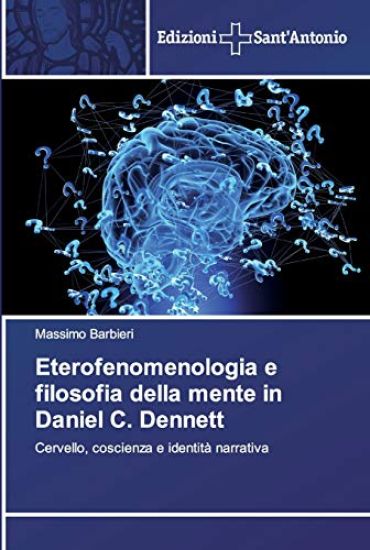
Eterofenomenologia e filosofia della mente in Daniel C. Dennett
Massimo Barbieri
Edizioni Sant'antonio
2019
pokkari
Il rapporto tra consapevolezza e cervello (Mind-Body Problem) centrale nella riflessione sul 'mentale' in filosofia e psicologia. L'influente filosofo Daniel Dennett, discutendo una serie di dati sperimentali ottenuti con particolari tecniche di indagine, critica la concezione di un 'Io' centrale, l'idea di identit personale unitaria caratterizzata da continuit della coscienza. Proponendo una metodologia interpretativa detta 'eterofenomenologia', come approccio oggettivo scientifico al mondo introspettivo del parlante (i fenomeni della sua esperienza soggettiva e la sua trama di autonarrazioni), designa il 'S ' come baricentro narrativo del corpo. E definisce 'atteggiamento intenzionale' l'attribuzione di credenze, giudizi, desideri e aspettative, al titolare degli atti linguistici, ritenuto come agente razionale che regola la scelta dei suoi comportamenti. Il rapporto tra l'eterofenomenologo e il soggetto narrante assimilabile alla relazione psicoterapeutica tra terapeuta e paziente. L'originale e singolare teoria di Dennett riveste specifico interesse per filosofi, psicologi, formatori e chiunque opera nel campo delle neuroscienze, della clinica e della didattica.

Addresses at the Inauguration of Daniel C. Gilman. As President of the Johns Hopkins University
Antigonos Verlag
2025
sidottu

Gilman, D: Addresses at the inauguration of Daniel C. Gilman
Antigonos Verlag
2024
sidottu
Irreduzibilität des Bewusstseins und dessen Implikationen bei David J. Chalmers und Daniel C. Dennett
Marc-Oliver Rauch
GRIN Verlag
2022
pokkari
Bachelorarbeit aus dem Jahr 2021 im Fachbereich Philosophie - Philosophie der Gegenwart, Note: 1,7, Ludwig-Maximilians-Universit t M nchen (Fakult t f r Philosophie), Sprache: Deutsch, Abstract: Die Frage nach dem Wesen des Bewusstseins ist eine der zentralen und auch verbl ffendsten Fragen der Menschheit, die wahrscheinlich seit der Zeit gestellt wird, als der Geist im Menschen erwacht ist und nach Erkenntnis rief. In der t glichen Erfahrung ist das Bewusstsein allgegenw rtig und subjektive Erlebnisse sind auf so einer direkten Art und Weise gegeben, dass niemand unter normalen Umst nden deren Existenz in Frage stellen w rde. Die Neurowissenschaften versuchen seit langer Zeit erfolglos, ein Korrelat des Bewusstseins im menschlichen Gehirn zu finden, und es ist fraglich, ob das jemals gelingen kann. Ren Descartes, sah das Bewusstsein gar nicht im Gehirn verortet, sondern postulierte eine res cogitans, eine eigene Substanz des denkenden Geistes, unabh ngig von der res extensa, der K rperwelt. David J. Chalmers, mit dessen 1996 erschienenen Buch "The Conscious Mind - In Search of a Fundamental Theory" diese Bachelorarbeit sich haupts chlich besch ftigt, fragt nach dem subjektiven Charakter des Bewusstseins und dessen Status in einer vor allem naturwissenschaftlich, physikalisch gepr gten Welt. Im Verlauf dieser Arbeit wird sich zeigen, dass die Existenz des Bewusstseins von Chalmers nicht in Frage gestellt wird, aber es schwierig ist, Bewusstsein zu fassen, da es eben nicht aus der Perspektive der dritten Person erkl rt werden kann. Mit Hilfe u. a. des Zombiearguments zeigt er, dass consciousness nicht global logisch ber dem Physikalischen superveniert, nicht auf das Physikalische reduzierbar ist und das der Physikalismus falsch ist. Er beschreibt einen "Naturalistic dualism", einen speziellen Eigenschaftsdualismus der consciousness als grundlegendes Prinzip "over and above" des Physikalismus betrachtet. Die Darstellung von David Chalmers negativer Theorie im Te
S? Tay Thu?t Ng? Th?n H?c Anh-Vi?t
Daniel C Owens; Ð?ng Th? Phuong Lan; Nguy?n Th? H?i Vân
Resource Leadership International
2022
sidottu