Kirjojen hintavertailu. Mukana 11 699 587 kirjaa ja 12 kauppaa.

Kirjahaku

Etsi kirjoja tekijän nimen, kirjan nimen tai ISBN:n perusteella.

1000 tulosta hakusanalla Daniel P. Mears

The Oxford Handbook of Evidence-Based Crime and Justice Policy

The Oxford Handbook of Evidence-Based Crime and Justice Policy

Daniel P. Mears

OXFORD UNIVERSITY PRESS INC
2024
sidottu
The need for and the threats to improved public policy are equally acute. Crime policy agenda continues to be driven by anecdotal evidence and political ideology, resulting in a patchwork of programs, policies, and practices. All-too-frequently, the need for them is uncertain, they rest on unclear theoretical foundations, they are implemented poorly, and their effectiveness in preventing or controlling crime, or furthering justice, is unknown. Putting research evidence at center-stage in political and policy decisions can go a long way to addressing this state of affairs by ensuring that the best available data informs decisions that affect the public good. Situated within this wider context, The Oxford Handbook of Evidence-Based Crime and Justice Policy showcases much of what is right with evidence-based crime and justice policy as well as confronts the challenges that it faces today and looking forward. Bringing together leading scholars and researchers in criminology, criminal justice, sociology, psychology, education, health, and the law, this handbook promotes new and productive ways to think about evidence-based policy, shows how research can contribute to and guide evidence-based policy in juvenile justice, criminal justice, and alternatives to system responses, and identifies strategies that can increase reliance on evidence-based policy. It is the most authoritative and scholarly source on research and experience on evidence-based policy as it applies to crime and justice in the United States and across the Western world.
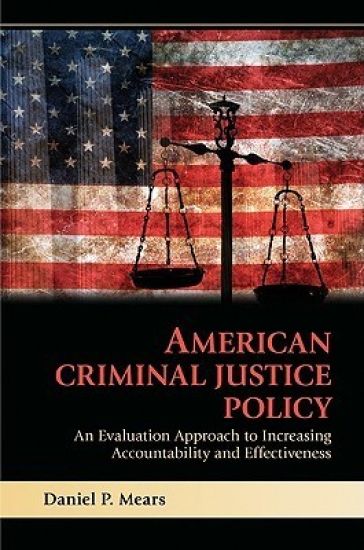
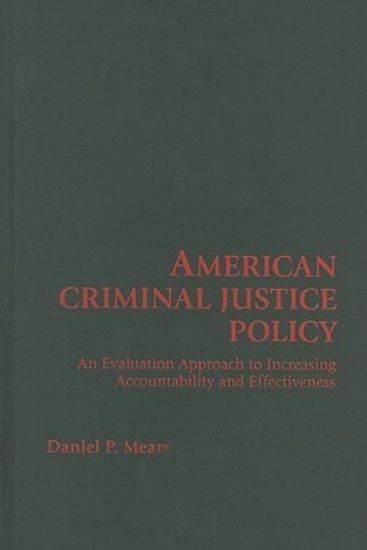
American Criminal Justice Policy

American Criminal Justice Policy

Daniel P. Mears

Cambridge University Press
2010
pokkari
American Criminal Justice Policy examines many of the most prominent criminal justice policies on the American landscape and finds that they fall well short of achieving the accountability and effectiveness that policymakers have advocated and that the public expects. The policies include mass incarceration, sex offender laws, supermax prisons, faith-based prisoner reentry programs, transfer of juveniles to adult court, domestic violence mandatory arrest laws, drug courts, gun laws, community policing, private prisons, and others. Optimistically, Daniel P. Mears argues that this situation can be changed through systematic incorporation of evaluation research into policy development, monitoring, and assessment. To this end, the book provides a clear and accessible discussion of five types of evaluation - needs, theory, implementation or process, outcome and impact, and cost-efficiency. It identifies how these can be used both to hold the criminal justice system accountable and to increase the effectiveness of crime control and crime prevention efforts.
American Criminal Justice Policy

American Criminal Justice Policy

Daniel P. Mears

Cambridge University Press
2010
sidottu
American Criminal Justice Policy examines many of the most prominent criminal justice policies on the American landscape and finds that they fall well short of achieving the accountability and effectiveness that policymakers have advocated and that the public expects. The policies include mass incarceration, sex offender laws, supermax prisons, faith-based prisoner reentry programs, transfer of juveniles to adult court, domestic violence mandatory arrest laws, drug courts, gun laws, community policing, private prisons, and others. Optimistically, Daniel P. Mears argues that this situation can be changed through systematic incorporation of evaluation research into policy development, monitoring, and assessment. To this end, the book provides a clear and accessible discussion of five types of evaluation - needs, theory, implementation or process, outcome and impact, and cost-efficiency. It identifies how these can be used both to hold the criminal justice system accountable and to increase the effectiveness of crime control and crime prevention efforts.
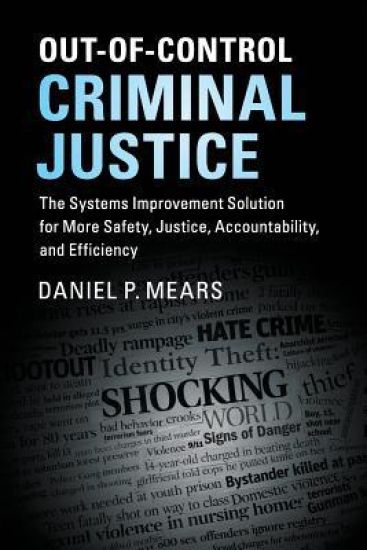
Out-of-Control Criminal Justice

Out-of-Control Criminal Justice

Daniel P. Mears

Cambridge University Press
2017
sidottu
Out-of-Control Criminal Justice shows that our system of criminal justice is broken; it is out of control. The author writes that a research-based strategy is needed that builds on the insights of those who work within criminal justice or are affected by it. Such a strategy must entail continuous evaluation and improvement, so that what works can be expanded and what does not can be eliminated. Out-of-Control Criminal Justice identifies how systems problems plague our criminal justice systems. It then presents a comprehensive strategy for bringing these systems under control to reduce crime, to increase justice and accountability, and to do so at less cost. The strategy can be used, too, to create greater responsiveness to victims and communities, effectiveness in reducing racial and ethnic disparities, and understanding of the causes and consequences of crime. After describing this new approach, the book identifies the tools needed to implement a systems solution to create a safer and more just society.
Out-of-Control Criminal Justice

Out-of-Control Criminal Justice

Daniel P. Mears

Cambridge University Press
2017
pokkari
Out-of-Control Criminal Justice shows that our system of criminal justice is broken; it is out of control. The author writes that a research-based strategy is needed that builds on the insights of those who work within criminal justice or are affected by it. Such a strategy must entail continuous evaluation and improvement, so that what works can be expanded and what does not can be eliminated. Out-of-Control Criminal Justice identifies how systems problems plague our criminal justice systems. It then presents a comprehensive strategy for bringing these systems under control to reduce crime, to increase justice and accountability, and to do so at less cost. The strategy can be used, too, to create greater responsiveness to victims and communities, effectiveness in reducing racial and ethnic disparities, and understanding of the causes and consequences of crime. After describing this new approach, the book identifies the tools needed to implement a systems solution to create a safer and more just society.
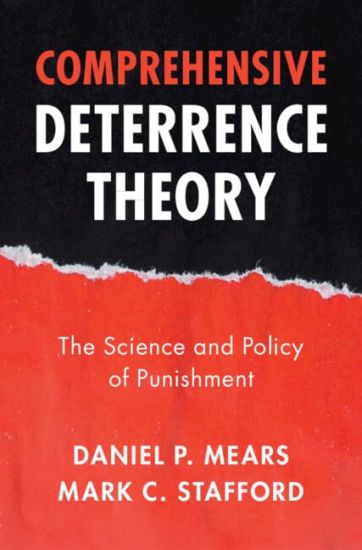
Comprehensive Deterrence Theory

Comprehensive Deterrence Theory

Daniel P. Mears; Mark C. Stafford

Cambridge University Press
2025
sidottu
First articulated more than 250 years ago, deterrence remains a central theory in criminology and continues to be the bedrock of the vast bulk of criminal justice policy. But few updates to the original theory of deterrence have been made, and crime-based punishment has only grown tougher, resulting in a historically unprecedented growth in imprisonment and an even greater reliance on deterrence to justify all kinds of punishment. These changes have occurred despite consistent or strong evidence to show that such punishments actually deter crime. In this book, renowned criminologists Daniel P. Mears and Mark C. Stafford provide an in-depth understanding of the classical account of deterrence theory, its limitations, and a reconceptualized version that establishes a more complete and powerful picture of how legal punishments can deter crime. Thorough and corrective, Comprehensive Deterrence Theory gives readers a new way of thinking about and understanding legal punishment.
Comprehensive Deterrence Theory

Comprehensive Deterrence Theory

Daniel P. Mears; Mark C. Stafford

Cambridge University Press
2025
pokkari
First articulated more than 250 years ago, deterrence remains a central theory in criminology and continues to be the bedrock of the vast bulk of criminal justice policy. But few updates to the original theory of deterrence have been made, and crime-based punishment has only grown tougher, resulting in a historically unprecedented growth in imprisonment and an even greater reliance on deterrence to justify all kinds of punishment. These changes have occurred despite consistent or strong evidence to show that such punishments actually deter crime. In this book, renowned criminologists Daniel P. Mears and Mark C. Stafford provide an in-depth understanding of the classical account of deterrence theory, its limitations, and a reconceptualized version that establishes a more complete and powerful picture of how legal punishments can deter crime. Thorough and corrective, Comprehensive Deterrence Theory gives readers a new way of thinking about and understanding legal punishment.
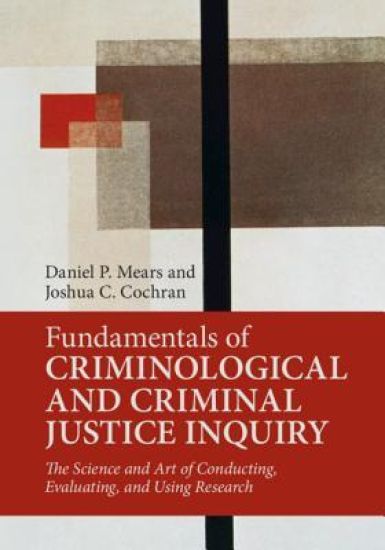
Fundamentals of Criminological and Criminal Justice Inquiry

Fundamentals of Criminological and Criminal Justice Inquiry

Daniel P. Mears; Joshua C. Cochran

Cambridge University Press
2019
sidottu
How to think about, conduct, and evaluate research is fundamental to the study and understanding of criminology and criminal justice. Students take methods, statistics, theory, and topic-specific classes, but they struggle to integrate what they learn and to see how it fits within the broader field of criminology and criminal justice research. This book directly tackles this problem by helping students to develop a 'researcher sensibility', and demonstrates how the 'nuts and bolts' of criminal justice research - including research design, theory, data, and analysis - are and can be combined. Relying on numerous real-world examples and illustrations, this book reveals how anyone can 'think like a researcher'. It reveals, too, why that ability is critical for being a savvy producer or consumer of criminological and criminal justice research.
Fundamentals of Criminological and Criminal Justice Inquiry

Fundamentals of Criminological and Criminal Justice Inquiry

Daniel P. Mears; Joshua C. Cochran

Cambridge University Press
2019
pokkari
How to think about, conduct, and evaluate research is fundamental to the study and understanding of criminology and criminal justice. Students take methods, statistics, theory, and topic-specific classes, but they struggle to integrate what they learn and to see how it fits within the broader field of criminology and criminal justice research. This book directly tackles this problem by helping students to develop a 'researcher sensibility', and demonstrates how the 'nuts and bolts' of criminal justice research - including research design, theory, data, and analysis - are and can be combined. Relying on numerous real-world examples and illustrations, this book reveals how anyone can 'think like a researcher'. It reveals, too, why that ability is critical for being a savvy producer or consumer of criminological and criminal justice research.
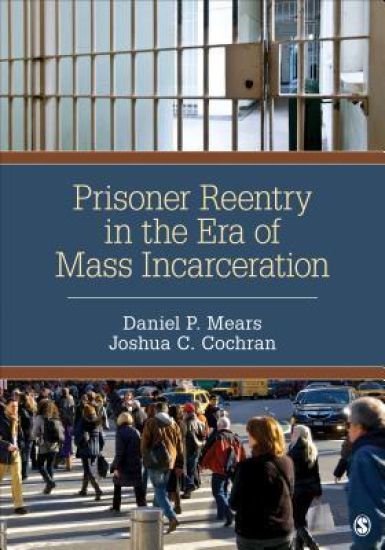
Prisoner Reentry in the Era of Mass Incarceration

Prisoner Reentry in the Era of Mass Incarceration

Daniel P. Mears; Joshua C. Cochran

SAGE Publications Inc
2015
nidottu
Understanding and Improving Prisoner Reentry Outcomes "Mass imprisonment and mass prisoner reentry are two faces of the same coin. In a comprehensive and penetrating analysis, Daniel Mears and Joshua Cochran unravel the causes of this pressing problem, detail the challenges confronting released prisoners, and provide an evidence-based blueprint for successfully reintegrating offenders into the community. Scholarly yet accessible, this volume is essential reading—whether by academics or students—for anyone wishing to understand the chief policy issue facing American corrections." Francis T. Cullen Distinguished Research Professor, University of Cincinnati Prisoner Reentry is an engaging and comprehensive examination of prisoner reentry and how to improve public safety, well-being, and justice in the "era of mass incarceration." Renowned authors Daniel P. Mears and Joshua C. Cochran investigate historical trends in incarceration and punishment policy, the salience of in-prison and post-prison contexts and experiences for reentry, and the importance of understanding group differences in offending, punishment, and social context. Using extensive reliance on both theory and empirical research, the authors identify how reentry reflects criminal justice policy in America and, at the same time, has profound implications for crime prevention and justice. Readers will develop a diverse foundation for current policies, identify the implications of reentry for families, community, and society at large, and gain a conceptual and empirical toolkit for analyzing and improving the lives of those released from prison.
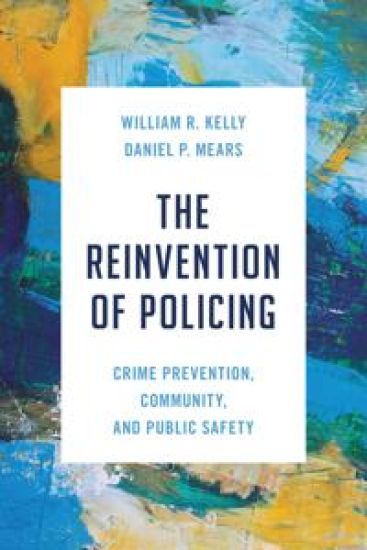
The Reinvention of Policing

The Reinvention of Policing

William R. Kelly; Daniel P. Mears

BLOOMSBURY PUBLISHING PLC
2023
sidottu
Contemporary policing is in crisis, a situation that has led to persistent calls to reform it. Unfortunately, many proposed solutions focus on piecemeal changes that ignore a fundamental problem—policing relies on a largely reactive approach that does not in any systematic or comprehensive way focus on crime prevention. Most of what the police do, such as responding to 911 calls for service and employing directed patrols or hot spots policing, fails to address the causes of crime. Compounding this problem is the absence of any institution or agency charged with prioritizing the prevention of crime and for ensuring that police efforts support this goal.Kelly and Mears argue that a better strategy exists, one that places responsibility on the police and other governmental and non-governmental agencies and organizations for truly preventing crime. Why, historically, did crime prevention not take hold and infuse policing? One reason is a design flaw—the vision of policing centered too much on surveillance and too little on efforts that target the diverse causes of crime. The end result? Contemporary policing lacks any institutionalized commitment or systematic approach to crime prevention. It is designed to fail.The Reinvention of Policing diagnoses this problem, along with many others, inAmerican policing. Then the authors turn to solutions. First, they call for a great many reforms to existing practices. Second, they call for a reinvention of the design and focus of policing and, concomitantly, the way that states, cities, and towns approach public safety. This change presents special challenges, but it is the only way to create an appreciable impact in reducing crime and improving justice.
The Reinvention of Policing

The Reinvention of Policing

William R. Kelly; Daniel P. Mears

BLOOMSBURY PUBLISHING PLC
2023
nidottu
Contemporary policing is in crisis, a situation that has led to persistent calls to reform it. Unfortunately, many proposed solutions focus on piecemeal changes that ignore a fundamental problem—policing relies on a largely reactive approach that does not in any systematic or comprehensive way focus on crime prevention. Most of what the police do, such as responding to 911 calls for service and employing directed patrols or hot spots policing, fails to address the causes of crime. Compounding this problem is the absence of any institution or agency charged with prioritizing the prevention of crime and for ensuring that police efforts support this goal.Kelly and Mears argue that a better strategy exists, one that places responsibility on the police and other governmental and non-governmental agencies and organizations for truly preventing crime. Why, historically, did crime prevention not take hold and infuse policing? One reason is a design flaw—the vision of policing centered too much on surveillance and too little on efforts that target the diverse causes of crime. The end result? Contemporary policing lacks any institutionalized commitment or systematic approach to crime prevention. It is designed to fail.The Reinvention of Policing diagnoses this problem, along with many others, inAmerican policing. Then the authors turn to solutions. First, they call for a great many reforms to existing practices. Second, they call for a reinvention of the design and focus of policing and, concomitantly, the way that states, cities, and towns approach public safety. This change presents special challenges, but it is the only way to create an appreciable impact in reducing crime and improving justice.
Cloudless Mind: Conversations on Buddhahood with Daniel P Brown, PhD
Every Wednesday Night, for over six years, Dan Brown answered questions by students and colleagues about positive and negative experiences in life and mind, integrating the perspectives of both Western psychology and Eastern traditions of spiritual practice -- most notably Vajrayana Buddhism, Dzogchen, and then the Bon tradition. While Dan had no idea what questions might be asked on any given night, he answered them often with rather astonishing detail, while also making his answer relevant and helpful to the person asking the question. The basis of Dan's knowledge and communication was not from scholarship. His history of treating people psychologically for over 40 years, with a long-time focus on trauma, as well as teaching Buddhist meditation with a high Lama appointed to teach with him by H.H. the Dalai Lama for 15 years, and then on his own using the style of "pointing out" while teaching, and with oversight by living lineage masters, for another 30 or more, gave him a basis of understanding founded in direct experience, in relationship to others, both as a healer and a teacher.
Cloudless Mind- Volume II: Conversations on Buddhahood with Daniel P Brown, PhD
Every Wednesday Night, for over six years, Dan Brown answered questions by students and colleagues about positive and negative experiences in life and mind, integrating the perspectives of both Western psychology and Eastern traditions of spiritual practice -- most notably Vajrayana Buddhism, Dzogchen, and then the Bon tradition. While Dan had no idea what questions might be asked on any given night, he answered them often with rather astonishing detail, while also making his answer relevant and helpful to the person asking the question. The basis of Dan's knowledge and communication was not from scholarship. His history of treating people psychologically for over 40 years, with a long-time focus on trauma, as well as teaching Buddhist meditation with a high Lama appointed to teach with him by H.H. the Dalai Lama for 15 years, and then on his own using the style of "pointing out" while teaching, and with oversight by living lineage masters, for another 30 or more, gave him a basis of understanding founded in direct experience, in relationship to others, both as a healer and a teacher.
Cloudless Mind- Volume III: Conversations on Buddhahood with Daniel P Brown, PhD
Every Wednesday Night, for over six years, Dan Brown answered questions by students and colleagues about positive and negative experiences in life and mind, integrating the perspectives of both Western psychology and Eastern traditions of spiritual practice -- most notably Vajrayana Buddhism, Dzogchen, and then the Bon tradition. While Dan had no idea what questions might be asked on any given night, he answered them often with rather astonishing detail, while also making his answer relevant and helpful to the person asking the question. The basis of Dan's knowledge and communication was not from scholarship. His history of treating people psychologically for over 40 years, with a long-time focus on trauma, as well as teaching Buddhist meditation with a high Lama appointed to teach with him by H.H. the Dalai Lama for 15 years, and then on his own using the style of "pointing out" while teaching, and with oversight by living lineage masters, for another 30 or more, gave him a basis of understanding founded in direct experience, in relationship to others, both as a healer and a teacher.