Kirjojen hintavertailu. Mukana 11 342 296 kirjaa ja 12 kauppaa.

Kirjahaku

Etsi kirjoja tekijän nimen, kirjan nimen tai ISBN:n perusteella.

1000 tulosta hakusanalla Daniel P. Todes

Ivan Pavlov

Ivan Pavlov

Daniel P. Todes

OXFORD UNIVERSITY PRESS INC
2023
nidottu
In this book, Daniel P. Todes provides concise introduction to the life and science of the great Russian physiologist Ivan Pavlov (1849-1936). Todes weaves together Pavlov's life, values, context, and science by focusing upon his quest to understand the psyche and the "torments of our consciousness". This introduction follows the origins and maturation of Pavlov's quest from his early life in a priestly family in provincial Riazan, to his struggles and late professional success in the glittering capital of St. Petersburg, through the cataclysmic destruction of his world during the Bolshevik seizure of power and civil war of 1917-1921, to the rebuilding of his life in his 70s as a "prosperous dissident" during the Leninist 1920s, and his success and personal torments in 1929-1936 during the industrialization, cultural revolution, and terror of Stalin times. Beyond a basic biography, Todes devotes particular attention to Pavlov's Nobel Prize-winning research on digestion (1891-1903) and his iconic studies of conditional reflexes and higher nervous activity (1903-1936), as well as his experiments with dogs. Fundamentally reinterpreting Pavlov's famous research on conditional reflexes, Todes shows that Pavlov was not a behaviorist, did not use a bell, and was uninterested in training dogs. The Russian scientist sought to explain not merely external behaviors, but the emotional and intellectual life of animals and humans. Furthermore, this iconic "objectivist" was a profoundly anthropomorphic thinker whose science was suffused with his own experiences and values. Exploring the two unpublished manuscripts upon which Pavlov was working when he died, Todes shows the importance of his little-known experiments on chimps and explores his final thoughts about the relationship of science, Christianity, and Bolshevism.

Darwin without Malthus

Darwin without Malthus

Daniel P. Todes

Oxford University Press Inc
1989
sidottu
Nineteenth century Russian intellectuals perceived a Malthusian bias in Darwin's theory of evolution by means of natural selection. They identified that bias with Darwin's concept of the "struggle for existence" and his emphasis upon the evolutionary role of overpopulation and intraspecific conflict. In this book, Todes documents a historical Russian critique of Darwin's "Malthusian error", explores its relationship to such scientific work as Mechnikov's phagocytic theory, Korzhinskii's mutation theory and Kropotkin's theory of mutual aid, and finds its origins in Russia's political economy and in the very nature of its land and climate. This is the first book in English to examine in detail the scientific work of nineteenth century Russian evolutionists, and the first in any language to explore the relationship of Russian theories to the economic, political, and natural circumstances in which they were generated. It combines a broad scope (dealing with political figures and cultural movements) with a close analysis of scientific work on a range of topics.
Ivan Pavlov

Ivan Pavlov

Daniel P. Todes

Oxford University Press Inc
2014
sidottu
This is a definitive, deeply researched biography of Russian physiologist Ivan Pavlov (1849-1936) and is the first scholarly biography to be published in any language. The book is Todes's magnum opus, which he has been working on for some twenty years. Todes makes use of a wealth of archival material to portray Pavlov's personality, life, times, and scientific work. Combining personal documents with a close reading of scientific texts, Todes fundamentally reinterprets Pavlov's famous research on conditional reflexes. Contrary to legend, Pavlov was not a behaviorist (a misimpression captured in the false iconic image of his "training a dog to salivate to the sound of a bell"); rather, he sought to explain not simply external behaviors, but the emotional and intellectual life of animals and humans. This iconic "objectivist" was actually a profoundly anthropomorphic thinker whose science was suffused with his own experiences, values, and subjective interpretations. This book is also a traditional "life and times" biography that weaves Pavlov into some 100 years of Russian history-particularly that of its intelligentsia--from the emancipation of the serfs to Stalin's time. Pavlov was born to a family of priests in provincial Ryazan before the serfs were emancipated, made his home and professional success in the glittering capital of St. Petersburg in late imperial Russia, suffered the cataclysmic destruction of his world during the Bolshevik seizure of power and civil war of 1917-1921, rebuilt his life in his 70s as a "prosperous dissident" during the Leninist 1920s, and flourished professionally as never before in 1929-1936 during the industrialization, revolution, and terror of Stalin. Todes's story of this powerful personality and extraordinary man is based upon interviews with surviving coworkers and family members (along with never-before-analyzed taped interviews from the 1960s and 1970s), examination of hundreds of scientific works by Pavlov and his coworkers, and close analysis of materials from some twenty-five archives. The documents range from the records of his student years at Ryazan Seminary to the transcripts of the Communist Party cells in his labs, and from his scientific manuscripts and notebooks to his political speeches; they include revealing love letters to his future wife and correspondence with hundreds of lay people, scholars, artists, and Communist Party leaders; and unpublished memoirs by many coworkers, his daughter, his wife, and his lover.
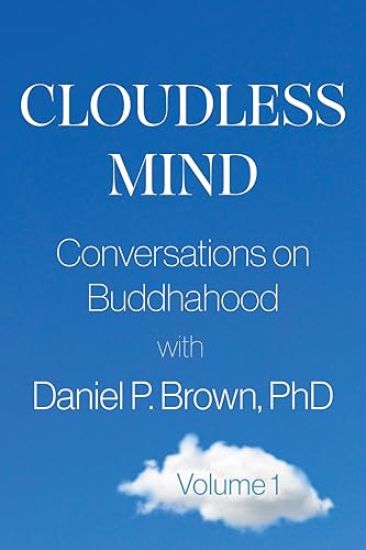
Cloudless Mind: Conversations on Buddhahood with Daniel P Brown, PhD
Every Wednesday Night, for over six years, Dan Brown answered questions by students and colleagues about positive and negative experiences in life and mind, integrating the perspectives of both Western psychology and Eastern traditions of spiritual practice -- most notably Vajrayana Buddhism, Dzogchen, and then the Bon tradition. While Dan had no idea what questions might be asked on any given night, he answered them often with rather astonishing detail, while also making his answer relevant and helpful to the person asking the question. The basis of Dan's knowledge and communication was not from scholarship. His history of treating people psychologically for over 40 years, with a long-time focus on trauma, as well as teaching Buddhist meditation with a high Lama appointed to teach with him by H.H. the Dalai Lama for 15 years, and then on his own using the style of "pointing out" while teaching, and with oversight by living lineage masters, for another 30 or more, gave him a basis of understanding founded in direct experience, in relationship to others, both as a healer and a teacher.
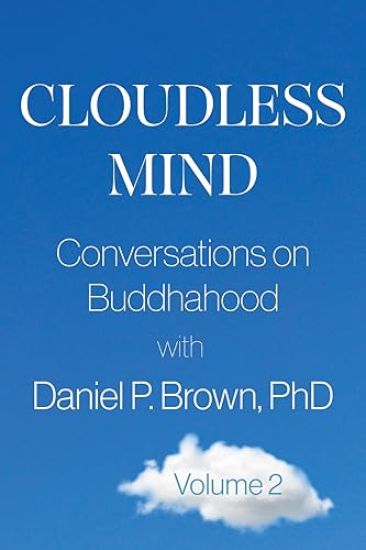
Cloudless Mind- Volume II: Conversations on Buddhahood with Daniel P Brown, PhD
Every Wednesday Night, for over six years, Dan Brown answered questions by students and colleagues about positive and negative experiences in life and mind, integrating the perspectives of both Western psychology and Eastern traditions of spiritual practice -- most notably Vajrayana Buddhism, Dzogchen, and then the Bon tradition. While Dan had no idea what questions might be asked on any given night, he answered them often with rather astonishing detail, while also making his answer relevant and helpful to the person asking the question. The basis of Dan's knowledge and communication was not from scholarship. His history of treating people psychologically for over 40 years, with a long-time focus on trauma, as well as teaching Buddhist meditation with a high Lama appointed to teach with him by H.H. the Dalai Lama for 15 years, and then on his own using the style of "pointing out" while teaching, and with oversight by living lineage masters, for another 30 or more, gave him a basis of understanding founded in direct experience, in relationship to others, both as a healer and a teacher.
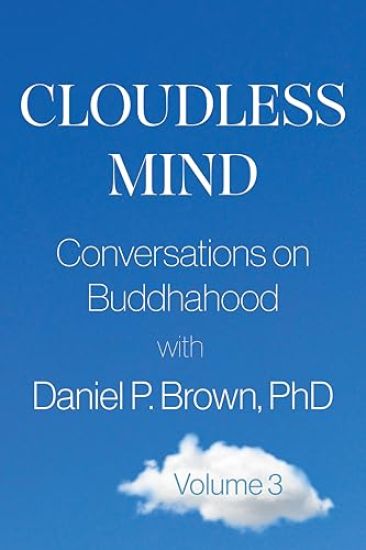
Cloudless Mind- Volume III: Conversations on Buddhahood with Daniel P Brown, PhD
Every Wednesday Night, for over six years, Dan Brown answered questions by students and colleagues about positive and negative experiences in life and mind, integrating the perspectives of both Western psychology and Eastern traditions of spiritual practice -- most notably Vajrayana Buddhism, Dzogchen, and then the Bon tradition. While Dan had no idea what questions might be asked on any given night, he answered them often with rather astonishing detail, while also making his answer relevant and helpful to the person asking the question. The basis of Dan's knowledge and communication was not from scholarship. His history of treating people psychologically for over 40 years, with a long-time focus on trauma, as well as teaching Buddhist meditation with a high Lama appointed to teach with him by H.H. the Dalai Lama for 15 years, and then on his own using the style of "pointing out" while teaching, and with oversight by living lineage masters, for another 30 or more, gave him a basis of understanding founded in direct experience, in relationship to others, both as a healer and a teacher.
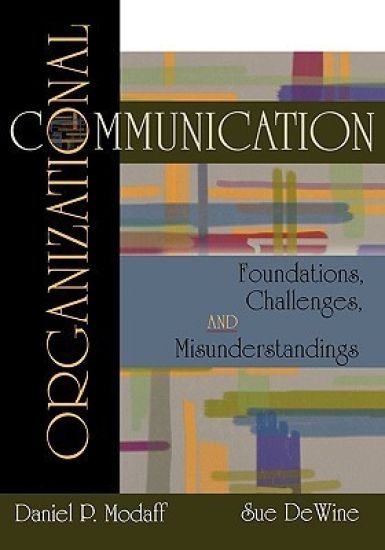
Organizational Communication

Organizational Communication

Daniel P. Modaff; Sue DeWine

Oxford University Press Inc
2002
sidottu
Modaff and DeWine's new undergraduate text, Organizational Communication: Foundations, Challenges, and Misunderstandings, offers a unique perspective on the field of internal organizational communication. The authors review the foundational material, but intersperse the discussions with excerpts from interviews conducted with over 60 leaders and workers in a variety of organizations. A central feature of the text is the concept of misunderstandings, which highlights the idea that organizations are inherently problematic. This focus positions communication at the center of organizational life, and shows the reader how and why communication can serve to create and resolve misunderstandings of all types. The authors advance a model, the Communicative Organization, which allows the reader to see the significance of communication to every aspect of organizational functioning. Benefits to instructors and students include: * The use of real-life problems as told by organizational leaders and workers to illustrate the material discussed in every chapter, which provides an easy mechanism for starting class discussions. * Chapters on realistic recruitment and organizational socialization, which are not typically found in other introductory organizational communication textbooks. * Integration of the concepts of gender and diversity throughout the text. * Discussions of current applications of theories and concepts as students have or will experience them. * A postscript that ties all of the material from the text together. * A writing style that is student-centered yet sufficiently challenging. * A dedicated website (created by Derek Lane, University of Kentucky, Lexington) to support the text is available at http://www.uky.edu/~drlane/orgcomm. It includes chapter outlines, supplemental content, and suggested course syllabi. The site greatly facilitates use of the text for students. A PDF of corrected pages of the subject index from the first printing is also available at this site.