Kirjahaku
Etsi kirjoja tekijän nimen, kirjan nimen tai ISBN:n perusteella.
1000 tulosta hakusanalla Darrell John Kitchener
Many Indonesian landscape artists in the early part of the twentieth century were clearly influenced by the somewhat romantic style landscape paintings of expatriate Europeans and Japanese living in Indonesia. However, there were also a number of indigenous and Indo- European realist landscape painters who, from the early to mid-twentieth century, developed a style commonly referred to as Mooi Indie. This book has its genesis in trips to England and southern Europe taken in the 1970s where the author experienced, and was attracted to, the beauty and technical skills of eighteenth- to mid-nineteenth century naturalist English landscape school painters and the derivative French Barbizon plein - air school. Although influenced by the above schools, Mooi Indie painters had their own unique subject matter, perspective, brush strokes and palette which make their work instantly recognizable and eminently worthy of respect. The largest concentration of Mooi Indie painters was in Bandung, West Java. Apart from Basuki Abdullah, Mas Pirngadie, Suriosubroto and Sukardji, most of their work is little known. One family living at Bandung included three superb Mooi Indie painters of which Basar Idjonati was the most distinguished.
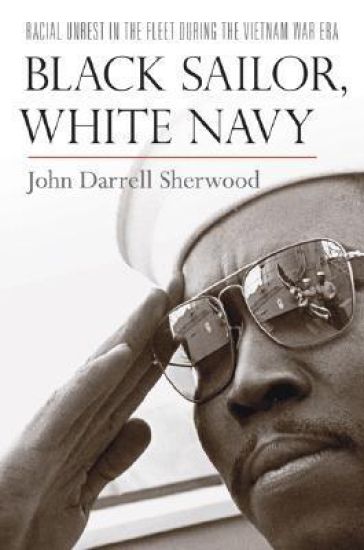
It is hard to determine what dominated more newspaper headlines in America during the 1960s and early '70s: the Vietnam War or America's turbulent racial climate. Oddly, however, these two pivotal moments are rarely examined in tandem. John Darrell Sherwood has mined the archives of the U.S. Navy and conducted scores of interviews with Vietnam veterans — both black and white — and other military personnel to reveal the full extent of racial unrest in the Navy during the Vietnam War era, as well as the Navy's attempts to control it. During the second half of the Vietnam War, the Navy witnessed some of the worst incidents of racial strife ever experienced by the American military. Sherwood introduces us to fierce encounters on American warships and bases, ranging from sit-down strikes to major race riots. The Navy's journey from a state of racial polarization to one of relative harmony was not an easy one, and Black Sailor, White Navy focuses on the most turbulent point in this road: the Vietnam War era.
Sherwood recounts the story of American Air Force pilots in the Korean War and the development of a lasting fighter-pilot culture The United States Air Force fought as a truly independent service for the first time during the Korean War. Ruling the skies in many celebrated aerial battles, even against the advanced Soviet MiG-15, American fighter pilots reigned supreme. Yet they also destroyed virtually every major town and city in North Korea, demolished its entire crop irrigation system and killed close to one million civilians. The self-confidence and willingness to take risks which defined the lives of these men became a trademark of the fighter pilot culture, what author John Darrell Sherwood here refers to as the flight suit attitude. In Officers in Flight Suits, John Darrell Sherwood takes a closer look at the flight suit officer's life by drawing on memoirs, diaries, letters, novels, unit records, and personal papers as well as interviews with over fifty veterans who served in the Air Force in Korea. Tracing their lives from their training to the flight suit culture they developed, the author demonstrates how their unique lifestyle affected their performance in battle and their attitudes toward others, particularly women, in their off-duty activities.
View the Table of Contents. Read the Prologue. "An exceptionally well written, well documented, fast-moving account."?Washington Times "This is a book written on multiple levels, and well worth reading."?M.S. Naval Institute Proceedings "This book is a welcome addition to the history of naval aviation and fills a much-needed void by detailing the later years of the Vietnam naval air campaign."?Sea Power "Makes for lively, vivid, and informative reading. I would include it...on my list of the top ten books on the air war in Vietnam." ?Air Power History "John Sherwood has done a fine job in giving us a first-rate account of a confusing but critically important period in Naval Aviation history."?The Hook "As a collection of individual studies and 'war stories,' Afterburner should find an interested readership." ?Military History "With a 45-degree dive angle set, 450 knots of airspeed building, and my altimeter unwinding like crazy, my scan went rapidly between the bombsight and flight instruments. . . . When I looked over my shoulder at the target, I could see where the bombs had hit and exploded." Through stories like this diary entry of a fighter pilot, John Darrell Sherwood brings forth the personal accounts of 21 naval and marine aviators in this chronicle of the second half of the Navy's air war over Vietnam. Despite spending over 200 billion dollars and dropping almost 8 million tons of bombs on Southeast Asia, the U.S. was unable to score a definitive victory in the air war. Afterburner takes us inside the day-to-day operations of the air war, particularly during the most intense year of the campaign: 1972. During that year, North Vietnam launched the first large-scale conventional attacks on strongholds in South Vietnam. Sherwood shows how the U.S. fought back with some of the most innovative air campaigns in its history, including Nixon's Linebacker bombings and the Navy's mining operation in Haiphong Harbor. From duels with enemy MiGs to the experiences of Commander C. Ronald Polfer, who became the voice of reason among American POWs in the Hanoi Hilton's Room 5, the detailed stories in Afterburner make these historical events come to life. Sherwood compiles and analyzes an incredible breadth of information about the details of each of the Navy's operations during the air war and then relates the key parts of the narrative through the eyes of an pilot or flight officer involved in each action. Through tales of courage and fear, triumph and horror, Sherwood reveals the lives of common aircrews who performed extraordinary service. Their experiences illustrate the personal nature of war?even from the air?and show that the air war in Vietnam may have begun as a slow burn, but by 1972, it was more intense than an F-4 afterburner.
A Unified Program in Science, Health and Safety: The MacMillan Science Life Series, Book 1
John Darrell Barnard; Celia Stendler; Benjamin Spock
Literary Licensing, LLC
2012
nidottu
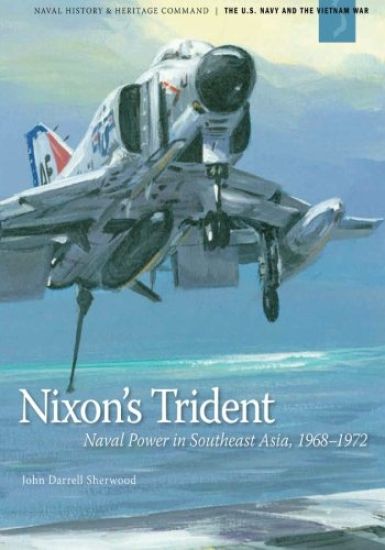
Nixon's Trident: Naval Power in Southeast Asia, 1968-1972
John Darrell Sherwood
Createspace Independent Publishing Platform
2013
nidottu
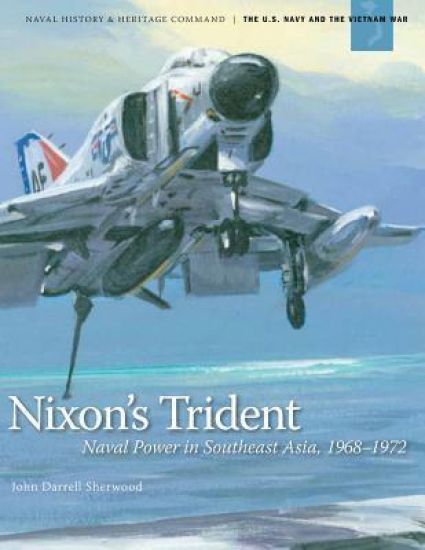
Nixon's Trident: Naval Power in Southeast Asia, 1968-1972
John Darrell Sherwood; Department of the Navy
Createspace Independent Publishing Platform
2014
nidottu
On 31 January 1968, the North Vietnamese Army (NVA) and Viet Cong (VC) guerrillas launched a spectacular offensive in South Vietnam.Five of the country's six major cities, 36 of its 44provincial capitals, and 64 of its 245 district capitals were attacked that day. A sapper squad even penetrated the grounds of the U.S. Embassyin Saigon. The media broadcast images ofcombat at the embassy and in other key cities, causing tremendous psychological shock forthe American viewing public. Ultimately, U.S. and Army of the Republic of Vietnam (ARVN) troops killed or captured most of the enemy combatantsin Saigon in the next few days. Allied troopsquelled most of the fighting in the rest ofthe country by March, killing over 58,000 NVAand VC troops in the process. The ARVNsuffered 4,954 dead, and the Americans, 3,895. It would take North Vietnam four years to rebuild a force capable of mounting a similar offensive, and the Viet Cong never recovered
John Walker is one of Canada's most prolific and important documentary filmmakers and is known for his many thoughtful, personally inflected films. His masterwork, Passage, centres on Sir John Franklin's failed expedition to find the final link of the Northwest Passage connecting the Atlantic and Pacific oceans through the Canadian Arctic. It also gives us the story of John Rae, the Scottish explorer who discovered the fate of Franklin and the final link in the passage, but was left to the margins of history. Walker's film brings to this story a layering of dramatic action and behind-the-scenes documentary footage that build tension between the story of the past and interpretations of the present. Darrell Varga provides a close analysis of Passage, situating it within Walker's rich body of work and the Canadian documentary tradition. Varga illuminates how the film can be viewed through the lens of Harold Innis's theories of communication and culture, opening up the work of this great Canadian political economist to film studies.
HBR's 10 Must Reads on Change Management, Vol. 2 (with bonus article "Accelerate!" by John P. Kotter)
Harvard Business Review; John P. Kotter; Tim Brown; Roger L. Martin; Darrell K. Rigby
Harvard Business Review Press
2021
pokkari
Lead change amid constant turbulence and disruption.Get more of the ideas you want, from the authors you trust, with HBR's 10 Must Reads on Change Management (Vol. 2). We've combed through hundreds of Harvard Business Review articles and selected the most important ones to help you successfully transform your organization.With insights from leading experts including John Kotter, Tim Brown, and Roger Martin, this book will inspire you to:Master the eight accelerators of strategic changeTurn your culture into a catalyst for transformationUse your network ties to win over resistersApply design thinking to secure buy-in Scale agile practices across your organizationGet reorgs rightAvoid pursuing the wrong changesThis collection of articles includes "What Everyone Gets Wrong About Change Management," by N. Anand and Jean-Louis Barsoux; "Cultural Change That Sticks," by Jon R. Katzenbach, Ilona Ste?en, and Caroline Kronley; "Culture Is Not the Culprit," by Jay W. Lorsch and Emily McTague; "The Network Secrets of Great Change Agents," by Julie Battilana and Tiziana Casciaro; "Design for Action," by Tim Brown and Roger L. Martin; "Agile at Scale," by Darrell K. Rigby, Je? Sutherland, and Andy Noble; "The Merger Dividend," by Ron Ashkenas, Suzanne Francis, and Rick Heinick; "Getting Reorgs Right," by Stephen Heidari-Robinson and Suzanne Heywood; and "Your Workforce Is More Adaptable Than You Think," by Joseph B. Fuller, Judith K. Wallenstein, Manjari Raman, and Alice de Chalendar.HBR's 10 Must Reads paperback series is the definitive collection of books for new and experienced leaders alike. Leaders looking for the inspiration that big ideas provide, both to accelerate their own growth and that of their companies, should look no further. HBR's 10 Must Reads series focuses on the core topics that every ambitious manager needs to know: leadership, strategy, change, managing people, and managing yourself. Harvard Business Review has sorted through hundreds of articles and selected only the most essential reading on each topic. Each title includes timeless advice that will be relevant regardless of an ever-changing business environment.
HBR's 10 Must Reads on Change Management, Vol. 2 (with bonus article "Accelerate!" by John P. Kotter)
Harvard Business Review; John P. Kotter; Tim Brown; Roger L. Martin; Darrell K. Rigby
Harvard Business Review Press
2021
sidottu
Lead change amid constant turbulence and disruption.Get more of the ideas you want, from the authors you trust, with HBR's 10 Must Reads on Change Management (Vol. 2). We've combed through hundreds of Harvard Business Review articles and selected the most important ones to help you successfully transform your organization.With insights from leading experts including John Kotter, Tim Brown, and Roger Martin, this book will inspire you to:Master the eight accelerators of strategic changeTurn your culture into a catalyst for transformationUse your network ties to win over resistersApply design thinking to secure buy-in Scale agile practices across your organizationGet reorgs rightAvoid pursuing the wrong changesThis collection of articles includes "What Everyone Gets Wrong About Change Management," by N. Anand and Jean-Louis Barsoux; "Cultural Change That Sticks," by Jon R. Katzenbach, Ilona Ste?en, and Caroline Kronley; "Culture Is Not the Culprit," by Jay W. Lorsch and Emily McTague; "The Network Secrets of Great Change Agents," by Julie Battilana and Tiziana Casciaro; "Design for Action," by Tim Brown and Roger L. Martin; "Agile at Scale," by Darrell K. Rigby, Je? Sutherland, and Andy Noble; "The Merger Dividend," by Ron Ashkenas, Suzanne Francis, and Rick Heinick; "Getting Reorgs Right," by Stephen Heidari-Robinson and Suzanne Heywood; and "Your Workforce Is More Adaptable Than You Think," by Joseph B. Fuller, Judith K. Wallenstein, Manjari Raman, and Alice de Chalendar.HBR's 10 Must Reads paperback series is the definitive collection of books for new and experienced leaders alike. Leaders looking for the inspiration that big ideas provide, both to accelerate their own growth and that of their companies, should look no further. HBR's 10 Must Reads series focuses on the core topics that every ambitious manager needs to know: leadership, strategy, change, managing people, and managing yourself. Harvard Business Review has sorted through hundreds of articles and selected only the most essential reading on each topic. Each title includes timeless advice that will be relevant regardless of an ever-changing business environment.
Many legendary men have been associated with University of Texas football, but for most fans one man will always be "Coach"—Darrell K Royal. One of the most successful coaches in college football, Royal led the Longhorns to three national championships and eleven Southwest Conference titles during his twenty years (1956-1976) as UT's head coach. He coached some of the Horns' best players, including future Heisman Trophy winner Earl Campbell, and was named NCAA Coach of the Year three times. In 1969, an ABC-TV poll of sportswriters called Royal the Coach of the Decade. In 1996 UT recognized his unrivalled contribution to Longhorn football when it designated Memorial Stadium the Darrell K Royal-Texas Memorial Stadium in his honor. Now, for the first time, Darrell Royal tells his life story in his own words. He remembers growing up poor in Hollis, Oklahoma, during the Great Depression, and describes playing college football for the University of Oklahoma and then coaching a succession of college teams and one pro team before settling in at UT for the rest of his career. He gives a fascinating, behind-the-scenes look at Longhorn football during his time-recruiting strategies, coaching techniques, the famous wishbone offense, unforgettable wins and losses, and his impressions of rival teams and coaches, including Bear Bryant of Texas A&M and Alabama and Frank Broyles of Arkansas. Proving that he's still the same straight shooter as always, Darrell Royal even discusses some of the controversies he's dealt with, including early charges of racism in the UT football program, the impact of Title IX on college athletics, his association with Jim Bob Moffett and the Freeport-MacMoRan Corporation, his longtime friendship with Willie Nelson, and his decision to retire from coaching. But whether he's describing the tough times he's faced professionally and personally or the rewards of being UT's most beloved coach and goodwill ambassador, Royal maintains the same plainspoken honesty and sense of honor that—as much as the winning seasons—have made him a legend to so many people.
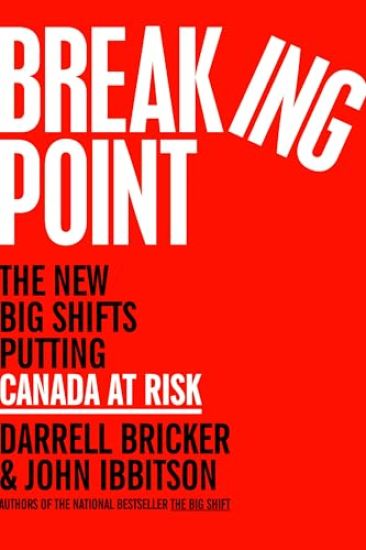
Breaking Point: The New Big Shifts Putting Canada at Risk
Darrell Bricker; John Ibbitson
Signal Books
2025
sidottu
From the authors of The Big Shift and Empty Planet, a timely and provocative exploration of the seismic forces reshaping Canada's political, cultural, and economic landscape. Darrell Bricker and John Ibbitson's explosive new polemic, arrives in the midst of the greatest political crisis Canada has ever faced. The country stands at risk. Even before Donald Trump returned to the U.S. presidency, brandishing tariffs and threats of annexation, Canada had started to crack. Year after year of decisions deferred, problems ignored, and cans kicked carelessly down the road have created dangerous fissures. Stifling regulations drag down the economy. Younger people feel angry and alienated by dizzying housing prices and gig jobs. Regional tensions threaten unity in both Quebec and the Prairies. The immigration system is broken. And Canada stands alone, having failed to pay the cost of defending itself. Canadians elected a former bank governor to fix all this. But can the Liberals get us out of the mess they helped get us into? What future awaits the progressive and conservative coalitions? Will the Laurentian elites continue to misgovern, or are there alternatives? The country is at a breaking point. Canadians must act to save it before they lose it. Provocative, urgent, and unapologetically candid, Breaking Point will ignite debate, dominate political discourse, and become the definitive guide to understanding what is shaping up to be one of the most turbulent eras in Canadian history.
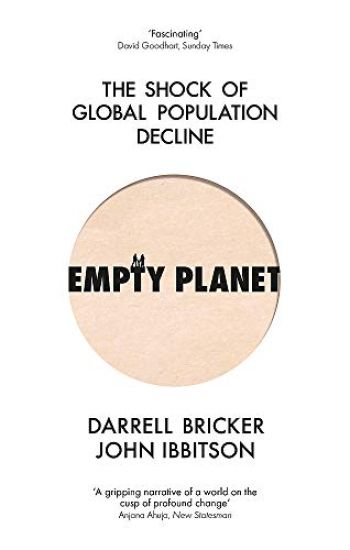
**A SUNDAY TIMES MUST-READ**'Riveting and vitally important' - Steven Pinker'A gripping narrative of a world on the cusp of profound change' - Anjana Ahuja, New StatesmanEmpty Planet offers a radical, provocative argument that the global population will soon begin to decline, dramatically reshaping the social, political and economic landscape.For half a century, statisticians, pundits and politicians have warned that a burgeoning planetary population will soon overwhelm the earth's resources. But a growing number of experts are sounding a different kind of alarm. Rather than growing exponentially, they argue, the global population is headed for a steep decline. Throughout history, depopulation was the product of catastrophe: ice ages, plagues, the collapse of civilizations. This time, however, we're thinning ourselves deliberately, by choosing to have fewer babies than we need to replace ourselves. In much of the developed and developing world, that decline is already underway, as urbanisation, women's empowerment, and waning religiosity lead to smaller and smaller families. In Empty Planet, Ibbitson and Bricker travel from South Florida to Sao Paulo, Seoul to Nairobi, Brussels to Delhi to Beijing, drawing on a wealth of research and firsthand reporting to illustrate the dramatic consequences of this population decline - and to show us why the rest of the developing world will soon join in. They find that a smaller global population will bring with it a number of benefits: fewer workers will command higher wages; good jobs will prompt innovation; the environment will improve; the risk of famine will wane; and falling birthrates in the developing world will bring greater affluence and autonomy for women. But enormous disruption lies ahead, too. We can already see the effects in Europe and parts of Asia, as aging populations and worker shortages weaken the economy and impose crippling demands on healthcare and vital social services. There may be earth-shaking implications on a geopolitical scale as well. Empty Planet is a hugely important book for our times. Captivating and persuasive, it is a story about urbanisation, access to education and the empowerment of women to choose their own destinies. It is about the secularisation of societies and the vital role that immigration has to play in our futures.Rigorously researched and deeply compelling, Empty Planet offers a vision of a future that we can no longer prevent - but that we can shape, if we choose to.
Empty Planet: The Shock of Global Population Decline
Darrell Bricker; John Ibbitson
Crown Publishing Group (NY)
2020
nidottu
NATIONAL BESTSELLER - In this "gripping narrative of a world on the cusp of profound change" (New Statesman), an award-winning journalist and leading international social researcher argue that the global population's inevitable decline will dramatically reshape our social, political, and economic landscape. "An ambitious reimagining of our demographic future."--The New York Times Book Review For half a century, statisticians, pundits, and politicians have warned that a burgeoning population will soon overwhelm the earth's resources. But a growing number of experts are sounding a different alarm. Rather than continuing to increase exponentially, they argue, the global population is headed for a steep decline--and in many countries, that decline has already begun. In Empty Planet, international social researcher Darrell Bricker and award-winning journalist John Ibbitson find that a smaller global population will bring with it many benefits: Fewer workers will command higher wages, the environment will improve, the risk of famine will wane, and falling birthrates in the developing world will bring greater affluence and autonomy for women. But enormous disruption lies ahead, too. The United States and Canada are well positioned to successfully navigate these coming demographic shifts--unless growing isolationism leads us to close ourselves off just as openness becomes more critical to our survival than ever. Rigorously researched and deeply compelling, Empty Planet offers a vision of the future that we can no longer prevent--but one that we can shape, if we choose.