

Kirjahaku
Etsi kirjoja tekijän nimen, kirjan nimen tai ISBN:n perusteella.
1000 tulosta hakusanalla David Adam Atwell


In a series of forty meditations, one for each day of Lent David Adam reflects on the life of Moses in the book of Exodus. The story of this great leader provides inspiration for us to follow the Israelites' example - to launch out into new adventures, freeing others and ourselves from slavery and seeking God's Promised Land. We are encouraged to step out of the familiar and to risk the desert; to leave that which captivates us and to move forward. Containing a Scripture reading, a short meditation, and a prayer for each day of Lent, thisis a book to challenge our relationship to the world, to each other and to our God. It will stretch our vision and ourselves so that we may positively reach forward to freedom.
The Celtic hymn, 'Be thou my vision' keeps its popularity after twelve centuries because of its vivid response to our deep human need for God. Following the great success of his earlier books, David Adam takes us through this well-loved hymn, discovering the spiritual riches that are hidden in all our lives. The Celtic tradition often speaks more directly to us than foreign spirituality: The Eye of the Eagle explores the inner resources which are our native heritage. It includes exercises so that we can experience for ourselves the many aspects of vision, which is such a vital part of every Christian life.
A Celtic Psaltery contains a collection of songs for direction and protection, including hymns for the morning and evening, which Celtic people wrote and used in personal prayer, or as part of the ritual of ordinary village life. The Celtic people had an enduring love for the psalms, which gave them the longing to express their love for God and a feeling for verse. These songs and prayers are divided into 11 main segments, with titles like creation, morning, evening, protection, etc. Each segment opens with a full page illustration on the facing page.
This work explores what it means to be a saint, to always be walking on the edges - geographically, physically and spiritually. Saints give us an idea of what we could be if we had the courage and faith to move out of our comfort zones and truly begin to live in the presence of God. The author calls on us to take this path, painful as it may be, since it is the only way open to the Christian serious about growing in faith.

In this rousing book, David Adam celebrates the lives and interweaving stories of Aidan, Bede and Cuthbert. Recalling, in a personal introduction, his ordination to the pastoral ministry in Durham Cathedral (the burial place of Bede and Cuthbert) and his thirteen years as Vicar of the Holy Island of Lindisfarne (where Aidan lived), the author communicates clearly his appreciation of these three great saints. They have much to teach us, he believes, about vision – about expanding our spiritual awareness and deepening our love for God. St Aidan was Irish by birth and was a monk at Iona long before being selected as the first Bishop of Lindisfarne in 635. In time became pastor to all of Northumbria. St Bede the Venerable was born in 673 near Sunderland, and was a monk at Jarrow on the Tyne. He is revered for his scholarly output of commentaries on the Scriptures and his famous Ecclesiastical History of the English People, which is such an important source of our knowledge of the development of Christianity in Britain St Cuthbert, when he was sixteen, received a vision of the soul of St Aidan being carried to heaven by angels. This vision may have convinced him to enter holy orders at Melrose where he became Prior. Later, having lived for some time as a hermit on the island of Farne, he was later reluctantly persuaded to became Bishop of Lindisfarne in 685.

In Mirror Images, David Adam reflects on human encounters - on how we meet others in their otherness and through them the great 'Other' who is God. Characters in the book include the bird-watcher who has a greater sense of wonder and awe than many who call themselves Christian; the 'Snow White' woman who is fading away for lack of love; the man who needs to drink and cannot live easily without doing so, and the fan who is almost possessed by the team he supports. Each chapter ends with a look at a biblical character (Abraham, Jacob, David and Isaiah are among those featured), who has something to teach us about ourselves and our inner make-up. We will then be able to reflect further on our own way of living and how other people may see us. "If we are fortunate enough we will meet at least one person with whom we can truly share our love. Then the love that is poured into our lives can be released and poured out towards others. For the strange thing about love is the more you give it away the more it grows. Love turns us away from ourselves and helps us to look outward and beyond the confines of our own space." From 'Love Changes Everything'
Helps us recognize that the visible world of matter and the invisible world of spirit are not two worlds but one. This book contains chapters that end with mediations, readings and prayers.
Life has its rhythms. We all need to be able to cope with its ebb as well as its flow. We have to survive its darkness as well as its light. We face dry times as well as times of richness. To survive this intricate pattern, we need to have an overriding rhythm of prayer. We need to know that whatever is happening, we are loved by God, and in him we live and move and have our being. "This updated gift edition of one of David Adam's most popular books features new, specially commissioned drawings."

The Open Gate by David Adam offers a book for both personal daily prayer and group weekly prayer as well as striking line drawings illustrations. The book is written Celtic tradition and is packed with Celtic prayers for growing in spirituality. The Open Gate will stimulate spiritual formation and is loosely structured for communion service featuring prayers of confession, intercession, thanksgiving and adoration. This book is ideal for new Christians, confirmations and those who want to find structure and refresh their daily devotions.

David Adam has been captivated by the beauty, wonder and holiness of Lindisfarne since first glimpsing its fairytale castle from the train as a young boy. In this absorbing volume, he shows the island's human face, revealing how Lindisfarne and its people have responded to trial, tribulation and triumph in the course of a long and vibrant history. This tiny place witnessed one of the last stands of the 'British' Celtic peoples against the invading Anglo-Saxons in the 6th century. It has been the home of saints and scholars, most notably St Aidan and St Cuthbert, and famously produced the medieval masterpiece known as the Lindisfarne Gospels. Less familiar to readers, perhaps, will be that the island experienced the first recorded Viking invasion in 793, and was involved in the 17th century Civil War and the 18th century Jacobite Rebellion. Today its ruined 11th century Priory and 16th century Castle - later redesigned by the great English architect Edwin Lutyens - draw pilgrims and visitors from all over the world. Wherever you walk on Lindisfarne, the past impinges on the present . . . In relating afresh many of the island's legends and stories, David Adam's lovely volume affords the reader a wonderful sense of all there is to discover, just beneath the surface.
Life has its rhythms, and so should prayer. Drawing on the traditions of Celtic Christianity, The Rhythm of Life is a beautiful daily prayer book that provides offices for each day of the week. With canticles following the Common Worship Lectionary as well as original prayers, David Adam offers an easy-to-use guide that shows us how a cycle of prayer helps us to open our hearts and minds and deepen our relationship with God. Each day is centred around a different liturgical theme, and there are prayers for morning, midday, afternoon and night, with stunning Celtic illustrations throughout. This book offers an accessible framework that is ideal for use in small-group prayer, but is also suited for individual use to keep you on track with prayer or help you refresh your prayer life.
St Cuthbert, monk and bishop of Lindisfarne, was a man of extraordinary charm and ability. A preacher, teacher and pastor, he was also reputed to have gifts of prophecy and healing. David Adam, one of the most prolific and best-loved writers in the Celtic tradition, vividly relates the story of this central figure in Celtic Christianity. Drawing out the qualities which make Cuthbert so important in our own time, Fire of the North celebrates the saint's ready sense of God's presence and eager response to nature. The narrative is complemented throughout by prayers specially composed to help us experience the direct force of Celtic spirituality for ourselves.

During his long and richly influential ministry, David Adam has found inspiration in prayers written by the Celtic peoples of Britain and Ireland, and especially from the Hebrides. The Path of Light is a lovely volume containing a series of meditations on forty prayers by David Adam whose rhythm and earthiness offer a more natural way of conversing with God. For if we are to know God, we must spend time with him, sharing our concerns; as the Celtic peoples did so simply and naturally. And as we learns to rest in the presence of the One who is ever with us, so we will be drawn more fully into the mystery and wonder of his love. The Revd Canon David Adam is one of the best-loved figures in Celtic spirituality. The author of many successful books, he was for thirteen years Vicar of the Holy Island of Lindisfarne. He continues to lecture, speak and act as a spiritual director.

The Cry of the Deer takes us deeper into the prayer experience through a series of meditations leading into practical exercises in affirming the Presence of God. These meditations are based on the eternal certainties of the Christian faith, as acclaimed in the translation of the hymn of St Patrick known as 'The Deer's Cry' They are designed to help us to experience faith not merely as creeds but as a vital, living relationship with God which touches every aspect of our lives.

David Adam believes that the way to get the most out of worship on Sundays is to pray regularly on weekdays. Here, to help us in this duty and joy of preparation, he offers prayers that link with the readings for each Sunday and great festival of the Christian Year. The prayers employ the Celtic emphasis and style that many people have found helpful in David's earlier books, and will benefit those who do not use a weekly lectionary and those who do.
Over fifty joyous years, David Adam has exercised a rich and profoundly influential ministry. From his earliest days, he was encouraged to use his eyes to absorb what was around him. He writes: 'I lived in a land of open fields, moorland, and beaches: a land of castles, of history, of heroes, saints and story . . . a radiant world . . . full of the mystery of existence.' Leaving school at 15 to work at the local coal mine, he became increasingly aware of the need to have a purpose in life. The Society of the Sacred Mission at Kelham (regarded as 'the Commando course of the Church of England') was his tough training ground, and thereafter he embarked on a 23 year ministry in Danby in the North York Moors. During this time The Edge of Glory: Prayers in the Celtic Tradition was published. Many more bestselling volumes were to follow during the exhilarating, exhausting and unforgettable thirteen years he served as Vicar of the Holy Island of Lindisfarne. Though autobiographical, the aim of The Wonder of the Beyond is primarily to help us enter a more wonder full world; to open our eyes, ears and hearts to what is about us; to become more truly aware of the glory of God in our midst.
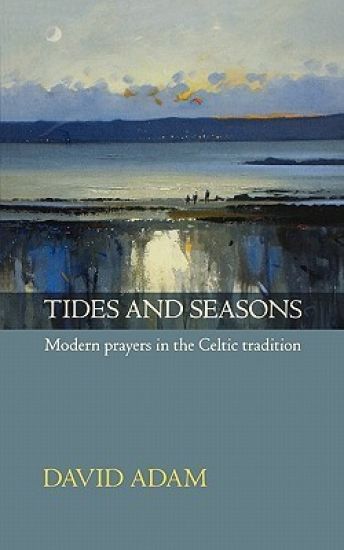
In Tides and Seasons, David Adam draws from the rich store of Celtic Spirituality insights which speak to our own world today. The prayers he has written for this book echo the rhythms of creation which find their parallels in our spiritual lives.
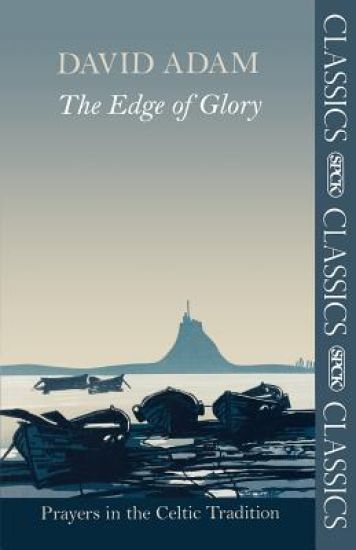
In the Celtic way of prayer the divine glory was intertwined with the ordinariness of everyday events like the patterns on carvings and illuminated gospels. The modern prayers in this book beautifully recapture that tradition. They were composed in a small parish in the north of England to help individuals and groups rediscover the use of life's simple rhythms in their worship of the Eternal Presence. Here are prayers for individual devotions and for corporate worship, as well as for quiet days and retreats.