News clippings from Overton, Nevada and surrounding areas (Logan, St. Thomas, Cappa, Kaolin and Moapa) 1905 - 1915 Some of the old names include: Andersen, Angell, Batty, Conger, Cooper, Cox, Hannig, Ingram, Jones, Koenig, Leavitt, Lewis, Losee, Lytle, Marshall, McDermott, McDonald, Mills, Nay, Perkins, Pixton, Shurtliff, Swapp, Syphus, Turnbaugh, Wells, West, Whitehead, Whitney, Wittwer and others. Consider these articles are decades old and some may not be as clear as we would like.
News Clippings from Overton, Nevada and the surrounding areas of Cappa, Koalin, Logandale, St. Thomas and Moapa from the years 1916 - 1923 Some of the names include: Andersen, Angell, Averett, Bonelli, Bowler, Brandt, Conger, Cooper, Doty, Earl, Flowers, Frehner, Gentry, Hafen, Ingram, Jennings, Jones, Leavitt, Lee, Lewis, Lytle, Marshall, McDonald, McMullin, Perkins, Prince, Prisbrey, Riggs, Reber, Robison, Roseberry, Shurtliff, Sprague, Swapp, Syphus, Tobler, Turner, Weber, Westover, Whipple Some of the articles are easier to read than others, please consider that they are nearly 100 years old.
Compiled from the Deseret News (Utah), Las Vegas Age Newspaper (Nevada) and the Washington County News (Utah) Some of the names include: Abbott, Allen, Barnum, Bowler, Bowman, Bunker, Canfield, Cox, Crosby, Darling, Earl, Frehner, Iverson, Hafen, Hanning, Hughes, Hunt, Huntsman, Jones, Kelly, Knight, Leavitt, Metzer, Miner, Potts, Pulsipher, Reber, Romney, Terry, Tobler, Sylvester, Waite, Whitney, Wittwer, Woodbury Please consider that the articles are decades old and some may not be as clear as we would like.
Some of the names include: Abbott, Allen, Barnum, Bowler, Bowman, Bunker, Canfield, Cox, Crosby, Darling, Earl, Frehner, Iverson, Hafen, Hanning, Hughes, Hunt, Huntsman, Jones, Kelly, Knight, Leavitt, Metzer, Miner, Potts, Pulsipher, Reber, Romney, Terry, Tobler, Sylvester, Waite, Whitney, Wittwer, Woodbury Compiled from the Las Vegas Age Newspaper (Nevada) and the Washington County News (Utah) Please bear in mind these articles are decades old and some may not be as clear as we would like.
Luther's critics have consistently charged him as an irrationalist and pessimist concerning reason's capabilities, and even by his followers as a fideist who sees little or no relationship between faith and reason. In this book, David Andersen offers a fresh and timely re-evaluation of Luther and his understanding of the relationship between faith and reason based upon a thorough engagement with Luther's mature writings. Dr. Andersen persuasively argues that, far from being either an irrationalist or a fideist, Luther stands within an empiricist tradition and that his pronouncements on fallen human reason can be understood only from that philosophical perspective. Based upon recent research into the writings of William of Ockham, who positively influenced Luther in this area, Dr. Andersen also shows that Luther can no longer be charged as a pessimist concerning human knowledge. Reason has an important role to play for Luther in bringing one to faith, and the objectivity of Christ's resurrection serves as that focal point that validates all Christian discourse. In subordinating itself to the facts of the death and resurrection of Christ for the forgiveness of sins, reason's created function is restored to some extent as it receives that forgiveness in the words of Holy Scripture and the visible means of Baptism and the Lord's Supper.
Articles collected from area newspapers of the period. Some of the names include: Bridges, Fredericks, Frehner, Harry, Iverson, Jennings, Leavitt, Lee, Lowe, McKnight, Peterson, Pollock, Reber, Relm, Strausset, Wittwer
Articles compiled from area newspapers of the period. Some of the names include: Bowler, Bracken, Burgess, Burton, Canfield, Hamm, Holt, Hunt, Jones, Kaufman, Leavitt, Nelson, Pulsipher, Talbot, Terry, Truman, Tullis, Webb Some of the articles are easier to read than others, please consider that they some are nearly 100 years old.
Luther's critics have consistently charged him as an irrationalist and pessimist concerning reason's capabilities, and even by his followers as a fideist who sees little or no relationship between faith and reason. In this book, David Andersen offers a fresh and timely re-evaluation of Luther and his understanding of the relationship between faith and reason based upon a thorough engagement with Luther's mature writings. Dr. Andersen persuasively argues that, far from being either an irrationalist or a fideist, Luther stands within an empiricist tradition and that his pronouncements on fallen human reason can be understood only from that philosophical perspective. Based upon recent research into the writings of William of Ockham, who positively influenced Luther in this area, Dr. Andersen also shows that Luther can no longer be charged as a pessimist concerning human knowledge. Reason has an important role to play for Luther in bringing one to faith, and the objectivity of Christ's resurrection serves as that focal point that validates all Christian discourse. In subordinating itself to the facts of the death and resurrection of Christ for the forgiveness of sins, reason's created function is restored to some extent as it receives that forgiveness in the words of Holy Scripture and the visible means of Baptism and the Lord's Supper.
Using the minimal facts every scholar accepts about Jesus, this book uniquely blends current New Testament thinking and research from the fields of psychology, neurology, and social sciences to argue that Jesus' physical resurrection from the dead is the most probable explanation for the appearance claims of the disciples and St. Paul. The book shows that the disciples and St. Paul were in no position to invent the appearances, especially as Jesus was executed as a criminal and Messianic pretender. With the resurrection the last thing they expected, and with no evidence of any evolutionary development, only the sudden appearances of Jesus explains their explosive transition from faithless to fearless.
Here, David Delfs Erbo Andersen presents a syncretic history of political and socioeconomic developments in the three Scandinavian countries since the early modern period, and contrasts their peaceful transitions with the more dramatic histories of otherwise similar European countries, like France and Germany.
Staten, det er mig! Sådan har konger og diktatorer erklæret igennem tiden, men sommetider tager de fejl. Et velsmurt statsapparat er ikke kun magtens forlængede arm, men lægger også arm med magten. Embedsmænd skal både assistere og inddæmme ministre, så de både udøver og overholder loven. I hvert fald i et demokrati, hvor papirnussere og paragrafryttere gør vores liv mere tillidsfuldt ifølge statelig samfundsforsker David Andersen fra Aarhus Universitet. Han gransker alt det med småt om det offentliges kontrol med den enkelte. Og afslører, at et effektivt bureaukrati kræver en rask lille krig.
A 96 page guide to the background, program, uses for and contact time needed with the CD-ROM A Right to Die? The Dax Cowart Case. This guide is supplied free with every multi-user copy of the CD-ROM, and will prove invaluable for all those planning to use the program in a classroom setting. This guide is not available to purchase separately.
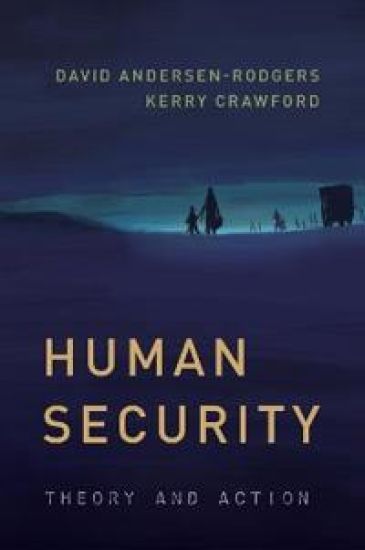
Human security refers in its broadest sense to the protection of individuals from harm. Human Security: Theory and Action explores the theory and application of concepts central to this notion of security. It examines the conceptual roots of human security, connecting its origins to its applications and challenges in war and peacetime. With a unique focus on the evolving notion of responsibility for security, the text introduces the critical questions and priorities that underpin policies and actions. The text is organized around four sections. The introduction offers an overview of human security and its basic tenets and historical foundations. The second section focuses on human security in armed conflict and post-conflict reconstruction, discussing such issues as the doctrine of Responsibility to Protect (R2P), peacekeeping and peace negotiation processes, and humanitarian assistance. The third section identifies the long-term issues that are necessary for a durable human security, including human rights, food security, poverty, gender equality, health security, and environmental sustainability. The final section applies the concepts introduced in the book to twenty-first century concerns and offers insights on turning theory into action. Integrated into the text are many case studies to broaden the student’s awareness beyond the conflicts and issues that dominate the media. By balancing theoretical explanations with concrete illustrative cases, both historical and contemporary, the text provides intellectually challenging and intrinsically interesting material and offers a unique, comprehensive introduction human security in war and peace.
Some of the names include: Chadburn, Cox, Eldridge, Forsyth, Harrison, Knell, Pace, Platt, Robinson, Thornton, Tullis Compiled from the Washington County News (Utah) & Iron County Record (Utah) with contributions from other regional papers. Some of the articles are easier to read than others, please consider that they some are nearly 100 years old.
Compiled from the Washington County News (Utah), Deseret News (Utah) & Iron County Record (Utah) with contributions from other regional papers.Often while working on family history (genealogy) I wonder about more than is listed on the pedigree sheets and am so grateful for their sacrifices and love for the generations to follow.Some of the names include: Bauman, Craig, Crosby, Ence, Ensign, Fordham, Francels, Frei, Graf (Graff, Garf), Grey, Gubler, Hafen, Hamblin, Huntsman, Judd, Keller, Knight, Laub, Leavitt, Little, McAllister, McIntyre, Miller, Naegle, Pearce, Preston, Prisbey, Reber, Richards, Staheli, Stucki, Tobler, VonAlma, Wilson, Wittwer, Woodbury Some of the articles are easier to read than others, please consider that they are nearly 100 years old.