Kirjojen hintavertailu. Mukana 12 459 402 kirjaa ja 12 kauppaa.

Kirjahaku

Etsi kirjoja tekijän nimen, kirjan nimen tai ISBN:n perusteella.

1000 tulosta hakusanalla David Bartholomew

Building on Knowledge

Building on Knowledge

David Bartholomew

Wiley-Blackwell (an imprint of John Wiley Sons Ltd)
2008
nidottu
This guide shows design practices and other construction professionals how to manage knowledge successfully. It explains how to develop and implement a knowledge management strategy, and how to avoid the pitfalls, focusing on the techniques of learning and knowledge sharing that are most relevant in professional practice. Expensive IT-based ‘solutions’ bought off-the-shelf rarely succeed in a practice context, so the emphasis here is on people-centred techniques, which recognise and meet real business knowledge needs and fit in with the organisational culture. Knowledge is supplanting physical assets as the dominant basis of capital value and an understanding of how knowledge is acquired, shared and used is increasingly crucial in organisational success. Most business leaders recognise this, but few have yet succeeded in making it the pervasive influence on management practice that it needs to become; that has turned out to be harder than it looks. Construction professionals are among those who have furthest to go, and most to gain. Design is a knowledge-based activity, and project managers, contractors and clients, as well as architects and engineers, have always learned from experience and shared their knowledge with immediate colleagues. But the intuitive processes they have traditionally used break down alarmingly quickly as organisations grow; even simply dividing the office over two floors can noticeably reduce communication. At the same time, increasingly sophisticated construction technology and more demanding markets are making effective management of knowledge ever more important. Other knowledge-intensive industries (such as management consultancy, pharmaceuticals, and IT), are well ahead in adopting a more systematic approach to learning and sharing knowledge, and seeing the benefits in improved technical capacity, efficiency, customer satisfaction and reduced risk.
Analysis of Multivariate Social Science Data

Analysis of Multivariate Social Science Data

Irini Moustaki; Fiona Steele; Yunxiao Chen; David Bartholomew

TAYLOR FRANCIS LTD
2026
nidottu
Drawing on the authors’ varied experiences researching and teaching in the field, Analysis of Multivariate Social Science Data: Statistical Machine Learning Methods, Third Edition, enables a basic understanding of how to use key multivariate methods in the social sciences. With minimal mathematical and statistical knowledge required, this third edition expands its topics to include graphical modelling, models for longitudinal data, structural equation models for categorical variables, and latent class analysis for ordinal, nominal, and continuous variables. It also connects the topics to terminology and principles of machine learning, intended to help readers grasp the links between methods of multivariate analysis and advancements in the field of data science. After describing methods for the summarisation of data in the first part of the book, the authors consider regression analysis. This chapter provides a link between the two halves of the book, signalling the move from descriptive to inferential methods. The remainder of the text deals with model-based methods that primarily make inferences about processes that generate data. Relying heavily on numerical examples from a range of disciplines, the authors provide insight into the purpose and working of the methods as well as the interpretation of results from analyses. Many of the same examples are used throughout to illustrate connections between the methods. In most chapters, the authors present suggestions for further work that go beyond conventional practice, encouraging readers to explore new ground in social science research. Features Contains new chapters on undirected graphical modelling, and models for longitudinal data, as well as new material such as K-means, cross-validation, structural equation models for categorical variables, latent class analysis for categorical, nominal and continuous variables, and treatment of missing data. Connects topics with terminology and principles of machine learning. Presents numerous examples of real-world applications, including voting preferences, social attitudes, educational assessment, recidivism, and health. Covers methods that summarise, describe, and explore multivariate datasets, including longitudinal data. Establishes a unified approach to latent variable modelling by providing detailed coverage of methods such as item response theory, factor analysis for continuous and categorical data, and models for categorical latent variables. Covers models for hierarchical and longitudinal data and their connection to latent variable models. Offers a full version of the data sets in the text or the book’s website, with software code for implementing the analyses on the website. The book offers a balanced and accessible resource for students and researchers with limited mathematical and statistical training. It serves as a practical resource for courses in multivariate analysis and as a guide for applying these techniques in applied research.
Analysis of Multivariate Social Science Data

Analysis of Multivariate Social Science Data

Irini Moustaki; Fiona Steele; Yunxiao Chen; David Bartholomew

TAYLOR FRANCIS LTD
2026
sidottu
Drawing on the authors’ varied experiences researching and teaching in the field, Analysis of Multivariate Social Science Data: Statistical Machine Learning Methods, Third Edition, enables a basic understanding of how to use key multivariate methods in the social sciences. With minimal mathematical and statistical knowledge required, this third edition expands its topics to include graphical modelling, models for longitudinal data, structural equation models for categorical variables, and latent class analysis for ordinal, nominal, and continuous variables. It also connects the topics to terminology and principles of machine learning, intended to help readers grasp the links between methods of multivariate analysis and advancements in the field of data science. After describing methods for the summarisation of data in the first part of the book, the authors consider regression analysis. This chapter provides a link between the two halves of the book, signalling the move from descriptive to inferential methods. The remainder of the text deals with model-based methods that primarily make inferences about processes that generate data. Relying heavily on numerical examples from a range of disciplines, the authors provide insight into the purpose and working of the methods as well as the interpretation of results from analyses. Many of the same examples are used throughout to illustrate connections between the methods. In most chapters, the authors present suggestions for further work that go beyond conventional practice, encouraging readers to explore new ground in social science research. Features Contains new chapters on undirected graphical modelling, and models for longitudinal data, as well as new material such as K-means, cross-validation, structural equation models for categorical variables, latent class analysis for categorical, nominal and continuous variables, and treatment of missing data. Connects topics with terminology and principles of machine learning. Presents numerous examples of real-world applications, including voting preferences, social attitudes, educational assessment, recidivism, and health. Covers methods that summarise, describe, and explore multivariate datasets, including longitudinal data. Establishes a unified approach to latent variable modelling by providing detailed coverage of methods such as item response theory, factor analysis for continuous and categorical data, and models for categorical latent variables. Covers models for hierarchical and longitudinal data and their connection to latent variable models. Offers a full version of the data sets in the text or the book’s website, with software code for implementing the analyses on the website. The book offers a balanced and accessible resource for students and researchers with limited mathematical and statistical training. It serves as a practical resource for courses in multivariate analysis and as a guide for applying these techniques in applied research.
Statistics without Mathematics

Statistics without Mathematics

David J Bartholomew

SAGE Publications Ltd
2015
sidottu
This is a book about the ideas that drive statistics. It is an ideal primer for students who need an introduction to the concepts of statistics without the added confusion of technical jargon and mathematical language. It introduces the intuitive thinking behind standard procedures, explores the process of informal reasoning, and uses conceptual frameworks to provide a foundation for students new to statistics. It showcases the expertise we have all developed from living in a data saturated society, increases our statistical literacy and gives us the tools needed to approach statistical mathematics with confidence. Key topics include: VariabilityStandard DistributionsCorrelationRelationshipSamplingInference An engaging, informal introduction this book sets out the conceptual tools required by anyone undertaking statistical procedures for the first time or for anyone needing a fresh perspective whilst studying the work of others.
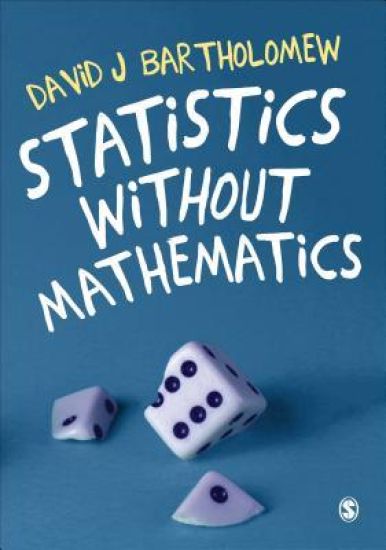
Statistics without Mathematics

Statistics without Mathematics

David J Bartholomew

SAGE Publications Ltd
2015
nidottu
This is a book about the ideas that drive statistics. It is an ideal primer for students who need an introduction to the concepts of statistics without the added confusion of technical jargon and mathematical language. It introduces the intuitive thinking behind standard procedures, explores the process of informal reasoning, and uses conceptual frameworks to provide a foundation for students new to statistics. It showcases the expertise we have all developed from living in a data saturated society, increases our statistical literacy and gives us the tools needed to approach statistical mathematics with confidence. Key topics include: VariabilityStandard DistributionsCorrelationRelationshipSamplingInference An engaging, informal introduction this book sets out the conceptual tools required by anyone undertaking statistical procedures for the first time or for anyone needing a fresh perspective whilst studying the work of others.
Measuring Intelligence

Measuring Intelligence

Bartholomew David J.

Cambridge University Press
2004
pokkari
The testing of intelligence has a long and controversial history. Claims that it is a pseudo-science or a weapon of ideological warfare have been commonplace and there is not even a consensus as to whether intelligence exists and, if it does, whether it can be measured. As a result the debate about it has centred on the nurture versus nature controversy and especially on alleged racial differences and the heritability of intelligence - all of which have major policy implications. This book aims to penetrate the mists of controversy, ideology and prejudice by providing a clear non-mathematical framework for the definition and measurement of intelligence derived from modern factor analysis. Building on this framework and drawing on everyday ideas the author address key controversies in a clear and accessible style and explores some of the claims made by well known writers in the field such as Stephen Jay Gould and Michael Howe.
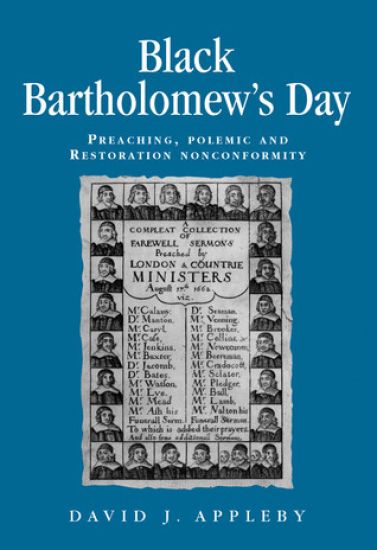
Black Bartholomew's Day

Black Bartholomew's Day

David Appleby

Manchester University Press
2012
nidottu
Black Bartholomew's Day explores the religious, political and cultural implications of a collision of highly-charged polemic prompted by the mass ejection of Puritan ministers from the Church of England in 1662.It is the first in-depth study of this heated exchange, centres centring on the departing ministers' farewell sermons. Many of these valedictions, delivered by hundreds of dissenting preachers in the weeks before Bartholomew's Day, would be illegally printed and widely distributed, provoking a furious response from government officials, magistrates and bishops. Black Bartholomew's Day re-interprets the political significance of ostensibly moderate Puritan clergy, arguing that their preaching posed a credible threat to the restored political orderThis book is aimed at readers interested in historicism, religion, nonconformity, print culture and the political potential of preaching in Restoration England.
Descendants of Christian Riblet, and His Son Bartholomew Riblet: and Genealogical Family History
Discover your family's history with this meticulously researched genealogy of the Riblet family. David Franklin Shull traces the lineage of Christian Riblet and his son Bartholomew Riblet, including information about their ancestors, descendants, and siblings. With photographs, maps, and detailed charts, this book is an invaluable resource for anyone interested in genealogy or the history of the Riblet family.This work has been selected by scholars as being culturally important, and is part of the knowledge base of civilization as we know it.This work is in the "public domain in the United States of America, and possibly other nations. Within the United States, you may freely copy and distribute this work, as no entity (individual or corporate) has a copyright on the body of the work.Scholars believe, and we concur, that this work is important enough to be preserved, reproduced, and made generally available to the public. We appreciate your support of the preservation process, and thank you for being an important part of keeping this knowledge alive and relevant.
Uncertain Belief

Uncertain Belief

David J. Bartholomew

Clarendon Press
1996
sidottu
The certainties which once underpinned Christian belief have crumbled in a world where science sets the standard for what is true. A rational case for belief must therefore be constructed out of uncertainties. Probability theory provides the tools for measuring and combining uncertainties and is thus the key to progress. This book examines four much debated topics where the logic of uncertain inference can be brought to bear. These are: miracles, the paranormal, God's existence, and the Bible. Given the great diversity of evidence, it is not surprising that opposite conclusions have been drawn by supposedly rational people. An assessment of the state of argument from a probabilistic perspective is overdue. In this book Professor Bartholomew examines and refutes some of the more extravagent claims, evaluates the weight of some of the quantitive evidence, and provides an answer to the fundamental question: is it rational to be a Christian?
Uncertain Belief

Uncertain Belief

David J. Bartholomew

Oxford University Press
2000
nidottu
The certainties which underpinned Christian belief have crumbled in a world where science sets the standard of what is true. A rational case for belief must therefore be constructed out of uncertainties. Probability theory provides the tools for measuring and combining uncertainties and is thus the key to progress. This book examines four much debated topics where the logic of uncertain reference can be brought to bear. These are: miracles, the paranormal, God's existence, and the Bible. Given the great diversity of evidence, it is not surprising that opposite conclusions have been drawn by supposedly rational people. An assessment of the state of the argument from a probabilistic perspective is overdue. In this book Professor Bartholomew examines and refutes some of the more extravagant claims, evaluates the weight of some of the quantitative evidence, and provides an answer to the fundamental question: can a rational person be a Christian?
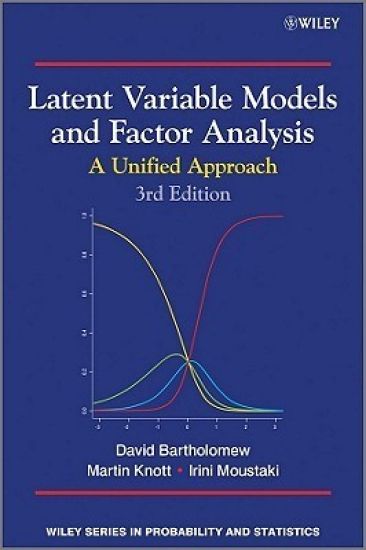
Latent Variable Models and Factor Analysis

Latent Variable Models and Factor Analysis

David J. Bartholomew; Martin Knott; Irini Moustaki

John Wiley Sons Inc
2011
sidottu
Latent Variable Models and Factor Analysis provides a comprehensive and unified approach to factor analysis and latent variable modeling from a statistical perspective. This book presents a general framework to enable the derivation of the commonly used models, along with updated numerical examples. Nature and interpretation of a latent variable is also introduced along with related techniques for investigating dependency. This book: Provides a unified approach showing how such apparently diverse methods as Latent Class Analysis and Factor Analysis are actually members of the same family.Presents new material on ordered manifest variables, MCMC methods, non-linear models as well as a new chapter on related techniques for investigating dependency.Includes new sections on structural equation models (SEM) and Markov Chain Monte Carlo methods for parameter estimation, along with new illustrative examples.Looks at recent developments on goodness-of-fit test statistics and on non-linear models and models with mixed latent variables, both categorical and continuous. No prior acquaintance with latent variable modelling is pre-supposed but a broad understanding of statistical theory will make it easier to see the approach in its proper perspective. Applied statisticians, psychometricians, medical statisticians, biostatisticians, economists and social science researchers will benefit from this book.
God, Chance and Purpose

God, Chance and Purpose

David J. Bartholomew

Cambridge University Press
2008
pokkari
Scientific accounts of existence give chance a central role. At the smallest level, quantum theory involves uncertainty and evolution is driven by chance and necessity. These ideas do not fit easily with theology in which chance has been seen as the enemy of purpose. One option is to argue, as proponents of Intelligent Design do, that chance is not real and can be replaced by the work of a Designer. Others adhere to a deterministic theology in which God is in total control. Neither of these views, it is argued, does justice to the complexity of nature or the greatness of God. The thesis of this book is that chance is neither unreal nor non-existent but an integral part of God's creation. This view is expounded, illustrated and defended by drawing on the resources of probability theory and numerous examples from the natural and social worlds.
Measuring Intelligence

Measuring Intelligence

David J. Bartholomew

Cambridge University Press
2004
sidottu
The testing of intelligence has a long and controversial history. Claims that it is a pseudo-science or a weapon of ideological warfare have been commonplace and there is not even a consensus as to whether intelligence exists and, if it does, whether it can be measured. As a result the debate about it has centred on the nurture versus nature controversy and especially on alleged racial differences and the heritability of intelligence - all of which have major policy implications. This book aims to penetrate the mists of controversy, ideology and prejudice by providing a clear non-mathematical framework for the definition and measurement of intelligence derived from modern factor analysis. Building on this framework and drawing on everyday ideas the author address key controversies in a clear and accessible style and explores some of the claims made by well known writers in the field such as Stephen Jay Gould and Michael Howe.
God, Chance and Purpose

God, Chance and Purpose

David J. Bartholomew

Cambridge University Press
2008
sidottu
Scientific accounts of existence give chance a central role. At the smallest level, quantum theory involves uncertainty and evolution is driven by chance and necessity. These ideas do not fit easily with theology in which chance has been seen as the enemy of purpose. One option is to argue, as proponents of Intelligent Design do, that chance is not real and can be replaced by the work of a Designer. Others adhere to a deterministic theology in which God is in total control. Neither of these views, it is argued, does justice to the complexity of nature or the greatness of God. The thesis of this book is that chance is neither unreal nor non-existent but an integral part of God's creation. This view is expounded, illustrated and defended by drawing on the resources of probability theory and numerous examples from the natural and social worlds.
Hidden Nature

Hidden Nature

Alick Bartholomew; David Bellamy

Floris Books
2003
nidottu
Austrian naturalist Viktor Schauberger was the pioneer of the study of subtle energies in nature. This book describes and explains Schauberger's insights in contemporary, accessible language. His discoveries have dramatic implications for how we should work with nature and its resources.
The Diamond Principle: The CEO's Common-Sense, Time-Tested 21st Century Guide to Making Can't-Miss Decisions and Getting Things Done
Explore the Five Simple Rules that have led over 50 companies to achieve their goals. The Diamond Principle gives you a specific roadmap on how to produce immediate and sustainable results for your company.Not just theory, this book is chock full of proven tools that will assist your executive team. The success stories within these pages show how CEO's have improved their company's competitive position, increased employees' and strengthened the customer relationship. satisfaction when decisions companies make do not produce the desired outcomes they violated one or more of five simple rules to achieving results. The rules are explained through the stories of where they were applied in over 50 large and small companies in a variety of industries.A sampling of the tools contained in the book are: - The "Chalk Talk" a powerful approach to getting started.- All-inclusive references to ensure no ideas fall through the cracks.- A "cookbook" of recipes to go along with the submitted management concepts.- How to create Action Plans that are practical and doable for any company.Not only will you see how the Diamond Principle works, but you can also read amazing stories of companies; who have competitively advanced with the Five Rules presented in this book.Take the first step with your company to explore the many facets of The Diamond Principle. Engage your management, employees and customers to achieve measurable results like so many others have done.The Diamond Principle rules gives you timely hands-on solutions to some of the greatest problems companies are facing today. Stories of success from the application of the Diamond Principle rules in aligning management decision-making teams, employees and customers to accelerate better communication and increase the bottom-line will give you action.
Analysis of Multivariate Social Science Data

Analysis of Multivariate Social Science Data

David J. Bartholomew; Fiona Steele; Jane Galbraith; Irini Moustaki

CRC Press
2017
sidottu
Drawing on the authors varied experiences working and teaching in the field, Analysis of Multivariate Social Science Data, Second Editionenables a basic understanding of how to use key multivariate methods in the social sciences. With updates in every chapter, this edition expands its topics to include regression analysis, confirmatory factor analysis, structural equation models, and multilevel models.After emphasizing the summarization of data in the first several chapters, the authors focus on regression analysis. This chapter provides a link between the two halves of the book, signaling the move from descriptive to inferential methods and from interdependence to dependence. The remainder of the text deals with model-based methods that primarily make inferences about processes that generate data. Relying heavily on numerical examples, the authors provide insight into the purpose and working of the methods as well as the interpretation of data. Many of the same examples are used throughout to illustrate connections between the methods. In most chapters, the authors present suggestions for further work that go beyond conventional exercises, encouraging readers to explore new ground in social science research. Requiring minimal mathematical and statistical knowledge, this book shows how various multivariate methods reveal different aspects of data and thus help answer substantive research questions.
The Diamond Principle: The Ceo's Common-Sense, Time-Tested 21st Century Guide to Making Can't-Miss Decisions and Getting Things Done
Explore the Five Simple Rules that have led over 50 companies to achieve their goals. The Diamond Principle gives you a specific roadmap on how to produce immediate and sustainable results for your company. Not just theory, this book is chock full of proven tools that will assist your executive team. The success stories within these pages show how CEO's have improved their company's competitive position, increased employees' and strengthened the customer relationship. satisfaction when decisions companies make do not produce the desired outcomes they violated one or more of five simple rules to achieving results. The rules are explained through the stories of where they were applied in over 50 large and small companies in a variety of industries. A sampling of the tools contained in the book are: - The "Chalk Talk" a powerful approach to getting started. - All-inclusive references to ensure no ideas fall through the cracks. - A "cookbook" of recipes to go along with the submitted management concepts. - How to create Action Plans that are practical and doable for any company. Not only will you see how the Diamond Principle works, but you can also read amazing stories of companies; who have competitively advanced with the Five Rules presented in this book. Take the first step with your company to explore the many facets of The Diamond Principle. Engage your management, employees and customers to achieve measurable results like so many others have done. The Diamond Principle rules gives you timely hands-on solutions to some of the greatest problems companies are facing today. Stories of success from the application of the Diamond Principle rules in aligning management decision-making teams, employees and customers to accelerate better communication and increase the bottom-line will give you action.
Analysis of Multivariate Social Science Data

Analysis of Multivariate Social Science Data

David J. Bartholomew

Chapman Hall/CRC
2008
nidottu
Drawing on the authors’ varied experiences working and teaching in the field, Analysis of Multivariate Social Science Data, Second Editionenables a basic understanding of how to use key multivariate methods in the social sciences. With updates in every chapter, this edition expands its topics to include regression analysis, confirmatory factor analysis, structural equation models, and multilevel models.After emphasizing the summarization of data in the first several chapters, the authors focus on regression analysis. This chapter provides a link between the two halves of the book, signaling the move from descriptive to inferential methods and from interdependence to dependence. The remainder of the text deals with model-based methods that primarily make inferences about processes that generate data. Relying heavily on numerical examples, the authors provide insight into the purpose and working of the methods as well as the interpretation of data. Many of the same examples are used throughout to illustrate connections between the methods. In most chapters, the authors present suggestions for further work that go beyond conventional exercises, encouraging readers to explore new ground in social science research. Requiring minimal mathematical and statistical knowledge, this book shows how various multivariate methods reveal different aspects of data and thus help answer substantive research questions.