Kirjojen hintavertailu. Mukana 11 627 623 kirjaa ja 12 kauppaa.

Kirjahaku

Etsi kirjoja tekijän nimen, kirjan nimen tai ISBN:n perusteella.

1000 tulosta hakusanalla David Bellos

The Plague, the Fall, Exile and the Kingdom, and Selected Essays: Introduction by David Bellos
From one of the most brilliant and influential thinkers of the twentieth century and a Nobel Prize-winning author: two novels, six short stories, and a pair of essays in a single hardcover volume that deploy his lyric eloquence in defense against despair. In both his essays and his fiction, Albert Camus (1913-1960) provides an affirmation of the brave assertion of humanity in the face of a universe devoid of order or meaning. The Plague--written in 1947 and still profoundly relevant--is a riveting tale of horror, survival, and resilience in the face of a devastating epidemic. The Fall (1956), which takes the form of an astonishing confession by a French lawyer in a seedy Amsterdam bar, is a haunting parable of modern conscience in the face of evil. The six stories of Exile and the Kingdom (1957) represent Camus at the height of his narrative powers, masterfully depicting his characters--from a renegade missionary to an adulterous wife--at decisive moments of revelation. Set beside their fictional counterparts, Camus's famous essays "The Myth of Sisyphus" and "Reflections on the Guillotine" are all the more powerful and philosophically daring, confirming his towering place in twentieth-century thought. With an introduction by David Bellos. Everyman's Library pursues the highest production standards, printing on acid-free cream-colored paper, with full-cloth cases with two-color foil stamping, decorative endpapers, silk ribbon markers, European-style half-round spines, and a full-color illustrated jacket. Contemporary Classics include an introduction, a select bibliography, and a chronology of the author's life and times.
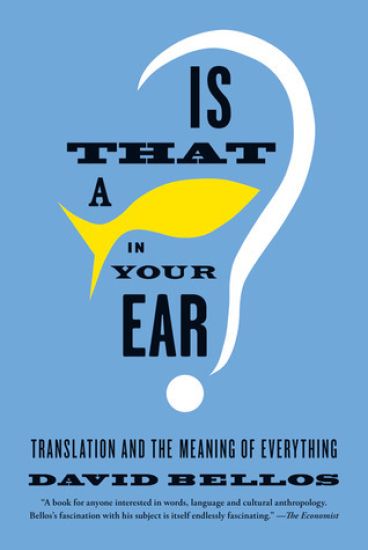
Is That a Fish in Your Ear?

Is That a Fish in Your Ear?

David Bellos

Penguin Books Ltd
2012
pokkari
Is That a Fish in Your Ear? by David Bellos asks: how do we really make ourselves understood to other people? This funny, wise and life-affirming language book shows how, from puns to poetry, news bulletins to the Bible, Asterix to Swedish films, translation is at the heart of everything we do - and makes us who we are.Selected by The New York Times as one of the 100 Notable Books of 2011'A wonderful, witty book ... richly original, endlessly fascinating ... for anyone interested in words' Economist, Books of the Year 'A scintillating bouillabaisse ... spiced with good and provocative things' Literary Review'Dazzlingly inventive' The New York Times'Clear and lively ... There is nothing quite like it' Spectator
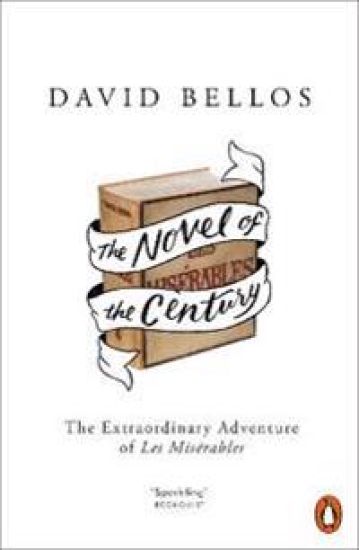
The Novel of the Century

The Novel of the Century

David Bellos

Penguin Books Ltd
2018
pokkari
'Never mind those self-help manuals urging that some classic novel may change your life; in this sparkling study of the birth, growth and afterlife of Hugo's evergreen blockbuster, David Bellos argues that Les Misérables already has' Boyd Tonkin, Economist'Any reader who hasn't yet embarked on Hugo's book might be converted to the idea by this one' Daniel Hahn, SpectatorThe extraordinary story of how a simple tale of love and revolution, the poor and the downtrodden - Victor Hugo's beloved classic Les Misérables - conquered the world.There has never been a book like it. It is the most widely read and frequently adapted story of all time, on stage and on film. But why is Les Misérables the novel of the century? David Bellos's remarkable new book brings to life the extraordinary story of how Hugo managed to write his epic novel despite a revolution, a coup d'état and political exile; how he pulled off the deal of the century to get it published, and set it on course to become the novel that epitomizes the grand sweep of history in the nineteenth century. Packed full of information about the background and design of Les Misérables, this biography of a masterpiece nonetheless insists that the moral and social message of Hugo's ever-popular novel is just as important for our century as it was for its own. The Novel of the Century is a book as rich, remarkable and long-lasting as the novel at its heart.Les Misérables is available as a Penguin Classic, in an acclaimed new translation by Christine Donougher, with an introduction by Robert Tombs.
Novel of the Century

Novel of the Century

David Bellos

Farrar, Strauss Giroux-3pl
2018
nidottu
A New York Times Book Review Editors' Choice Winner of the American Library in Paris Book Award, 2017 Les Mis rables is among the most popular and enduring novels ever written. Like Inspector Javert's dogged pursuit of Jean Valjean, its appeal has never waned, but only grown broader in its one-hundred-and-fifty-year life. Whether we encounter Victor Hugo's story on the page, onstage, or on-screen, Les Mis rables continues to captivate while also, perhaps unexpectedly, speaking to contemporary concerns. In The Novel of the Century, the acclaimed scholar and translator David Bellos tells us why. This enchanting biography of a classic of world literature is written for "Les Mis" fanatics and novices alike. Casting decades of scholarship into accessible narrative form, Bellos brings to life the extraordinary story of how Victor Hugo managed to write his novel of the downtrodden despite a revolution, a coup d' tat, and political exile; how he pulled off a pathbreaking deal to get it published; and how his approach to the "social question" would define his era's moral imagination. More than an ode to Hugo's masterpiece, The Novel of the Century also shows that what Les Mis rables has to say about poverty, history, and revolution is full of meaning today.
Balzac: Old Goriot

Balzac: Old Goriot

David Bellos

Cambridge University Press
1987
pokkari
This up-to-date account of the novel's composition, structure, and achievement provides readers with the literary and historical knowledge needed to make sense of the text. Professor Bellos explains how Balzac challenged prevailing nineteenth-century expectations of what novels should be like.
Is That a Fish in Your Ear?: Translation and the Meaning of Everything
An NBCC Award and Los Angeles Times Book Award finalistA New York Times Notable Book for 2011 One of The Economist's 2011 Books of the Year People speak different languages, and always have. The Ancient Greeks took no notice of anything unless it was said in Greek; the Romans made everyone speak Latin; and in India, people learned their neighbors' languages--as did many ordinary Europeans in times past (Christopher Columbus knew Italian, Portuguese, and Castilian Spanish as well as the classical languages). But today, we all use translation to cope with the diversity of languages. Without translation there would be no world news, not much of a reading list in any subject at college, no repair manuals for cars or planes; we wouldn't even be able to put together flat-pack furniture. Is That a Fish in Your Ear? ranges across the whole of human experience, from foreign films to philosophy, to show why translation is at the heart of what we do and who we are. Among many other things, David Bellos asks: What's the difference between translating unprepared natural speech and translating Madame Bovary? How do you translate a joke? What's the difference between a native tongue and a learned one? Can you translate between any pair of languages, or only between some? What really goes on when world leaders speak at the UN? Can machines ever replace human translators, and if not, why? But the biggest question Bellos asks is this: How do we ever really know that we've understood what anybody else says--in our own language or in another? Surprising, witty, and written with great joie de vivre, this book is all about how we comprehend other people and shows us how, ultimately, translation is another name for the human condition.
Jacques Tati

Jacques Tati

David Bellos

The Harvill Press
2001
pokkari
The full story of one of France's greatest cinema legends, a clown whose film-making innovation was to turn everyday life into an art form.Jacques Tati's Monsieur Hulot, unmistakable with his pipe, brolly and striped socks, was a creation of slapstick genius that made audiences around the world laugh at the sheer absurdity of life. This biography charts Tati's rise and fall, from his earliest beginnings as a music hall mime during the Depression, to the success of Jour de Fête and Mon Oncle, to Playtime, the grandiose masterpiece that left the once celebrated director bankrupt and begging for equipment to complete his final films. Analysing Tati's singular vision, Bellos reveals the intricate staging of his most famous gags and draws upon hitherto inaccessible archives to produce a unique assessment of his work and its context for film lovers and film students alike.
Who Owns This Sentence?: A History of Copyrights and Wrongs

Who Owns This Sentence?: A History of Copyrights and Wrongs

David Bellos; Alexandre Montagu

W. W. Norton Company
2024
sidottu
Copyright is everywhere. Your smartphone incorporates thousands of items of intellectual property. Someone owns the reproduction rights to photographs of your dining table. At this very moment, battles are raging over copyright in the output of artificial intelligence programs. Not only books but wallpaper, computer programs, pop songs, cartoon characters, snapshots, and cuddly toys are now deemed to be intellectual properties--making copyright a labyrinthine construction of laws with colorful and often baffling rationales covering almost all products of human creativity.It wasn't always so. Copyright has its roots in eighteenth-century London, where it was first established to limit printers' control of books. But a handful of little-noticed changes in the late twentieth century brought about a new enclosure of the cultural commons, concentrating ownership of immaterial goods in very few hands. Copyright's metastasis can't be understood without knowing its backstory, a long tangle of high ideals, low greed, opportunism, and word-mangling that allowed poems and novels (and now, even ringtones and databases) to be treated as if they were no different from farms and houses. Principled arguments against copyright arose from the start and nearly abolished it in the nineteenth century. Nonetheless, countless revisions have made copyright ever stronger. Who Owns This Sentence? is an often-humorous and always-enlightening cultural, legal, and global history of the idea that intangible things can be owned, and makes a persuasive case for seeing copyright as an engine of inequality in the twenty-first century.
Who Owns This Sentence?: A History of Copyrights and Wrongs

Who Owns This Sentence?: A History of Copyrights and Wrongs

David Bellos; Alexandre Montagu

W. W. Norton Company
2025
nidottu
Copyright is everywhere. Your smartphone incorporates thousands of items of intellectual property. Someone owns the reproduction rights to photographs of your dining table. At this very moment, battles are raging over copyright in the output of artificial intelligence programs. Not only books but wallpaper, computer programs, pop songs, cartoon characters, snapshots, and cuddly toys are now deemed to be intellectual properties--making copyright a labyrinthine construction of laws with colorful and often baffling rationales covering almost all products of human creativity.It wasn't always so. Copyright has its roots in eighteenth-century London, where it was first established to limit printers' control of books. But a handful of little-noticed changes in the late twentieth century brought about a new enclosure of the cultural commons, concentrating ownership of immaterial goods in very few hands. Copyright's metastasis can't be understood without knowing its backstory, a long tangle of high ideals, low greed, opportunism, and word-mangling that allowed poems and novels (and now, even ringtones and databases) to be treated as if they were no different from farms and houses. Principled arguments against copyright arose from the start and nearly abolished it in the nineteenth century. Nonetheless, countless revisions have made copyright ever stronger. Who Owns This Sentence? is an often-humorous and always-enlightening cultural, legal, and global history of the idea that intangible things can be owned, and makes a persuasive case for seeing copyright as an engine of inequality in the twenty-first century.
Who Owns This Sentence?

Who Owns This Sentence?

David Bellos; Alexandre Montagu

HEADLINE PUBLISHING GROUP
2024
sidottu
'Fascinating' Telegraph'Thorough and engaging' Washington Post'Lively, opinionated, and ultra-timely' New Yorker'[A] robust and readable polemic history' Financial Times'A fascinating new look at the patchwork chaos called copyright ... Not just authors, but artists in many media, scientists, mathematicians and every one of us with our own unique individual faces ... should read this book' SpectatorThis is the story of a relatively simple idea - that authors have rights in the works they create - which through many strange and startling twists and turns has come to frame and to constrain a wide range of things we do, for the benefit not of the many, but of the few.Copyright is everywhere. Your smartphone incorporates thousands of items of intellectual property. Someone owns the reproduction rights to photographs of your dining table. At this very moment, battles are raging over copyright in the output of artificial intelligence programs. Not only books but wallpaper, computer programs and cuddly toys are now deemed to be intellectual properties - making copyright a labyrinthine construction of laws covering almost all products of human creativity.Copyright has its roots in eighteenth-century London, where it was first established to limit printers' control of books. Principled arguments against copyright arose from the start and nearly abolished it in the nineteenth century. But a handful of little-noticed changes in the late twentieth century concentrated ownership of immaterial goods into very few hands.Who Owns This Sentence? is an often-humorous and always-enlightening cultural, legal, and global history of the idea that intangible things can be owned, and makes a persuasive case for seeing copyright as an engine of inequality in the twenty-first century.
Who Owns This Sentence?

Who Owns This Sentence?

David Bellos; Alexandre Montagu

HEADLINE PUBLISHING GROUP
2024
pokkari
'Fascinating' Telegraph'Thorough and engaging' Washington Post'Lively, opinionated, and ultra-timely' New Yorker'[A] robust and readable polemic history' Financial Times'A fascinating new look at the patchwork chaos called copyright ... Not just authors, but artists in many media, scientists, mathematicians and every one of us with our own unique individual faces ... should read this book' SpectatorThis is the story of a relatively simple idea - that authors have rights in the works they create - which through many strange and startling twists and turns has come to frame and to constrain a wide range of things we do, for the benefit not of the many, but of the few.On December 16, 2021, Sony Music Group announced that it had acquired the rights to the work of singer songwriter Bruce Springsteen. The sale price was over half a billion dollars. The reason why a catalogue of songs and recordings can now be sold for the price of a fleet of small aircraft is the whole subject of this book: copyright. Who Owns this Sentence? is a fascinating and comprehensive cultural, legal and global history of how intangible things can be owned, and reveals how copyright is no longer for the benefit of creators but has been transformed into an engine of inequality in the twenty-first century.
The Siege

The Siege

Ismail Kadare; David Bellos

Canongate Canons
2018
pokkari
It is the fifteenth century and war looms. The people of Albania have refused to negotiate with the Ottoman Empire and they know their fate is sealed. As they take refuge in a fortress in the mountains, the army arrives and prepares to lay siege to the Christian citadel.
Chronicle In Stone

Chronicle In Stone

Ismail Kadare; David Bellos

Canongate Canons
2018
pokkari
In a seamless mosaic of dreams and games, a young boy reflects on events as his hometown in Albania falls to a series of invaders. Amid floods and bombings, his own innocence and wonder are lost forever in the madness and brutality of the Second World War.A disturbing mix of tragedy and comedy, politics and sexuality, Chronicle in Stone is a fascinating masterpiece about what it means to grow up in a turbulent world.
Who Owns This Sentence?

Who Owns This Sentence?

Alexandre Montagu; David Bellos

HEADLINE PUBLISHING GROUP
2024
pokkari
A fascinating and important exploration into how copyright has become a tool of unprecedented power and wealth for the few, widening the gap between the richest and poorest in society.
India Observations of a Sojourner: The Poetry and Prose of David Bellomy

India Observations of a Sojourner: The Poetry and Prose of David Bellomy

David Bellomy

Createspace Independent Publishing Platform
2017
nidottu
"India Observations of a Sojourner" is poetry and prose, an introspective collection written over a period of 40 years. Although many of the works are satirical, the introduction and postscripts point the finger of criticism at the author's inability to understand and accept India during his first sojourn. India is paradoxical, a place of multiple dichotomies best described as competing realities. For the western traveler, any personal opinion regarding India is most often colored by prejudices, fears and what they choose to see. Few can accept her co-existent beautiful and dreadful realities. India remains one relatively safe place in an increasingly dangerous world, a place where every western traveler has the opportunity to compare, contrast, define or redefine and then use those definitions to improve.
Kettlebell Training for Athletes: Develop Explosive Power and Strength for Martial Arts, Football, Basketball, and Other Sports, pb
Improve performance in any sport with Russia’s most guarded training secretFor elite sports training, nothing compares to the impact that kettlebells have on the entire body, and author and trainer Dave Bellomo now brings the power and benefit of these Russian-inspired weights to any athlete. Working the entire body at different angles, this popular training program provides you with rapid gains in strength, speed, and endurance—all requirements for proficiency in any sport. This powerhouse program also gives you customization tools for setting personal goals and tailored eight-week workouts to answer the needs of your specific sport.Kettlebell Power Training for Athletes:Presents more than eighty illustrated exercises for quicker learning on how to train with the weightsHelps you gradually build a training foundation for a healthier lifestyleIncludes sport- and goal-specific programs so you can go directly to that section of the book for your needsFeatures photographs from award-winning photographer Bruce CurtisWhether you are training for the gridiron, the Octagon, or the Pentagon, these simple tools will help you produce the most extraordinary results you have ever seen. Author ProfileDave Bellomo (Williamsport, PA) holds a graduate degree in Exercise Science, specializing in sports performance and injury prevention and an undergraduate degree in Health Science. He is a Certified Strength and Conditioning Specialist (CSCS), a Performance Enhancement Specialist (PES), and a Certified Speed Coach, Dave has over 20 years of experience in the fitness management field and continues to consult with groups and individuals.