Kirjojen hintavertailu. Mukana 12 453 193 kirjaa ja 12 kauppaa.

Kirjahaku

Etsi kirjoja tekijän nimen, kirjan nimen tai ISBN:n perusteella.

1000 tulosta hakusanalla David Carr

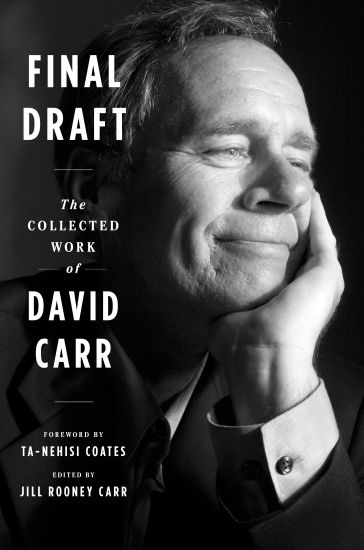
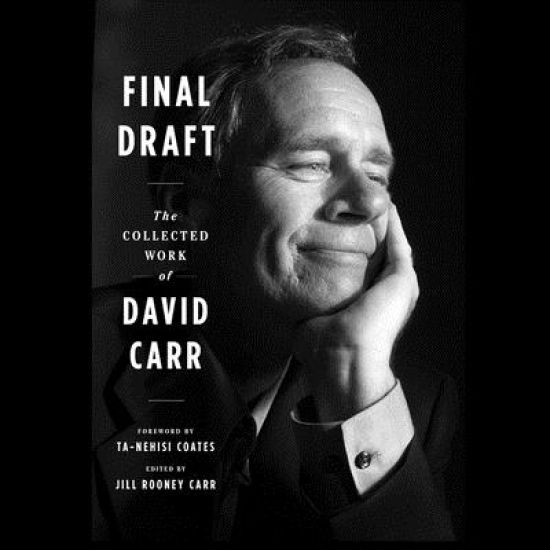
Final Draft: The Collected Work of David Carr
A career-spanning selection of the legendary reporter David Carr's writing for the New York Times, Washington City Paper, New York Magazine, the Atlantic, and more. Throughout his 25-year journalistic career, David Carr was noted for his sharp and fearless observations, his uncanny sense of fairness and justice, and his remarkable compassion and wit. His writing was informed both by his own hardships as an addict, and his intense love of the journalist's craft. His range--from media politics to national politics, from rock 'n' roll celebrities to the unknown civil servants who make our daily lives function--was broad and often timeless. Whether he was breaking exclusives about Amazon or mourning Philip Seymour Hoffman's death or taking aim at editors who valued political trivia over substance, Carr's voice and concerns remain enormously influential and relevant. In these hundred or so articles, from a range of publications, we read his stories with fresh eyes. Edited by his widow, Jill Rooney Carr, and with an introduction written by one of the many journalists David Carr mentored and promoted, Ta-Nehisi Coates, Final Draft is a singular event in the world of writing news, an art increasingly endangered in these troubled times. Narrated by Christopher Ryan GrantCHRISTOPHER RYAN GRANT is an actor and voice artist based in New York City. As well as narrating numerous audiobooks, and lending his voice to video games, animated shows, and radio/TV campaigns, he has also appeared on Broadway in The Iceman Cometh starring Denzel Washington and the Tony Award winning Million Dollar Quartet. He has been seen on stage recently in Coriolanus at Shakespeare in the Park, at The Public, Lincoln Center, New World Stages, Yale Rep, Shakespeare Theatre (D.C.), The MUNY, and at NY Stage & Film among many others. Film/TV credits include Rolling on the Floor Laughing, Hard Times For Softcore, How You Are To Me, The Other Two, and Nella the Princess Knight. He holds an MFA from the Yale School of Drama.
Final Draft Lib/E: The Collected Work of David Carr
A career-spanning selection of the legendary reporter David Carr's writing for the New York Times, Washington City Paper, New York Magazine, the Atlantic, and more. Throughout his 25-year journalistic career, David Carr was noted for his sharp and fearless observations, his uncanny sense of fairness and justice, and his remarkable compassion and wit. His writing was informed both by his own hardships as an addict, and his intense love of the journalist's craft. His range--from media politics to national politics, from rock 'n' roll celebrities to the unknown civil servants who make our daily lives function--was broad and often timeless. Whether he was breaking exclusives about Amazon or mourning Philip Seymour Hoffman's death or taking aim at editors who valued political trivia over substance, Carr's voice and concerns remain enormously influential and relevant. In these hundred or so articles, from a range of publications, we read his stories with fresh eyes. Edited by his widow, Jill Rooney Carr, and with an introduction written by one of the many journalists David Carr mentored and promoted, Ta-Nehisi Coates, Final Draft is a singular event in the world of writing news, an art increasingly endangered in these troubled times.
Final Draft: The Collected Work of David Carr

Final Draft: The Collected Work of David Carr

David Carr

HOUGHTON MIFFLIN
2020
mp3 cd-levyllä
A career-spanning selection of the legendary reporter David Carr's writing for the New York Times, Washington City Paper, New York Magazine, the Atlantic, and more. Throughout his 25-year journalistic career, David Carr was noted for his sharp and fearless observations, his uncanny sense of fairness and justice, and his remarkable compassion and wit. His writing was informed both by his own hardships as an addict, and his intense love of the journalist's craft. His range--from media politics to national politics, from rock 'n' roll celebrities to the unknown civil servants who make our daily lives function--was broad and often timeless. Whether he was breaking exclusives about Amazon or mourning Philip Seymour Hoffman's death or taking aim at editors who valued political trivia over substance, Carr's voice and concerns remain enormously influential and relevant. In these hundred or so articles, from a range of publications, we read his stories with fresh eyes. Edited by his widow, Jill Rooney Carr, and with an introduction written by one of the many journalists David Carr mentored and promoted, Ta-Nehisi Coates, Final Draft is a singular event in the world of writing news, an art increasingly endangered in these troubled times.
The Mysterious Mind Of David Criss Carr
My name is David Criss Carr. I am the author of The Mysterious Mind of David Criss Carr. For some reason I am able to connect with the unconnected; I am used as a tool by some higher power. I had a strong motive to write this book because it is 100% the truth. As you read my book, at some point you'll come to the conclusion that I am no joke, but first you have to open your mind-my book is not for the closed-minded person for sure. For the closed-minded person, my book will be an open-and-shut case, and for the readers that are able to connect, there will always be that element of surprise. This book is a testament to who I really am and how I conduct myself as a human being. This book came from my soul, and if you read my book with an open mind, I guarantee it will touch your soul. My power to tap into the unseen is a mystery to me; every day I understand it more and more, and if you read my book, I guarantee you will enjoy it. Thank you. - David Criss Carr
Final Draft: The Collected Work of David Carr

Final Draft: The Collected Work of David Carr

David Carr; Jill Rooney Carr

Mariner Books
2021
nidottu
A career-spanning selection of the legendary reporter David Carr's writing for the New York Times, Washington City Paper, New York Magazine, the Atlantic, and more. Throughout his 25-year career, David Carr was noted for his sharp and fearless observations, his uncanny sense of fairness and justice, and his remarkable compassion and wit. His writing was informed both by his own hardships as an addict and his intense love of the journalist's craft. His range--from media politics to national politics, from rock 'n' roll celebrities to the unknown civil servants who make our daily lives function--was broad and often timeless. Edited by his widow, Jill Rooney Carr, and with an introduction by one of the many journalists David Carr mentored, Ta-Nehisi Coates, Final Draft is a singular event in the world of writing news, an art increasingly endangered in these troubled times.
David Carradine, the Eye of My Tornado

David Carradine, the Eye of My Tornado

Marina Anderson

Flying Goddess
2015
nidottu
Pop culture/Memoir/autobiography This NEW EDITION contains updates, new information, additional photographs and contributions. This is a significant and very personal book. Dr. Drew Pinsky: "I commend you for having the courage to step up and do it and do it thoroughly and do it properly. I think that's a very good thing." David Carradine, The Eye Of My Tornado has been inducted into the Johnny Grant Hollywood Walk of Fame Library "...it was one long rollercoaster thrill... Mr. Toad's wild ride...intense passion and emotion. He was the eye of my tornado." Marina Anderson. Marina Anderson was just starting out taking acting lessons at Warner Bros., when she wandered one afternoon onto the candlelit set of a Shaolin temple and met for the first time, the volatile, dark and brilliant personality that was actor and icon, David Carradine. Two dynamic people merging into a karmic-destined, intense and turbulent love relationship. Each struggling with their own demons including sexual abuse and incest. Their private life was replete with love, passion, erotic pleasure and eventually bondage, sexual experimentation, and pain as an avenue to pleasure. Their marriage was marred by a toxic secret that could not be ignored. Her writing speaks to readers universally by focusing on their personal journey, revealing the truth about the couple, addresses conquering fear and overcoming obstacles, self discovery, recovery, re-inventing and rebuilding one's self. It's her personal survival while desperately trying to save the marriage as well as Carradine's constant struggle to be someone he wasn't, but wished he could be. Spirituality, psychic John Edward, other psychics and astrologers who helped her are written about in the book as well. They were married on the Warner Bros. back lot and their six-year relationship was a whirl of auditions, star-studded parties, exotic locations, red carpets and a star on the Hollywood Walk of Fame. Marina, who was already an established actress, became Carradine's personal manager and set about rehabilitating the career of an actor who was now known for his heavy drinking. She introduced him to Quentin Tarantino, who cast David in a lead role in the popular Kill Bill films. This vaulted Carradine back onto the Hollywood A-list. After their divorce with the help of re-known celebrity Dr. Drew Pinsky (Celebrity Rehab, Sober House), issues are addressed in the consultation verbatim, occupying an entire chapter. Anderson was able to finally exorcise the demons that have haunted her for so long about their relationship and herself that almost destroyed her. "This book is an avenue for his fans and the general public to know, understand and hopefully accept him as a man, not a celluloid fantasy...to be admired for his talents and the motivations behind certain issues in his life understood. It's also to reveal the very personal interior of a marriage that people can relate to. What we do for love. We are all human beings with our faults. He was afraid people wouldn't remember him. That will never happen. The legend continues." David Carradine's acting career spanned four decades onstage, television and cinema. He became an international sensation as Kwai Chang Caine in the 1970s hit television series Kung Fu and cemented his cult hero status with his role in the classic movie Death Race 2000. He portrayed Woody Guthrie in Hal Ashby's Bound for Glory and Bill in Quentin Tarantino's Kill Bill films. Carradine received four Golden Globe nominations. He was a talented songwriter and musician and performed in a band called Cosmic Rescue Team. He died in a Bangkok hotel room, June 3, 2009, an apparent victim of autoerotic asphyxiation. Amid sensational media speculation, Marina refused to let David's death remain stigmatized like it was and launched her own investigation into the death of her ex-husband. Suicide? Foul play? A sex act gone wrong? Was he alone? Was there a cover-up? Her concl
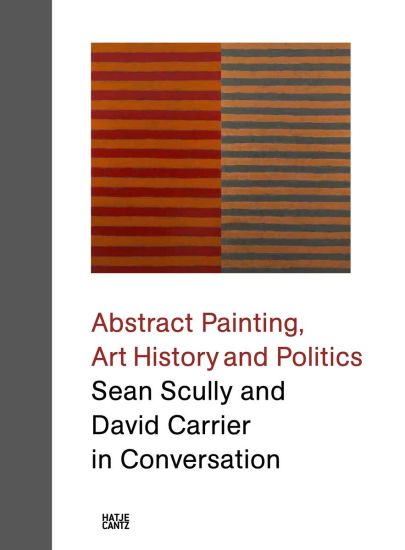
Sean Scully and David Carrier in Conversation

Sean Scully and David Carrier in Conversation

David Carrier; Sean Scully

Hatje Cantz
2021
sidottu
What makes a person an artist? How do works of art and their very own, extraordinary style come into being? And how does the prominent painter view his own work? The world-famous painter Sean Scully met with the philosopher David Carrier for several in-depth interview sessions. Their conversations explore these and many more questions about Scully’s life, work, and ideas. The result is a rich manuscript that very closely approaches the status of autobiography. Scully provides personal insights into his life and the important sources of inspiration for his career. He discusses his own view of his entire oeuvre, of art history and his position within it. Thus, this text becomes a literal eye-opener for Scully’s art, which can be (re)discovered through his words.
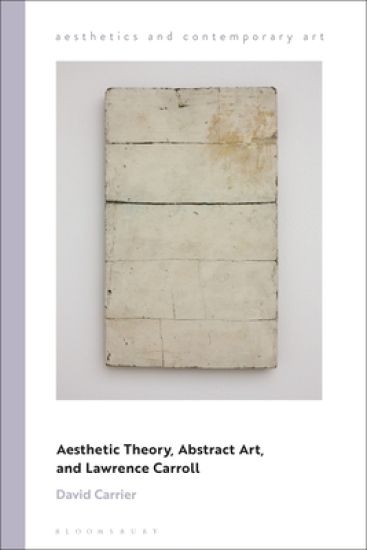
Aesthetic Theory, Abstract Art, and Lawrence Carroll
Boldly developing the central traditions of American modernist abstraction, Lawrence Carroll’s paintings engage with a fundamental issue of aesthetic theory, the nature of the medium of painting, in highly original, frequently extraordinarily successful ways. Aesthetic Theory, Abstract Art, and Lawrence Carroll explains how he understands the medium of painting; shows what his art says about the identity of painting as an art; discusses the place of his paintings in the development of abstraction; and, finally, offers an interpretation of his art. The first monograph devoted to him, this philosophical commentary employs the resources of analytic aesthetics. Art historians trace the development of art, explaining how what came earlier yields to what comes later. Taking for granted that the artifacts they describe are artworks, art historians place them within the history of art. Philosophical art writers define art, explain why it has a history and identify its meaning. Pursuing that goal, Aesthetic Theory, Abstract Art, and Lawrence Carroll roams freely across art history, focused at some points on the story of old master painting and sometimes on the history of modernism, but looking also to contemporary art, in order to provide the fullest possible philosophical perspective on Carroll’s work.
Aesthetic Theory, Abstract Art, and Lawrence Carroll
Boldly developing the central traditions of American modernist abstraction, Lawrence Carroll’s paintings engage with a fundamental issue of aesthetic theory, the nature of the medium of painting, in highly original, frequently extraordinarily successful ways. Aesthetic Theory, Abstract Art, and Lawrence Carroll explains how he understands the medium of painting; shows what his art says about the identity of painting as an art; discusses the place of his paintings in the development of abstraction; and, finally, offers an interpretation of his art. The first monograph devoted to him, this philosophical commentary employs the resources of analytic aesthetics. Art historians trace the development of art, explaining how what came earlier yields to what comes later. Taking for granted that the artifacts they describe are artworks, art historians place them within the history of art. Philosophical art writers define art, explain why it has a history and identify its meaning. Pursuing that goal, Aesthetic Theory, Abstract Art, and Lawrence Carroll roams freely across art history, focused at some points on the story of old master painting and sometimes on the history of modernism, but looking also to contemporary art, in order to provide the fullest possible philosophical perspective on Carroll’s work.
The Paradox of Subjectivity

The Paradox of Subjectivity

David Carr

Oxford University Press Inc
1999
sidottu
Challenging prevailing interpretations of the development of modern philosophy, this book proposes a reinterpretation of the transcendental tradition, as represented primarily by Kant and Husserl, and counters Heidegger's influential reading of these philosophers. Author David Carr defends their subtle and complex transcendental investigations of the self and the life of subjectivity, and seeks to revive an understanding of what Husserl calls "the paradox of subjectivity"--an appreciation for the rich and sometimes contradictory character of experience.
Experience and History

Experience and History

David Carr

Oxford University Press Inc
2014
sidottu
David Carr outlines a distinctively phenomenological approach to history. Rather than asking what history is or how we know history, a phenomenology of history inquires into history as a phenomenon and into the experience of the historical. How does history present itself to us, how does it enter our lives, and what are the forms of experience in which it does so? History is usually associated with social existence and its past, and so Carr probes the experience of the social world and of its temporality. Experience in this context connotes not just observation but also involvement and interaction: We experience history not just in the social world around us but also in our own engagement with it. For several decades, philosophers' reflections on history have been dominated by two themes: representation and memory. Each is conceived as a relation to the past: representation can be of the past, and memory is by its nature of the past. On both of these accounts, history is separated by a gap from what it seeks to find or wants to know, and its activity is seen by philosophers as that of bridging this gap. This constitutes the problem to which the philosophy of history addresses itself: how does history bridge the gap which separates it from its object, the past? It is against this background that a phenomenological approach, based on the concept of experience, can be proposed as a means of solving this problem-or at least addressing it in a way that takes us beyond the notion of a gap between present and past.
Time, Narrative, and History

Time, Narrative, and History

David Carr

Indiana University Press
1991
pokkari
"For description and defense of the narrative configurations of everyday life, and of the practical and social character of those narratives, there is no better treatment than Time, Narrative, and History. . . . a clear, judicious, and truthful account, provocative from beginning to end." —Journal of the British Society for Phenomenology " . . . a superior work of philosophy that tells a unique and insightful story about narrative." —Quarterly Journal of Speech
Historical Experience

Historical Experience

David Carr

Routledge
2021
sidottu
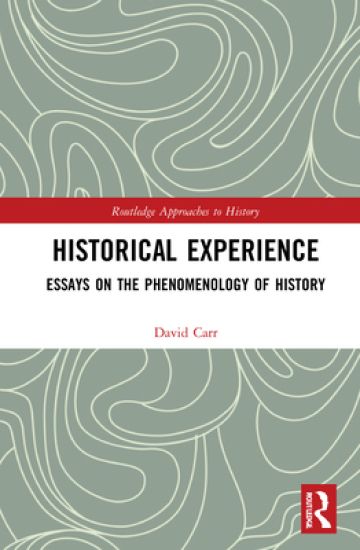
This volume brings together a collection of recent essays on the philosophy and theory of history.This is a field of lively interdisciplinary discussion and research, to which historians, philosophers and theorists of culture and literature have contributed. The author is a philosopher by training, and his inspiration comes primarily from the continental-phenomenological tradition. Thus the influence of Husserl, Heidegger, Merleau-Ponty and Ricoeur can be discerned here. This background opens up a unique perspective on the issues under discussion. Phenomenology differs from other philosophical approaches, like metaphysics and epistemology. Phenomenology asks, of anything that exists or may exist: how is it given, how does it enter our experience, what is our experience of it like? Very broadly we can say: phenomenology is about experience. At first glance, this approach may seem ill-suited to history. In our language, “history” usually means either 1) what happened, i.e. past events, or 2) our knowledge of what happened. We can’t experience past events, and whatever knowledge we have of them must come from other sources—memory, testimony, physical traces. But the author maintains that we actually do experience historical events, and these essays explain how this is so.Sitting at the intersection of philosophy and history, and divided into three parts—Historicity, Narrative, and Time, Teleology and History, and Embodiment and Experience—this is the ideal volume for those interested in experience from a philosophical and historical perspective.
Historical Experience

Historical Experience

David Carr

TAYLOR FRANCIS LTD
2022
nidottu
This volume brings together a collection of recent essays on the philosophy and theory of history.This is a field of lively interdisciplinary discussion and research, to which historians, philosophers and theorists of culture and literature have contributed. The author is a philosopher by training, and his inspiration comes primarily from the continental-phenomenological tradition. Thus the influence of Husserl, Heidegger, Merleau-Ponty and Ricoeur can be discerned here. This background opens up a unique perspective on the issues under discussion. Phenomenology differs from other philosophical approaches, like metaphysics and epistemology. Phenomenology asks, of anything that exists or may exist: how is it given, how does it enter our experience, what is our experience of it like? Very broadly we can say: phenomenology is about experience. At first glance, this approach may seem ill-suited to history. In our language, “history” usually means either 1) what happened, i.e. past events, or 2) our knowledge of what happened. We can’t experience past events, and whatever knowledge we have of them must come from other sources—memory, testimony, physical traces. But the author maintains that we actually do experience historical events, and these essays explain how this is so.Sitting at the intersection of philosophy and history, and divided into three parts—Historicity, Narrative, and Time, Teleology and History, and Embodiment and Experience—this is the ideal volume for those interested in experience from a philosophical and historical perspective.
Professionalism and Ethics in Teaching
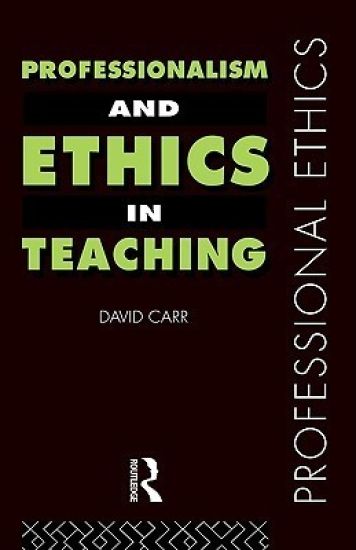
Professionalism and Ethics in Teaching presents a thought-provoking and stimulating study of the moral dimensions of the teaching professions. After discussing the moral implications of professionalism, Carr explores the relationship of education theory to teaching practice and the impact of this relationship on professional expertise. He then identifies and examines some central ethical and moral issues in education and teaching. Finally David Carr gives a detailed analysis of a range of issues concerning the role of the teacher and the managements of educational issues.Professionalism and Ethics in Teaching presents a thought-provoking and stimulating study of the moral dimensions of the teaching professions.
Professionalism and Ethics in Teaching
Professionalism and Ethics in Teaching presents a thought-provoking and stimulating study of the moral dimensions of the teaching professions. After discussing the moral implications of professionalism, Carr explores the relationship of education theory to teaching practice and the impact of this relationship on professional expertise. He then identifies and examines some central ethical and moral issues in education and teaching. Finally David Carr gives a detailed analysis of a range of issues concerning the role of the teacher and the managements of educational issues.Professionalism and Ethics in Teaching presents a thought-provoking and stimulating study of the moral dimensions of the teaching professions.
Making Sense of Education

Making Sense of Education

David Carr

Routledge
2002
nidottu
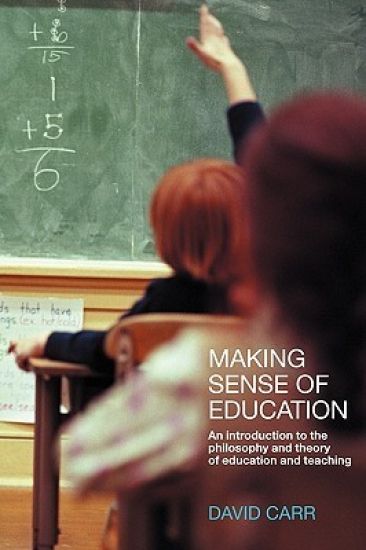
Making Sense of Education provides a contemporary introduction to the key issues in educational philosophy and theory. Exploring major past and present conceptions of education, teaching and learning, this book makes philosophy of education relevant to the professional practice of teachers and student teachers, as well of interest to those studying education as an academic subject.The book is divided into three parts:education, teaching and professional practice: issues concerning education, the role of the teacher, the relationship of educational theory to practice and the wider moral dimensions of pedagogylearning, knowledge and curriculum: issues concerning behaviourist and cognitive theories of learning, knowledge and meaning, curriculum aims and content and evaluation and assessmentschooling, society and culture: issues of the wider social and political context of education concerning liberalism and communitarianism, justice and equality, differentiation, authority and discipline.This timely and up-to-date introduction assists all those studying and/or working in education to appreciate the main philosophical sources of and influences on present day thinking about education, teaching and learning
Making Sense of Education

Making Sense of Education

David Carr

Routledge
2002
sidottu
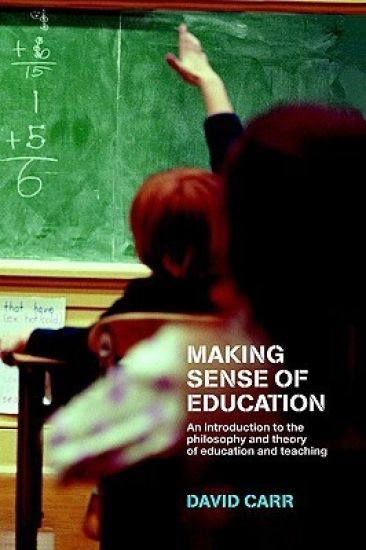
Making Sense of Education provides a contemporary introduction to the key issues in educational philosophy and theory. Exploring major past and present conceptions of education, teaching and learning, this book makes philosophy of education relevant to the professional practice of teachers and student teachers, as well of interest to those studying education as an academic subject.The book is divided into three parts:education, teaching and professional practice: issues concerning education, the role of the teacher, the relationship of educational theory to practice and the wider moral dimensions of pedagogylearning, knowledge and curriculum: issues concerning behaviourist and cognitive theories of learning, knowledge and meaning, curriculum aims and content and evaluation and assessmentschooling, society and culture: issues of the wider social and political context of education concerning liberalism and communitarianism, justice and equality, differentiation, authority and discipline.This timely and up-to-date introduction assists all those studying and/or working in education to appreciate the main philosophical sources of and influences on present day thinking about education, teaching and learning