Kirjojen hintavertailu. Mukana 11 717 486 kirjaa ja 12 kauppaa.

Kirjahaku

Etsi kirjoja tekijän nimen, kirjan nimen tai ISBN:n perusteella.

1000 tulosta hakusanalla David Edwin Harrell

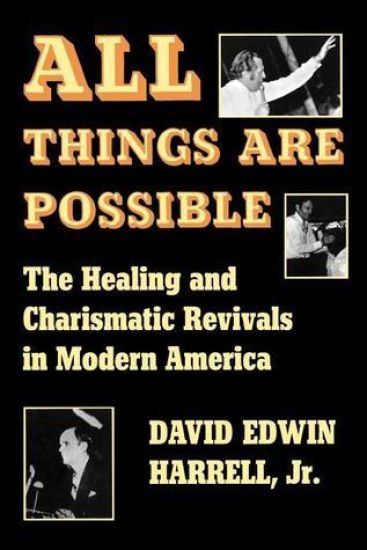
All Things Are Possible

All Things Are Possible

David Edwin Harrell

Indiana University Press
1979
pokkari
" . . . a book about healing revivalists that takes them seriously and treats them fairly." —Journal of Southern History " . . . will be a definitive work for some years to come." —Reviews in American History "Harrell has obviously attended countless rallies, read sheafs of literature, and personally interviewed many of the principals. He . . . tell[s] the story in a largely biographical format. This makes for lively reading." —Harvey G. Cox, New York Times Book Review " . . . will attract readers interested in the reasons behind the various fat and lean periods among revivalists." —Publishers Weekly "All Things Are Possible is the first book to tell the story of the enterprisers who have personal followings. The narrative is full of surprises: of seriousness and scandal strangely blended. Professor Harrell has done a staggering amount of research in hard to discover sources; his scholarship is impressive and he is eminently fair-minded. Here is a missing link in the chain of American religious movements." —Martin E. Marty, The University of Chicago Divinity School "Harrell's book will doubtless be the definitive work on the subject for a long while—who else will wade through Healing Waters and Miracle Magazine with such fastidious care?" —The Kirkus Reviews This is the first objective history of the great revivals that swept the country after World War II. It tells the story of the victories and defeats of such giants of the revival as William Branham, Oral Roberts, Jack Coe, T. L. Osborn, A. A. Allen. It also tells of the powerful present day evangelists who are carrying on the revival, including Robert Schambach and Morris Cerullo. The book includes pictures of Schambach, Allen, Cerullo, Branham, Roberts, Osborn, Coe and many others. Those who lived through the great revival of the 1950's and 1960's will be thrilled to read about those exciting days. Those who do not remember those days need to read this book to see what has led us up to this present moment in time. David Edwin Harrell, Jr. is a professor of history at the University of Alabama in Birmingham. He has tried to write this book in an objective way, although you may not agree with all that he says. Dr. Harrell has visited Schambach revivals.
The Churches of Christ in the 20th Century

The Churches of Christ in the 20th Century

David Edwin Harrell

The University of Alabama Press
2002
nidottu
As a preacher, teacher and author, Homer Hailey was widely known throughout the congregations of the churches of Christ. This biography is also a history of the complex and schismatic American restoration movement that produced the modern-day churches of Christ.
Unto A Good Land

Unto A Good Land

David Edwin Harrell; Edwin S. Gaustad; John B. Boles

William B Eerdmans Publishing Co
2005
pokkari
Unto a Good Land offers a distinctive narrative history of the American people -- from the first contacts between Europeans and North America's native inhabitants, through the creation of a modern nation, to the standing of the United States as a world power. Written by a team of distinguished historians led by David Edwin Harrell, Jr. and Edwin S. Gaustad, this textbook shows how grasping the uniqueness of the bAmerican experimentb depends on understanding the role of religion as well as social, cultural, political, and economic factors in shaping U.S. history.A common shortcoming of most United States history textbooks is that while, in recent decades, they have expanded their coverage of social and cultural history, they still tend to shortchange the role of religious ideas, practices, and movements in the American past. Unto a Good Land addresses this shortcoming in a balanced way. The authors recognize that religion is only one of many factors that have influenced our past -- one, however, that has often been neglected in textbook accounts. This volume gives religion its appropriate place in the story.Unprecedented coverage of the forces that have shaped the history of the United StatesWhile none of America's rich history is left out, this volume is the first U.S. history textbook to give serious attention to the religious dimension of American life. This textbook is not a religious history; instead, it offers an account of American history that includes religious ideas, practices, and movements whenever they played a shaping role.Comprehensive and currentThis volume traces the American story from the earliest encounters between the first North Americaninhabitants and Europeans through the 2004 presidential election. Complete and balanced treatment is also given to issues of gender, race, and ethnicity, as well as cultural, political, and economic forces.A clear and compelling narrativeThe authors are more than expert historians; they are also talented writers who recognize history to be the retelling of human life. United by a seamless narrative structure, these chapters restore the bstoryb to history.Multiple formats specially designed for flexible classroom useUnto a Good Land is available as a single hardcover edition or as two paperback volumes, offering maximum flexibility when adapting curriculum for one- and two-semester courses in U.S. history. The two paperback volumes can be used for U.S. history survey courses divided at 1865 or 1900 -- or at any date in between.Informative special features to complement the textIn addition to the book's exceptional narrative, an array of special features enhances the instructional value of the text and points students to resources for further study.Includes assistance for teaching and test preparationThe instructor's manual for Unto a Good Land provides helpful suggestions for lesson plans and assignments, and the test bank provides multiple-choice and essay questions for use as study aids, quizzes, or tests.Suitable for instruction at both secular and religious colleges and universitiesDrawing on their experience in both secular and religious schools, the authors have ensured that this textbook is suitable for U.S. history classes in a wide variety of settings.
Unto A Good Land

Unto A Good Land

David Edwin Harrell; Edwin S. Gaustad; John B. Boles

William B Eerdmans Publishing Co
2005
pokkari
Introducing a New U.S. History Text That Takes Religion SeriouslyUnto a Good Land offers a distinctive narrative history of the American people -- from the first contacts between Europeans and North America's native inhabitants, through the creation of a modern nation, to the 2004 presidential election. Written by a team of highly regarded historians, this textbook shows how grasping the uniqueness of the -American experiment- depends on understanding not only social, cultural, political, and economic factors but also the role that religion has played in shaping U. S. history. While most United States history textbooks in recent decades have expanded their coverage of social and cultural history, they still tend to shortchange the role of religious ideas, practices, and movements in the American past. Unto a Good Land restores the balance by giving religion its appropriate place in the story. This readable and teachable text also features a full complement of maps, historical illustrations, and -In Their Own Words- sidebars with excerpts from primary source documents.
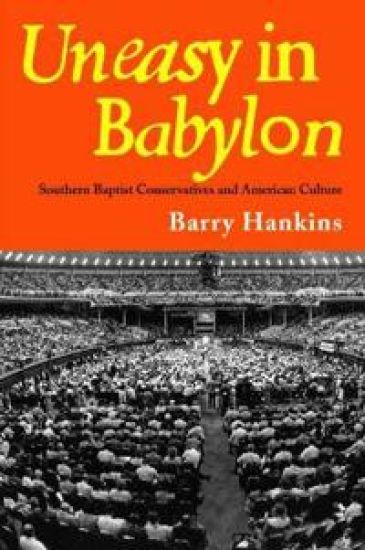
Uneasy in Babylon

Uneasy in Babylon

Barry Hankins; David Edwin Harrell; Wayne Flynt; Edith L. Blumhofer

The University of Alabama Press
2002
sidottu
Uneasy in Babylon is based on extensive interviews with the most important Southern Baptist conservatives who have wrested control of the Southern Baptist Convention (SBC) away from moderates. Known to many Americans from their appearances on national TV talk shows, such as Larry King Live, they advocate a return to traditional values throughout the country. Women should be submissive to their husbands, Disney World should be boycotted because of its tacit support of homosexuality, and multiculturalism is the death knell for the American way of life, these culture warriors aver. Almost 40 years earlier, historian Rufus Spain published At Ease in Zion: Social History of Southern Baptists, 1877-1914, showing how Southern Baptists had built a culture of their own in the South in which they were very comfortable. At the end of the 20th century, however, the new Southern Baptist conservatives live in a very different South where they are not at ease and do not dwell in Zion. Rather, asserts Hankins, because they are uneasy in a culture that to them resembles wicked Babylon, they intend to lead the orthodox side of the looming culture war in America. Hankins shows how differing cultural perceptions help explain the great chasm that developed between conservatives in the SBC and the moderates who preceded them as leaders of the denomination. The book covers the elite leaders of Southern Baptist conservatism from the 1960s to the present, focusing especially on how their views were formed as they studied and lived outside the South, how those cultural perceptions functioned in the 1980s and 1990s as they became highly visible activists in American culture, and how their writings have influenced journalists in both the religious and secular media. As the first mainstream historical treatment of SBC conservatism, Uneasy in Babylon will be valuable for religious and academic libraries, southern historians, and theologians, as well as general readers knowledgeable about the century-long battle within the Southern Baptist Convention.
Uneasy in Babylon

Uneasy in Babylon

Barry Hankins; David Edwin Harrell; Wayne Flynt; Edith L. Blumhofer

The University of Alabama Press
2003
nidottu
Uneasy in Babylon is based on extensive interviews with the most important Southern Baptist conservatives who have assumed control of the Southern Baptist Convention (SBC). Known to many Americans from their appearances on national TV talk shows, such as Larry King Live and Fox News, they advocate a return to traditional values throughout the country. Hankins shows how differing cultural perceptions help explain the great chasm that developed between fundamentalists in the SBC and the moderates who preceded them as leaders of the denomination.
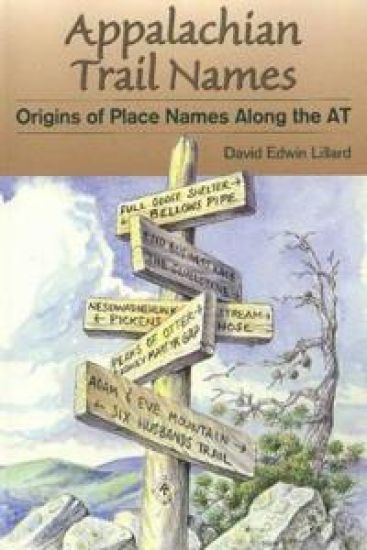
Appalachian Trail Names

Appalachian Trail Names

David Edwin Lillard

Stackpole Books
2002
pokkari
This concise, alphabetical, backpack-friendly guide explains the origins of some 1100 place names hikers come across as they make their way along the Appalachian Trail. Filled with fascinating facts, surprising stories, and colourful trivia, it also offers insight into the AT's long and legendary history, as well as the history of the wilderness preservation movement, and of the country itself.
Putting The Pieces Together

Putting The Pieces Together

David Edwin Jacobson

Parker Publishers
2026
pokkari
Putting the Pieces Together is a powerful autobiography that traces David E. Jacobson's extraordinary journey from a childhood marked by trauma, instability, and parental alcoholism to a life rebuilt on resilience, love, service, and personal achievement. With unflinching honesty and emotional clarity, David reflects on eight decades of triumphs and hardships from polio and juvenile institutions to the Air Force, marriage, fatherhood, a successful technology career, global adventures, and eventually, the wisdom of old age. The book is not a story of tragedy it is a story of survival. David shows that even in the darkest moments, there are people who help, circumstances that shape us, and inner strength waiting to be uncovered. As the narrative unfolds, readers witness a life transformed piece-by-piece, proving that success is possible no matter where you begin. Through heartfelt storytelling, historical detail, and reflective wisdom, Putting the Pieces Together becomes a testament to hope, perseverance, and the human spirit's ability to overcome.
Putting The Pieces Together

Putting The Pieces Together

David Edwin Jacobson

Parker Publishers
2026
sidottu
Putting the Pieces Together is a powerful autobiography that traces David E. Jacobson's extraordinary journey from a childhood marked by trauma, instability, and parental alcoholism to a life rebuilt on resilience, love, service, and personal achievement. With unflinching honesty and emotional clarity, David reflects on eight decades of triumphs and hardships from polio and juvenile institutions to the Air Force, marriage, fatherhood, a successful technology career, global adventures, and eventually, the wisdom of old age. The book is not a story of tragedy it is a story of survival. David shows that even in the darkest moments, there are people who help, circumstances that shape us, and inner strength waiting to be uncovered. As the narrative unfolds, readers witness a life transformed piece-by-piece, proving that success is possible no matter where you begin. Through heartfelt storytelling, historical detail, and reflective wisdom, Putting the Pieces Together becomes a testament to hope, perseverance, and the human spirit's ability to overcome.
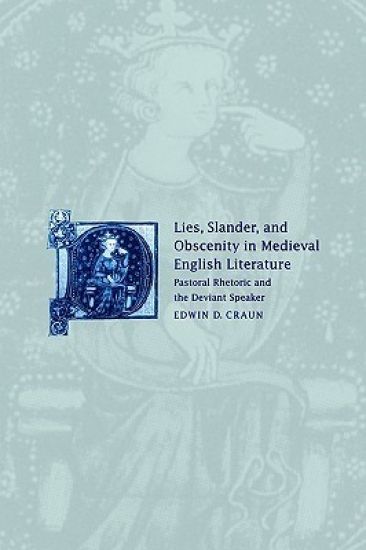
Lies, Slander and Obscenity in Medieval English Literature

Lies, Slander and Obscenity in Medieval English Literature

Edwin David Craun

Cambridge University Press
2005
pokkari
Drawing on manuscript sources, this book examines how the medieval clergy developed the authority and persuasive force to attempt to govern the day-to-day speech of Western Christians. It shows how attempts were made to portray some political, social and private speech as deviant and destructive, labelling it lying, slander, blasphemy and other Sins of the Tongue. It explores, for the first time, how Chaucer, Langland, Gower and the 'Patience' poet use the different strains of this pastoral discourse not only to expose the destructive power of speech in political and social life but also to judge clerical claims to authority and efficacy in formulating and applying codes of speech.
Lies, Slander and Obscenity in Medieval English Literature

Lies, Slander and Obscenity in Medieval English Literature

Edwin David Craun

Cambridge University Press
1997
sidottu
Drawing on manuscript sources, this book examines how the medieval clergy developed the authority and persuasive force to attempt to govern the day-to-day speech of Western Christians. It shows how attempts were made to portray some political, social and private speech as deviant and destructive, labelling it lying, slander, blasphemy and other Sins of the Tongue. It explores, for the first time, how Chaucer, Langland, Gower and the 'Patience' poet use the different strains of this pastoral discourse not only to expose the destructive power of speech in political and social life but also to judge clerical claims to authority and efficacy in formulating and applying codes of speech.