Kirjojen hintavertailu. Mukana 12 393 150 kirjaa ja 12 kauppaa.

Kirjahaku

Etsi kirjoja tekijän nimen, kirjan nimen tai ISBN:n perusteella.

1000 tulosta hakusanalla David Lewis

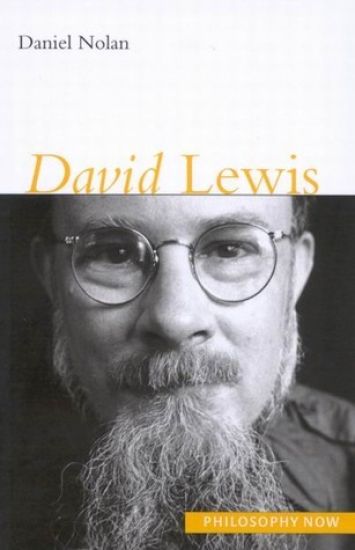
David Lewis

David Lewis

Daniel Nolan

Acumen Publishing Ltd
2005
sidottu
David Lewis's work is of fundamental importance in many areas of philosophical inquiry and there are few areas of Anglo-American philosophy where his impact has not been felt. Lewis's philosophy also has a rare unity: his views form a comprehensive philosophical system, answering a broad range of questions in metaphysics, philosophy of mind, philosophy of language, philosophy of action and many other areas. This breadth of Lewis's work, however, has meant that it is difficult to know where to start in Lewis's work and a casual reader may often miss some of the illuminating connections between apparently quite disparate pieces of Lewis's work. This book aims to make this body of work more accessible to a general philosophical readership, while also providing a unified overview of the many contributions Lewis has made to contemporary Anglo-American philosophy. The book can be divided into four parts. The first part examines Lewis's metaphysical picture - one of the areas where he has had the greatest impact and also the framework for the rest of his theories. The second section discusses Lewis's important contributions in the philosophy of mind, language and meaning. The third part explores some of Lewis's work in decision theory, metaethics and applied ethics, areas where his work in not necessarily as widely appreciated, but in which he has done a range of work that is both accessible and important. The final section focuses on Lewis's distinctive philosophical method, perhaps one of his most significant legacies, which combines naturalism with "common-sense" theorizing.
David Lewis

David Lewis

Daniel Nolan

Acumen Publishing Ltd
2005
nidottu
David Lewis's work is of fundamental importance in many areas of philosophical inquiry and there are few areas of Anglo-American philosophy where his impact has not been felt. Lewis's philosophy also has a rare unity: his views form a comprehensive philosophical system, answering a broad range of questions in metaphysics, philosophy of mind, philosophy of language, philosophy of action and many other areas. This breadth of Lewis's work, however, has meant that it is difficult to know where to start in Lewis's work and a casual reader may often miss some of the illuminating connections between apparently quite disparate pieces of Lewis's work. This book aims to make this body of work more accessible to a general philosophical readership, while also providing a unified overview of the many contributions Lewis has made to contemporary Anglo-American philosophy. The book can be divided into four parts. The first part examines Lewis's metaphysical picture - one of the areas where he has had the greatest impact and also the framework for the rest of his theories. The second section discusses Lewis's important contributions in the philosophy of mind, language and meaning. The third part explores some of Lewis's work in decision theory, metaethics and applied ethics, areas where his work in not necessarily as widely appreciated, but in which he has done a range of work that is both accessible and important. The final section focuses on Lewis's distinctive philosophical method, perhaps one of his most significant legacies, which combines naturalism with "common-sense" theorizing.
David Lewis und seine mereologische Interpretation der Zermelo-Fraenkelschen Mengenlehre
In seinem wichtigen Buch "Parts of Classes" hat David Lewis eine Reduktion von ZFC auf eine Mereologie zweiter Stufe skizziert. Sein Resultat nimmt in vorliegender Rekonstruktion folgende Form an: ZFC ist in M (der klassischen Mereologie zweiter Stufe) plus "Es gibt eine stark unerreichbare Partition" parametrisiert interpretierbar. In den Beweis geht ein, dass geordnete Paare in M plus "Es gibt eine unendliche Partition" parametrisiert interpretierbar sind. Die Arbeit beleuchtet den logischen und philosophie-geschichtlichen Hintergrund von "Parts of Classes," gibt eine Einf hrung in die Mereologie zweiter Stufe und schlie t mit einem recht einfachen Beweis f r "ZFC ist (die Konsistenz von ZFC vorausgesetzt) in einer konsistenten Mereologie zweiter Stufe parametrisiert interpretierbar."
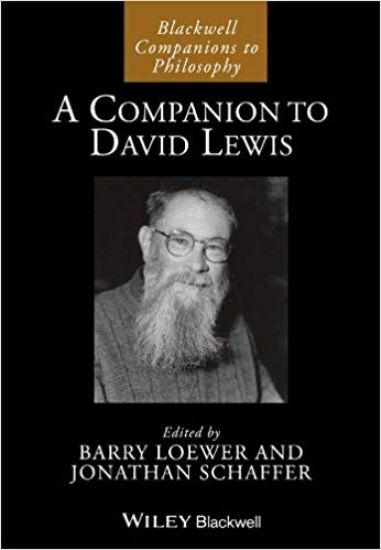
A Companion to David Lewis

A Companion to David Lewis

John Wiley Sons Inc
2015
sidottu
In A Companion to David Lewis, Barry Loewer and Jonathan Schaffer bring together top philosophers to explain, discuss, and critically extend Lewis's seminal work in original ways. Students and scholars will discover the underlying themes and complex interconnections woven through the diverse range of his work in metaphysics, philosophy of language, logic, epistemology, philosophy of science, philosophy of mind, ethics, and aesthetics. The first and only comprehensive study of the work of David Lewis, one of the most systematic and influential philosophers of the latter half of the 20th centuryContributions shed light on the underlying themes and complex interconnections woven through Lewis's work across his enormous range of influence, including metaphysics, language, logic, epistemology, science, mind, ethics, and aestheticsOutstanding Lewis scholars and leading philosophers working in the fields Lewis influenced explain, discuss, and critically extend Lewis's work in original waysAn essential resource for students and researchers across analytic philosophy that covers the major themes of Lewis's work
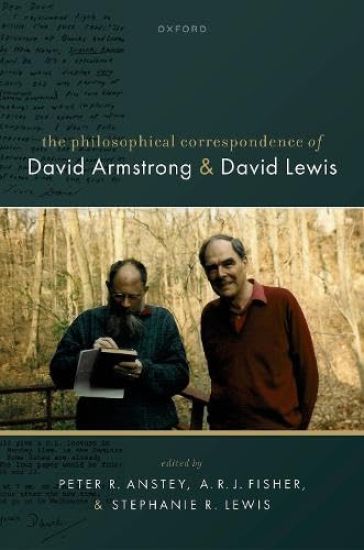
The Philosophical Correspondence of David Armstrong and David Lewis
This volume contains the complete correspondence of two of the leading analytic philosophers of the late twentieth century, David Armstrong and David Lewis. Comprising some 345 letters, including letters to and from third parties, this correspondence is at once a deep philosophical resource shedding new light on the philosophical development of two of the great late twentieth-century philosophers, and a record of the development of a philosophical friendship. The letters are valuable, not only for the light they shed on the background to many of Armstrong's and Lewis' major publications, but also for what they show us about the practice of philosophy. The correspondence is a window into both the philosophical content of two leading thinkers' minds and an exemplar of how philosophy of the highest level can be done.
Koordination Und Konvention - Die Theorie Von David Lewis
Studienarbeit aus dem Jahr 2008 im Fachbereich Germanistik - Semiotik, Pragmatik, Semantik, Note: 1,3, Universit t Leipzig (Institut f r Germanistik), Veranstaltung: HS Sprechch re, Sprache: Deutsch, Abstract: Unter einer Konvention versteht man im Allgemeinen eine nicht formal festgeschriebene Regel, die von einer bestimmten Gruppe von Menschen aufgrund einer bereinkunft eingehalten wird. Diese kann stillschweigend zustande gekommen oder vereinbart worden sein. David Lewis hat sich mit genau dieser Thematik ausf hrlich auseinandergesetzt und die 'Sprachkonvention', als zentralen Begriff der philosophischen Bedeutungstheorie, in einer neuen Art und Weise definiert. Mit diesem Aspekt m chte ich mich in meinem Beleg genauer auseinandersetzen. Der Schwerpunkt meiner Arbeit liegt dabei auf der Beschreibung sprachlicher Konventionen als Folge von Koordinationsproblemen, die durch Erreichen eines koordinativen Gleichgewichts gel st wurden. Als Quelle dient mir dabei vor allem das Buch "Konventionen. Eine sprachphilosophische Abhandlung" von David Lewis aus dem Jahre 1975. Im ersten Teil der Arbeit stelle ich zun chst einige Vor berlegungen zum sprachlichen Handeln und zur Sprechakttheorie im Allgemeinen an. Sie bilden die Grundlage f r die beiden folgenden Kapitel. Daraufhin stelle ich die Sprechakttheorie von John Searle kurz und knapp vor. Dieser setzte sich ausf hrlich mit Sprechakten auseinander und betonte, dass neben Intentionen vor allem Konventionen auf sprachliche Handlungen direkt einwirken und damit ber deren Erfolg entscheiden. In Ankn pfung daran, besch ftige ich mich im zweiten Teil der Arbeit umfassend mit David Lewis berlegungen zu Koordination und Konvention. Anhand von Beispielen erl utere ich dabei zun chst, was unter einem Koordinationsproblem zu verstehen ist und wie ein koordinatives Gleichgewicht erzielt werden kann. Anschlie end zeige ich - erneut anhand von Beispielen - auf, wie daraus Konventionen entstehen k nnen und was genau unter diesem
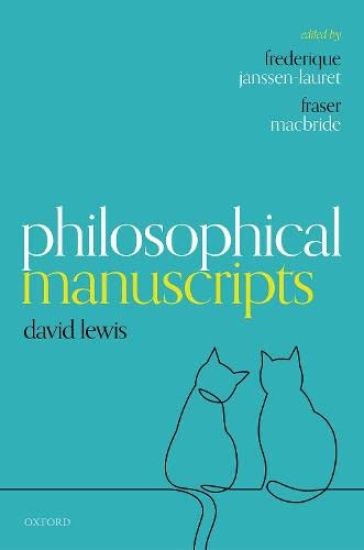
Philosophical Manuscripts

Philosophical Manuscripts

David Lewis

Oxford University Press
2023
sidottu
David Lewis (1941-2001) was a celebrated and influential figure in analytic philosophy. When Lewis died, he left behind a large body of unpublished notes, manuscripts, and letters. This volume contains two longer manuscripts which Lewis had originally intended to turn into books, and thirty-one shorter items. The longer manuscripts are 'The Paradoxes of Time Travel', his David Gavin Young Lectures at the University of Adelaide, and 'Confirmation Theory', which is based on a graduate course on probability and logic that he gave at UCLA. Lewis's described his purposes in 'The Paradoxes of Time Travel' as being, `(1) to solve a philosophical problem hitherto largely ignored or casually mis-solved by philosophers […]; (2) to introduce the layman to various topics in metaphysics, since our problem turns out to connect with many more familiar ones; and (3) to show of several of my favorite doctrines and methods in metaphysics'. By contrast, 'Confirmation Theory' is a technical work in which Lewis aimed to present in a unified fashion what he considered to be the best from competing theories of confirmation. Lewis described the work as 'Mathematically self-contained, with proofs for the major theorems; but the mathematics is kept down to hairy high-school algebra'. The thirty-one shorter items cover such topics as causation, freedom of the will, probability, counterparts, reference, logic, value, and divine evil. They are included here both for their intrinsic philosophical interest and their historical value. This volume also contains an intellectual biography of the young David Lewis by the editors.
Philosophical Papers: Volume II

Philosophical Papers: Volume II

David Lewis

Oxford University Press Inc
1987
nidottu
This is the second volume of philosophical essays by one of the most innovative and influential philosophers now writing in English. Containing thirteen papers in all, the book includes both new essays and previously published papers, some of them with extensive new postscripts reflecting Lewis's current thinking. The papers in Volume II focus on causation and several other closely related topics, including counterfactual and indicative conditionals, the direction of time, subjective and objective probability, causation, explanation, perception, free will, and rational decision. Throughout, Lewis analyzes global features of the world in such a way as to show that they might turn out to supervene on the spatiotemporal arrangement of local qualities.
Occupation: Russian Rule in South-Eastern Ukraine

Occupation: Russian Rule in South-Eastern Ukraine

David Lewis

Oxford University Press
2025
sidottu
In September 2022, at a grandiose ceremony in the Kremlin, President Putin announced the incorporation into the Russian Federation of four provinces in southern and eastern Ukraine--the most significant attempted land seizure in Europe since World War II. Although Russia was not in control of large parts of these provinces, its military occupied more than 40,000 square miles of Ukrainian territory. Occupation explains how Russia sought to subjugate these territories through a toxic mix of violence, political influence and economic coercion. Its security forces kidnapped, tortured and killed civilians and officials, seized businesses and properties from Ukrainian owners, erased physical evidence of Ukrainian culture, and subjected the population to a barrage of constant propaganda. More than half of the pre-war population fled, to Europe, Russia or the rest of Ukraine, and most who remained were hostile to the occupiers. Yet Russia found local politicians to front its regime. A few people openly collaborated; most faced uncomfortable choices to survive under Russian rule. In occupied Ukraine, Moscow attempted to create an ersatz 'new Russia', based on fantasy, ideology and violence. This regime was a microcosm of the contemporary Russian Federation, reflecting its deepening militarization and authoritarianism.
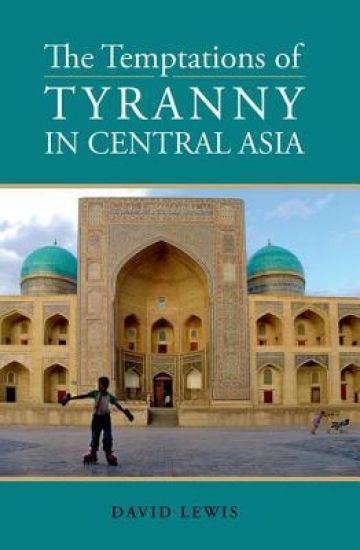
Temptations of Tyranny in Central Asia

Temptations of Tyranny in Central Asia

David Lewis

Oxford University Press, USA
2008
sidottu
After the toppling of the Taliban regime in Afghanistan the important but overlooked former Soviet states of Central Asia became for a brief time key players in the US-led war on terror. American and other Western military and economic aid poured in on the assumption that stability and greater democratisation would follow in its wake. But only a few years later the West's strategy to exert geopolitical influence in the region is in tatters. How did it all go so wrong? The Temptations of Tyranny in Central Asia explains why the US alliance with Uzbekistan failed to produce reform and instead ended with the massacre of hundreds of civilians in Andijan; it provides the first detailed account of the 2005 revolution in Kyrgyzstan; investigates the bizarre dictatorship in Turkmenistan that threatens to be the next North Korea; and examines the Islamic militant groups that threaten stability in the region. The book concludes with some of the lessons for Western policy in Central Asia, including the possibility of democratisation in the Islamic world; the myths and realities of Islamist militancy; the role of authoritarian states in inciting radicalism and violence; the conflict in US policy between security relationships and rhetorical commitments to democracy and human rights; and the developing rivalry between China, Russia and the US in the region.
Reading Contemporary Picturebooks
Reading Contemporary Picturebooks takes a look at one of the most vibrant branches of children's literature - the modern picturebook. This exciting new book takes a sample of contemporary picturebooks and closely examines the features that make them distinctive and then suggests a way of characterising the 'interanimation' of words and pictures that is the essence of the form. The reasons for the picturebook's vitality and flexibility are also explored and the close bond between the picturebook and its readers is analyzed. Advances in our understanding of how visual images are organized are examined and the book concludes with an attempt to redescribe the picturebook in such a way that pictures, readers and text may be drawn together. Picturing Text will be of interest to students, teachers and researchers interested in reading, children's literature and media studies.
Reading Contemporary Picturebooks
Reading Contemporary Picturebooks takes a look at one of the most vibrant branches of children's literature - the modern picturebook. This exciting new book takes a sample of contemporary picturebooks and closely examines the features that make them distinctive and then suggests a way of characterising the 'interanimation' of words and pictures that is the essence of the form. The reasons for the picturebook's vitality and flexibility are also explored and the close bond between the picturebook and its readers is analyzed. Advances in our understanding of how visual images are organized are examined and the book concludes with an attempt to redescribe the picturebook in such a way that pictures, readers and text may be drawn together. Picturing Text will be of interest to students, teachers and researchers interested in reading, children's literature and media studies.