Kirjojen hintavertailu. Mukana 11 244 527 kirjaa ja 12 kauppaa.

Kirjahaku

Etsi kirjoja tekijän nimen, kirjan nimen tai ISBN:n perusteella.

1000 tulosta hakusanalla Deborah Cook

Adorno, Habermas and the Search for a Rational Society
Theodor W. Adorno and Jnrgen Habermas both champion the goal of a rational society. However, they differ significantly about what this society should look like and how best to achieve it. Exploring the premises shared by both critical theorists, along with their profound disagreements about social conditions today, this book defends Adorno against Habermas' influential criticisms of his account of Western society and prospects for achieving reasonable conditions of human life. The book begins with an overview of these critical theories of Western society. Both Adorno and Habermas follow Georg Lukacs when they argue that domination consists in the reifying extension of a calculating, rationalizing form of thought to all areas of human life. Their views about reification are discussed in the second chapter. In chapter three the author explores their conflicting accounts of the historical emergence and development of the type of rationality now prevalent in the West. Since Adorno and Habermas claim to have a critical purchase on reified social life, the critical leverage of their theories is assessed in chapter four. The final chapter deals with their opposing views about what a rational society would look like, as well as their claims about the prospects for establishing such a society. Adorno, Habermas and the Search for a Rational Society will be essential reading for students and researchers of critical theory, political theory and the work of Adorno and Habermas.

Adorno, Habermas and the Search for a Rational Society
Theodor W. Adorno and Jnrgen Habermas both champion the goal of a rational society. However, they differ significantly about what this society should look like and how best to achieve it. Exploring the premises shared by both critical theorists, along with their profound disagreements about social conditions today, this book defends Adorno against Habermas' influential criticisms of his account of Western society and prospects for achieving reasonable conditions of human life. The book begins with an overview of these critical theories of Western society. Both Adorno and Habermas follow Georg Lukacs when they argue that domination consists in the reifying extension of a calculating, rationalizing form of thought to all areas of human life. Their views about reification are discussed in the second chapter. In chapter three the author explores their conflicting accounts of the historical emergence and development of the type of rationality now prevalent in the West. Since Adorno and Habermas claim to have a critical purchase on reified social life, the critical leverage of their theories is assessed in chapter four. The final chapter deals with their opposing views about what a rational society would look like, as well as their claims about the prospects for establishing such a society. Adorno, Habermas and the Search for a Rational Society will be essential reading for students and researchers of critical theory, political theory and the work of Adorno and Habermas.
The Culture Industry Revisited

The Culture Industry Revisited

Deborah Cook

Rowman Littlefield
1996
nidottu
As the culture wars continue to dominate newspaper headlines and conference panels, much of the debate revolves around the value of and values in popular culture. Many opponents of popular culture have cited Theodor W. Adorno, one of the leading figures of the Frankfurt School of critical theorists. Adorno is understood to have viewed mass culture as completely commodified—that is, produced only to be sold on the market and without aesthetic value. In this compelling book, Deborah Cook critically examines this view and argues persuasively that even Adorno's "pessimistic" theory leaves room for resistance to the culture industry. Beginning with an exploration of the theoretical background for Adorno's work, Cook then examines Adorno's conception and criticism of mass culture and its consumption, and his views about art and its relation to mass culture. The first book-length treatment in English of Adorno's work on popular culture, The Culture Industry Revisited provides new readers of Adorno with an understanding of his theory and an overview of his more important critics. Those more familiar with Adorno will find important discussion of some of the more controversial ideas in his work. The book will be of interest to scholars and upper-level students of philosophy, sociology, literature, communications, and cultural studies.
Theodor Adorno

Theodor Adorno

Deborah Cook

Acumen Publishing Ltd
2008
sidottu
Adorno continues to have an impact on disciplines as diverse as philosophy, sociology, psychology, cultural studies, musicology and literary theory. An uncompromising critic, even as Adorno contests many of the premises of the philosophical tradition, he also reinvigorates that tradition in his concerted attempt to stem or to reverse potentially catastrophic tendencies in the West. This book serves as a guide through the intricate labyrinth of Adorno's work. Expert contributors make Adorno accessible to a new generation of readers without simplifying his thought. They provide readers with the key concepts needed to decipher Adorno's often daunting books and essays.
Theodor Adorno

Theodor Adorno

Deborah Cook

Acumen Publishing Ltd
2008
nidottu
Adorno continues to have an impact on disciplines as diverse as philosophy, sociology, psychology, cultural studies, musicology and literary theory. An uncompromising critic, even as Adorno contests many of the premises of the philosophical tradition, he also reinvigorates that tradition in his concerted attempt to stem or to reverse potentially catastrophic tendencies in the West. This book serves as a guide through the intricate labyrinth of Adorno's work. Expert contributors make Adorno accessible to a new generation of readers without simplifying his thought. They provide readers with the key concepts needed to decipher Adorno's often daunting books and essays.
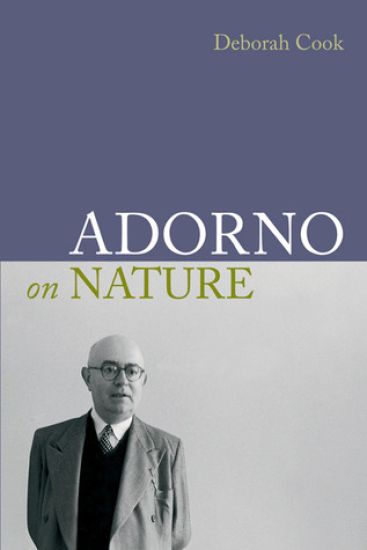
Adorno on Nature

Adorno on Nature

Deborah Cook

Acumen Publishing Ltd
2011
sidottu
Decades before the environmental movement emerged in the 1960s, Adorno condemned our destructive and self-destructive relationship to the natural world, warning of the catastrophe that may result if we continue to treat nature as an object that exists exclusively for our own benefit. "Adorno on Nature" presents the first detailed examination of the pivotal role of the idea of natural history in Adorno's work. A comparison of Adorno's concerns with those of key ecological theorists - social ecologist Murray Bookchin, ecofeminist Carolyn Merchant, and deep ecologist Arne Naess - reveals how Adorno speaks directly to many of today's most pressing environmental issues. Ending with a discussion of the philosophical conundrum of unity in diversity, "Adorno on Nature" also explores how social solidarity can be promoted as a necessary means of confronting environmental problems.
Adorno on Nature

Adorno on Nature

Deborah Cook

Acumen Publishing Ltd
2011
nidottu
Decades before the environmental movement emerged in the 1960s, Adorno condemned our destructive and self-destructive relationship to the natural world, warning of the catastrophe that may result if we continue to treat nature as an object that exists exclusively for our own benefit. "Adorno on Nature" presents the first detailed examination of the pivotal role of the idea of natural history in Adorno's work. A comparison of Adorno's concerns with those of key ecological theorists - social ecologist Murray Bookchin, ecofeminist Carolyn Merchant, and deep ecologist Arne Naess - reveals how Adorno speaks directly to many of today's most pressing environmental issues. Ending with a discussion of the philosophical conundrum of unity in diversity, "Adorno on Nature" also explores how social solidarity can be promoted as a necessary means of confronting environmental problems.
Adorno, Foucault and the Critique of the West
Adorno, Foucault, and the Critique of the West argues that critical theory continues to offer valuable resources for critique and contestation during this turbulent period in our history. To assess these resources, it examines the work of two of the twentieth century's more prominent social theorists: Theodor W. Adorno and Michel Foucault. Although Adorno was situated squarely in the Marxist tradition that Foucault would occasionally challenge, Cook demonstrates that their critiques of our current predicament are complementary in important respects. Among other things, they converge in their focus on the historical conditions-economic in Adorno and political in Foucault-that gave rise to the racist and authoritarian tendencies that continue to blight the West. But this book will also show that as Adorno and Foucault plumb the economic and political forces that have shaped our identities, they offer remarkably similar answers to the perennial question: What is to be done?