Kirjojen hintavertailu. Mukana 11 244 527 kirjaa ja 12 kauppaa.

Kirjahaku

Etsi kirjoja tekijän nimen, kirjan nimen tai ISBN:n perusteella.

1000 tulosta hakusanalla Deborah Simonton

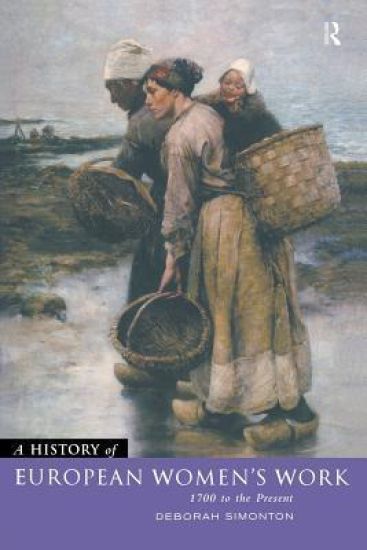
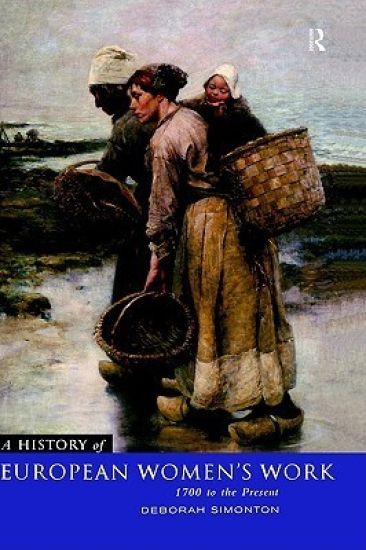
A History of European Women's Work

A History of European Women's Work

Deborah Simonton

Routledge
1998
sidottu
The work patterns of European women from 1700 onwards fluctuate in relation to ideological, demographic, economic and familial changes. In A History of European Women's Work, Deborah Simonton draws together recent research and methodological developments to take an overview of trends in women's work across Europe from the so-called pre-industrial period to the present.Taking the role of gender and class in defining women's labour as a central theme, Deborah Simonton compares and contrasts the pace of change between European countries, distinguishing between Europe-wide issues and local developments.
A History of European Women's Work

A History of European Women's Work

Deborah Simonton

Routledge
1998
nidottu
The work patterns of European women from 1700 onwards fluctuate in relation to ideological, demographic, economic and familial changes. In A History of European Women's Work, Deborah Simonton draws together recent research and methodological developments to take an overview of trends in women's work across Europe from the so-called pre-industrial period to the present.Taking the role of gender and class in defining women's labour as a central theme, Deborah Simonton compares and contrasts the pace of change between European countries, distinguishing between Europe-wide issues and local developments.
Women in European Culture and Society

Women in European Culture and Society

Deborah Simonton

Routledge
2010
sidottu
A new and major contribution to the field, Women in European Culture and Society is a transnational history of women in Europe from the beginning of the eighteenth century that pushes women’s history beyond national studies to create an integrated view of three hundred years of women in Europe. Using a longue durée, the book disentangles the accounts of industrialisation and bourgeois femininity which tend to dominate women’s studies, and questions the dominant narratives of history. Drawing on women’s own writing and cultural production, it presents women as agents of change as well as exploring cultural perceptions of women and the ways in which women have been represented by these discourses. It explicitly engages with how women contributed as practitioners to shaping the culture and society of western Europe. The geographical range and generational breadth of this study provides a cohesive vision of women’s lives up to the present day. Women in European Culture and Society is an invaluable and essential guide to the conditions, circumstances and understandings of how women lived throughout Europe.
Women in European Culture and Society

Women in European Culture and Society

Deborah Simonton

Routledge
2010
nidottu
A new and major contribution to the field, Women in European Culture and Society is a transnational history of women in Europe from the beginning of the eighteenth century that pushes women’s history beyond national studies to create an integrated view of three hundred years of women in Europe. Using a longue durée, the book disentangles the accounts of industrialisation and bourgeois femininity which tend to dominate women’s studies, and questions the dominant narratives of history. Drawing on women’s own writing and cultural production, it presents women as agents of change as well as exploring cultural perceptions of women and the ways in which women have been represented by these discourses. It explicitly engages with how women contributed as practitioners to shaping the culture and society of western Europe. The geographical range and generational breadth of this study provides a cohesive vision of women’s lives up to the present day. Women in European Culture and Society is an invaluable and essential guide to the conditions, circumstances and understandings of how women lived throughout Europe.
Gender in the European Town

Gender in the European Town

Deborah Simonton

Routledge
2022
sidottu
Moving from the mid-seventeenth century to the near present, this book marks physical and conceptual changes across European towns and examines how gender was implicated and imbricated in those changes. As places which fostered and disseminated key social, economic, political and cultural developments, towns were central to the creation of gendered identities and the transmission of ideas across local, national and transnational boundaries. From 1650 to 2000, towns grew rapidly and responded to the needs for new infrastructures, physical reconfiguration and ideas of citizenship. Gender relations vary over space and time and are continually altering; such variation underlines the need for a thorough non- or even anti-essentialism. Drawing primarily on three themes of economy, civic identity and uses of space, the volume shows that urban development, and responses to it, is not gender neutral and thus argues for the fundamental importance of a gendered perspective.Gender in the European Town is a useful resource for all students and scholars interested in urban history and its interaction with gender from 1650 to the present.
Gender in the European Town

Gender in the European Town

Deborah Simonton

Routledge
2022
nidottu
Moving from the mid-seventeenth century to the near present, this book marks physical and conceptual changes across European towns and examines how gender was implicated and imbricated in those changes. As places which fostered and disseminated key social, economic, political and cultural developments, towns were central to the creation of gendered identities and the transmission of ideas across local, national and transnational boundaries. From 1650 to 2000, towns grew rapidly and responded to the needs for new infrastructures, physical reconfiguration and ideas of citizenship. Gender relations vary over space and time and are continually altering; such variation underlines the need for a thorough non- or even anti-essentialism. Drawing primarily on three themes of economy, civic identity and uses of space, the volume shows that urban development, and responses to it, is not gender neutral and thus argues for the fundamental importance of a gendered perspective.Gender in the European Town is a useful resource for all students and scholars interested in urban history and its interaction with gender from 1650 to the present.
Girlhood in Eighteenth-Century Britain

Girlhood in Eighteenth-Century Britain

Deborah Simonton

TAYLOR FRANCIS LTD
2025
sidottu
This book draws on a wide range of sources to provide the first comprehensive account of the experience of eighteenth-century working girlhood across all regions of Britain, examining the lifecycle stage of growing up for the middling and lower classes as they worked and prepared for a life of work. Studies of history have often tended to slide over the distinct history of girls in its focus on women’s history, merging their stories into broader narratives. This volume continues the more recent historical reclamation of girls and girlhood as a useful analytical tool, while also specifically addressing the lacunae in histories of eighteenth-century working girls. Examining the role of home, schools and apprenticeships in girls’ upbringing, it considers how mobility shaped their trajectories. Furthermore, it examines sociability, love, sex and the ‘misfortunes’ they might encounter. An underpinning message is the active role that girls played in shaping their own destinies using whatever tools were at their disposal. Written in an accessible style and bridging gaps in the literature, this volume is a valuable resource for university courses in the history of childhood and women’s studies/history.
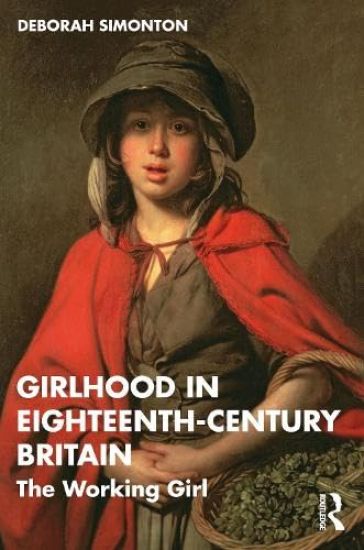
Girlhood in Eighteenth-Century Britain

Girlhood in Eighteenth-Century Britain

Deborah Simonton

TAYLOR FRANCIS LTD
2025
nidottu
This book draws on a wide range of sources to provide the first comprehensive account of the experience of eighteenth-century working girlhood across all regions of Britain, examining the lifecycle stage of growing up for the middling and lower classes as they worked and prepared for a life of work.Studies of history have often tended to slide over the distinct history of girls in its focus on women’s history, merging their stories into broader narratives. This volume continues the more recent historical reclamation of girls and girlhood as a useful analytical tool, while also specifically addressing the lacunae in histories of eighteenth-century working girls. Examining the role of home, schools, and apprenticeships in girls’ upbringing, it considers how mobility shaped their trajectories. Furthermore, it examines sociability, love, sex and the ‘misfortunes’ they might encounter. An underpinning message is the active role that girls played in shaping their own destinies using whatever tools at their disposal.Written in an accessible style and bridging gaps in the literature, this volume is a valuable resource for university courses in the History of Childhood and Women's Studies/History.
Women in Eighteenth-Century Scotland

Women in Eighteenth-Century Scotland

Deborah Simonton

Routledge
2019
nidottu
The eighteenth century looms large in the Scottish imagination. It is a century that saw the doubling of the population, rapid urbanisation, industrial growth, the political Union of 1707, the Jacobite Rebellions and the Enlightenment - events that were intrinsic to the creation of the modern nation and to putting Scotland on the international map. The impact of the era on modern Scotland can be seen in the numerous buildings named after the luminaries of the period - Adam Smith, David Hume, William Robertson - the endorsement of Robert Burns as the national poet/hero, the preservation of the Culloden battlefield as a tourist attraction, and the physical geographies of its major towns. Yet, while it is a century that remains central to modern constructions of national identity, it is a period associated with men. Until recently, the history of women in eighteenth-century Scotland, with perhaps the honourable exception of Flora McDonald, remained unwritten. Over the last decade however, research on women and gender in Scotland has flourished and we have an increasingly full picture of women's lives at all social levels across the century. As a result, this is an appropriate moment to reflect on what we know about Scottish women during the eighteenth century, to ask how their history affects the traditional narratives of the period, and to reflect on the implications for a national history of Scotland and Scottish identity. Divided into three sections, covering women's intimate, intellectual and public lives, this interdisciplinary volume offers articles on women's work, criminal activity, clothing, family, education, writing, travel and more. Applying tools from history, art anthropology, cultural studies, and English literature, it draws on a wide-range of sources, from the written to the visual, to highlight the diversity of women's experiences and to challenge current male-centric historiographies.
Women in European Culture and Society Text and Sourcebook - BUNDLE
Women in European Culture and Society: Gender, Skill and Identity since 1700 provides readers with an overview of women's roles and place in western Europe from the beginning of the eighteenth century, with essays covering the key themes in women's history. Drawing on women’s own writing and cultural production, it presents women as agents of change as well as exploring cultural perceptions of women and the ways in which women have been represented by these discourses. Women in European Culture and Society: A Sourcebook contains a uniquely diverse range of transnational sources from across Europe, organised in a broad chronological spread, and is an essential collection of material showing how women lived in Europe over the past three centuries. This bundle includes both the textbook and accompanying sourcebook together at a discount, providing a complete survey of women’s lives throughout Europe up to the present day.
Women in Eighteenth-Century Scotland

Women in Eighteenth-Century Scotland

Deborah Simonton

Ashgate Publishing Limited
2013
sidottu
The eighteenth century looms large in the Scottish imagination. It is a century that saw the doubling of the population, rapid urbanisation, industrial growth, the political Union of 1707, the Jacobite Rebellions and the Enlightenment - events that were intrinsic to the creation of the modern nation and to putting Scotland on the international map. The impact of the era on modern Scotland can be seen in the numerous buildings named after the luminaries of the period - Adam Smith, David Hume, William Robertson - the endorsement of Robert Burns as the national poet/hero, the preservation of the Culloden battlefield as a tourist attraction, and the physical geographies of its major towns. Yet, while it is a century that remains central to modern constructions of national identity, it is a period associated with men. Until recently, the history of women in eighteenth-century Scotland, with perhaps the honourable exception of Flora McDonald, remained unwritten. Over the last decade however, research on women and gender in Scotland has flourished and we have an increasingly full picture of women's lives at all social levels across the century. As a result, this is an appropriate moment to reflect on what we know about Scottish women during the eighteenth century, to ask how their history affects the traditional narratives of the period, and to reflect on the implications for a national history of Scotland and Scottish identity. Divided into three sections, covering women's intimate, intellectual and public lives, this interdisciplinary volume offers articles on women's work, criminal activity, clothing, family, education, writing, travel and more. Applying tools from history, art anthropology, cultural studies, and English literature, it draws on a wide-range of sources, from the written to the visual, to highlight the diversity of women's experiences and to challenge current male-centric historiographies.
Distance Education

Distance Education

Michael Simonson; Deborah J. Seepersaud

Information Age Publishing
2018
nidottu
The fourth edition of this book updates background information about the definition and supporting theories and updates the glossary with new terms related to distance education and instructional technology.
Distance Education

Distance Education

Michael Simonson; Deborah J. Seepersaud

Information Age Publishing
2018
sidottu
The fourth edition of this book updates background information about the definition and supporting theories and updates the glossary with new terms related to distance education and instructional technology.
Deborah

Deborah

Cathy Phythian

Trilogy Christian Publishing
2020
pokkari
God is calling mature women of faith to rise up and pray for the younger generations. Also, we need to tell them what we have learned about God and His wonders. This is our time to use the preparation we have experienced to lead the young army of God into battle as Deborah did with confidence.