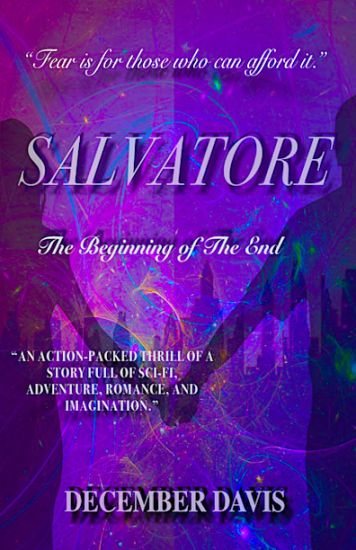
As the chief-contributor's youngest daughter, sixteen-year-old VANNA lived a life of privilege. But the moment her mother comes into her room on the most important night of her life with a terrified expression on her face, Vanna's entire life changes. WILDER has lived the entire eighteen years of his life as an outcast super-soldier. But on the night of The Court, he has a chance to change everything. He will need to use his Super in a way he never has before. TATTY is Vanna's twenty-year-old elder sister. She has been tasked with being a spy and going into the belly of the beast of the powerful Elders of Salvatore. What she learns and what she becomes is more than she bargained for. It has been decided by the Elders of Salvatore to end the human race's existence on the dying Earth. The plan is for a select and elite group of members known as The Court, all above eighteen, to be transported to Ojpan, a newer planet. But a rebellious group of minors and outcasts get wind of the plan and they want to live, they certainly don't want to end the human race. In a frightening race against time, their message of betrayal and survival is spreading around the world. Teens are managing to escape and are doing everything they can to stay alive and avoid getting caught, forming a rebellion that will rival The Elders' plans. In a story full of sci-fi, romance, action, and thrill: Alone, they are powerless, but together, they will prove to be a force to be reckoned with.
Paul Charles Joseph Bourget (French:2 September 1852 - 25 December 1935) was a French novelist and critic. Paul Bourget was born in Amiens in the Somme d partement of Picardy, France. His father, a professor of mathematics, was later appointed to a post in the college at Clermont-Ferrand, where Bourget received his early education. He afterwards studied at the Lyc e Louis-le-Grand and at the cole des Hautes tudes. Between 1872 and 1873, he produced a volume of verse, Au Bord de la Mer, which was followed by others, the last, Les Aveux, appearing in 1882. Meanwhile, he was making a name in literary journalism and in 1883 he published Essais de Psychologie Contemporaine, studies of eminent writers first printed in the Nouvelle Revue, and now brought together. In 1884 Bourget paid a long visit to Britain, where he wrote his first published story (L'Irr parable). Cruelle Enigme followed in 1885; then Andr Cornelis (1886) and Mensonges (1887) - inspired by Octave Mirbeau's life - were received with much favour. 4] Bourget, who had abandoned Catholicism in 1867, began a gradual return to it in 1889, fully converting only in 1901. In 1893, in an interview he gave in America, he spoke about his changed views: "For many years I, like most young men in modern cities, was content to drift along in agnosticism, but I was brought to my senses at last by the growing realization that...the life of a man who simply said 'I don't know, and not knowing I do the thing that pleases me, ' was not only empty in itself and full of disappointment and suffering, but was a positive influence for evil upon the lives of others." On the other hand, "those men and women who follow the teachings of the church are in a great measure protected from the moral disasters which...almost invariably follow when men and women allow themselves to be guided and swayed by their senses, passions and weaknesses." 5] These were the themes of his novel Le Disciple (1889), which he wrote, as he says in his American interview, just after abandoning his "drifting and comfortable belief in agnosticism". It is the story of philosopher Adrien Sixte, whose advocacy of materialism and positivism wields a terrible influence over an admiring but unstable student, Robert Geslon, whose actions, in turn, lead to the tragic death of a young woman. Le Disciple caused a stir in France and became a bestseller. Exemplifying the novelist's graver side, it was one of Gladstone's favourite books.John Cowper Powys listed Le Disciple at number 33 in his One Hundred Best Books... Charles Dana Gibson (September 14, 1867 - December 23, 1944) was an American graphic artist, best known for his creation of the Gibson Girl, an iconic representation of the beautiful and independent American woman at the turn of the 20th century. His wife, Irene Langhorne, and her four beautiful sisters, inspired his images. He published his illustrations in Life magazine and other major national publications for more than 30 years, becoming editor in 1918 and later owner of the general interest magazine.... Richard Harding Davis (April 18, 1864 - April 11, 1916) was an American journalist and writer of fiction and drama, known foremost as the first American war correspondent to cover the Spanish-American War, the Second Boer War, and the First World War. 1] His writing greatly assisted the political career of Theodore Roosevelt and he also played a major role in the evolution of the American magazine. His influence extended to the world of fashion and he is credited with making the clean-shaven look popular among men at the turn of the 20th century....
Title: A Discourse before the Massachusetts Historical Society, Boston, December 22, 1813. At their anniversary commemoration of the first landing of our ancestors at Plymouth, in 1620.Publisher: British Library, Historical Print EditionsThe British Library is the national library of the United Kingdom. It is one of the world's largest research libraries holding over 150 million items in all known languages and formats: books, journals, newspapers, sound recordings, patents, maps, stamps, prints and much more. Its collections include around 14 million books, along with substantial additional collections of manuscripts and historical items dating back as far as 300 BC.The GENERAL HISTORICAL collection includes books from the British Library digitised by Microsoft. This varied collection includes material that gives readers a 19th century view of the world. Topics include health, education, economics, agriculture, environment, technology, culture, politics, labour and industry, mining, penal policy, and social order. ++++The below data was compiled from various identification fields in the bibliographic record of this title. This data is provided as an additional tool in helping to insure edition identification: ++++ British Library Davis, John; 1814. 31 p.; 8 . 740.f.11.(2.)
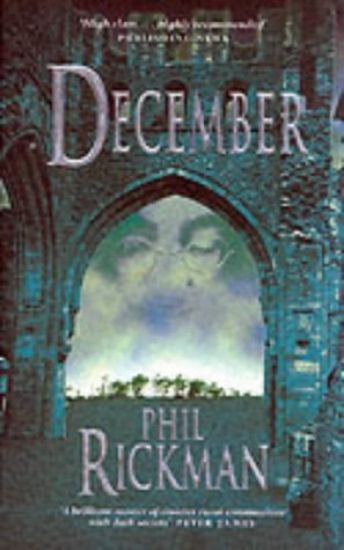
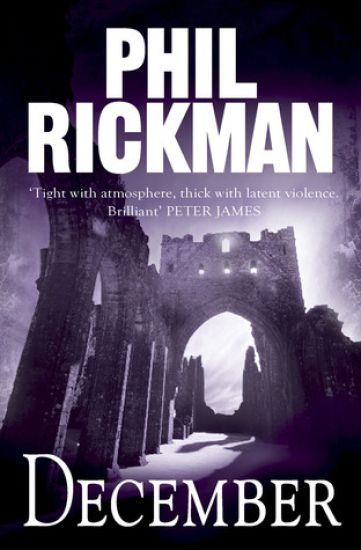
Four musicians gather in a recording studio in a haunted abbey, to tap into the site's psychic dark history, the same night when John Lennon was murdered. The band's tapes survive and in 1994, a record company plans to release them. The musicians must now face their personal demons and face evil.
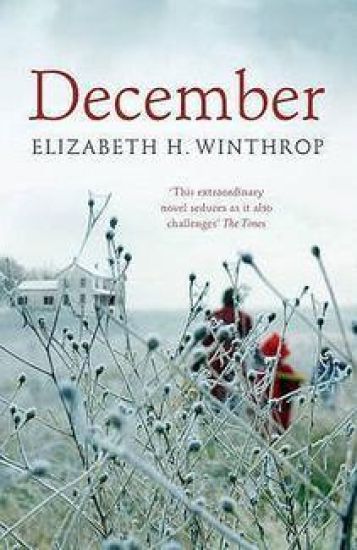
Eleven-year-old Isabelle hasn't spoken in nine months, and as December begins the situation is getting desperate. Her mother has stopped work to devote herself to her daughter's care. Four psychiatrists have already given up on her, and her school will not take her back in the New Year. Her parents are frantically trying to understand what has happened so they can help their child, but they cannot escape the thought of darker possibilities. What if Isabelle is damaged beyond their reach? Will she never speak again? Is it their fault? As they spiral around Isabelle's impenetrable silence, she herself emerges as a bright young girl in need of help yet too terrified to ask for it. By the talented young author of FIREWORKS, this is a compelling, ultimately uplifting novel about a family in crisis, showing the delicate web that connects a husband and wife, parents and children, and how easily it can tear.
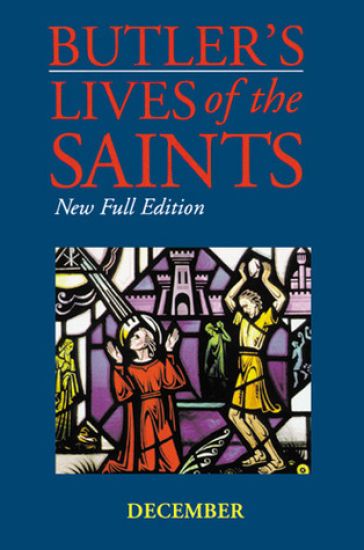
One of the most well-known and relied-upon reference works of all time has been updated and revised The twelve volumes of the revised Butler's Lives of the Saints correspond to the months of the year; each volume contains entries on saints with feast days in that month.Since its original publication over two hundred years ago, Butler's Lives of the Saints has been one of the best-known and most-used religious reference works of all time. The original work has been updated twice previously in the twentieth century, in 1926-1938 and again in the 1950s. The need has become urgent for this most thorough revision yet undertaken, completely rewritten and with substantial amendments to the selection of entries.These amendments have been made necessary, first by the major reform of the Roman Calendar, which removed many saints for whom reliable historical evidence was lacking, and, second, by the unprecedented number of canonizations and beatifications of recent decades. To these factors must be added the ongoing revision of the Roman Martyrology in progress at the Congregation for Divine Worship in Rome, which has altered a number of dates for commemoration, and which this new revision follows. Each volume is revised by one person, working to general guidelines and backed by a team of expert consultants. The criteria adopted are: maximum clarity of style; more world-wide emphasis, reflecting the pattern of recent beatifications; the provision of solid historical and contextual background. The bibliographical notes to each entry, which have been such a valuable feature, are retained and updated, and in the case of major figures, expanded with notes on artistic representations. In many cases, these relate to legend rather than to history, so relevant legends are not discarded, but distinguished as such-which may have been a principle, but was not always the practice with earlier editions. The name "Butler's" has been retained because, beside the fact that much of his information is still valid and retained, his original purpose remains the basic inspiration: "Example instructs without usurping the authoritative air of a master. . . . In the lives of the saints we see the most perfect maxims of the gospel reduced to practice."
In the historic tradition of calendar stories and calendar illustrations, author and film director Alexander Kluge and celebrated visual artist Gerhard Richter have composed December, a collection of thirty-nine stories and thirty-nine snow-swept photographs for the darkest month of the year.
In the historic tradition of calendar stories and calendar illustrations, author and film director Alexander Kluge and celebrated visual artist Gerhard Richter have composed December, a collection of thirty-nine stories and thirty-nine snow-swept photographs for the darkest month of the year.In stories drawn from modern history and the contemporary moment, from mythology, and even from meteorology, Kluge toys as readily with time and space as he does with his characters. In the narrative entry for December 1931, Adolf Hitler avoids a car crash by inches. In another, we relive Greek financial crises. There are stories where time accelerates, and others in which it seems to slow to the pace of falling snow. In Kluge’s work, power seems only to erode and decay, never grow, and circumstances always seem to elude human control. When a German commander outside Moscow in December of 1941 remarks, “We don’t need weapons to fight the Russians but a weapon to fight the weather,” the futility of his struggle is painfully present. Accompanied by the ghostly and wintry forest scenes captured in Gerhard Richter's photographs, these stories have an alarming density, one that gives way at unexpected moments to open vistas and narrative clarity. Within these pages, the lessons are perhaps not as comforting as in the old calendar stories, but the subversive moralities are always instructive and perfectly executed.Praise for Alexander Kluge“More than a few of Kluge's many books are essential, brilliant achievements. None are without great interest.”—Susan Sontag “Alexander Kluge, that most enlightened of writers.”—W.G. Sebald
A standalone supernatural thriller from the author of the chilling Merrily Watkins Mysteries.December has the shortest days, the darkest nights... In the ruins of a medieval abbey on the Welsh Border, four young musicians start work on an album influenced by the site's bloody history. It's December 1980 - the night John Lennon will be murdered in New York. And there'll be more horror before the sun rises and the session tapes are burned. Or are they? Years later, Moira, Dave, Tom and Simon are persuaded to return to the abbey to complete the recordings they thought had been destroyed. But the old tapes - and all the darkness they contain - have been restored. And it's December again.A PHIL RICKMAN STANDALONE NOVEL
December o primeiro da trilogia. Seu tema principal terror e sobreviv ncia. Miguel Ideali o anti-her i que luta pela sua sobreviv ncia e de sua fam lia em um mundo que a maior parte da popula o mundial est o possu das por dem nios. Eles precisam encontrar um lugar seguro, comida e armas para sobreviverem enquanto se defendem dos ataques dos possu dos que ca am e matam todas as pessoas que n o est o possu das. Precisam sair em busca de mantimentos, muni o e se tiverem sorte, encontrar mais pessoas que n o est o possu das ou capturar algum do possu dos para exorciz -los. Medo e terror dominam seus esp ritos, mortes e desespero os perseguem nas cidades abandonadas.
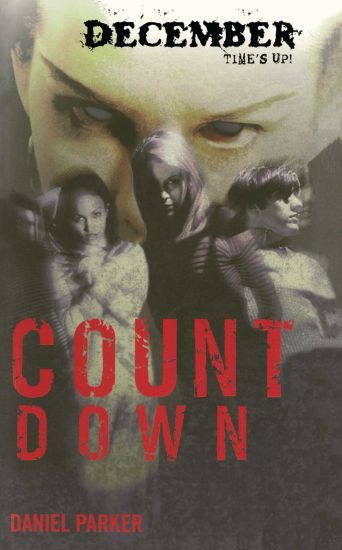
Countdown It's 1999. You better watch out -- you better not die. December They've spent a year fighting for survival. Their time has run out. Only one battle remains to be fought. One savage struggle between the Chosen One and the Demon. One defining moment that will decide the future of the planet. 10 9 8 7 6 5 4 3 2 1...?
December is the season of love, December has the moments of breaking up. December can turn you pale, it may make your relations red. And ""December"" is the perfect blend of poems. This book is unique in its own way because that is the author's first publication in public which includes 15 selected poems written back in the poet's early teenage. As mentioned in the preface of the book, these poems are somewhat autobiographical. Their poetic value will be decided by its readers, but they certainly have the flavor of teenage memory, love, breakups, trouble, society and also what happens in early adolescence. But some of the poems have a very calm and composed manner. They are full of peace and reflects the fluctuation of the writer's psychology. Hope the readers will enjoy the poems and will be sending positive feedbacks. We are also eager to welcome any constructive criticism or review.
Twelve women connected by the death of another, realizing what they most want from life and reaching for it - this is the year of discovery, the year of new beginnings. As the youngest of three sisters, Mika is thrown into turmoil by the death of her oldest sister, Meredith. She can't admit that Meredith's death has shaken her horribly, so she self-medicates with alcohol and finds herself in an abusive relationship.When her ex-boyfriend makes bail, Mika fears what he'll do to her and her family. As her life unravels, she turns to the only coping mechanism she has, but this only accelerates her decent. When Brendan Ward, a recovering alcoholic, offers to sponsor her, Mika responds with fury, but as things continue to come undone in her life, she wonders if she can learn to trust him before it's too late.