Kirjojen hintavertailu. Mukana 11 699 587 kirjaa ja 12 kauppaa.

Kirjahaku

Etsi kirjoja tekijän nimen, kirjan nimen tai ISBN:n perusteella.

1000 tulosta hakusanalla Denys Pringle

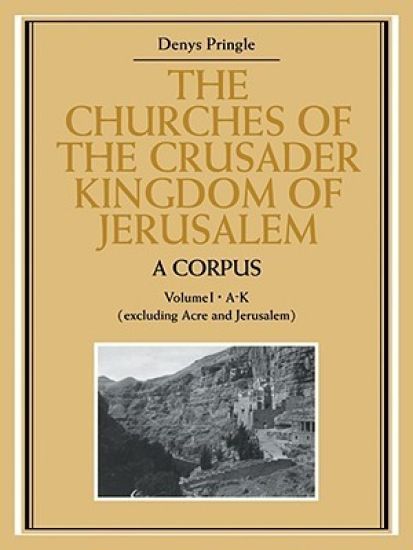
The Churches of the Crusader Kingdom of Jerusalem: A Corpus: Volume 1, A-K (excluding Acre and Jerusalem)
This is the first of a series of three volumes which are intended to present a complete corpus of all the church buildings in use in the crusader kingdom of Jerusalem between the capture of Jerusalem by the First Crusade in 1099 and the loss of Acre in 1291. Volume II completes the general topographical coverage begun in Volume I, while Volume III will deal specifically with Jerusalem, Acre and Tyre. When complete the Corpus will contain a topographical listing of all the 400 or more church buildings of the Kingdom and individual descriptions and discussion of them in terms of their identification, building history and architecture. A feature of the Corpus is the standardized format in which the evidence is presented; this also extends to the plans and elevations which are drawn to a uniform style and scale. The Corpus will therefore be an indispensable work of reference for all those concerned with the history and architecture of the Latin east.
Secular Buildings in the Crusader Kingdom of Jerusalem

Secular Buildings in the Crusader Kingdom of Jerusalem

Denys Pringle

Cambridge University Press
2009
pokkari
This book contains a descriptive gazetteer of all the secular buildings (including industrial sites) known by their surviving remains to have existed within the Crusader Kingdom of Jerusalem. The site descriptions take the form of brief notes with full bibliographical references and location maps, accompanied in most cases by photographs and drawings. The gazetteer is preceded by an introduction which analyses the range of building types to be found in the Crusader Kingdom and is followed by a supplementary gazetteer listing other sites as 'possibles', 'rejects' or 'don't knows'. This gazetteer has been compiled under the auspices of the British School of Archaeology in Jerusalem and is published as a companion volume to Dr Pringle's three-volume work The Churches of the Crusader Kingdom of Jerusalem.
The Churches of the Crusader Kingdom of Jerusalem: A Corpus: Volume 2, L-Z (excluding Tyre)
This is the second of a series of four volumes that are intended to present a complete corpus of all the church buildings, of both the western and the oriental rites, rebuilt or simply in use in the Crusader Kingdom of Jerusalem between the capture of Jerusalem for the First Crusade in 1099 and the loss of Acre in 1291. This volume completes the general topographical coverage begun in volume I, and will be followed by a third volume dealing specifically with the major cities of Jerusalem, Acre and Tyre (which are excluded from the preceding volumes). The project, of which this series represents the final, definitive publication, has been sponsored by the British School of Archaeology in Jerusalem. On completion the corpus will contain a topographical listing of all the 400 or more church buildings of the Kingdom that are attested by documentary or surviving archaeological evidence, and individual descriptions and discussion of them in terms of their identification, building history and architecture. Some of the buildings have been published before, but many others are published here for the first time.
The Churches of the Crusader Kingdom of Jerusalem: Volume 3, The City of Jerusalem
This is the third in a series of four volumes that are intended to present a complete Corpus of all the church buildings, of both the Western and the Oriental rites, built, rebuilt or simply in use in the Crusader Kingdom of Jerusalem between the capture of Jerusalem by the First Crusade in 1099 and the loss of Acre in 1291. This volume deals exclusively with Jerusalem, the capital of the Kingdom from 1099 to 1187, leaving the churches of Acre and Tyre to be covered in the fourth and final volume. The Corpus will be an indispensable work of reference to all those concerned with the medieval topography and archaeology of the Holy Land, with the history of the church in the Crusader Kingdom of Jerusalem, with medieval pilgrimage to the Holy Places, and with the art and architecture of the Latin East.
The Churches of the Crusader Kingdom of Jerusalem: A Corpus: Volume 2, L-Z (excluding Tyre)
This is the second of a series of four volumes that are intended to present a complete corpus of all the church buildings, of both the western and the oriental rites, rebuilt or simply in use in the Crusader Kingdom of Jerusalem between the capture of Jerusalem for the First Crusade in 1099 and the loss of Acre in 1291. This volume completes the general topographical coverage begun in volume I, and will be followed by a third volume dealing specifically with the major cities of Jerusalem, Acre and Tyre (which are excluded from the preceding volumes). The project, of which this series represents the final, definitive publication, has been sponsored by the British School of Archaeology in Jerusalem. On completion the corpus will contain a topographical listing of all the 400 or more church buildings of the Kingdom that are attested by documentary or surviving archaeological evidence, and individual descriptions and discussion of them in terms of their identification, building history and architecture. Some of the buildings have been published before, but many others are published here for the first time.
The Churches of the Crusader Kingdom of Jerusalem: Volume 4, The Cities of Acre and Tyre with Addenda and Corrigenda to Volumes 1-3
This is the fourth and final volume in a series which presents a complete corpus of all the church buildings that were built, rebuilt or simply in use in the Crusader Kingdom of Jerusalem between the capture of Jerusalem by the First Crusade in 1099 and the loss of Acre in 1291. This volume deals with the major coastal cities of Acre and Tyre, which were both in Frankish hands for almost two centuries, and also contains addenda and corrigenda to volumes 1–3. It describes and discusses some 120 churches and chapels that are attested by documentary or surviving evidence, accompanied where possible by plans, elevation drawings and photographs. This is an indispensable work of reference to all those concerned with the medieval archaeology of the Holy Land, the history of the Church in the Crusader Kingdom of Jerusalem and the art and architecture of the Latin East.
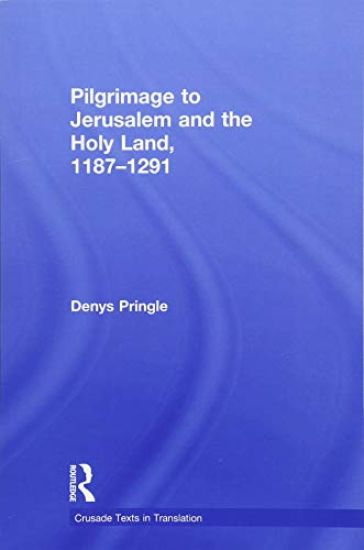
Pilgrimage to Jerusalem and the Holy Land, 1187–1291

Pilgrimage to Jerusalem and the Holy Land, 1187–1291

Denys Pringle

Ashgate Publishing Limited
2012
sidottu
This book presents new translations of a selection of Latin and French pilgrimage texts - and two in Greek - relating to Jerusalem and the Holy Land between the fall of Jerusalem to Saladin in 1187 and the loss of Acre to the Mamluks in 1291. It therefore complements and extends existing studies, which deal with the period from Late Antiquity to Saladin's conquest. Such texts provide a wealth of information not only about the business of pilgrimage itself, but also on church history, topography, architecture and the social and economic conditions prevailing in Palestine in this period. Pilgrimage texts of the 13th century have not previously been studied as a group in this way; and, because the existing editions of them are scattered across a variety of rather obscure publications, they tend to be under-utilized by historians, despite their considerable interest. For instance, they are often more original than the texts of the 12th century, representing first-hand accounts of travellers rather than simple reworkings of older texts. Taken together, they document the changes that occurred in the pattern of pilgrimage after the fall of Jerusalem in 1187, during its brief reoccupation by the Franks between 1229 and 1244, and during the period from 1260 onwards when the Mamluks gradually took military control of the whole country. In the 1250s-60s, for example, because of the difficulties faced by pilgrims in reaching Jerusalem itself, there developed an alternative set of holy sites offering indulgences in Acre. The bringing of Transjordan, southern Palestine and Sinai under Ayyubid and, later, Mamluk control also encouraged the development of the pilgrimage to St Catherine's monastery on Mount Sinai in this period. The translations are accompanied by explanatory footnotes and preceded by an introduction, which discusses the development of Holy Land pilgrimage in this period and the context, dating and composition of the texts themselves. The book concludes with a comprehensive list of sources and a detailed index.
Fortification and Settlement in Crusader Palestine
These studies examine the physical remains of Frankish settlement in Palestine in the 12th and 13th centuries. In recent years the view that Frankish settlement was largely confined to the fortified urban centres and castles, with few westerners venturing into the open countryside, has come to be challenged in the light of new archaeological evidence and re-examination of the sources. The present studies contribute to an understanding of the nature of Frankish settlement by illustrating aspects of the relationship between fortification and settlement: in particular, the role of castles and towers in promoting settlement and providing both security and domestic accommodation; the relationship between castles, towers and other semi-fortified rural structures; the physical planning of the new towns established by the canons of the Holy Sepulchre; the measures undertaken to defend urban settlements; and the contribution that town walls and castles made to the security of the kingdom.
Pilgrimage to Jerusalem and the Holy Land, 1187–1291
This book presents new translations of a selection of Latin and French pilgrimage texts - and two in Greek - relating to Jerusalem and the Holy Land between the fall of Jerusalem to Saladin in 1187 and the loss of Acre to the Mamluks in 1291. It therefore complements and extends existing studies, which deal with the period from Late Antiquity to Saladin's conquest. Such texts provide a wealth of information not only about the business of pilgrimage itself, but also on church history, topography, architecture and the social and economic conditions prevailing in Palestine in this period. Pilgrimage texts of the 13th century have not previously been studied as a group in this way; and, because the existing editions of them are scattered across a variety of rather obscure publications, they tend to be under-utilized by historians, despite their considerable interest. For instance, they are often more original than the texts of the 12th century, representing first-hand accounts of travellers rather than simple reworkings of older texts. Taken together, they document the changes that occurred in the pattern of pilgrimage after the fall of Jerusalem in 1187, during its brief reoccupation by the Franks between 1229 and 1244, and during the period from 1260 onwards when the Mamluks gradually took military control of the whole country. In the 1250s-60s, for example, because of the difficulties faced by pilgrims in reaching Jerusalem itself, there developed an alternative set of holy sites offering indulgences in Acre. The bringing of Transjordan, southern Palestine and Sinai under Ayyubid and, later, Mamluk control also encouraged the development of the pilgrimage to St Catherine's monastery on Mount Sinai in this period. The translations are accompanied by explanatory footnotes and preceded by an introduction, which discusses the development of Holy Land pilgrimage in this period and the context, dating and composition of the texts themselves. The book concludes with a comprehensive list of sources and a detailed index.
Fortification and Settlement in Crusader Palestine
These studies examine the physical remains of Frankish settlement in Palestine in the 12th and 13th centuries. In recent years the view that Frankish settlement was largely confined to the fortified urban centres and castles, with few westerners venturing into the open countryside, has come to be challenged in the light of new archaeological evidence and re-examination of the sources. The present studies contribute to an understanding of the nature of Frankish settlement by illustrating aspects of the relationship between fortification and settlement: in particular, the role of castles and towers in promoting settlement and providing both security and domestic accommodation; the relationship between castles, towers and other semi-fortified rural structures; the physical planning of the new towns established by the canons of the Holy Sepulchre; the measures undertaken to defend urban settlements; and the contribution that town walls and castles made to the security of the kingdom.
Churches, Castles and Landscape in the Frankish East

Churches, Castles and Landscape in the Frankish East

Denys Pringle

Ashgate Publishing Limited
2013
sidottu
The sixteen studies brought together in this book (the second collection of Denys Pringle's articles) are the product of the many years that the author has spent investigating the material evidence for Latin settlement in Syria and Palestine in the twelfth and thirteenth centuries. Focusing on the building remains of churches and castles - and their relationship to the landscape - the themes that it explores include: the influence that such factors as existing local architectural traditions and the need to accommodate visiting pilgrims may have had on the design of Latin churches and religious houses; the architecture of the Cistercian houses in the kingdom of Jerusalem; the insights that the geographical distribution of church buildings gives into the extent of Christian settlement in the 12th and 13th centuries; the development and geographical extent of estates and lordships, including the lordship of Mirabel; the functions of castles in peace and war and the perception of their role by contemporaries; the design and purpose of castle chapels and the role of their chaplains; the evidence for Armenian inhabitants in the castle of Sahyun; and the identification of the spring of the Cresson that features in accounts of the military campaigns of 1187.
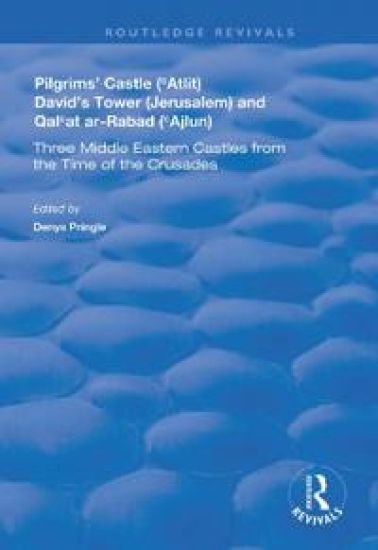
Pilgrims’ Castle (‘Atlit), David’s Tower (Jerusalem) and Qal‘at ar-Rabad (‘Ajlun)
First published in 1997, this collection includes papers on Crusader-era architecture in Palestine with a focus on ‘Atlit, the castle of ‘Ajlun and on the Citadel of Jerusalem, both the papers and sites of which have previously been difficult to access. The volume is presented partly to repair the very real deficit in the literature on Crusader architecture and partly as a fitting memorial to the author, who died in 1992. ‘Atlit in particular held a special significance for C.N. Johns, being the site of his first major project as a field archaeologist. His Guide to ‘Atlit, a masterly summary of his findings, remains the most complete and comprehensive account of the castle and its suburb.The studies collected here pay tribute to their author’s enduring contribution to the medieval archaeology of the Near East. The first part of the book deals with the ‘Pilgrim’s Castle’, the great Templar fortress and town at ’Atlit. The significance of Johns’ excavations at this site has been relatively neglected, because it remains in a military area, inaccessible to visitors, and because almost the entire stock of his major publication was lost in 1947. This ‘Guide to ’Atlit’, a synthesis of historical, archaeological and architectural research on the monument, is reprinted here together with all the interim reports relating to the medieval period. Also included are Johns’ studies on the Citadel of Jerusalem, the ‘Tower of David’, and on the Islamic castle of ‘Ajlun. Together, they represent a fundamental contribution to the study of the period of the Crusades and to the military architecture of the Middle Ages. The notes by Denys Pringle bring the accounts up to date in the light of recent research.
Pilgrims’ Castle (‘Atlit), David’s Tower (Jerusalem) and Qal‘at ar-Rabad (‘Ajlun)
First published in 1997, this collection includes papers on Crusader-era architecture in Palestine with a focus on ‘Atlit, the castle of ‘Ajlun and on the Citadel of Jerusalem, both the papers and sites of which have previously been difficult to access. The volume is presented partly to repair the very real deficit in the literature on Crusader architecture and partly as a fitting memorial to the author, who died in 1992. ‘Atlit in particular held a special significance for C.N. Johns, being the site of his first major project as a field archaeologist. His Guide to ‘Atlit, a masterly summary of his findings, remains the most complete and comprehensive account of the castle and its suburb.The studies collected here pay tribute to their author’s enduring contribution to the medieval archaeology of the Near East. The first part of the book deals with the ‘Pilgrim’s Castle’, the great Templar fortress and town at ’Atlit. The significance of Johns’ excavations at this site has been relatively neglected, because it remains in a military area, inaccessible to visitors, and because almost the entire stock of his major publication was lost in 1947. This ‘Guide to ’Atlit’, a synthesis of historical, archaeological and architectural research on the monument, is reprinted here together with all the interim reports relating to the medieval period. Also included are Johns’ studies on the Citadel of Jerusalem, the ‘Tower of David’, and on the Islamic castle of ‘Ajlun. Together, they represent a fundamental contribution to the study of the period of the Crusades and to the military architecture of the Middle Ages. The notes by Denys Pringle bring the accounts up to date in the light of recent research.
Denys Arcand's Le Declin De L'empire Americain and Les Invasions Barbares
The release of Denys Arcand's Le Déclin de l'empire américain (The Decline of the American Empire) in 1986 marked a major turning point in Quebec cinema. It was the first Québécois film that enjoyed huge critical and commercial success at home and abroad. Arcand's tragicomedy about eight intellectuals gathered around a dinner table relating sexy anecdotes became the top-grossing film of all time in Quebec and was the first Canadian feature to be nominated for an Oscar in the foreign-language category. Seventeen years later, Arcand won an Academy Award for the sequel, Les Invasions barbares (The Barbarian Invasions), where the amusing insouciance of the thirty-somethings talking dirty in Le Déclin is replaced by a sense of moral responsibility and serene resignation. In this engrossing study, André Loiselle presents the first in-depth analysis of both films within the context of Quebec culture. Through close readings and concise cultural analysis of two of the most important films in the history of Quebec cinema, Loiselle demonstrates the ways in which Arcand's work represents a snapshot of the evolution of the French Canadian film industry since 1980. The companion films trace the decline of Quebec's national dream and the Québécois' attempts to cling to their identity against the forces of barbaric globalization. The second title in the new Canadian Cinema series, Denys Arcand's "Le Déclin de l'empire américain" and "Les Invasions barbares" is essential reading for cinephiles, film critics, and anyone with an interest in cultural studies and Canadian and Quebec history.
Denys the Areopagite

Denys the Areopagite

Andrew Louth

Continuum International Publishing Group Ltd.
2002
nidottu
Andrew Louth examines all the traditions on which Denys' work draws: the Fourth Century Greek theologians, pagan philosophy and Syrian Christian thought. The corpus of Denys the Areopagite appeared in the sixth century and have since been deeply influential on Christian thinking both in East and West. Who their author was remains a mystery but in this book Professor Louth documents and comments on his compelling vision of the beauty of God's world and his revelation, together with his profound awareness of the ultimate mystery of the unknowable God who utterly transcends all being.