Kirjojen hintavertailu. Mukana 11 342 296 kirjaa ja 12 kauppaa.

Kirjahaku

Etsi kirjoja tekijän nimen, kirjan nimen tai ISBN:n perusteella.

1000 tulosta hakusanalla Dimitris Plantzos

Hellenistic Engraved Gems

Hellenistic Engraved Gems

Dimitris Plantzos

Clarendon Press
1999
sidottu
Engraved gems were used by the Greeks as seals and amulets, but were primarily valued as ornaments. Their iconography was drawn from a wide range of motifs and standard devices current in other art forms. In the Hellenistic period gem cutters remained faithful to the classical tradition, but were able to develop new subjects and styles. Portraits, especially of royalty, became the commonest subject in glyptic after Alexander, a practice that continued through the Roman period and was still popular with patrons and artists of the Renaissance and even later. This volume follows the development of gem engraving from Alexander's conquest of the East to the Augustan period. Hellenistic gems are studied in their archaeological and historical context: evidence on their use, significance, and value; questions of technique and style; and problems of chronology and distribution. Special sections have been devoted to patronage of gem-engravers and the relationship of gem-cutting with other miniaturist arts and coinage.
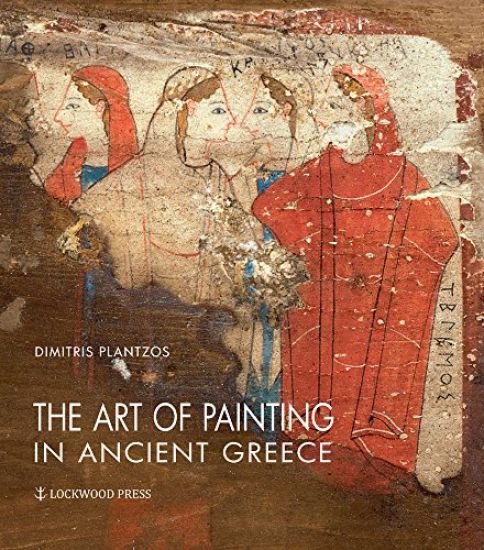
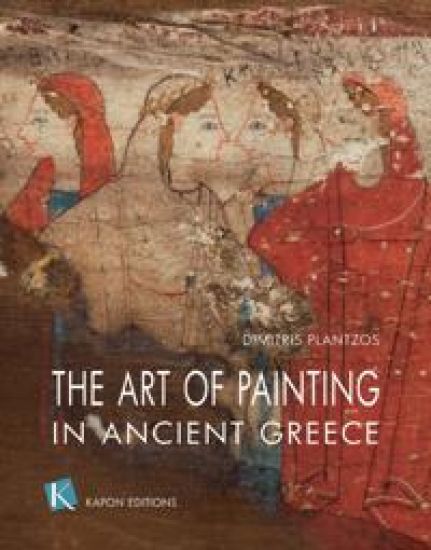
The Art of Painting in Ancient Greece

The Art of Painting in Ancient Greece

Dimitris Plantzos

Lockwood Press
2018
nidottu
This new and richly illustrated overview of Greek painting combines a fresh scholarly approach to visual arts with the most complete survey to date of the painted monuments of classical antiquity. The Art of Painting in Ancient Greece covers a wide chronological and geographical span, from the Bronze Age murals of Knossos, Santorini and Mycenae to the opulent villas of the Roman Empire, from Anatolia and Egypt in the East to Campania and Etruria in the West. Surveying the techniques, materials, and works produced, as well as ancient literary accounts, the book engages in five main lines of inquiry: Why did the Greeks cover the walls of their sanctuaries, agoras, palaces, homes, and even their tombs with painted images? What topics, real or imaginary, did they choose to depict? How were those images created? What were the techniques employed and the materials used? Who painted those images? And how does the spectacular phenomenon of Greek monumental painting compare with other branches of Greek art, from mosaics and vase painting to sculpture?
The Story of Lemnos (Greek lang.)

The Story of Lemnos (Greek lang.)

Dimitris Plantzos

Kapon Editions
2022
nidottu
In The Story of Lemnos Dimitris Plantzos has written the long history of the relatively unknown and, until recently, somewhat ignored Aegean island of Lemnos. The story is a fascinating narrative, a true chronicle of the place and its people. The book is illustrated throughout in colour. Readers will find detailed information about the society, economy, political life, art, and the intellectual output of the island over time, from the first nomadic settlements during the late Palaeolithic period (ca. 10,500 BC) up to today. There are extensive references to the prehistoric cities of Poliochni and Myrina, to the important sites of Koukonisi, Hephaestia and Kaveirion during the Archaic and Classical periods (7th-4th centuries BC), Lemnos of the Hellenistic and Roman eras, Lemnos as a Byzantine, Venetian, and Ottoman possession, and of course the life of the island and its inhabitants from the liberation of 1912-13 onwards. Finally, we get to read about Lemnos of today: places of historical importance, archaeological sites and museums, also locations of natural beauty, geological monuments and places of ecological interest, beaches and traditional settlements. The author also covers the intangible and gastronomic heritage of Lemnos, and also the music and dance tradition that is alive to this day. Language of text: Greek
The Story of Lemnos

The Story of Lemnos

Dimitris Plantzos

Kapon Editions
2022
nidottu
In The Story of Lemnos Dimitris Plantzos has written the long history of the relatively unknown and, until recently, somewhat ignored Aegean island of Lemnos. The story is a fascinating narrative, a true chronicle of the place and its people. The book is illustrated throughout in colour. Readers will find detailed information about the society, economy, political life, art, and the intellectual output of the island over time, from the first nomadic settlements during the late Palaeolithic period (ca. 10,500 BC) up to today. There are extensive references to the prehistoric cities of Poliochni and Myrina, to the important sites of Koukonisi, Hephaestia and Kaveirion during the Archaic and Classical periods (7th-4th centuries BC), Lemnos of the Hellenistic and Roman eras, Lemnos as a Byzantine, Venetian, and Ottoman possession, and of course the life of the island and its inhabitants from the liberation of 1912-13 onwards. Finally, we get to read about Lemnos of today: places of historical importance, archaeological sites and museums, also locations of natural beauty, geological monuments and places of ecological interest, beaches and traditional settlements. The author also covers the intangible and gastronomic heritage of Lemnos, and also the music and dance tradition that is alive to this day.
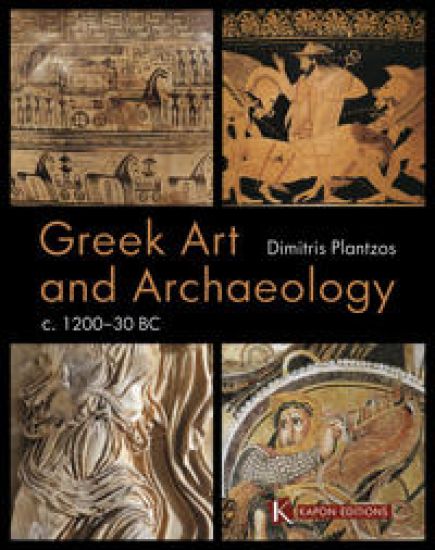
Greek Art and Archaeology c. 1200-30 BC

Greek Art and Archaeology c. 1200-30 BC

Dimitris Plantzos

Kapon Editions
2016
nidottu
This luxuriously illustrated book surveys Greek archaeology from the collapse of the Mycenaean palaces to the subordination of the last Hellenistic kingdoms to Rome. Its aim is to study Greek art through the material record, and against its cultural and social backdrop. It takes the reader on a tour of ancient Greece along the most important period in its history, the 1st millennium BC. Architecture, city planning, sculpture, painting, pottery, metallurgy, jewellery, and numismatics are some of the areas covered. With concise, systematic coverage of the main categories of classical monuments, the book caters for the non-specialist looking for the essential in ancient Greece, students of Greek archaeology and art, as well as anyone interested in Greek art and culture. The text is divided into accessible, user-friendly sections including case studies, terminology, charts, maps, a timeline and full index. This is the first English language edition of the original Greek edition and was thoroughly revised and expanded by Dimitris Plantzos before translation by the British archaeologist Nicola Wardle. 592 colour illustrations.
The Art of Painting in Ancient Greece (Greek language edition)
This innovative look at ancient Greek painting combines a standard comprehensive survey of the material record – wall paintings, painted panels, or slabs – with an in-depth exploration of the ways in which the people of Ancient Greece appreciated this demanding art. Plantzos looks at techniques, styles, themes and masters as well as their admirers, clients, and critics. At the same time, he discusses recent breakthroughs in archaeology, cultural studies, and art history. The book is unique in its reflections of new, multidisciplinary approaches to the material record which it combines with a more traditional, art-historical exploration; it draws on a wide range of ancient authorities – from Plato and Xenophon to Cicero, Pliny, Lucian, and Philostratus.The book covers painting in Bronze-Age Greece (Cyclades, Crete, Santorini, Mycenaean Greece); painting of the Archaic, the Classical, and the Hellenistic periods, and ends with a study of Graeco-Roman painting in the 2nd-3rd c. AD.Dimitris Plantzos is the author of Greek Art and Archaeology, 1200-30 BC (Kapon Editions, 2016) also available from UEP.
The Art of Painting in Ancient Greece (English language edition)
This innovative look at ancient Greek painting combines the most complete survey to date of the painted monuments of classical antiquity with an in-depth exploration of the ways in which the people of Ancient Greece appreciated this demanding art. Plantzos looks at techniques, styles, themes and masters as well as their admirers, clients, and critics. At the same time, he discusses recent breakthroughs in archaeology, cultural studies, and art history. The book is unique in its reflections of new, multidisciplinary approaches to the material record which it combines with a more traditional, art-historical exploration; it draws on a wide range of ancient authorities – from Plato and Xenophon to Cicero, Pliny, Lucian, and Philostratus. The book covers painting in Bronze-Age Greece (Cyclades, Crete, Santorini, Mycenaean Greece); painting of the Archaic, the Classical, and the Hellenistic periods, and ends with a study of Graeco-Roman painting in the 2nd-3rd c. AD. Dimitris Plantzos is the author of Greek Art and Archaeology, 1200-30 BC (Kapon Editions, 2016).
Introduction to Derivative Financial Instruments: Bonds, Swaps, Options, and Hedging
Written by a renowned corporate financial advisor, this timely guide offers a comprehensive treatment of derivative financial instruments, fully covering bonds, interest swaps, options, futures, Forex, and more. The author explains the strategic use of derivatives, their place in portfolio management, hedging, and the importance of managing risk.
Coronary Artery Disease

Coronary Artery Disease

Dimitris Tousoulis

Academic Press Inc
2017
nidottu
Coronary Artery Disease: From Biology to Clinical Practice links the most important basic concepts of atherosclerosis pathophysiology to treatment management of coronary artery disease. Comprehensive coverage starts with the basic pathophysiologic mechanisms of the disease, including molecular and genetic mechanisms, cells interaction and inflammation. In addition, sections on novel anti-atherosclerotic therapies and a thorough understanding of the recent trends in clinical management round out this comprehensive tome that is ideal for practitioners and researchers. By summarizing this novel knowledge and changes in diagnostic algorithm and treatment options, this is the perfect reference for cardiology researchers who want a volume with the most up-to-date experimental trends in the field of atherosclerosis, for cardiologists and physicians who manage patients with atherosclerotic risk factors and established coronary artery disease, and medical students who want to learn the basic concepts of atherosclerosis.
The Macedonian Question

The Macedonian Question

Dimitris Livanios

Oxford University Press
2008
sidottu
The Macedonian Question - the struggle for control over a territory with historically ill-defined borders and conflicting national identities - is one of the most intractable problems in modern Balkan history. In this lucid and persuasive study, Dimitris Livanios explores the British dimension to the Macedonian Question from the outbreak of the Second World War to the aftermath of the Tito-Stalin split. Investigating British policy towards the Bulgar-Yugoslav controversy over Macedonia, the author assesses the impact of British actions and strategy during this period, with a particular focus on wartime planning concerning the future of Yugoslavia and Bulgaria, and attempts to prevent Tito from creating a federation of the South Slavs, both during and after the war. Making extensive use of British archives, Livanios brings to light important documentary evidence to offer a fresh perspective on the emergence of the federal Macedonian unit within Tito's Yugoslavia, and on the efforts to create a functioning Macedonian national ideology.
The Cypher Files

The Cypher Files

Dimitris Chassapakis

Penguin Books Ltd
2020
pokkari
THE ULTIMATE GIFT FOR WANNABE SPIES: AN INTERACTIVE PUZZLE BOOK FROM THE CREATOR OF THE BESTSELLING CULT PHENOMENON, JOURNAL 29!In this brain-bending interactive game, you'll solve puzzles on every page, and obtain keys to move forward by submitting answers online. To solve each puzzle, you'll need to think outside the book.You are an agent of CY.P.H.E.R., the secret international agency working on 'unsolvable' code-based cases. Called upon to investigate cryptic clues discovered in the wake of a series of mysterious disappearances, the clock is ticking to crack the codes before it's too late.To escape this book, you must write, draw, search, fold and cut pages, explore virtual escape rooms and think laterally to identify the perpetrator and solve the mystery.All you need to play is a pencil, a pair of scissors, an internet connection, and a curious mind.
Ritual: How Seemingly Senseless Acts Make Life Worth Living
A pioneering anthropologist takes readers on a 'fascinating, well-researched' (Dr. Jane Goodall, DBE) journey through the rich tapestry of human ritual--showing how and why our most irrational behaviors are a key driver of our success." Ritual is one of the oldest, and certainly most enigmatic, threads in the history of human culture. It presents a profound paradox: people ascribe the utmost importance to their rituals, but few can explain why they are so important. Apparently pointless ceremonies pervade every documented society, from handshakes to hexes, hazings to parades. Before we ever learned to farm, we were gathering in giant stone temples to perform elaborate rites and ceremonies. And yet, though rituals exist in every culture and can persist nearly unchanged for centuries, their logic has remained a mystery--until now. In Ritual, pathfinding scientist Dimitris Xygalatas leads us on an enlightening tour through this shadowy realm of human behavior. Armed with cutting-edge technology and drawing on discoveries from a wide range of disciplines, he presents a powerful new perspective on our place in the world. In birthday parties and coronations, in silent prayer, in fire-walks and terrifying rites of passage, in all the bewildering variety of human life, Ritual reveals the deep and subtle mechanisms that bind us together.
Implementing Networks in Banking and Financial Services

Implementing Networks in Banking and Financial Services

Dimitris N Chorafas; Heinrich Steinmann

Palgrave Macmillan
1989
sidottu
The objective of this book is to provide banks and the financial industry at large with an analysis of what is and what is not a network at their service. The background to the book is electronic banking, and the foreground brings into perspective what has been done by forward-looking financial industries and the benefits they have achieved. While banking is today an industry, it cannot be satisfactorily compared to other industries as it operates too much by its own rules. Examples in the text have therefore been restricted to banking only and, more precisely, to the four generations of online financial networks which have evolved over the past twenty years in Japan. This book is a study addressed to the management of financial institutions. Computers and communications technologists will also gain from it both insight and foresight.
Expert Systems in Banking

Expert Systems in Banking

Dimitris N Chorafas; Heinrich Steinmann

Palgrave Macmillan
1990
sidottu
This book presents the reader with a complete and comprehensive picture of what is happening today in banks and other financial institutions in terms of expert systems implementation. In addition it helps in refining the reader's thoughts on how to build an environment for the successful implementation of expert systems in banking - and how to sell this concept to management including risks and opportunities.
Stability in the Financial System

Stability in the Financial System

Dimitris Papadimitriou

Palgrave Macmillan
1996
sidottu
The S&L crisis of the 1990s has given many a reason to review the events which led to a (in many ways) similar banking crisis sixty years ago, and the subsequent legislation of the Emergency Banking Act, the Banking Act of 1933, the Banking Act of 1935, and other related legislation. The reconstituted financial structure produced the longest period of financial stability in the US history, lasting one-half of a century. The book has two goals: provide an understanding of the reasons the banking reforms enacted in the 1930s were so successful; and present a set of policy proposals which offer the institutional provisions for both the financing of the capital development of the economy, and a safe payments system.
Protocols, Servers and Projects for Multimedia Realtime Systems
This book addresses the changing role of networks and the evolving structure of an Infrastructure Superhighway. The requirements for leadership in telecommunications are reviewed from different viewpoints: Network operators, equipment manufacturers, software developers and user organizations. Emphasis is placed on multimedia and what multimedia solutions would mean to telephone utilities and endusers. Based on extensive research undertaken in Europe, US and Japan, Dimitris Chorafas identifies new domains of applications, presents the breakthroughs which have currently been achieved and outlines the systems solutions necessary to fruitfully exploit new technology.
High-Performance Networks, Personal Communications and Mobile Computing
Many professionals in the technology industry are seeking new solutions beyond the confines of the more traditional type software tools, network design solutions and distributed systems applications. The aim of this book is to provide for them a much needed upgrade of knowledge and skills by addressing the developing technical and business perspectives which have emerged from the deregulation of telecommunications, including issues connected to costs and tariffs. It also addresses a comprehensible introduction to the research, development and implementation of agents. Based on thorough research undertaken from 1993-96 in the United States, Europe and Japan, much practical material is included, with both comprehensive examples and case studies.