Kirjojen hintavertailu. Mukana 12 459 402 kirjaa ja 12 kauppaa.

Kirjahaku

Etsi kirjoja tekijän nimen, kirjan nimen tai ISBN:n perusteella.

1000 tulosta hakusanalla Divya M N

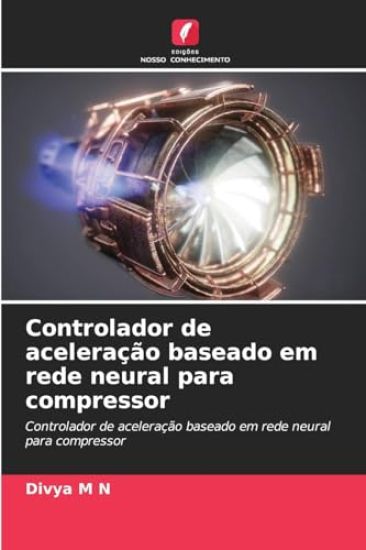
Neural Network based Throttle Controller for Compressor

Neural Network based Throttle Controller for Compressor

Divya M N

Lap Lambert Academic Publishing
2024
pokkari
The centrifugal Compressor is used in various industries, including oil, aerospace, and gas facilities, to increase pressure and oil output. If the Compressors are failed, then the entire system's production will be halted.The primary objective is to model the centrifugal Compressor with Anti-surge control (ASC) mechanism using neural networks to avoid surge issues and improve performance metrics. Different controllers like PID controller, followed by Fuzzy logic controller (FLC), Neuro-fuzzy controller (NFC) are incorporated in Anti surge control(ASC) mechanism for Compressor recycle system to realize the performance comparison. The modelling of the CRS with ASC mechanism is carried out using MATLAB Simulink environment. The simulation results like different flow rates, suction and plenum pressures, speed, and compressor maps are realized in detail for all the controller designs. The performance metrics error responses are analyzed in detail for CRS with ASC mechanism using different controllers. Based on the NNPC output response in the ASC mechanism of the CRS system, the OP position is adjacent to the Surge control line (SCL).
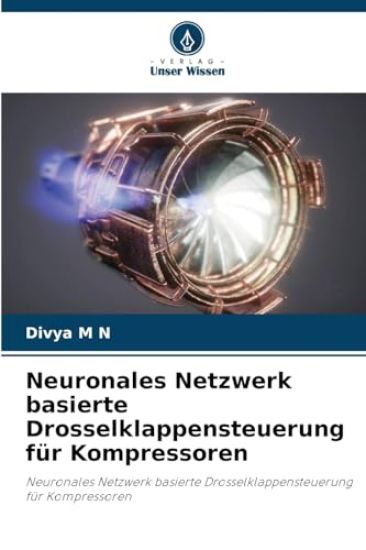
Neuronales Netzwerk basierte Drosselklappensteuerung für Kompressoren
Zentrifugalkompressoren werden in verschiedenen Industriezweigen wie der lindustrie, der Luft- und Raumfahrt und in Gasanlagen eingesetzt, um den Druck und die lproduktion zu erh hen. Das Hauptziel besteht darin, den Zentrifugalkompressor mit einem Anti-Surge-Control-Mechanismus (ASC) unter Verwendung neuronaler Netze zu modellieren, um Schwallprobleme zu vermeiden und die Leistungskennzahlen zu verbessern. Verschiedene Regler wie PID-Regler, gefolgt von Fuzzy-Logic-Reglern (FLC) und Neuro-Fuzzy-Reglern (NFC) werden in den Anti-Surge-Control (ASC)-Mechanismus f r das Kompressor-Recyclingsystem integriert, um einen Leistungsvergleich zu erm glichen. Die Modellierung des CRS mit ASC-Mechanismus wird mit der MATLAB Simulink-Umgebung durchgef hrt. Die Simulationsergebnisse wie verschiedene Durchflussraten, Saug- und Plenumdr cke, Drehzahlen und Kompressorkennfelder werden f r alle Reglerentw rfe im Detail realisiert. Die Fehlerreaktionen der Leistungsmetriken werden f r CRS mit ASC-Mechanismus unter Verwendung verschiedener Regler im Detail analysiert. Basierend auf dem NNPC-Ausgangsverhalten im ASC-Mechanismus des CRS-Systems liegt die OP-Position neben der Surge-Control-Linie (SCL) Der NNPC liefert eine bessere OP-Position und vermeidet Surge
Contrôleur d'accélérateur pour compresseur basé sur un réseau neuronal
Le compresseur centrifuge est utilis dans diverses industries, notamment dans les installations p troli res, a rospatiales et gazi res, pour augmenter la pression et la production d'huile. L'objectif principal est de mod liser le compresseur centrifuge avec un m canisme de contr le anti-surtension (ASC) l'aide de r seaux neuronaux afin d' viter les probl mes de surtension et d'am liorer les mesures de performance. Diff rents contr leurs tels que le contr leur PID, suivi par le contr leur logique floue (FLC), le contr leur neuro-flou (NFC) sont incorpor s dans le m canisme de contr le anti-surtension (ASC) pour le syst me de recyclage du compresseur afin de r aliser la comparaison des performances. La mod lisation du CRS avec le m canisme ASC est r alis e en utilisant l'environnement MATLAB Simulink. Les r sultats de la simulation tels que les diff rents d bits, les pressions d'aspiration et de pl num, la vitesse et les cartes du compresseur sont r alis s en d tail pour toutes les conceptions de contr leurs. Les r ponses aux erreurs des mesures de performance sont analys es en d tail pour le CRS avec le m canisme ASC en utilisant diff rents contr leurs. Sur la base de la r ponse de sortie du NNPC dans le m canisme ASC du syst me CRS, la position OP est adjacente la ligne de contr le de surtension (SCL).
Regolatore di accelerazione per compressori basato su reti neurali
Il compressore centrifugo utilizzato in diversi settori industriali, tra cui quello petrolifero, aerospaziale e del gas, per aumentare la pressione e la produzione di olio. L'obiettivo primario modellare il compressore centrifugo con un meccanismo di controllo anti-surge (ASC) utilizzando le reti neurali per evitare problemi di sovratensione e migliorare le prestazioni. Diversi controllori come il controllore PID, seguito dal controllore a logica fuzzy (FLC) e dal controllore neuro-fuzzy (NFC) sono incorporati nel meccanismo di controllo anti-surge (ASC) per il sistema di riciclo del compressore per realizzare il confronto delle prestazioni. La modellazione del CRS con il meccanismo ASC viene effettuata utilizzando l'ambiente MATLAB Simulink. I risultati della simulazione, come le diverse portate, le pressioni di aspirazione e di plenum, la velocit e le mappe del compressore, sono realizzati in dettaglio per tutti i progetti di controllori. Le risposte agli errori delle metriche di prestazione sono analizzate in dettaglio per il CRS con meccanismo ASC utilizzando diversi controllori. In base alla risposta dell'uscita NNPC nel meccanismo ASC del sistema CRS, la posizione del PO adiacente alla linea di controllo delle sovratensioni (SCL).
Controlador de aceleração baseado em rede neural para compressor
O compressor centr fugo utilizado em v rias ind strias, incluindo as instala es petrol feras, aeroespaciais e de g s, para aumentar a press o e a produ o de petr leo. O objetivo principal modelar o compressor centr fugo com o mecanismo de controlo anti-surto (ASC) utilizando redes neuronais para evitar problemas de surto e melhorar as m tricas de desempenho. Diferentes controladores, como o controlador PID, seguido do controlador l gico Fuzzy (FLC) e do controlador Neuro-fuzzy (NFC), s o incorporados no mecanismo de controlo anti-surto (ASC) para o sistema de reciclagem do compressor, a fim de realizar a compara o do desempenho. A modela o do CRS com o mecanismo ASC realizada utilizando o ambiente MATLAB Simulink. Os resultados da simula o, como diferentes caudais, press es de aspira o e plenum, velocidade e mapas do compressor, s o realizados em pormenor para todos os modelos de controladores. As respostas de erro das m tricas de desempenho s o analisadas em pormenor para o CRS com mecanismo ASC utilizando diferentes controladores. Com base na resposta de sa da do NNPC no mecanismo ASC do sistema CRS, a posi o OP adjacente linha de controlo de sobretens o (SCL).
FDTD Modeling of EM Field inside Microwave Cavities

FDTD Modeling of EM Field inside Microwave Cavities

Shiv Narayan; K. M. Divya; V. Krushna Kanth

Springer Verlag, Singapore
2016
nidottu
This book deals with the EM analysis of closed microwave cavities based on a three-dimensional FDTD method. The EM analysis is carried out for (i) rectangular microwave ovens and (ii) hybrid-cylindrical microwave autoclaves at 2.45 GHz. The field distribution is first estimated inside domestic rectangular ovens in xy-, yz-, and zx-plane. Further, the RF leakage from the oven door is determined to study the effect of leakage radiation on wireless communication at 2.45 GHz. Furthermore, the EM analysis of the autoclave is carried out based on 3D FDTD using staircase approximation. In order to show the capability of autoclaves (excited with five source) for curing the aerospace components and materials, the field distribution inside autoclave cavity is studied in presence of aerospace samples. The FDTD based modelling of oven and autoclave are explained with the appropriate expressions and illustrations.
Fruit Breeding

Fruit Breeding

Anil Kumar Shukla; Arun Kumar Shukla; M.B. Noor mohamed; Akath Singh; Divya Tiwari

New India Publishing Agency
2019
nidottu
As a result of the growing population and recurring issues of flood and drought, the need for innovation in plant varieties has become increasingly pressing. Furthermore, the limitations in the improvement of fruit crops, such as extended juvenile periods, high genetic variation, inadequate understanding of inheritance patterns, excessive fruit drop, parthenocarpy, and fewer seeds per fruit, have necessitated the development of various strains of mango, grape, papaya, banana, and guava. These strains are suitable for a range of purposes.The second, fully revised and expanded edition of the eagerly anticipated book Fruit Breeding Approaches and Achievements has been released with the purpose of providing the most up-to-date information on fundamental breeding approaches, biotic stress resistance, and the use of plant growth regulators in fruit development. Additionally, this edition covers the enhancement of a wide range of important fruit crops, including mango, banana, papaya, grape, guava, citrus, ber, aonla, pomegranate, date palm, litchi, coconut, cashewnut, pineapple, and temperate and underutilized fruits.
Fruit Breeding

Fruit Breeding

Anil Kumar Shukla; Arun Kumar Shukla; M.B. Noor mohamed; Akath Singh; Divya Tiwari

New India Publishing Agency- Nipa
2019
sidottu
The necessity to address the challenges posed by a growing population and recurring food shortages due to unforeseen droughts and floods has prompted the development of new plant varieties by horticultural scientists. Additionally, certain restrictions in the enhancement of fruit crops, such as extended juvenile periods, high genetic diversity, limited understanding of hereditary patterns, excessive fruit drop, parthenocarpy, and reduced seed count per fruit, have contributed to the creation of several mango, grape, papaya, banana, and guava varieties for various applications.The publication of the second, fully revised and expanded version of the eagerly anticipated book Fruit Breeding Approaches and Achievements has been undertaken with the purpose of providing the most current information on the fundamentals of fruit breeding, breeding for resistance to biotic stressors, the use of plant growth regulators in fruit improvement, and the advancement of important fruit crops such as mango, banana, papaya, grape, guava, citrus, ber, aonla, pomegranate, date palm, litchi, coconut, cashewnut, pineapple, temperate, and underutilized fruits across a broad range.
Tradition and Transformation in the Māturīdiyya of the 6th/12th Century: With a Critical Edition of the Kitāb Al-Kifāya Fī Lh
Nūr al-Dīn al-Ṣābūnī was a prominent jurist and theologian in Samarqand in the late 6th/12th century. His theological works are in the tradition of the Ḥanafite-Māturīdite current of Sunni kalām. In addition, al-Ṣābūnī's argumentation reflects the increasing engagement of Māturīdite mutakallimūn with their wide intellectual-historical environment. His discussions with the famous scholar Faḫr al-Dīn al-Rāzī are attested. In the present volume, Angelika Brodersen uses a text-critical edition of al-Ṣābūnī's comprehensive theological work, the Kitāb al-Kifāya fī l-hidāya fī uṣūl al-dīn, to analyze, based on selected thematic examples, how both elements of Māturīdite theological tradition and transformation processes occur in al-Ṣābūnī's work, which contributed to the consolidation of the Māturīdiyya as a Sunni school of thought.