This text explores the creative processes in four classic works: "Death in Venice", "Treasure Island", "The Rubaiyat of Omar Khayyam" and "War and Peace". It considers how each of these works was compelled by an urgent life problem - conscious or unconscious - of its author.
An exploration of the creative process in four classic works: Death in Venice, Treasure Island, The Rubáiyát of Mar Khayyám, and War and Peace. Creating Literature Out of Life examines four very dissimilar masterpieces and their authors in search of evidence that will answer some of the many questions in the great mystery of creativity. Crossing boundaries of period, nation, and genre, the study looks into the "why" and "how" of the creation of Thomas Mann's Death in Venice, Robert Louis Stevenson's Treasure Island, Edward FitzGerald's The Rubáiyát of Mar Khayyám, and Lev Tolstoy's War and Peace. Doris Alexander finds that each of these works was compelled by an urgent life problem of its author, some of them partly conscious, others completely unconscious, which worked in harmony and counterpoint with the author's conscious theme to shape his work. She traces an interconnected nexus of memories—personal experiences, ideas, readings—that came alive in response to the author's problem and served as a reservoir out of which his characters, his images, his story line, and the emotional tone of his work emerged. Creating Literature Out of Life tells the exciting story of how Mann, Stevenson, FitzGerald, and Tolstoy fought out their major life battles in their works.
In Eugene O'Neill's Creative Struggle, Doris Alexander gives us a new kind of inside biography that begins where the others leave off. It follows O'Neill through the door into his writing room to give a blow-by-blow account of how he fought out in his plays his great life battles—love against hate, doubt against belief, life against death—to an ever-expanding understanding. It presents a new kind of criticism, showing how O'Neill's most intimate struggles worked their way to resolution through the drama of his plays. Alexander reveals that he was engineering his own consciousness through his plays and solving his life problems—while the tone, imagery, and richness of the plays all came out of the nexus of memories summoned up by the urgency of the problems he faced in them. By the way of O'Neill, this study moves toward a theory of the impulse that sets off a writer's creativity, and a theory of how that impulse acts to shape a work, not only in a dramatist like O'Neill but also in the case of writers in other mediums, and even of painters and composers. The study begins with Desire Under the Elms because that play's plot was consolidated by a dream that opened up the transfixing grief that precipitated the play for O'Neill, and it ends with Days Without End when he had resolved his major emotional-philosophical struggle and created within himself the voice of his final great plays. Since the analysis brings to bear on the plays all of his conscious decisions, ideas, theories, as well as the life-and-death struggles motivating them, documenting even the final creative changes made during rehearsals, this book provides a definitive account of the nine plays analyzed in detail (Desire Under the Elms, Marco Millions, The Great God Brown, Lazarus Laughed, Strange Interlude, Dynamo, Mourning Becomes Electra, Ah, Wilderness!, and Days Without End, with additional analysis of plays written before and after.
This study draws on new and unprecedented research concerning the lives of Eugene O’Neill, his family, and his circle. It corrects and expands the biographical record on O’Neill, sharpens our understanding of his art, and distinguishes the man and his life more clearly than ever from the creations that were inspired by, and drew on, that life.In his final creative years, 1939 to 1943, O’Neill wrote The Iceman Cometh, Long Day’s Journey into Night, and A Moon for the Misbegotten. Because these plays are so intense, intimate, and evocative of the friends and family members who influenced O’Neill’s artistic development, biographers and critics have long—and mistakenly—regarded them as accurate sources for insights into the playwright’s early years.Drawing upon interviews and a staggering amount of archival research into multiple generations of the O’Neill family, Alexander sets the historical record straight by documenting the actual people and situations on which characters and scenes in O’Neill’s last plays are based. Included in her study are such topics as the playwright’s attempted suicide, his tuberculosis, and his relationship with his parents. By revealing the distinctions between O’Neill’s life and his art, Alexander’s findings make possible greater insight into the artistry that shaped these final plays and brought them to life.
If the sheer diversity of recent hits from Twelve Years a Slave and Moonlight to Get Out, Black Panther, and BlackkKlansman tells us anything, it might be that there’s no such thing as “black film” per se. This book is especially timely, then, in expanding our idea of what black films are and, going back to the 1960s, showing us new and interesting ways to understand them.When critics and scholars write about films from the Blaxploitation movement—such as Cotton Comes to Harlem, Shaft, Superfly, and Cleopatra Jones—they emphasize their importance as films made for black Audiences. Consequently, Lisa Doris Alexander points out, a film like the highly popular, Oscar-nominated Blazing Saddles—costarring and co-written by Richard Pryor—is generally left out of the discussion because it doesn’t fit the profile of what a black film of the period should be. This is the kind of categorical thinking that Alexander seeks to broaden, looking at films from the 60s to the present day in the context of their time. Applying insights from black feminist thought and critical race theory to one film per decade, she analyzes what each can tell us about the status of black people and race relations in the United States at the time of its release.By teasing out the importance of certain films excluded from the black film canon, Alexander hopes to expand that canon to include films typically relegated to the category of popular entertainment—and to show how these offer more nuanced representations of black characters even as they confront, negate, or parody the controlling images that have defined black filmic characters for decades.
If the sheer diversity of recent hits from Twelve Years a Slave and Moonlight to Get Out, Black Panther, and BlackkKlansman tells us anything, it might be that there’s no such thing as “black film” per se. This book is especially timely, then, in expanding our idea of what black films are and, going back to the 1960s, showing us new and interesting ways to understand them.When critics and scholars write about films from the Blaxploitation movement—such as Cotton Comes to Harlem, Shaft, Superfly, and Cleopatra Jones—they emphasize their importance as films made for black Audiences. Consequently, Lisa Doris Alexander points out, a film like the highly popular, Oscar-nominated Blazing Saddles—costarring and co-written by Richard Pryor—is generally left out of the discussion because it doesn’t fit the profile of what a black film of the period should be. This is the kind of categorical thinking that Alexander seeks to broaden, looking at films from the 60s to the present day in the context of their time. Applying insights from black feminist thought and critical race theory to one film per decade, she analyzes what each can tell us about the status of black people and race relations in the United States at the time of its release.By teasing out the importance of certain films excluded from the black film canon, Alexander hopes to expand that canon to include films typically relegated to the category of popular entertainment—and to show how these offer more nuanced representations of black characters even as they confront, negate, or parody the controlling images that have defined black filmic characters for decades.
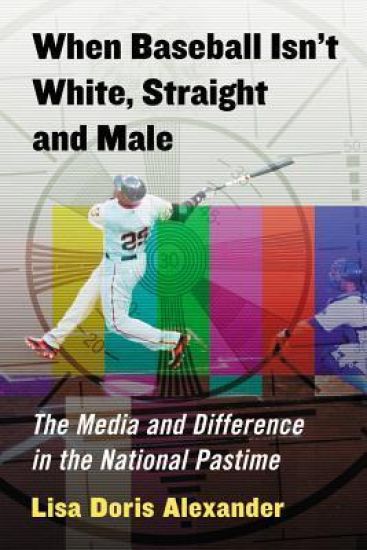
This book analyzes how sportswriters have discussed issues of race, ethnicity, nationality, sexual identity, age and class within professional baseball from 1998 to the present. Each chapter looks at the media representations of a specific controversy--the 1998 home-run chase, Alex Rodriguez's historic contract signing, Barry Bonds' home runs, Mike Piazza's "I am not gay" press conference, Effa Manley's Hall of Fame induction, the celebration of Jackie Robinson's legacy, as well as the various incidents involving performance-enhancing drugs. The author puts it together and reveals what messages are being conveyed by the issues.
Renowned for its unique visual style, Homicide: Life on the Street fundamentally changed the police procedural genre. The show broke records, featured memorable characters, and launched careers--most notably that of David Simon, whose own nonfiction book, Homicide: A Year on the Killing Streets, inspired the series, and who went on to create both The Wire and Treme. Homicide was an anomaly in the 1990s for its honest and open portrayals and discussions of race, and in this TV Milestone, Lisa Doris Alexander uses Critical Race Theory as a lens to highlight how the show illustrated the impacts that racial politics can have on policing. Homicide is one in a long line of police procedurals that date back to the early days of broadcast television, with series such as Dragnet (NBC 1951-59), Hawaii Five-O (CBS 1968-80), and Columbo (NBC 1971-78). But because Homicide takes place and was filmed in the majority-Black city of Baltimore, it makes sense that many of the main and supporting cast are Black. This differentiated it from the other shows of its genre and time. Chapter 1 discusses the Black-starring roles on Homicide in terms of being non-stereotypical and both written and performed as well-rounded, complex characters. Chapter 2 focuses on issues of race and racism and their impact on policing. Chapter 3 looks at other power dynamics, such as class, political clout, and social standing, and how those dynamics intersect with race and the criminal justice system's perceived neutrality. In many regards, Homicide was ahead of its time. Alexander argues that Homicide reflects the politics of the Black Lives Matter movement, which in turn highlights the fact that the issues brought up by the movement are long-standing and that the series affirms the critiques BLM activists make about the criminal justice system. This book shows that the series' oftentimes unflinching commentary on the systemic flaws within the criminal justice system not only feels more at home in today's television and political landscape than it did in the 1990s but is just as relevant. Fans of the works of David Simon, as well as students and scholars of television studies and Critical Race Theory, will enjoy this enlightening book.
In Eugene O'Neill's Creative Struggle, Doris Alexander gives us a new kind of inside biography that begins where the others leave off. It follows O'Neill through the door into his writing room to give a blow-by-blow account of how he fought out in his plays his great life battles—love against hate, doubt against belief, life against death—to an ever-expanding understanding. It presents a new kind of criticism, showing how O'Neill's most intimate struggles worked their way to resolution through the drama of his plays. Alexander reveals that he was engineering his own consciousness through his plays and solving his life problems—while the tone, imagery, and richness of the plays all came out of the nexus of memories summoned up by the urgency of the problems he faced in them. By the way of O'Neill, this study moves toward a theory of the impulse that sets off a writer's creativity, and a theory of how that impulse acts to shape a work, not only in a dramatist like O'Neill but also in the case of writers in other mediums, and even of painters and composers. The study begins with Desire Under the Elms because that play's plot was consolidated by a dream that opened up the transfixing grief that precipitated the play for O'Neill, and it ends with Days Without End when he had resolved his major emotional-philosophical struggle and created within himself the voice of his final great plays. Since the analysis brings to bear on the plays all of his conscious decisions, ideas, theories, as well as the life-and-death struggles motivating them, documenting even the final creative changes made during rehearsals, this book provides a definitive account of the nine plays analyzed in detail (Desire Under the Elms, Marco Millions, The Great God Brown, Lazarus Laughed, Strange Interlude, Dynamo, Mourning Becomes Electra, Ah, Wilderness!, and Days Without End, with additional analysis of plays written before and after.
""Alexander Hadden: A Short Biography"" is a book written by John A. Hadden that provides a brief overview of the life of Alexander Hadden. Hadden was a prominent figure in the early 20th century, known for his contributions to the field of engineering and his work in the development of the Panama Canal.The book covers Hadden's early life, education, and career, including his time at the Massachusetts Institute of Technology and his work on the Panama Canal. It also explores Hadden's personal life, including his marriage and family, as well as his philanthropic activities.Throughout the book, Hadden's accomplishments and contributions are highlighted, providing readers with a glimpse into the life of this influential figure. The book is well-researched and provides a comprehensive overview of Hadden's life and legacy, making it an excellent resource for anyone interested in the history of engineering, the Panama Canal, or early 20th-century America.This scarce antiquarian book is a facsimile reprint of the old original and may contain some imperfections such as library marks and notations. Because we believe this work is culturally important, we have made it available as part of our commitment for protecting, preserving, and promoting the world's literature in affordable, high quality, modern editions, that are true to their original work.
Educational sociologists have paid relatively little attention to children in middle childhood (ages 6 to 12), whereas developmental psychologists have emphasized factors internal to the child much more than the social contexts in explaining children's development. Children, Schools, and Inequality redresses that imbalance. It examines elementary s
Educational sociologists have paid relatively little attention to children in middle childhood (ages 6 to 12), whereas developmental psychologists have emphasized factors internal to the child much more than the social contexts in explaining children's development. Children, Schools, and Inequality redresses that imbalance. It examines elementary school outcomes (e.g., test scores, grades, retention rates) in light of the socioeconomic variation in schools and neighbourhoods, the organizational patterns across elementary schools, and the ways in which family structure intersects with children's school performance. Adding data from the Baltimore Beginning School Study to information culled from the fields of sociology, child development, and education, this book suggests why the gap between the school achievement of poor children and those who are better off has been so difficult to close. Doris Enwistle, Karl Alexander, and Linda Olson show why the first-grade transition,how children negotiate entry into full-time schooling,is a crucial period. They also show that events over that time have repercussions that echo throughout children's entire school careers. Currently the only study of this life transition to cover a comprehensive sample and to suggest straightforward remedies for urban schools, Children, Schools, and Inequality can inform educators, practitioners, and policymakers, as well as researchers in the sociology of education and child development.
This book is about the practice of grade retention in elementary school, a particularly vexing problem in urban school systems, where upward of half the students may repeat a grade. On the Success of Failure addresses whether repeating a grade is helpful or harmful when children are not keeping up. It describes the school context of retention and evaluates its consequences by tracking the experiences of a large, representative sample of Baltimore school children from first grade through high school. In addition to evaluating the consequences of retention, the book describes the cohort’s dispersion along many different educational pathways from first grade through middle school, the articulation of retention with other forms of educational tracking (like reading group placements in the early primary grades and course-level assignments in middle school), and repeaters’ academic and school adjustment problems before they were held back.
Sonidos que pintan es una invitaci n a descubrir el poder transformador del sonido en nuestras vidas y en la narrativa audiovisual. Este libro explora el fascinante v nculo entre el o do y el cerebro, revelando c mo las ondas sonoras se convierten en emociones, recuerdos y experiencias profundas. A lo largo de sus p ginas, el lector se adentra en los misterios del dise o sonoro, desde sus aplicaciones terap uticas hasta su impacto en el cine y la publicidad. Aprender s c mo las diferentes frecuencias pueden alterar estados mentales, proporcionando herramientas para mejorar el bienestar emocional y f sico. Adem s, este libro destaca la importancia cultural de los paisajes sonoros, como un elemento esencial que define identidades colectivas y preserva tradiciones. En "Sonidos que pintan", el lector encontrar una s ntesis perfecta entre ciencia, arte y emoci n, comprendiendo que el sonido no es solo un est mulo auditivo, sino un lenguaje universal que conecta profundamente al ser humano con su entorno y con los dem s.
Kl nge, die malen" ist eine Einladung, die transformative Kraft des Klangs in unserem Leben und im audiovisuellen Erz hlen zu entdecken. Dieses Buch erforscht die faszinierende Verbindung zwischen dem Ohr und dem Gehirn und enth llt, wie Klangwellen zu Emotionen, Erinnerungen und tiefgreifenden Erfahrungen werden. Auf allen Seiten wird der Leser in die Geheimnisse des Sounddesigns eingeweiht, von seinen therapeutischen Anwendungen bis hin zu seinen Auswirkungen auf Film und Werbung. Sie erfahren, wie verschiedene Frequenzen mentale Zust nde ver ndern k nnen, und erhalten Werkzeuge zur Verbesserung des emotionalen und k rperlichen Wohlbefindens. Dar ber hinaus unterstreicht dieses Buch die kulturelle Bedeutung von Klanglandschaften als wesentliches Element, das kollektive Identit ten definiert und Traditionen bewahrt. In "Sounds that Paint" findet der Leser eine perfekte Synthese zwischen Wissenschaft, Kunst und Emotionen und versteht, dass Klang nicht nur ein auditiver Stimulus ist, sondern eine universelle Sprache, die den Menschen tief mit seiner Umwelt und mit anderen verbindet.
"Sons que pintam" um convite descoberta do poder transformador do som nas nossas vidas e na narra o de hist rias audiovisuais. Este livro explora a fascinante liga o entre o ouvido e o c rebro, revelando como as ondas sonoras se transformam em emo es, mem rias e experi ncias profundas. Ao longo das suas p ginas, o leitor mergulha nos mist rios do design de som, desde as suas aplica es terap uticas ao seu impacto no cinema e na publicidade. Aprender como as diferentes frequ ncias podem alterar os estados mentais, fornecendo ferramentas para melhorar o bem-estar emocional e f sico. Al m disso, este livro destaca a import ncia cultural das paisagens sonoras como um elemento essencial que define as identidades colectivas e preserva as tradi es. Em "Sons que Pintam", o leitor encontrar uma s ntese perfeita entre ci ncia, arte e emo o, compreendendo que o som n o apenas um est mulo auditivo, mas uma linguagem universal que liga profundamente os seres humanos ao seu ambiente e aos outros.