Kirjojen hintavertailu. Mukana 11 244 527 kirjaa ja 12 kauppaa.

Kirjahaku

Etsi kirjoja tekijän nimen, kirjan nimen tai ISBN:n perusteella.

1000 tulosta hakusanalla Doris Lessing

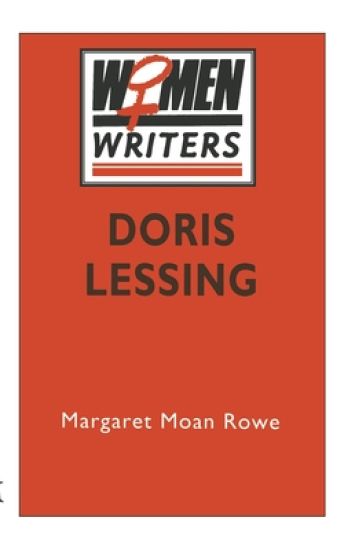
Doris Lessing

Doris Lessing

Margaret Moan Rowe

Red Globe Press
1994
nidottu
Through close readings of Doris Lessing's novels from The Grass is Singing to The Fifth Child, Margaret Moan Rowe maps many of the literary and cultural negotiations that make Doris Lessing both a maverick and a mainstream novelist. Examining the pull of paternal and maternal biographical and literary identification in Lessing, Rowe relates them to the tensions between the ordinary and the visionary in her fiction.
Doris Lessing

Doris Lessing

Lorna Sage

Routledge
2019
sidottu
Doris Lessing was one of the most impressive, prolific and vital of twentieth century writers. Her fiction is obsessed with the workings of cultural change and she radically extended the novel’s scope – most famously and influentially in The Golden Notebook – by questioning the realist tradition she inherited and the wider social beliefs about self, sexuality and authority which that tradition symbolized.This study, originally published in 1983, surveys her epic output from her early, African writings to her later experiments with space fiction. It traces her struggles to decentre imaginative life and to erase and to redraw the boundaries of our mental maps in favour of values on the margins of the official culture.
Doris Lessing

Doris Lessing

Lorna Sage

Routledge
2021
nidottu
Doris Lessing was one of the most impressive, prolific and vital of twentieth century writers. Her fiction is obsessed with the workings of cultural change and she radically extended the novel’s scope – most famously and influentially in The Golden Notebook – by questioning the realist tradition she inherited and the wider social beliefs about self, sexuality and authority which that tradition symbolized.This study, originally published in 1983, surveys her epic output from her early, African writings to her later experiments with space fiction. It traces her struggles to decentre imaginative life and to erase and to redraw the boundaries of our mental maps in favour of values on the margins of the official culture.
Doris Lessing

Doris Lessing

Susan Watkins

Manchester University Press
2010
sidottu
This study examines the writing career of the respected and prolific novelist Doris Lessing, who was awarded the Nobel Prize for Literature in 2007 and has recently published what she has announced will be her final novel. Whereas earlier assessments have focused on Lessing’s relationship with feminism and the impact of her 1962 novel, The Golden Notebook, this book argues that Lessing's writing was formed by her experiences of the colonial encounter; it makes use of postcolonial theory and criticism to examine Lessing's continued interest in ideas of nation, empire, gender and race and the connections between them.The book examines the entire range of her writing, including her most recent fiction and non-fiction, which have been comparatively neglected. The book is aimed at undergraduate and postgraduate students of Doris Lessing’s work as well as the general reader who enjoys her writing. This is the first significant book-length critical evaluation in ten years.
Doris Lessing

Doris Lessing

Susan Watkins

Manchester University Press
2015
nidottu
This study examines the writing career of the respected and prolific novelist Doris Lessing, who was awarded the Nobel Prize for Literature in 2007.Whereas earlier assessments have focused on Lessing’s relationship with feminism and the impact of her 1962 novel, The Golden Notebook, this book argues that Lessing's writing was formed by her experiences of the colonial encounter; it makes use of postcolonial theory and criticism to examine Lessing's interest in ideas of nation, empire, gender and race and the connections between them.The book, now available in paperback, examines the entire range of her writing, including her most recent fiction and non-fiction, which have been comparatively neglected. The book is aimed at undergraduate and postgraduate students of Doris Lessing’s work as well as the general reader who enjoys her writing. This is the first significant book-length critical evaluation in ten years.
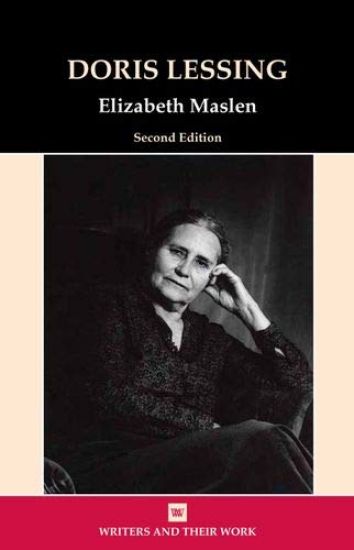
Doris Lessing

Doris Lessing

Elizabeth Maslen

LIVERPOOL UNIVERSITY PRESS
2014
nidottu
This new edition of Elizabeth Maslen's successful study covers the full range of Doris Lessing's work and explores in detail both its form and content. From The Grass is Singing (1950) through to Alfred and Emily (2008) her main concerns are shown to have a remarkable continuity, both in her commitment to political and cultural issues and in her explorations of inner space. Her experiments with form are closely analysed, and her bold exposure of jargon, cliché, and the manipulative power of language is demonstrated. While she can be seen as part of the great diasporaic influx that followed World War Two her experimentations with form blend in with the explorations of realism taking place in much British fiction from the early years of the twentieth century. This is a concise, accessible, but scholarly book, offering both perceptive critical insights and a valuable up-to-date bibliography.
Doris Lessing

Doris Lessing

Ohio University Press
1988
sidottu
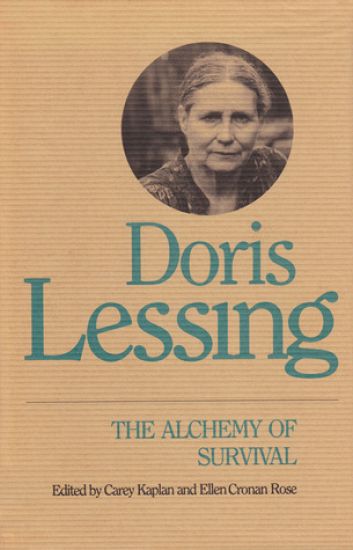
Long neglected by the academic world because of her rejection of belletristic values and resistance to convenient literary taxonomy, Doris Lessing has nonetheless built an international following of serious, dedicated readers. Acknowledging the difficulties posed by the multiple dimensions of Lessing's work, Kaplan and Rose have gathered eleven essays that address her artistic, philosophical, political, and psychological complexity, and so provide a welcome introduction to the extraordinary depth and diversity of this important contemporary novelist. Lessing has been described as an "alchemical" writer, in that her work is directed toward changing people's lives and perceptions rather than simply recording experience. Accordingly, the contributors examine her various postures and tactics for the purpose of discovering how the alchemical elements inform her various personae. Frederick C. Stern discusses Lessing's commitment to radical humanist thought, while Carey Kaplan examines how Lessing's imperialist past has shaped her futuristic fiction. Elizabeth Abel offers a feminist interpretation of the pattern of brother-sister incest in Lessing's work, showing how Lessing has established Antigone as a female alternative to the Oedipal myth of male incest. Particularly insightful is Eve Bertelsen's report of her interview with Lessing, demonstrating how Lessing's often evasive style of adversarial dialogue works in concert with her refusal to be conveniently pigeonholed by academic analysis. For those readers new to her work, Doris Lessing: The Alchemy of Survival will serve as a useful introduction to Lessing's concerns and techniques. Those who have long admired her writing will find in this collection new keys to understanding Lessing's philosophical, political, and psychological complexity.
Doris Lessing

Doris Lessing

Continuum International Publishing Group Ltd.
2009
sidottu
This is an edited collection offering up-to-date critical coverage of a wide range of Lessing's work. Despite winning the Nobel Prize for Literature, Doris Lessing has received relatively little critical attention. One of the reasons for this is that Lessing has spent much of her lifetime and her long published writing career crossing both national and ideological borders. This essay collection reflects and explores the incredible variety of Lessing's border crossings and positions her writing in its various social and cultural contexts. Lessing crosses literal national borders in her life and work, but more controversial have been her crossings of genre borders into sci-fi and 'space fiction', and her crossing of ideological borders such as moving into and out of the Communist Party and from a colonial into a post-colonial world. This timely collection also considers a number of the most interesting recent critical and theoretical approaches to Lessing's writing, including work on maternity and abjection in relation to "The Fifth Child" and "The Grass is Singing", eco-criticism in Lessing's 'Ifrakan' novels, and postcolonial re-writings of landscape in her African Stories.
Doris Lessing

Doris Lessing

Continuum Publishing Corporation
2011
nidottu
Despite winning the Nobel Prize for Literature, Doris Lessing has received relatively little critical attention. One of the reasons for this is that Lessing has spent much of her lifetime and her long published writing career crossing both national and ideological borders. This essay collection reflects and explores the incredible variety of Lessing's border crossings and positions her writing in its various social and cultural contexts. Lessing crosses literal national borders in her life and work, but more controversial have been her crossings of genre borders into sci-fi and "space fiction", and her crossing of ideological borders such as moving into and out of the Communist Party and from a colonial into a post-colonial world. This timely collection also considers a number of the most interesting recent critical and theoretical approaches to Lessing's writing, including work on maternity and abjection in relation to The Fifth Child and The Grass is Singing, eco-criticism in Lessing's 'Ifrakan' novels, and postcolonial re-writings of landscape in her African Stories.
Doris Lessing and Sufi Equilibrium

Doris Lessing and Sufi Equilibrium

S. Fahim

Palgrave Macmillan
1994
sidottu
The purpose of this study is to examine the rationale of Doris Lessing's development from Classical Realism to mysticism and forms of science fiction and to consider the unifying motifs that appear throughout her novels in her consistent search for Sufi Equilibrium. The four novels selected in this study represent significant stages in Lessing's work. Chapter one focuses on The Grass is Singing, which represents the author's early traditionally realistic writing, to show how far the preoccupations of Lessing's later novels find expression in this early work. Chapter two studies The Golden Notebook, which marks a turning point in formal structure in Lessing's canon and is selected as evidence of her interest in Sufism at that early stage. Chapter three concentrates on the study of The Memoirs of a Survivor, which has elicited a comparatively limited amount of criticism but which proves to be a major achievement when brought into line with Sufi methods of writing. Chapter four considers Lessing's science fiction series, 'Canopus in Argos', tracing sources from Oriental literature - a key which unlocks many areas of obscurity.
Doris Lessing’s The Golden Notebook After Fifty
Published in 1962, Doris Lessing's The Golden Notebook merits fresh theoretical, geopolitical, autobiographical, and aesthetic approaches. Prompted by the novel's golden anniversary, the twelve essays collected in this volume provide fresh analyses along with appreciative memoirs for 21st century readers of this well-known masterpiece.
Doris Lessing’s The Golden Notebook After Fifty
Published in 1962, Doris Lessing's The Golden Notebook merits fresh theoretical, geopolitical, autobiographical, and aesthetic approaches. Prompted by the novel's golden anniversary, the twelve essays collected in this volume provide fresh analyses along with appreciative memoirs for 21st century readers of this well-known masterpiece.
Doris Lessing and the Forming of History
Explores Doris Lessing's innovative engagement with historical change in her own lifetime and beyondThe death of Nobel Prize-winning Doris Lessing sparked a range of commemorations that cemented her place as one of the major figures of twentieth- and twenty-first-century world literature. This volume views Lessing's writing as a whole and in retrospect, focusing on her innovative attempts to rework literary form to engage with the challenges thrown up by the sweeping historical changes through which she lived. The 12 original chapters provide new readings of Lessing's work via contexts ranging from post-war youth politics and radical women's writing to European cinema, analyse her experiments with genres from realism to autobiography and science-fiction, and draw on previously unstudied archive material. The volume also explores how Lessing's writing can provide insight into some of the issues now shaping twenty-first century scholarship including trauma, ecocriticism, the post-human, and world literature as they emerge as defining challenges to our own present moment in history.Key FeaturesOffers a critical overview of the full range of Lessing's work, setting the agenda for future study of her writingProvides new readings of an unprecedented range of Lessing's writing, including previously unstudied archive material, landmark novels such as The Golden Notebook, drama and reportage, essays, memoirs and short storiesSituates Lessing in relation to new literary and cultural contexts, including the nineteenth-century novel-series, cinema, and post-war youth cultureRelates Lessing's work to contemporary theoretical debates on post-humanism, trauma, ecocriticism, radical women's writing and world literature
Doris Lessing and the Forming of History
Explores Doris Lessing's innovative engagement with historical change in her own lifetime and beyondThe death of Nobel Prize-winning Doris Lessing sparked a range of commemorations that cemented her place as one of the major figures of twentieth- and twenty-first-century world literature. This volume views Lessing's writing as a whole and in retrospect, focusing on her innovative attempts to rework literary form to engage with the challenges thrown up by the sweeping historical changes through which she lived. The 12 original chapters provide new readings of Lessing's work via contexts ranging from post-war youth politics and radical women's writing to European cinema, analyse her experiments with genres from realism to autobiography and science-fiction, and draw on previously unstudied archive material. The volume also explores how Lessing's writing can provide insight into some of the issues now shaping twenty-first century scholarship including trauma, ecocriticism, the post-human, and world literature as they emerge as defining challenges to our own present moment in history.Key FeaturesOffers a critical overview of the full range of Lessing's work, setting the agenda for future study of her writingProvides new readings of an unprecedented range of Lessing's writing, including previously unstudied archive material, landmark novels such as The Golden Notebook, drama and reportage, essays, memoirs and short storiesSituates Lessing in relation to new literary and cultural contexts, including the nineteenth-century novel-series, cinema, and post-war youth cultureRelates Lessing's work to contemporary theoretical debates on post-humanism, trauma, ecocriticism, radical women's writing and world literature
Doris Lessing - A Life Behind the Scenes

Doris Lessing - A Life Behind the Scenes

Peter Raina

Peter Lang International Academic Publishers
2021
sidottu
In March 1949 the security service MI5 received notice of a suspect person about to enter Britain and went to great pains to keep her under surveillance. This person was the author Doris Lessing. She would eventually go on to win the Nobel Prize for literature as an «epicist … who with scepticism, fire and visionary power has subjected a divided civilisation to scrutiny». And it was precisely this scrutiny that troubled the guardians of the status quo. Lessing grew up in colonial Rhodesia and hated the scorn with which the colonists treated the native population. She worked tirelessly for a more just society and this drove her into support for communism. But a communist, as one of her fictional characters says, «is hated, despised, feared and hunted». Peter Raina’s book, reproducing the secret files kept on Lessing, shows that this was largely true, even though her emphasis in these troubled times was always on Peace. Lessing was eventually disillusioned by communism, and sought a better understanding of human relations than Soviet-conforming clichés could provide. However, her understanding was much enriched by the experiences of her activism and knowledge of the opposition it aroused. The secret files show how strongly Lessing followed her convictions and throw new light on how her perceptions of society evolved. Peter Raina elucidates this in a short Introduction and an Epilogue discussing aspects of her writings.
Doris Lessing Stories

Doris Lessing Stories

Everyman's Library
2008
sidottu
Included are seminal stories like 'To Room Nineteen'; in which a woman reacts against the oppression of her banal marriage with dreadful results; 'One off the Short List', which traces the surprising conclusion to a seduction gone awry, and 'The Habit of Loving' in which a lonely older man who takes a vivacious young wife witnesses an unexpected reversal of intimacy. Here also are two classic novellas, The Temptation of Jack Orkney and The Other Woman, exemplifying Lessing's impressive understanding of human psychology. Rich and various in mood and background - the settings range across England and France - these stories powerfully convey the uncompromising insight, intelligence and vision of one of the most ardently admired writers of our time.