Kirjahaku
Etsi kirjoja tekijän nimen, kirjan nimen tai ISBN:n perusteella.
1000 tulosta hakusanalla E M Foster
Each of E. M. Forster's five novels-The Longest journey, Where Angels Fear to Tread, Room with a View. Howards End, and A Passage to India-is here analyzed within the framework of Forster's cultural heritage nineteenth-century liberalism and humanism. In tracing Forster's family and educational background, his religious and political heritage, and his relation to the "Bloomsbury Group," Mr. Crews reveals the growing melancholy in Forster's acceptance of "the perils of humanism." Originally published in 1962. The Princeton Legacy Library uses the latest print-on-demand technology to again make available previously out-of-print books from the distinguished backlist of Princeton University Press. These editions preserve the original texts of these important books while presenting them in durable paperback and hardcover editions. The goal of the Princeton Legacy Library is to vastly increase access to the rich scholarly heritage found in the thousands of books published by Princeton University Press since its founding in 1905.


The Duke of Clarence. an Historical Novel. in Two Volumes. by E. M. F. ... Volume 1 of 2
E M Foster
Gale Ecco, Print Editions
2010
pokkari
The Duke of Clarence. An historical novel. In two volumes. By E. M. F. ... Volume 2 of 2
E M Foster
Gale Ecco, Print Editions
2010
pokkari
The Duke of Clarence. An Historical Novel. In two Volumes. By E. M. F. ... of 2; Volume 1
E M Foster
Gale Ecco, Print Editions
2018
sidottu
The 18th century was a wealth of knowledge, exploration and rapidly growing technology and expanding record-keeping made possible by advances in the printing press. In its determination to preserve the century of revolution, Gale initiated a revolution of its own: digitization of epic proportions to preserve these invaluable works in the largest archive of its kind. Now for the first time these high-quality digital copies of original 18th century manuscripts are available in print, making them highly accessible to libraries, undergraduate students, and independent scholars.Western literary study flows out of eighteenth-century works by Alexander Pope, Daniel Defoe, Henry Fielding, Frances Burney, Denis Diderot, Johann Gottfried Herder, Johann Wolfgang von Goethe, and others. Experience the birth of the modern novel, or compare the development of language using dictionaries and grammar discourses. ++++The below data was compiled from various identification fields in the bibliographic record of this title. This data is provided as an additional tool in helping to insure edition identification: ++++British LibraryN007242E. M. F. = Mrs. E. M. Foster.Dublin: printed by W. Folds, for Messrs. P. Wogan, P. Byrne, J. Halpin, and W. Jones, 1795. 2v.; 12
The Duke of Clarence. An Historical Novel. In two Volumes. By E. M. F. ... of 2; Volume 2
E M Foster
Gale Ecco, Print Editions
2018
sidottu
The 18th century was a wealth of knowledge, exploration and rapidly growing technology and expanding record-keeping made possible by advances in the printing press. In its determination to preserve the century of revolution, Gale initiated a revolution of its own: digitization of epic proportions to preserve these invaluable works in the largest archive of its kind. Now for the first time these high-quality digital copies of original 18th century manuscripts are available in print, making them highly accessible to libraries, undergraduate students, and independent scholars.Western literary study flows out of eighteenth-century works by Alexander Pope, Daniel Defoe, Henry Fielding, Frances Burney, Denis Diderot, Johann Gottfried Herder, Johann Wolfgang von Goethe, and others. Experience the birth of the modern novel, or compare the development of language using dictionaries and grammar discourses. ++++The below data was compiled from various identification fields in the bibliographic record of this title. This data is provided as an additional tool in helping to insure edition identification: ++++British LibraryN007242E. M. F. = Mrs. E. M. Foster.Dublin: printed by W. Folds, for Messrs. P. Wogan, P. Byrne, J. Halpin, and W. Jones, 1795. 2v.; 12
A Passage to India is a 1924 novel by English author E. M. Forster set against the backdrop of the British Raj and the Indian independence movement in the 1920s. "We may hate one another, but we hate you most... Yes, we shall drive every blasted Englishman into the sea." on that fateful day, when Dr. Aziz took Mrs. Moore and Miss adela quest to the famous marabar caves, he had no idea that his whole life was about to turn upside down. All Aziz had done was kindly offer to show the 'real' India to the two englishwomen who had newly arrived in his country. But on the day of the excursion, upon returning from the caves, he was slapped with the accusation of a sexual assault. What happens when Aziz is brought to Court? Does the man get justice? Or has his race earmarked him for prison? Set in the fictional town of Chandernagore, in the pre-Independence era of India, a passage to India portrays colonialism, racial prejudice, and the dynamics of Anglo-Indian relations with striking realism. Time magazine included the novel in its "All Time 100 Novels" list.
Old-School-Learning
Anna E Tower; Angela M Foster
Createspace Independent Publishing Platform
2016
pokkari
The "Old-School-Learning" series is bringing back the old school way of learning. Each book is a facsimile or reproduction of a school textbook or instructional book from a time period when education was simple and highly effective. Preface (from the original book): Teachers will observe that only a few letters at a time are given to the pupil, and with them words formed of those few letters. Thus the alphabet as presented to a child in detached portions, and each successive portion practically used in words before the next is learned. This method is claimed as a peculiar feature of this book, except so far as it is used in the "Gradual Primer." The alphabets at the beginning of the book are for those who prefer to teach in the old way, and for all to learn the old order of arrangement. No word is used in the book till it has first been given to the pupil in a spelling lesson. This book will be an easy introduction to the "Gradual Primer," the First Reader of Tower's Series; also to his "Pictorial Primer;" and, in short, to any Series of readers. It is especially designed for the LOWEST CLASS in the primary schools, to encourage children by making their first step simple, easy, attractive, and interesting.
Impressive in terms of scale and structure, the Fire Support Base became a dominant element in ground maneuver during the Vietnam War. Initially a mobile base, it soon evolved into a semi-permanent and more sophisticated fortress as a result of enemy counterattacks and bombardments. Thus, the first and foremost function of the Fire Support Base was defensive. Troops, artillery, surveillance radars, and command centers all had to be dug into bunkers and fire trenches by nightfall of the first day. With the benefit of the on-site howitzers, the FSB could also deliver offensive fire, eliminating enemy firing sites or supporting friendly infantry operations. In fact, the fort offered such a degree of support and protection that ground maneuver was eventually hampered by the troop's reluctance to leave the comfort and safety of the FSB. With a description of the design, development and operational history of the Fire Support Base, this book provides the key to understanding one of the main assets of US battle strategy in the Vietnam War.
Mainely Sisters and the Halloween Party
Cora E Fletcher; Abigail V Fletcher; Angela M Foster
Createspace Independent Publishing Platform
2016
pokkari
Evaluating Managed Mental Health Services
Leonard Bickman; C.S. Breda; E.M. Foster; P.R. Guthrie; C.A. Heflinger; E.W. Lambert; Wm.T. Summerfelt
Kluwer Academic/Plenum Publishers
1995
sidottu
Based on a five-year evaluation of an $80 million U.S. Army demonstration program, this first-of-its kind study explores the cost effectiveness of a managed care model of service delivery for children and adolescents with mental health and substance addiction problems. Contributions report on the quality, cost, and clinical outcome and raise critical questions about the effectiveness of mental health services and their delivery in community settings. Chapters describe new approaches to measurement and provide analyses assisting future research on managed care.
Evaluating Managed Mental Health Services
Leonard Bickman; C.S. Breda; E.M. Foster; P.R. Guthrie; C.A. Heflinger; E.W. Lambert; Wm.T. Summerfelt
Kluwer Academic/Plenum Publishers
2004
nidottu
Based on a five-year evaluation of an $80 million U.S. Army demonstration program, this first-of-its kind study explores the cost effectiveness of a managed care model of service delivery for children and adolescents with mental health and substance addiction problems. Contributions report on the quality, cost, and clinical outcome and raise critical questions about the effectiveness of mental health services and their delivery in community settings. Chapters describe new approaches to measurement and provide analyses assisting future research on managed care.
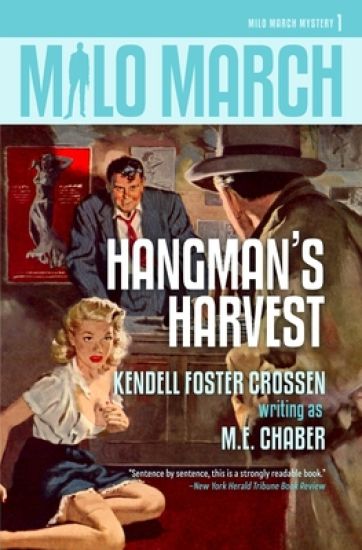
Milo March, a tough private eye from Denver, is sent to Aragon City (which could be Hollywood) to help the City Betterment Committee wipe out the gangsters and hoodlums controlling brothels, bookies, gamblers, shady nightclubs, and the dope traffic. He just has to uncover "Mr. X," the mystery man who's been raking in a tidy little income by providing protection to the Syndicate. But can Milo accomplish that without stumbling over something even more dangerous-like who pays Mr. X, and why?Milo is well equipped for the job. He has plenty of gall, good looks, an unlimited expense account, a fishtail Cadillac, and ample experience with lawbreakers-and beautiful, willing women, of whom there are several, but only one who is the girl next door. As March starts his snooping, he is surprised to discover a sexy, naked blonde in his hotel room. And there are other, more painful things complicating his life-things like beatings and fistfights and gun battles, and a blow he never saw coming.
In this action-packed Cold War spy adventure, Milo March-private detective and former OSS officer during World War II-is recruited by Army intelligence to carry out a dangerous mission behind the Iron Curtain. An important British diplomat has defected to East Germany, carrying with him secrets about British and American codes. He can also help the Communists gain access to a physicist working in the British Sector on a top-secret project that involves tampering with energy fields affecting the human brain―a bizarre process that could disastrously alter the nature of warfare. "Operation Berlin" demands that Milo kidnap the diplomat before the Russians make him talk.Disguised as an American Communist delegate to an international Peace Festival in Berlin, Milo dashes into the Soviet Zone just as the news leaks that an American agent is coming to the event. Surrounded by suspicious comrades, he is congratulated on his mastery of Lenin quotes one moment, while the next he is subjected to arrest and a torturous interrogation. Even when he scores a point, he never knows whether he is fooling them or they are fooling him. While treading this unbearable tightrope of tension, he is distracted by two beautiful women: the sexually aggressive blonde Frieda and the soft-eyed, black-haired Greta, who has some secrets of her own. Either or both of these feminine comrades could be on the verge of betraying him. Although the efficient and fearless Milo always insists on working alone, help comes from an unexpected quarter in the nick of time.
Samson Hercules Carter is a little man with a big name who has fallen obsessively in love with a diamond. The Tavernier Blue is only a little smaller than a golf ball and worth a fortune. To insurance investigator Milo March, the hunk of carbon doesn't seem as attractive as the equivalent in cash, but he can see why the little man might want to put it in his pocket and take a walk. But the problem is, Carter has also shot a man to death in the process. The insurance company sends Milo to track down the murderer and recover the stolen diamond-a task made all the more urgent because he's got competition. Some of the world's top jewel thieves would also like to get their hands on the diamond, from sinister professionals to a beautiful seductress. In one of Milo's wildest adventures ever, the chase takes him from New York to Lisbon and Madrid, where the thief, a mild-mannered accountant, has transformed himself into a new identity as a cultured gentleman, an alternate personality that he has secretly developed for years. Getting the thief back to America for prosecution is challenge enough-but where the hell did the little man hide the diamond?The Man Inside was made into an English film of the same name in 1958, directed by John Gilling and starring Jack Palance and Anita Eckberg.
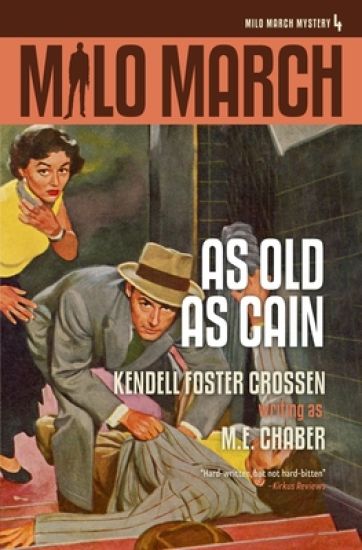
Insurance investigator Milo March is under pressure to solve a classic whodunit in a small town. Athens, Ohio, is a place full of historic monuments, many of them still walking the streets. But now the excitement of Hollywood has burst on the scene, with a studio shooting a biopic about a rugged pioneer who played a role in the founding of Athens County. Descendants of the story's hero still live in Athens, and are the owners of valuable antiques, books, and other heirlooms passed down to them from the early 1800s. The studio has arranged to use these gems of Americana as props, insuring them with a million-dollar policy. With such a large sum at stake, the insurance company sends Milo to check on the security measures at the little museum where the items are housed under guard.The job seems like a snap-until a bludgeoned body and a lot of smashed-open cases send everyone into a panic. Among the stolen items is a personal diary written by Hanna's wife, which appears to be an object of intense interest, or even obsession. Milo can't imagine why a diary from the early 1800s should be so dangerous as to lead to murder, but he'll have to find out. Was it a matter of greed, professional ambition, or something bizarre like a delusional fixation on the long-dead pioneer woman who penned the diary? If being unpleasant or eccentric made someone a murderer, then there was full cast of characters to choose from, including a pedantic historian, a shiftless ex-cop, and a couple of snooping old biddies, not to mention a scheming scriptwriter, a genius director, and a man-eating blonde starlet.Murder wasn't supposed to happen in Athens, Ohio, and the cops want these crimes to be solved fast. The pressure is on Milo to identify the killer before he strikes again-and to recover the heirlooms before anyone cashes in the million-dollar policy.
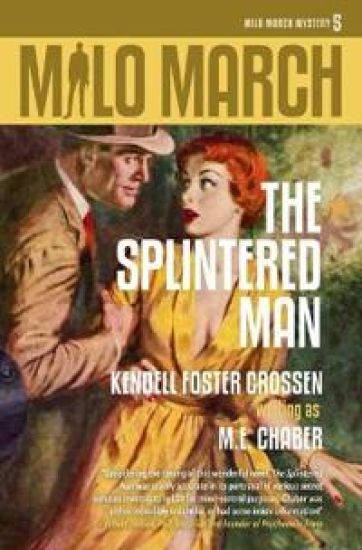
It's been two years since Milo March sneaked into East Germany to capture a valuable Western deserter. Now, as a major in the Army Reserves, he is recalled to tackle a much weirder case. No one knows why Hermann Gruss, head of the counterespionage police in West Germany, disappeared behind the Iron Curtain. Did he defect voluntarily, or was he taken by force? Either way, Milo has to get him back before he reveals secrets that the U.S. shared with him.Some say Gruss suffers from a dread disease and is being treated in East Berlin with the latest wonder drug by his friend Dr. Oderbruch. Milo suspects that Oderbruch, a former Nazi, is experimenting on Gruss, bouncing him in and out of insanity like a yo-yo by dosing him with LSD, then healing his "schizophrenia" with an antidote. Withholding the antidote is a handy way to squeeze information out of Gruss, and the drug experiments are part of a larger, fiendish project involving mind control of the military.In his effort to gain access to Oderbruch and find Gruss, Milo ends up in the arms of the lustful Frau Beate, who plies him with Soviet champagne and vodka. Milo is reasonably safe if hangovers are the only menace. But when his disguise as a Russian secret-police agent is blown, he is packed off to a mental hospital. There he joins Gruss as the doctor's latest guinea pig.Milo survived a marathon interrogation by the Communists during his last mission. But this is different-the hallucinogenic effects of LSD threaten to splinter his mind into pieces. How will he escape the closely guarded hospital, bringing both Gruss and the evil Oderbruch back with him to the West? Milo's quick-witted action and sheer nerve, not to mention his irreverence toward authority figures on both sides, make for the wildest trip of all-an insane car chase back to the Free World.
Milo March, Madison Avenue insurance detective, is sent to Rome to investigate the double-indemnity claim on the policy of a young woman who may have been murdered. Anna Maria went walking on a beach, allegedly to bathe in the healing seawater. A few hours later she was found lying nude on the sand, with no apparent signs of violence to the body. An accidental drowning, says the medical report, and the family puts in a claim for the large benefit. The insurance company, understandably, would like to confirm that the death was indeed an accident.Although the case is quickly closed by the police, the whispers of Rome will not be silenced. They insist that the girl was murdered, that she'd been consorting with VIPs at a wild drug party, that she was pregnant and the guilty man did not want any trouble. It is rumored that politicians made the police hush up the truth, lest a scandal topple the Christian-Democrat government, allowing the Communists to take over.Milo is warned to leave the case alone. If he persists, he may find himself arrested, he may get orders from his own American Embassy, or he may even be killed by someone... or some thing. All of this may happen if he says out loud that a girl of no importance died because someone wanted her dead. But the question-and the shocking surprise-is who actually killed her?A Lonely Walk was inspired by the true story of Wilma Montesi, whose death in 1953 led to a scandal that rocked Italy with revelations of corruption in high places. The real-life case remains unsolved death to this day. Not so Milo's investigation of the girl who took a lonely walk-until Death came to keep her company.