etude sur les gisements metalliferes des vallees Trompia, Sabbia et Sassina, dans la Lombardie septentrionale / par M. Edmond Fuchs, ...Date de l'edition originale: 1868Ce livre est la reproduction fidele d'une oeuvre publiee avant 1920 et fait partie d'une collection de livres reimprimes a la demande editee par Hachette Livre, dans le cadre d'un partenariat avec la Bibliotheque nationale de France, offrant l'opportunite d'acceder a des ouvrages anciens et souvent rares issus des fonds patrimoniaux de la BnF.Les oeuvres faisant partie de cette collection ont ete numerisees par la BnF et sont presentes sur Gallica, sa bibliotheque numerique.En entreprenant de redonner vie a ces ouvrages au travers d'une collection de livres reimprimes a la demande, nous leur donnons la possibilite de rencontrer un public elargi et participons a la transmission de connaissances et de savoirs parfois difficilement accessibles.Nous avons cherche a concilier la reproduction fidele d'un livre ancien a partir de sa version numerisee avec le souci d'un confort de lecture optimal. Nous esperons que les ouvrages de cette nouvelle collection vous apporteront entiere satisfaction.Pour plus d'informations, rendez-vous sur www.hachettebnf.fr
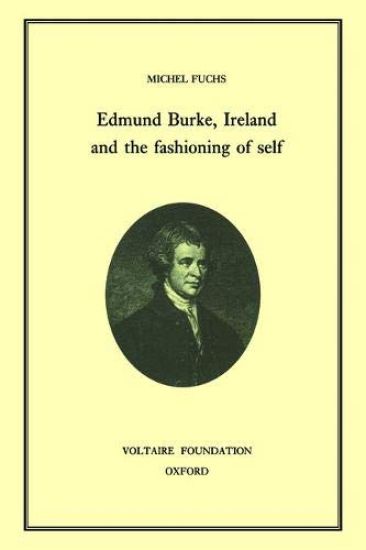
This is the first attempt, since the work of A.P.I. Samuels in 1923, at examining the early career of Edmund Burke without assuming that he was born to become the arch-conservative who condemned the French Revolution. Instead of being in revolt against the Enlightenment, the young Burke was a man intent on illustrating himself and his age by promoting rational knowledge and widening the field of reason. His turn to politics is, therefore, seen as turning away from truth; the compromise changed the direction of his thinking. An escapist solution to some of Burke’s problems could not make him forget Ireland, his native country. The fact that Ireland is the first country to have been colonized by England makes it an interesting laboratory of colonial misrule. The study of how it fashioned such a man torn between Ireland and England raises and sheds light on problems that go very much beyond the fate of Burke as an individual. It is a demonstration of the different means used by colonial powers to maintain their conquered empire and contain dissidence and rebellion. Making people believe, for instance, that the order of things is as it should be because that is what it is, does not tax the imagination, but it works and is still being used the world over. In this opinion campaign, Protestant England enjoyed the unfailing support of the Catholic hierarchy in Ireland and a ‘realistic’ understanding on the part of Catholic Europe. It is an example of the private and public tragedies caused by the divided loyalties that colonialism generated. The painfully experienced situation of a ‘cultural mulatto’ is the inevitable result of a state of domination. If it seems complex, it is because it is not purely negative: the dominated may in turn dominate the dominator. The effects are still with us of the passionate oscillations and reversals of opinion that Burke called his ‘principles’. Finally it illustrates the fundamental error of those who, even for a moment, lose sight of the truth perceived by Victor Hugo that ‘the first phase of the possible is to be impossible’. As a cultural mulatto, Burke led an impossible life, but who can fail to see that what was then an ‘impossibility’ is, in the present situation of Ireland and of the world, not only possible but eminently desirable? If only because this is just the beginning.
This work has been selected by scholars as being culturally important and is part of the knowledge base of civilization as we know it.This work is in the public domain in the United States of America, and possibly other nations. Within the United States, you may freely copy and distribute this work, as no entity (individual or corporate) has a copyright on the body of the work.Scholars believe, and we concur, that this work is important enough to be preserved, reproduced, and made generally available to the public. To ensure a quality reading experience, this work has been proofread and republished using a format that seamlessly blends the original graphical elements with text in an easy-to-read typeface.We appreciate your support of the preservation process, and thank you for being an important part of keeping this knowledge alive and relevant.
This work has been selected by scholars as being culturally important and is part of the knowledge base of civilization as we know it.This work is in the public domain in the United States of America, and possibly other nations. Within the United States, you may freely copy and distribute this work, as no entity (individual or corporate) has a copyright on the body of the work.Scholars believe, and we concur, that this work is important enough to be preserved, reproduced, and made generally available to the public. To ensure a quality reading experience, this work has been proofread and republished using a format that seamlessly blends the original graphical elements with text in an easy-to-read typeface.We appreciate your support of the preservation process, and thank you for being an important part of keeping this knowledge alive and relevant.
The Crossing of Antarctica: The Commonwealth Transantarctic Expedition, 1955-1958 is a book written by Vivian Fuchs, detailing his experiences as the leader of the first successful crossing of the Antarctic continent. The book chronicles the three-year expedition, which involved a team of scientists and explorers from Britain, New Zealand, Australia, and South Africa. The team set out to cross the continent from the Weddell Sea to the Ross Sea, a journey of over 3,000 miles, in order to conduct scientific research and establish a permanent base on the continent.The book provides a detailed account of the challenges the team faced, including harsh weather conditions, treacherous terrain, and the constant threat of injury or illness. Fuchs describes the team's efforts to overcome these obstacles, including the use of dog sleds, snow tractors, and a specially designed vehicle known as the Sno-Cat. The book also includes vivid descriptions of the Antarctic landscape, as well as the wildlife and plant life that the team encountered along the way.Throughout the book, Fuchs emphasizes the importance of scientific research and exploration, as well as the need for international cooperation in these endeavors. He also pays tribute to the bravery and dedication of his fellow explorers, many of whom risked their lives to achieve the expedition's goals. The Crossing of Antarctica is a fascinating and inspiring account of one of the greatest feats of exploration in modern history, and a testament to the human spirit of adventure and discovery.This scarce antiquarian book is a facsimile reprint of the old original and may contain some imperfections such as library marks and notations. Because we believe this work is culturally important, we have made it available as part of our commitment for protecting, preserving, and promoting the world's literature in affordable, high quality, modern editions, that are true to their original work.
The first single-volume edition of this stunning early Mamet play You know how much of our life we're alive, you and me? Nothing. Two minutes out of the year. When we meet someone new, when we get married, when, when, when, when we're in difficulties...once in our life at the death of someone that we love. That's...in a carcrash...and that's it. You know, you know, we're sheltered...A fortune-teller's teasing rumination sends Edmond lurching into New York City's hellish underworld, his whole life abandoned in a searing quest for self-discovery and redemption. A furious, unflinching, whirlwind of a play first produced in 1982. "A stunning amorality play, glittering and disturbing, suspended in the dark void of contemporary New York. It is also a technically adventurous piece pared brilliantly to the bone, highly theatrical in its scenic elisions" Financial Times "A riveting theatrical experience that illuminates the heart of darkness" Newsweek Publication of this edition ties in with a production in July 2003 at the Royal National Theatre starring Kenneth Branagh.
Edmond, a man set morally adrift, leaves an unfulfilling marriage to find sex, adventure, companionship, and, ultimately, the meaning of his existence.
Edmond, par Armand Bernier de MalignyDate de l'edition originale: 1830Ce livre est la reproduction fidele d'une oeuvre publiee avant 1920 et fait partie d'une collection de livres reimprimes a la demande editee par Hachette Livre, dans le cadre d'un partenariat avec la Bibliotheque nationale de France, offrant l'opportunite d'acceder a des ouvrages anciens et souvent rares issus des fonds patrimoniaux de la BnF.Les oeuvres faisant partie de cette collection ont ete numerisees par la BnF et sont presentes sur Gallica, sa bibliotheque numerique.En entreprenant de redonner vie a ces ouvrages au travers d'une collection de livres reimprimes a la demande, nous leur donnons la possibilite de rencontrer un public elargi et participons a la transmission de connaissances et de savoirs parfois difficilement accessibles.Nous avons cherche a concilier la reproduction fidele d'un livre ancien a partir de sa version numerisee avec le souci d'un confort de lecture optimal. Nous esperons que les ouvrages de cette nouvelle collection vous apporteront entiere satisfaction.Pour plus d'informations, rendez-vous sur www.hachettebnf.frhttp: //gallica.bnf.fr/ark: /12148/bpt6k5469033s
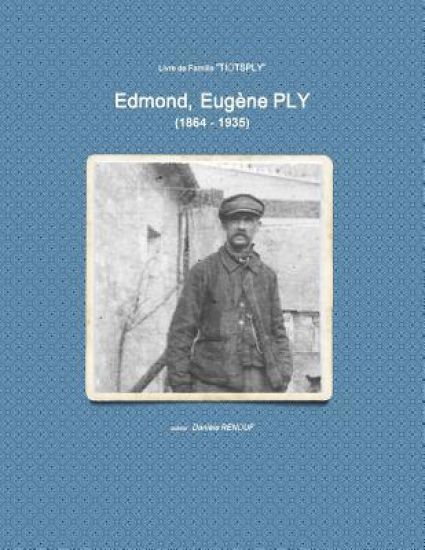
C'est pour r habiliter, aupr s de ses petits et arri re-petits-enfants, la m moire de son anc tre Edmond Ply, clips e, par celle de son beau-p re, que l'auteur a entrepris l' criture de cette biographie. En 1889 Edmond, jeune boulanger, pouse Jeanne Belloy malgr l'opposition du p re de celle-ci, Joseph Marcel instituteur de la commune. Le couple a d j 2 gar ons de 6 et 3 ans, quand en 96, Jeanne donne naissance deux jumelles. Peu de temps apr s, sa m re d c de de la tuberculose.Jeanne, son tour, est emport e par la tuberculose en janvier 98. Un Conseil de famille se r unit, dont Joseph Marcel Belloy est lu Subrog Tuteur. La boulangerie d'Edmond et Jeanne est vendue, ainsi que tous leurs biens. Ayant perdu son gagne-pain et son logement, ce dernier retourne dans son village natal....
An absorbing portrait of Edmond de Rothschild, who defied his class to help build a nation—and found his identity in the process Edmond de Rothschild (1845–1934) was born into one of the wealthiest families in history, but his legacy lies beyond banking, art, and aristocratic privilege. In this compelling biography, award-winning historian and journalist James McAuley tells the story of a man who defied his elite world to support a radical cause: the creation of a Jewish homeland. Drawing on rare access to archives—including Rothschild’s own long-lost memoir—McAuley reveals how and why this reserved French aesthete became a driving force in the early Zionist settlement of Palestine. Rothschild’s journey from the salons of Paris to the fields of Eretz Israel is a tale of emotional awakening, political conviction, and personal transformation—of a man’s search for a cause and discovery of himself.
Edmond Fleg and Jewish Minority Culture in Twentieth-Century France, the first critical biography of the leading French writer Edmond Fleg (1874–1963), explores his role in forging a modern French Jewish identity before and after the Second World War.Through his writings – plays, novels, poems, and essays based on Jewish and Christian texts – Fleg fashioned a minority identity within the context of French Third Republic universalism. At the heart of his work we find a radical ecumenism, a rejection of exclusive and homogenous nationalism, and a deep understanding of the necessity of supporting vibrant minority subcultures within the context of a liberal democratic republic. This account is both individual and social, pointing to the ways in which Fleg acted within the possibilities and constraints of his milieu and used his writing to engage with and shape the discursive fabric of twentieth-century French culture.This book appeals to a number of scholarly audiences, including historians and literary critics who work on modern France and Jewish and religious studies and those who focus on issues of identity and difference, as well as a more general audience interested in Modern France and/or modern Jewish history.
Edmond Malone (1741–1812) was the greatest early editor of Shakespeare's works, the first historian of early English drama, the biographer of Shakespeare, Dryden and Reynolds, and a relentless exposer of literary fraud and forgery. His dedication to discovering the facts of literary history through manuscripts and early editions laid the foundations for the scholar's code and the modern study of literature. Yet he was also a gregarious man, attracting many friends and enemies among his contemporaries. This first modern full-length biography of Edmond Malone illuminates in a unique way both the intensely private world of the scholar and the highly public world of the late eighteenth-century artistic, intellectual and political elite, including Samuel Johnson, Edmund Burke, Sir Joshua Reynolds, Sarah Siddons and James Boswell.
"The Poetry of the Nomad" is a unique attempt to write a nomad's poetry, to encounter both desert and book, to speak and to be silent toward the divine. The poet accepts and denies the divine. His conversations are heard and not heard. Words designate and transfigure their designations. Men listen and they understand, but understanding is the beginning of nonunderstanding. This is a dialogue of a nomad, a wandering dialogue, one that is in the book and beyond it.
This volume is a collection of articles, essays, notes and posts in response to the most often asked questions and issues the author encountered in his career as an astrologer and consultant beginning in the 1970s to the present as of this printing.This text is a blending of science, metaphysics, philosophy, astrology and psychology on an array of popular topics.553 pages, 71 articles, and 16 pieces of artwork, all in one place.