
Kirjahaku
Etsi kirjoja tekijän nimen, kirjan nimen tai ISBN:n perusteella.
1000 tulosta hakusanalla Edwin J. Ross


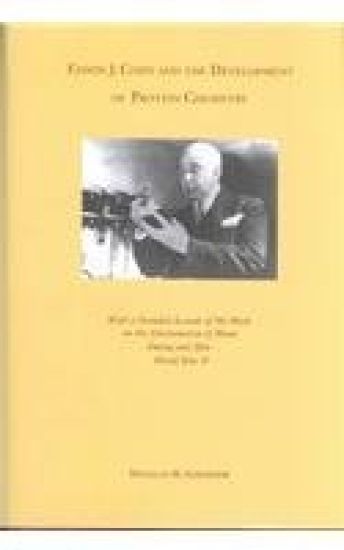
Edwin J. Cohn and the Development of Protein Chemistry
Douglas M. Surgenor
Harvard University Press
2002
sidottu
“Blood,” Goethe observed in Faust, “is a very special juice.” How special it is and how complex as well is revealed in Douglas Surgenor’s Edwin J. Cohn and the Development of Protein Chemistry.As Surgenor aptly shows, what began as a modest program in basic research at the Harvard Medical School in 1920 with the establishment of a small laboratory for the study of the physical chemistry of proteins, suddenly and quite unexpectedly took on immensely practical proportions twenty years later when the onset of World War II made requisite new sophisticated blood techniques and blood substitutes for the treatment of military casualties.The knowledge and expertise gained by Edwin Cohn and his laboratory associates in the study of proteins, amino acids, and peptides in blood after 1920 put them in a unique position to carry out the search for new blood products. Edwin J. Cohn and the Development of Protein Chemistry discloses how the wartime emergency called into play Cohn’s talents as a leader who drew together chemists, clinicians, pathologists, immunologists, and others in the attainment of a complex goal. The revolution Cohn started has still not run its course.

Edwin J. Brett's Adventures of Young Jack Harkaway and His Boy Tinker
Edwin J (Edwin John) Brett
Gale and the British Library
1904
pokkari


Letters to and about Robert Louis Stevenson: The Stevenson Library of Edwin J. Beinecke, V4
Robert Louis Stevenson; George L. McKay
Literary Licensing, LLC
2011
nidottu
The Reminiscences of Adm. Edwin J. Roland, USCG (Ret.), vol. I
Naval Institute Press
2018
sidottu
After graduation from the U.S. Coast Guard Academy in 1929, Roland's earliest assignments were as gunnery officer on board the destroyers USCGD Shaw (CG-22) and USCGD Wilkes (CG-25), which were involved in the suppression of smuggling. From 1934 to 1938, he taught at the Coast Guard Academy and was assistant football coach. Later duties included serving as commanding officer of the cutter USS Nemesis (WPC-111) and as Commander Escort Division 45, which escorted convoys to the Mediterranean. In 1944 Roland became CO of the cutter USS Mackinaw (WAGB-83), handling icebreaking in the Great Lakes to permit Navy vessels and cargoes of freight essential to the war effort to navigate in those waters. He was chief of staff at the 9th Coast Guard District in Cleveland from 1946 through 1949, and then Commandant of Cadets at the Coast Guard Academy. Volume I concludes with a discussion of his assignment to the National War College in 1955. Volume II follows Admiral Roland's career after he completed his courses at the National War College. He was then assigned as Deputy Chief of Staff at Coast Guard Headquarters. After that followed duty as Commander, First Coast Guard District, Boston, and in 1960, Commander, Third Coast Guard District and Commander Eastern Area in New York City. He was appointed Assistant Commandant of the U.S. Coast Guard in February 1962 and four months later became the Commandant. In discussing his tenure, he talks about his role in bringing Coast Guard forces to readiness prior to their employment in the Vietnam conflict and their subsequent involvement.

The Reminiscences of Adm. Edwin J. Roland, USCG (Ret.), vol. II
Naval Institute Press
2018
sidottu
After graduation from the U.S. Coast Guard Academy in 1929, Roland's earliest assignments were as gunnery officer on board the destroyers USCGD Shaw (CG-22) and USCGD Wilkes (CG-25), which were involved in the suppression of smuggling. From 1934 to 1938, he taught at the Coast Guard Academy and was assistant football coach. Later duties included serving as commanding officer of the cutter USS Nemesis (WPC-111) and as Commander Escort Division 45, which escorted convoys to the Mediterranean. In 1944 Roland became CO of the cutter USS Mackinaw (WAGB-83), handling icebreaking in the Great Lakes to permit Navy vessels and cargoes of freight essential to the war effort to navigate in those waters. He was chief of staff at the 9th Coast Guard District in Cleveland from 1946 through 1949, and then Commandant of Cadets at the Coast Guard Academy. Volume I concludes with a discussion of his assignment to the National War College in 1955. Volume II follows Admiral Roland's career after he completed his courses at the National War College. He was then assigned as Deputy Chief of Staff at Coast Guard Headquarters. After that followed duty as Commander, First Coast Guard District, Boston, and in 1960, Commander, Third Coast Guard District and Commander Eastern Area in New York City. He was appointed Assistant Commandant of the U.S. Coast Guard in February 1962 and four months later became the Commandant. In discussing his tenure, he talks about his role in bringing Coast Guard forces to readiness prior to their employment in the Vietnam conflict and their subsequent involvement.
The colonial era is especially appealing in regard to economic history because it represents a study in contrasts. The economy was exceptionally dynamic in terms of population growth and geographical expansion. No major famines, epidemics, or extended wars intervened to reverse, or even slow down appreciably, the tide of vigorous economic growth. Despite this broad expansion, however, the fundamental patterns of economic behavior remained fairly constant. The members of the main occupational groups - farmers, planters, merchants, artisans, indentured servants, and slaves - performed similar functions throughout the period. In comparison with the vast number of institutional innovations in the nineteenth and twentieth centuries, structural change in the colonial economy evolved gradually. With the exception of the adoption of the pernicious system of black slavery, few new economic institutions and no revolutionary new technologies emerged to disrupt the stability of this remarkably affluent commercial-agricultural society. Living standards rose slowly but fairly steadily at a rate of 3 to 5 percent a decade after 1650. (Monetary sums are converted into 1980 dollars so that the figures will be relevant to modern readers.) For the most part, this book describes the economic life styles of free white society. The term "colonists" is virtually synonymous here with inhabitants of European origin. Thus, statements about very high living standards and the benefits of land ownership pertain only to whites. One chapter does focus exclusively, however, on indentured servants and slaves. This book represents the author's best judgment about the most important features of the colonial economy and their relationship to the general society and to the movement for independence. It should be a good starting point for all - undergraduate to scholar - interested in learning more about the seventeenth and eighteenth centuries. This popular study, lauded by professors and scholars alike, has been diligently revised to reflect the tremendous amount of new research conducted during the last decade, and now includes a totally new chapter on women in the economy. Presenting a great deal of up-to-date information in a concise and lively style, the book surveys the main aspects of the colonial economy: population and economic expansion; the six main occupational groups (family farmers, indentured servants, slaves, artisans, great planters, and merchants); women in the economy; domestic and imperial taxes; the colonial monetary system; living standards for the typical family

Industry in the Pacific Northwest and the Location Theory
Edwin J. Cohn
Columbia University Press
2020
sidottu

How do you sell an innovative product to a market that does not yet exist? Entrepreneurial businesses often create products and services based on radically new technology that have the power to change the marketplace. Existing market research data will be largely irrelevant in these cases, making sales and marketing of innovative new products especially challenging to entrepreneurs. Entrepreneurial Marketing focuses on this challenge.Classic core marketing concepts, such as segmentation, positioning, and the marketing mix undergo an ‘extreme makeover’ in the context of innovative products hitting the market. Edwin J. Nijssen stresses principles of affordable loss, experimentation, and adjustment for emerging opportunities, as well as cooperation with first customers. Containing many marketing examples of successful and cutting-edge innovations (including links to websites and videos), useful lists of key issues, and instructions on how to make a one-page marketing plan, Entrepreneurial Marketing provides a vital guide to successfully developing customer demand and a market for innovative new products. This third edition has been thoroughly expanded, including: Expanded content on leveraging digital technologies and their new business models More practical tools, such as coverage of the Lean Canvas model Updated references, cases, and new examples throughout; and, Updated online resourcesThis book equips advanced undergraduate and postgraduate students of marketing strategy, entrepreneurial marketing, and entrepreneurship with the fundamental tools to succeed in marketing.

How do you sell an innovative product to a market that does not yet exist? Entrepreneurial businesses often create products and services based on radically new technology that have the power to change the marketplace. Existing market research data will be largely irrelevant in these cases, making sales and marketing of innovative new products especially challenging to entrepreneurs. Entrepreneurial Marketing focuses on this challenge.Classic core marketing concepts, such as segmentation, positioning, and the marketing mix undergo an ‘extreme makeover’ in the context of innovative products hitting the market. Edwin J. Nijssen stresses principles of affordable loss, experimentation, and adjustment for emerging opportunities, as well as cooperation with first customers. Containing many marketing examples of successful and cutting-edge innovations (including links to websites and videos), useful lists of key issues, and instructions on how to make a one-page marketing plan, Entrepreneurial Marketing provides a vital guide to successfully developing customer demand and a market for innovative new products. This third edition has been thoroughly expanded, including: Expanded content on leveraging digital technologies and their new business models More practical tools, such as coverage of the Lean Canvas model Updated references, cases, and new examples throughout; and, Updated online resourcesThis book equips advanced undergraduate and postgraduate students of marketing strategy, entrepreneurial marketing, and entrepreneurship with the fundamental tools to succeed in marketing.

Wall Street to Main Street, first published in 1999, focuses on the spectacularly successful career of financier Charles Merrill (1885–1956), the founder of Merrill Lynch & Co., the world's largest brokerage and investment firm. Merrill was the most innovative entrepreneur in the United States financial services sector in the twentieth century and the most important figure in promoting common stocks as a prudent long-term investment vehicle for members of the American middle class. With more than 100 branch offices across the nation, his firm solicited millions of middle-class households and became famous for bringing Wall Street to Main Street in the post-World War II era. Today, American investors hold, either directly or indirectly through mutual funds, a greater percentage of common stocks in their financial portfolios than do the citizens of any other country. Based on archival sources, this book is the first biography published about the career of this major Wall Street figure.

Wall Street to Main Street, first published in 1999, focuses on the spectacularly successful career of financier Charles Merrill (1885–1956), the founder of Merrill Lynch & Co., the world's largest brokerage and investment firm. Merrill was the most innovative entrepreneur in the United States financial services sector in the twentieth century and the most important figure in promoting common stocks as a prudent long-term investment vehicle for members of the American middle class. With more than 100 branch offices across the nation, his firm solicited millions of middle-class households and became famous for bringing Wall Street to Main Street in the post-World War II era. Today, American investors hold, either directly or indirectly through mutual funds, a greater percentage of common stocks in their financial portfolios than do the citizens of any other country. Based on archival sources, this book is the first biography published about the career of this major Wall Street figure.


Electrical Measurements And Other Advanced Primers Of Electricity
Edwin J. Houston
Kessinger Pub
2007
pokkari