Kirjojen hintavertailu. Mukana 11 342 296 kirjaa ja 12 kauppaa.

Kirjahaku

Etsi kirjoja tekijän nimen, kirjan nimen tai ISBN:n perusteella.

1000 tulosta hakusanalla Elizabeth F. Fideler

Women Still at Work

Women Still at Work

Elizabeth F. Fideler

Rowman Littlefield Publishers
2017
nidottu
From Betty White to Toni Morrison, we’re surrounded by examples of women working well past the traditional retirement age. In fact, the fastest growing segment of the workforce is women age sixty-five and older. Women Still at Work tells the everyday stories of hard-working women and the reasons they’re still on the job, with a focus on women in the professional workforce. The book is filled with profiles of real women, working in settings from academia to drug and alcohol rehabilitation centers, from business to the arts, talking about the many reasons why they still work and the impact work has on their lives. Women Still at Work draws on national survey data and in-depth interviews, showing not only the big picture of older women advancing their careers despite tough economic conditions, but also providing the personal insights of everyday working women from all parts of the country. Their stories showcase some of the key themes women choose to stay at work—including job satisfaction, diminishing retirement savings, the need to support children or parents longer in life, exercising the hard-won right to work, and more. Women Still at Work shows employment to be a positive and rewarding part of life for many women well beyond the expected retirement age.
Women Still at Work

Women Still at Work

Elizabeth F. Fideler

Rowman Littlefield
2012
sidottu
From Betty White to Toni Morrison, we’re surrounded by examples of women working well past the traditional retirement age. In fact, the fastest growing segment of the workforce is women age sixty-five and older. Women Still at Work tells the everyday stories of hard-working women and the reasons they’re still on the job, with a focus on women in the professional workforce. The book is filled with profiles of real women, working in settings from academia to drug and alcohol rehabilitation centers, from business to the arts, talking about the many reasons why they still work and the impact work has on their lives. Women Still at Work draws on national survey data and in-depth interviews, showing not only the big picture of older women advancing their careers despite tough economic conditions, but also providing the personal insights of everyday working women from all parts of the country. Their stories showcase some of the key themes women choose to stay at work—including job satisfaction, diminishing retirement savings, the need to support children or parents longer in life, exercising the hard-won right to work, and more. Women Still at Work shows employment to be a positive and rewarding part of life for many women well beyond the expected retirement age.
Men Still at Work

Men Still at Work

Elizabeth F. Fideler

Rowman Littlefield
2014
sidottu
Men Still at Work explores the reasons why many men are continuing to work well beyond the traditional retirement age. In today’s challenging economy, they are the second-fastest growing group of workers (just behind older women). Filled with profiles of older working men, as well as dynamic interview quotes, Men Still at Work explores thorny issues such as masculinity and the “need to provide,” as well as economic issues, job satisfaction, and more.
Aging, Work, and Retirement

Aging, Work, and Retirement

Elizabeth F. Fideler

Rowman Littlefield
2020
sidottu
Aging, Work, and Retirement presents the reasons older men and women are staying in the workforce as long as they are able to do so—information of immediate value to undergraduate and graduate students across the fields of sociology, gerontology, industrial/organizational psychology, and business management as well as to corporate leaders, human resources managers, professional organizations and policy makers. The text reflects a growing interest in and concern regarding aspects of aging, ageism, labor market challenges, workplace issues, plus gender and racial/ethnic similarities and differences in employment history and extended worklife opportunities, as they affect older workers in this country and abroad. Each chapter has cases and profiles and other strong pedagogical features allowing students to integrate the content with real world examples.
Aging, Work, and Retirement

Aging, Work, and Retirement

Elizabeth F. Fideler

Rowman Littlefield
2020
nidottu
Aging, Work, and Retirement presents the reasons older men and women are staying in the workforce as long as they are able to do so—information of immediate value to undergraduate and graduate students across the fields of sociology, gerontology, industrial/organizational psychology, and business management as well as to corporate leaders, human resources managers, professional organizations and policy makers. The text reflects a growing interest in and concern regarding aspects of aging, ageism, labor market challenges, workplace issues, plus gender and racial/ethnic similarities and differences in employment history and extended worklife opportunities, as they affect older workers in this country and abroad. Each chapter has cases and profiles and other strong pedagogical features allowing students to integrate the content with real world examples.
Margaret Pearmain Welch (1893-1984)

Margaret Pearmain Welch (1893-1984)

Elizabeth F Fideler

Resource Publications (CA)
2017
pokkari
In a bygone era when twentieth-century Proper Bostonians mixed Beacon Hill formalities with countryside pleasures, Margaret Pearmain Welch (1893-1984) defied the mores of her social set and got away with it. She was the epitome of everything expected and much that was scandalous. Known as a debutante, dancer, world traveler, and hostess, she was also an indefatigable activist, writer, lecturer, lobbyist, fundraiser, and opinion shaper--grande dame as well as proverbial little old lady in combat boots (footwear more appropriate to confrontation than tennis shoes). A descendant of seventeenth-century dissenter Anne Hutchinson and just as independent, she embraced Quaker ideals of religious tolerance, conscientious objection, and civil liberties, as well as worship without the benefit of clergy. Margaret was the quintessential socialite who established Waltz Evenings in her Louisburg Square drawing room and also the beauty whose marriages and divorces caused ostracism. At the same time, she worked tirelessly on women's suffrage, reproductive rights, world peace, environmental protection, monetary reform, land conservation, and more. As the indomitable matriarch of an extended family and chronicler of its history, her efforts at self-fashioning produced a unique persona, blending insistence on proprieties with a keen awareness of twentieth-century social, cultural, political, and economic shifts. ""Elizabeth Fideler tells the story of Margaret Pearmain Welch (1883-1984), who, despite her privileged status as a member of Boston's social elite, chose the life of a pioneer in her tireless advocacy of controversial causes. . . . By skillfully interweaving both the personal and political, Fideler lends depth and enrichment to her narrative and illuminates the turbulent history of twentieth-century American reform movements."" --Marjorie Wechsler, Professor of History Emerita, Lesley University ""Drawing on formidable archival research, Fideler tells the story of Margaret Pearmain Welch, her life among intertwined Bostonian families, and her developing interest in women's rights, pacifism, workers' rights, and economic injustice. Partly from Welch's own writing, a portrait emerges of an intelligent, surprisingly unconventional woman."" --Marcia McClintock Folsom, Professor of Literature, Wheelock College ""Elizabeth Fideler's biography of Margaret Pearman Welch introduces us to an extraordinary woman. Born to wealth and gentility on Beacon Hill, this Boston aristocrat evolved into a New Deal Democrat and Quaker peace activist and feminist. Fideler not only details a fascinating life, but tells us much about twentieth-century American activism."" --Thomas Hamm, Professor of History, Curator of the Quaker Collection, Director of Special Collections, Earlham College ""I knew and worked closely with Margaret Welch as a young state legislator on some key environmental issues when she was one of the few environmental advocates walking the halls of the Massachusetts State House. She was a force of nature--tough, persistent, unafraid, at a time when a woman lobbyist was a rarity. Her story is a must read."" --Michael Dukakis, Former Governor of Massachusetts. Professor, Northeastern University Elizabeth F. Fideler (EdD, Harvard University) is a Research Fellow at Boston College's Center on Aging and Work. She is the author of Women Still at Work: Professionals Over Sixty and On the Job (2012) and Men Still at Work: Professionals Over Sixty and On the Job (2014). She is a longtime trustee of the Framingham (MA) Public Library and chairs the library's ""one book, one community"" initiative.
Margaret Pearmain Welch (1893-1984)

Margaret Pearmain Welch (1893-1984)

Elizabeth F Fideler

Resource Publications (CA)
2017
sidottu
In a bygone era when twentieth-century Proper Bostonians mixed Beacon Hill formalities with countryside pleasures, Margaret Pearmain Welch (1893-1984) defied the mores of her social set and got away with it. She was the epitome of everything expected and much that was scandalous. Known as a debutante, dancer, world traveler, and hostess, she was also an indefatigable activist, writer, lecturer, lobbyist, fundraiser, and opinion shaper--grande dame as well as proverbial little old lady in combat boots (footwear more appropriate to confrontation than tennis shoes). A descendant of seventeenth-century dissenter Anne Hutchinson and just as independent, she embraced Quaker ideals of religious tolerance, conscientious objection, and civil liberties, as well as worship without the benefit of clergy. Margaret was the quintessential socialite who established Waltz Evenings in her Louisburg Square drawing room and also the beauty whose marriages and divorces caused ostracism. At the same time, she worked tirelessly on women's suffrage, reproductive rights, world peace, environmental protection, monetary reform, land conservation, and more. As the indomitable matriarch of an extended family and chronicler of its history, her efforts at self-fashioning produced a unique persona, blending insistence on proprieties with a keen awareness of twentieth-century social, cultural, political, and economic shifts. ""Elizabeth Fideler tells the story of Margaret Pearmain Welch (1883-1984), who, despite her privileged status as a member of Boston's social elite, chose the life of a pioneer in her tireless advocacy of controversial causes. . . . By skillfully interweaving both the personal and political, Fideler lends depth and enrichment to her narrative and illuminates the turbulent history of twentieth-century American reform movements."" --Marjorie Wechsler, Professor of History Emerita, Lesley University ""Drawing on formidable archival research, Fideler tells the story of Margaret Pearmain Welch, her life among intertwined Bostonian families, and her developing interest in women's rights, pacifism, workers' rights, and economic injustice. Partly from Welch's own writing, a portrait emerges of an intelligent, surprisingly unconventional woman."" --Marcia McClintock Folsom, Professor of Literature, Wheelock College ""Elizabeth Fideler's biography of Margaret Pearman Welch introduces us to an extraordinary woman. Born to wealth and gentility on Beacon Hill, this Boston aristocrat evolved into a New Deal Democrat and Quaker peace activist and feminist. Fideler not only details a fascinating life, but tells us much about twentieth-century American activism."" --Thomas Hamm, Professor of History, Curator of the Quaker Collection, Director of Special Collections, Earlham College ""I knew and worked closely with Margaret Welch as a young state legislator on some key environmental issues when she was one of the few environmental advocates walking the halls of the Massachusetts State House. She was a force of nature--tough, persistent, unafraid, at a time when a woman lobbyist was a rarity. Her story is a must read."" --Michael Dukakis, Former Governor of Massachusetts. Professor, Northeastern University Elizabeth F. Fideler (EdD, Harvard University) is a Research Fellow at Boston College's Center on Aging and Work. She is the author of Women Still at Work: Professionals Over Sixty and On the Job (2012) and Men Still at Work: Professionals Over Sixty and On the Job (2014). She is a longtime trustee of the Framingham (MA) Public Library and chairs the library's ""one book, one community"" initiative.
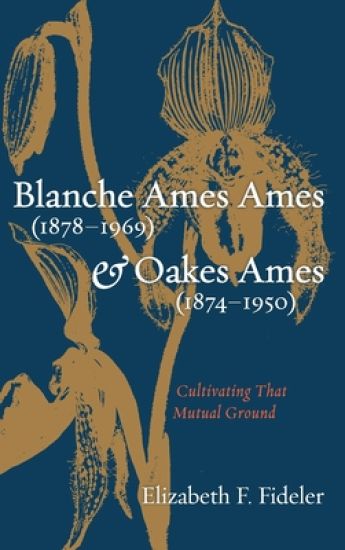
Blanche Ames Ames (1878-1969) and Oakes Ames (1874-1950)

Blanche Ames Ames (1878-1969) and Oakes Ames (1874-1950)

Elizabeth F Fideler

Resource Publications (CA)
2023
pokkari
Blanche Ames Ames and Oakes Ames advanced women's suffrage, reproductive rights, artistic expression, and scientific knowledge, among other accomplishments, in the first half of the twentieth century. Blanche was part of women's history for nearly seven decades and deserved to be better known for that and other reasons. Oakes's contributions to the women's suffrage movement and his extraordinary scientific accomplishments might have received greater recognition had he not avoided the spotlight so successfully. Their story is one of mutual enabling. Believing in gender equality, even if outside the bounds of what was considered socially acceptable, they named their home ""Borderland"" to represent boundary pushing. One lasting influence is found in the social justice arena. The Harvard professor of botany and supervisor of the university's major botanical institutions and his sociable, highly independent wife were both active in the fight to secure the vote for women, with Blanche contributing original political cartoons to newspapers. Blanche led the Birth Control League of Massachusetts for nearly twenty years, then used her position and skills on behalf of the New England Hospital for Women and Children. Unity Church and Memorial Hall in Easton, Massachusetts, were family gifts, as was their home, now Borderland State Park.
Blanche Ames Ames (1878-1969) and Oakes Ames (1874-1950)

Blanche Ames Ames (1878-1969) and Oakes Ames (1874-1950)

Elizabeth F Fideler

Resource Publications (CA)
2023
sidottu
Blanche Ames Ames and Oakes Ames advanced women's suffrage, reproductive rights, artistic expression, and scientific knowledge, among other accomplishments, in the first half of the twentieth century. Blanche was part of women's history for nearly seven decades and deserved to be better known for that and other reasons. Oakes's contributions to the women's suffrage movement and his extraordinary scientific accomplishments might have received greater recognition had he not avoided the spotlight so successfully. Their story is one of mutual enabling. Believing in gender equality, even if outside the bounds of what was considered socially acceptable, they named their home "Borderland" to represent boundary pushing. One lasting influence is found in the social justice arena. The Harvard professor of botany and supervisor of the university's major botanical institutions and his sociable, highly independent wife were both active in the fight to secure the vote for women, with Blanche contributing original political cartoons to newspapers. Blanche led the Birth Control League of Massachusetts for nearly twenty years, then used her position and skills on behalf of the New England Hospital for Women and Children. Unity Church and Memorial Hall in Easton, Massachusetts, were family gifts, as was their home, now Borderland State Park.
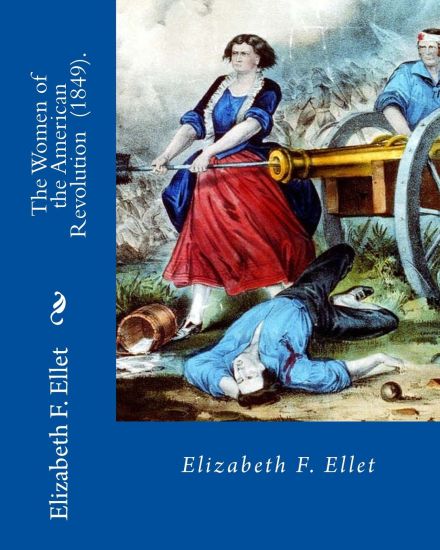
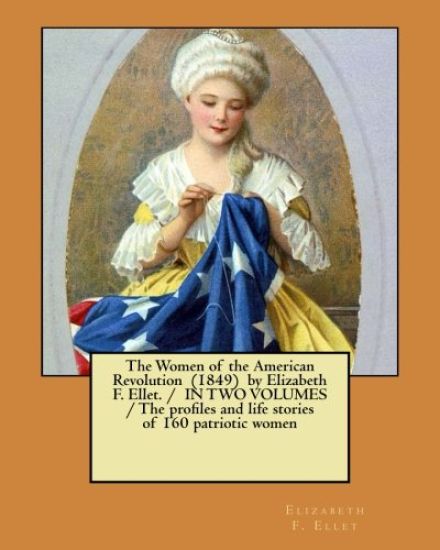
The Women of the American Revolution (1849). By: Elizabeth F. Ellet: The profiles and life stories of 160 patriotic women who were committed to the Am
The profiles and life stories of 160 patriotic women who were committed to the American Revolution and to the settling of the American frontier........ Elizabeth Fries Lummis Ellet (October 18, 1818 - June 3, 1877) was an American writer, historian and poet. She was the first writer to record the lives of women who contributed to the American Revolutionary War. Born Elizabeth Fries Lummis, in New York, she published her first book, Poems, Translated and Original, in 1835. She married the chemist William Henry Ellet and the couple moved to South Carolina. She had published several books and contributed to multiple journals. In 1845 she moved back to New York and took her place in the literary scene there. She was involved with a public scandal involving Edgar Allan Poe and Frances Sargent Osgood and, later, another involving Rufus Wilmot Griswold. Ellet's most important work, The Women of the American Revolution, was published in 1845. The three volume book profiled the lives of patriotic women in the early history of the United States. She continued writing until her death in 1877. Career: In 1835, Elizabeth Lummis published her first book, entitled Poems, Translated and Original, which included her tragedy, Teresa Contarini, based on the history of Venice, that was successfully performed in New York and other cities. Around this time she married William Henry Ellet (1806-1859), a chemist from New York City.He graduated from Columbia College in New York and earned a gold medal for a dissertation on the compounds of cyanogen. The couple moved to Columbia, South Carolina, when he was made professor of chemistry, mineralogy and geology at South Carolina College in 1836. He also discovered a new and inexpensive method of preparing guncotton, for which the state of South Carolina presented him a service of silver plate. During this time Ellet published several books. In 1839 she wrote The Characters of Schiller, a critical essay on the writer Friedrich Schiller including her translation of many of his poems. 9] She wrote Scenes in the Life of Joanna of Sicily, a history of the lifestyles of female nobility, and Rambles about the Country, a lively description of the scenery she had observed in her travels through the United States, in 1840. She continued writing poems, translations and essays on European literature which she contributed to the American Monthly, the North American Review, the Southern Literary Messenger, the Southern Quarterly Review and other periodicals. Ellet wrote abundantly in a wide variety of genres. In 1845, Ellet left her husband in the south, moving back to New York City where she resumed her place as a member of literary society along with such writers as Margaret Fuller, Anne Lynch Botta, Edgar Allan Poe, Rufus Wilmot Griswold, Anna Cora Mowatt and Frances Sargent Osgood............
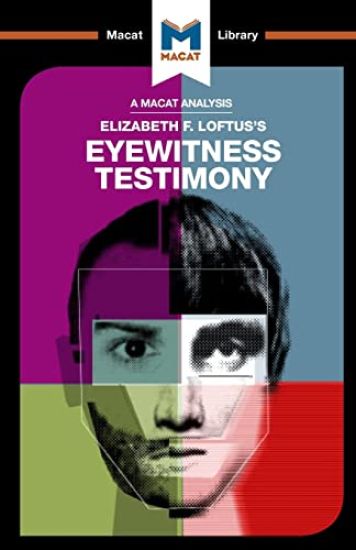
An Analysis of Elizabeth F. Loftus's Eyewitness Testimony

An Analysis of Elizabeth F. Loftus's Eyewitness Testimony

William Jenkins

Macat International Limited
2017
nidottu
Understanding evidence is critical in a court of law – and it is just as important for critical thinking. Elizabeth Loftus, a pioneering psychologist, made a landmark contribution to both these areas in Eyewitness Testimony, a trail-blazing work that undermines much of the decision-making made by judges and juries by pointing out how flawed eyewitness testimony actually is. Reporting the results of an eye-opening series of experiments and trials, Loftus explores the ways in which – unbeknownst to the witnesses themselves – memory can be distorted and become highly unreliable. Much of Loftus’s work is based on expert use of the critical thinking skill of interpretation. Her work not only highlights multiple problems of definition with regard to courtroom testimony, but also focuses throughout on how best we can understand the meaning of the available evidence. Eyewitness Testimony is arguably the best place in the Macat library to begin any investigation of how to use and understand interpretation.
An Analysis of Elizabeth F. Loftus's Eyewitness Testimony

An Analysis of Elizabeth F. Loftus's Eyewitness Testimony

William Jenkins

Macat International Limited
2017
sidottu
Understanding evidence is critical in a court of law – and it is just as important for critical thinking. Elizabeth Loftus, a pioneering psychologist, made a landmark contribution to both these areas in Eyewitness Testimony, a trail-blazing work that undermines much of the decision-making made by judges and juries by pointing out how flawed eyewitness testimony actually is. Reporting the results of an eye-opening series of experiments and trials, Loftus explores the ways in which – unbeknownst to the witnesses themselves – memory can be distorted and become highly unreliable. Much of Loftus’s work is based on expert use of the critical thinking skill of interpretation. Her work not only highlights multiple problems of definition with regard to courtroom testimony, but also focuses throughout on how best we can understand the meaning of the available evidence. Eyewitness Testimony is arguably the best place in the Macat library to begin any investigation of how to use and understand interpretation.
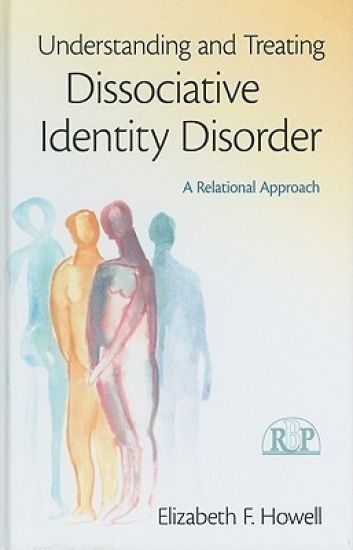
Understanding and Treating Dissociative Identity Disorder
Building on the comprehensive theoretical model of dissociation elegantly developed in The Dissociative Mind, Elizabeth Howell makes another invaluable contribution to the clinical understanding of dissociative states with Understanding and Treating Dissociative Identity Disorder. Howell, working within the realm of relational psychoanalysis, explicates a multifaceted approach to the treatment of this fascinating yet often misunderstood condition, which involves the partitioning of the personality into part-selves that remain unaware of one another, usually the result of severely traumatic experiences.Howell begins with an explication of dissociation theory and research that includes the dynamic unconscious, trauma theory, attachment, and neuroscience. She then discusses the identification and diagnosis of Dissociative Identity Disorder (DID) before moving on to outline a phase-oriented treatment plan, which includes facilitating a multileveled co-constructed therapeutic relationship, emphasizing the multiplicity of transferences, countertransferences, and kinds of potential enactments. She then expands the treatment possibilities to include dreamwork, before moving on to discuss the risks involved in the treatment of DID and how to mitigate them. All concepts and technical approaches are permeated with rich clinical examples.
Understanding and Treating Dissociative Identity Disorder
Building on the comprehensive theoretical model of dissociation elegantly developed in The Dissociative Mind, Elizabeth Howell makes another invaluable contribution to the clinical understanding of dissociative states with Understanding and Treating Dissociative Identity Disorder. Howell, working within the realm of relational psychoanalysis, explicates a multifaceted approach to the treatment of this fascinating yet often misunderstood condition, which involves the partitioning of the personality into part-selves that remain unaware of one another, usually the result of severely traumatic experiences.Howell begins with an explication of dissociation theory and research that includes the dynamic unconscious, trauma theory, attachment, and neuroscience. She then discusses the identification and diagnosis of Dissociative Identity Disorder (DID) before moving on to outline a phase-oriented treatment plan, which includes facilitating a multileveled co-constructed therapeutic relationship, emphasizing the multiplicity of transferences, countertransferences, and kinds of potential enactments. She then expands the treatment possibilities to include dreamwork, before moving on to discuss the risks involved in the treatment of DID and how to mitigate them. All concepts and technical approaches are permeated with rich clinical examples.