Author and feminist, Elizabeth Stuart Phelps Ward (1844-1911) was an early advocate of clothing reform for women, urging them to burn their corsets. This memoir originally published in 1896 and serialized, recounts anecdotes from her life in Massachusetts towns of Andover, Gloucester, Newton, and elsewhere. Over her long life she was friendly with: Celia Thaxter, Lucy Larcom, Oliver Wendell Holmes, Lydia Marie Childs, Whittier, Henry Wadsworth Longfellow and Harriet Beecher Stowe.
The well-educated daughter of a minister, Elizabeth Stuart Phelps (1844–1911) was introduced to writing at a young age, as both her mother and father were published writers. In 1868 she published her first major novel, The Gates Ajar. An international success, the novel sold more than six hundred thousand copies, making it one of the best-selling American works of the nineteenth century. Through the next four decades Phelps published hundreds of essays, tales, and poems, which appeared in every major American periodical, while also writing novels, including Beyond the Gates (1883) and The Gates Between (1887).Phelps's legacy as an important American writer, however, has been hurt by the seeming contradictions between her life and work. For example, she was an ardent advocate for women's rights both inside and outside marriage, but her stories seem to glorify the sort of extreme self-sacrifice associated with the most conservative domestic ideology. In this collection, the editors seek to restore Phelps's reputation by bringing together a diverse collection from the entire body of her lifetime of work. From arguments for suffrage to harrowing tales of Reconstruction, these essays, along with short fiction and poetry, provide a new perspective on a major American writer from the later nineteenth century.
This work has been selected by scholars as being culturally important and is part of the knowledge base of civilization as we know it.This work is in the public domain in the United States of America, and possibly other nations. Within the United States, you may freely copy and distribute this work, as no entity (individual or corporate) has a copyright on the body of the work.Scholars believe, and we concur, that this work is important enough to be preserved, reproduced, and made generally available to the public. To ensure a quality reading experience, this work has been proofread and republished using a format that seamlessly blends the original graphical elements with text in an easy-to-read typeface.We appreciate your support of the preservation process, and thank you for being an important part of keeping this knowledge alive and relevant.
This work has been selected by scholars as being culturally important and is part of the knowledge base of civilization as we know it.This work is in the public domain in the United States of America, and possibly other nations. Within the United States, you may freely copy and distribute this work, as no entity (individual or corporate) has a copyright on the body of the work.Scholars believe, and we concur, that this work is important enough to be preserved, reproduced, and made generally available to the public. To ensure a quality reading experience, this work has been proofread and republished using a format that seamlessly blends the original graphical elements with text in an easy-to-read typeface.We appreciate your support of the preservation process, and thank you for being an important part of keeping this knowledge alive and relevant.
This book is a volume in the Penn Press Anniversary Collection. To mark its 125th anniversary in 2015, the University of Pennsylvania Press rereleased more than 1,100 titles from Penn Press's distinguished backlist from 1899-1999 that had fallen out of print. Spanning an entire century, the Anniversary Collection offers peer-reviewed scholarship in a wide range of subject areas.
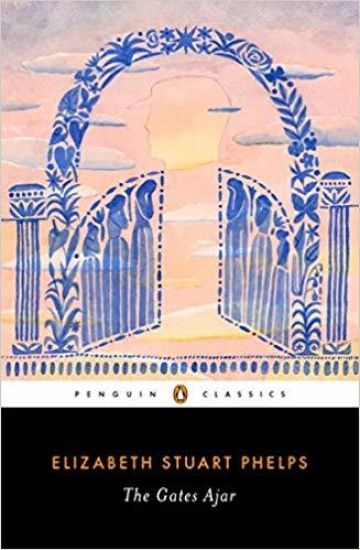
Elizabeth Stuart Phelps Ward (August 31, 1844 - January 28, 1911) was an early feminist American author and intellectual who challenged traditional Christian beliefs of the afterlife, challenged women's traditional roles in marriage and family, and advocated clothing reform for women. In 1868, three years after the Civil War ended, she published The Gates Ajar, which depicted the afterlife as a place replete with the comforts of domestic life and where families would be reunited-along with family pets-through eternity.
When Mary Cabot loses her beloved brother in the war, she feels as though she will never feel peace again until the arrival of her widowed aunt Winifred. Sharing the wisdom that has comforted her through her grief, Winifred offers Mary a groundbreaking view of the afterlife as a place of loving reunion with all those who were lost. Winifred's vision of the afterlife circulates within the community and attracts local adherents who have also suffered great loss in the war.