Kirjojen hintavertailu. Mukana 12 391 692 kirjaa ja 12 kauppaa.

Kirjahaku

Etsi kirjoja tekijän nimen, kirjan nimen tai ISBN:n perusteella.

1000 tulosta hakusanalla Ellen F. Davis

Opening Israel's Scriptures

Opening Israel's Scriptures

Ellen F. Davis

Oxford University Press Inc
2019
sidottu
Opening Israel's Scriptures is a collection of thirty-six essays on the Hebrew Bible, from Genesis to Chronicles, which gives powerful insight into the complexity and inexhaustibility of the Hebrew Scriptures as a theological resource. Based on more than two decades of lectures on Old Testament interpretation, Ellen F. Davis offers a selective yet comprehensive guide to the core concepts, literary patterns, storylines, and theological perspectives that are central to Israel's Scriptures. Underlying the whole study is the primary assumption that each book of the canon has literary and theological coherence, though not uniformity. In both her close readings of individual texts and in her broad demonstrations of the coherence of whole books, Davis models the best practices of contemporary exegesis, integrating the insights of contemporary scholars with those of classical theological resources in Jewish and Christian traditions. Throughout, she keeps an eye to the experiences and concerns of contemporary readers, showing through multiple examples that the critical interpretation of texts is provisional, open-ended work--a collaboration across generations and cultures. Ultimately what she offers is an invitation into the more spacious world that the Bible discloses, which challenges ordinary conceptions of how things "really" are.
Opening Israel's Scriptures

Opening Israel's Scriptures

Ellen F. Davis

Oxford University Press Inc
2019
nidottu
Opening Israel's Scriptures is a collection of thirty-six essays on the Hebrew Bible, from Genesis to Chronicles, which gives powerful insight into the complexity and inexhaustibility of the Hebrew Scriptures as a theological resource. Based on more than two decades of lectures on Old Testament interpretation, Ellen F. Davis offers a selective yet comprehensive guide to the core concepts, literary patterns, storylines, and theological perspectives that are central to Israel's Scriptures. Underlying the whole study is the primary assumption that each book of the canon has literary and theological coherence, though not uniformity. In both her close readings of individual texts and in her broad demonstrations of the coherence of whole books, Davis models the best practices of contemporary exegesis, integrating the insights of contemporary scholars with those of classical theological resources in Jewish and Christian traditions. Throughout, she keeps an eye to the experiences and concerns of contemporary readers, showing through multiple examples that the critical interpretation of texts is provisional, open-ended work--a collaboration across generations and cultures. Ultimately what she offers is an invitation into the more spacious world that the Bible discloses, which challenges ordinary conceptions of how things "really" are.
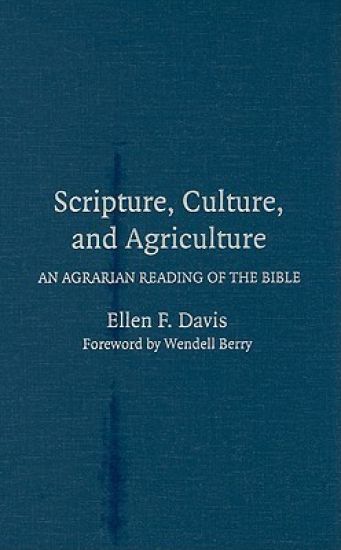
Scripture, Culture, and Agriculture

Scripture, Culture, and Agriculture

Ellen F. Davis

Cambridge University Press
2008
sidottu
This book examines the theology and ethics of land use, especially the practices of modern industrialized agriculture, in light of critical biblical exegesis. Nine interrelated essays explore the biblical writers' pervasive concern for the care of arable land against the background of the geography, social structures, and religious thought of ancient Israel. This approach consistently brings out neglected aspects of texts, both poetry and prose, that are central to Jewish and Christian traditions. Rather than seeking solutions from the past, Davis creates a conversation between ancient texts and contemporary agrarian writers; thus she provides a fresh perspective from which to view the destructive practices and assumptions that now dominate the global food economy. The biblical exegesis is wide-ranging and sophisticated; the language is literate and accessible to a broad audience.
Scripture, Culture, and Agriculture

Scripture, Culture, and Agriculture

Ellen F. Davis

Cambridge University Press
2008
pokkari
This book examines the theology and ethics of land use, especially the practices of modern industrialized agriculture, in light of critical biblical exegesis. Nine interrelated essays explore the biblical writers' pervasive concern for the care of arable land against the background of the geography, social structures, and religious thought of ancient Israel. This approach consistently brings out neglected aspects of texts, both poetry and prose, that are central to Jewish and Christian traditions. Rather than seeking solutions from the past, Davis creates a conversation between ancient texts and contemporary agrarian writers; thus she provides a fresh perspective from which to view the destructive practices and assumptions that now dominate the global food economy. The biblical exegesis is wide-ranging and sophisticated; the language is literate and accessible to a broad audience.
Wondrous Depth

Wondrous Depth

Ellen F. Davis

Westminster/John Knox Press,U.S.
2005
nidottu
Ellen Davis is concerned by what she calls a "shallow reading" of Scripture--a reading of what we think we already know instead of an attempt to dig deeper for new insights and revelations. Wondrous Depth is a collection of essays in which Davis argues for a more engaged reading of Scripture that opens the reader up to new knowledge and understanding. Davis also demonstrates that preaching and biblical interpretation are essentially related to one another in that it is essential for preachers to engage in thorough reading and interpretation of Scripture from the pulpit and to encourage their congregations to read the Bible with depth and sensitivity as well.
Proverbs, Ecclesiastes, and the Song of Songs

Proverbs, Ecclesiastes, and the Song of Songs

Ellen F. Davis

Westminster/John Knox Press,U.S.
2000
nidottu
These books of the Bible, despite their differences, all treat the phenomenon of what it means to live wisely before God. In this readable commentary, Ellen Davis points out that the writers of these books considered wisdom--and the fruits of wisdom, a well-ordered life and a peaceful mind--to be within the grasp of anyone wholeheartedly desiring it.Books in the Westminster Bible Companion series assist laity in their study of the Bible as a guide to Christian faith and practice. Each volume explains the biblical book in its original historical context and explores its significance for faithful living today. These books are ideal for individual study and for Bible study classes and groups.
Biblical Prophecy

Biblical Prophecy

Ellen F. Davis

Westminster/John Knox Press,U.S.
2014
nidottu
In this fresh and expansive work, Ellen Davis offers a comprehensive interpretation of the prophetic role and word in the Christian scriptures. Davis carefully outlines five essential features of the prophetic role and then systematically examines seven representations of prophets and prophecies.Thoroughly theological, Davis's volume provides both instruction and insight for understanding prophecy in Christian tradition and discipleship. This volume concludes with a rich discussion of practical matters, including the relationship between Christian discipleship and prophetic interpretation and the role of biblical prophecy in interfaith contexts.
Swallowing the Scroll

Swallowing the Scroll

Ellen F. Davis

Continuum Publishing Corporation
2009
nidottu
In this original study, Dr Davis argues that Ezekiel's place in the history of prophecy is overdue for reassessment. As against current views that Ezekiel represents the collapse of prophetism into priestly and scribal forms, she argues that something radically different in prophecy begins with Ezekiel. Ezekiel represents the creation of a new literary idiom for prophecy. He develops an archival speech form oriented less toward current events than to reshaping the tradition. He has taken a step backward from direct confrontation with an audience as the basic dynamic of communication, and has made the medium of prophecy not the person of the prophet but the text. Like the postexilic prophets, Ezekiel participated in the transformation of the social role of prophecy, and thereby saved himself from oblivion.
Getting Involved with God

Getting Involved with God

Ellen F. Davis

Cowley Publications,U.S.
2001
pokkari
“This is a book about getting, and staying, involved with God—what it takes, what it costs, what it looks and feels like, why anyone would want to do it anyway. It is at the same time a book about reading the Old Testament as a source of Good News and guidance for our life with God. The key piece of Good News that the Old Testament communicates over and over again is that God is involved with us, deeply and irrevocably so.” —from the Introduction With sound scholarship and her own vivid translations from the Hebrew, Old Testament professor Ellen Davis teaches us a spiritually engaged method of reading scripture. Beginning with the psalms, whose frank prayers can be a model for our own, Davis reflects on the stories of the patriarchs and the pastoral wisdom of the book of Job, Proverbs, Ecclesiastes, and the Song of Songs in helping us cultivate those habits of the heart that lead to a rich relationship with God.
Preaching the Luminous Word

Preaching the Luminous Word

Ellen F. Davis; Austin McIver Dennis

William B Eerdmans Publishing Co
2016
nidottu
Preaching The Luminous Word features insights from one of the most distinctive and eloquent scholar-preachers of our time. Inviting serious theological engagement with texts from all parts of the Christian Bible, noted preacher Ellen F. Davis offers fifty-one engaging sermons. A brief preface sets each sermon in its geographic and liturgical context, highlights distinctive themes, and draws attention to elements of structure and rhetorical style. The sermons are arranged in canonical order and cover a wide scope of texts - Torah, Prophets, Writings (including Psalms, Proverbs, Lamentations, Song of Songs, and Job), Gospels, Epistles, and Revelation. Also included in the volume are five choice essays by Davis that discuss various aspects of biblical preaching. At once accessible, theologically informed, and richly instructive, these sermons will engage Christian readers at any stage of their faith journey.
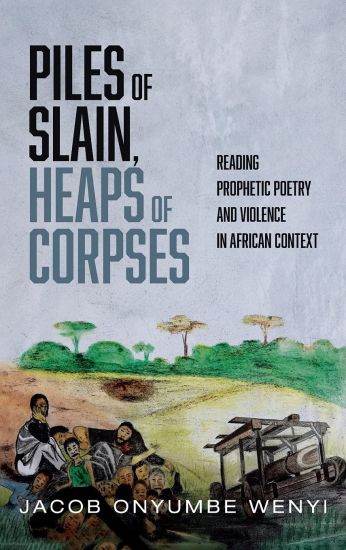
Piles of Slain, Heaps of Corpses

Piles of Slain, Heaps of Corpses

Jacob Onyumbe Wenyi; Ellen F Davis

Wipf Stock Publishers
2021
sidottu
Piles of Slain, Heaps of Corpses reads the violence in the book of Nahum against the background of the war in the Democratic Republic of the Congo and tries to show how this violent book can be therapeutic and transformative for wounded communities. Here Jacob Onyumbe views Nahum through four scholarly lenses: poetic analysis, study of Assyrian iconography related to eighth- and seventh-century Judah, ethnographic research among survivors of war in the Democratic Republic of the Congo, and modern studies on the impact of war trauma on communities of survivors. He argues that Nahum uses lyric poetry so as to evoke in seventh-century BCE Judahite audiences the memory of war and destruction at the hands of the Assyrians. The prophet uses poetry to evoke (rather than narrate) in order to bring comfort to his audience by revealing the powerful presence of God in the conditions of traumatic violence. Viewed thus, the book of Nahum cannot be dismissed (as has commonly been the case among both scholars and general readers) as irrelevant or merely vindictive. On the contrary, this book--with its depiction of a vengeful God and repulsive war scenes--is essential, especially for traumatized communities.
Piles of Slain, Heaps of Corpses

Piles of Slain, Heaps of Corpses

Jacob Onyumbe Wenyi; Ellen F Davis

Wipf Stock Publishers
2021
pokkari
Piles of Slain, Heaps of Corpses reads the violence in the book of Nahum against the background of the war in the Democratic Republic of the Congo and tries to show how this violent book can be therapeutic and transformative for wounded communities. Here Jacob Onyumbe views Nahum through four scholarly lenses: poetic analysis, study of Assyrian iconography related to eighth- and seventh-century Judah, ethnographic research among survivors of war in the Democratic Republic of the Congo, and modern studies on the impact of war trauma on communities of survivors. He argues that Nahum uses lyric poetry so as to evoke in seventh-century BCE Judahite audiences the memory of war and destruction at the hands of the Assyrians. The prophet uses poetry to evoke (rather than narrate) in order to bring comfort to his audience by revealing the powerful presence of God in the conditions of traumatic violence. Viewed thus, the book of Nahum cannot be dismissed (as has commonly been the case among both scholars and general readers) as irrelevant or merely vindictive. On the contrary, this book--with its depiction of a vengeful God and repulsive war scenes--is essential, especially for traumatized communities.
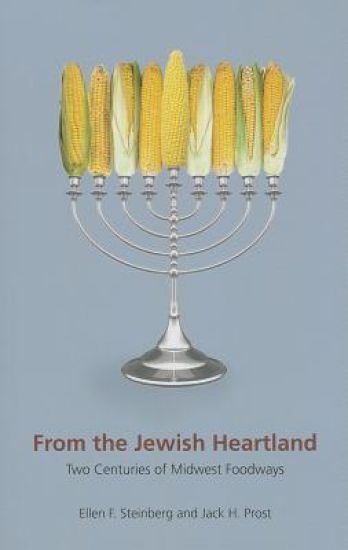
From the Jewish Heartland

From the Jewish Heartland

Ellen F. Steinberg; Jack H. Prost

University of Illinois Press
2011
sidottu
From the Jewish Heartland: Two Centuries of Midwest Foodways reveals the distinctive flavor of Jewish foods in the Midwest and tracks regional culinary changes through time. Exploring Jewish culinary innovation in America's heartland from the 1800s to today, Ellen F. Steinberg and Jack H. Prost examine recipes from numerous midwestern sources, both kosher and nonkosher, including Jewish homemakers' handwritten manuscripts and notebooks, published journals and newspaper columns, and interviews with Jewish cooks, bakers, and delicatessen owners. With the influx of hundreds of thousands of Jews during the late nineteenth and early twentieth centuries came new recipes and foodways that transformed the culture of the region. Settling into the cities, towns, and farm communities of Ohio, Indiana, Wisconsin, Michigan, Illinois, Missouri, Iowa, and Minnesota, Jewish immigrants incorporated local fruits, vegetables, and other comestibles into traditional recipes. Such incomparable gustatory delights include Tzizel bagels and rye breads coated in midwestern cornmeal, baklava studded with locally grown cranberries, dark pumpernickel bread sprinkled with almonds and crunchy Iowa sunflower seeds, tangy ketchup concocted from wild sour grapes, Sephardic borekas (turnovers) made with sweet cherries from Michigan, rich Chicago cheesecakes, native huckleberry pie from St. Paul, and savory gefilte fish from Minnesota northern pike. Steinberg and Prost also consider the effect of improved preservation and transportation on rural and urban Jewish foodways, as reported in contemporary newspapers, magazines, and published accounts. They give special attention to the impact on these foodways of large-scale immigration, relocation, and Americanization processes during the nineteenth century and the efforts of social and culinary reformers to modify traditional Jewish food preparation and ingredients. Including dozens of sample recipes, From the Jewish Heartland: Two Centuries of Midwest Foodways takes readers on a memorable and unique tour of midwestern Jewish cooking and culture.
From the Jewish Heartland

From the Jewish Heartland

Ellen F. Steinberg; Jack H. Prost

University of Illinois Press
2013
nidottu
From the Jewish Heartland: Two Centuries of Midwest Foodways reveals the distinctive flavor of Jewish foods in the Midwest and tracks regional culinary changes through time. Exploring Jewish culinary innovation in America's heartland from the 1800s to today, Ellen F. Steinberg and Jack H. Prost examine recipes from numerous midwestern sources, both kosher and nonkosher, including Jewish homemakers' handwritten manuscripts and notebooks, published journals and newspaper columns, and interviews with Jewish cooks, bakers, and delicatessen owners. With the influx of hundreds of thousands of Jews during the late nineteenth and early twentieth centuries came new recipes and foodways that transformed the culture of the region. Settling into the cities, towns, and farm communities of Ohio, Indiana, Wisconsin, Michigan, Illinois, Missouri, Iowa, and Minnesota, Jewish immigrants incorporated local fruits, vegetables, and other comestibles into traditional recipes. Such incomparable gustatory delights include Tzizel bagels and rye breads coated in midwestern cornmeal, baklava studded with locally grown cranberries, dark pumpernickel bread sprinkled with almonds and crunchy Iowa sunflower seeds, tangy ketchup concocted from wild sour grapes, Sephardic borekas (turnovers) made with sweet cherries from Michigan, rich Chicago cheesecakes, native huckleberry pie from St. Paul, and savory gefilte fish from Minnesota northern pike. Steinberg and Prost also consider the effect of improved preservation and transportation on rural and urban Jewish foodways, as reported in contemporary newspapers, magazines, and published accounts. They give special attention to the impact on these foodways of large-scale immigration, relocation, and Americanization processes during the nineteenth century and the efforts of social and culinary reformers to modify traditional Jewish food preparation and ingredients. Including dozens of sample recipes, From the Jewish Heartland: Two Centuries of Midwest Foodways takes readers on a memorable and unique tour of midwestern Jewish cooking and culture.
We Love Each Other, But . . .: Simple Secrets to Strengthen Your Relationship and Make Love Last
We Love Each Other, But...offers simple, practical tips that will help you restore and strengthen a relationship that has gone off track. It lays out the nuts and bolts of building relationships so they continue to be gratifying over the long haul. Dr. Ellen Wachtel shows how, even when you feel like giving up on a relationship or marriage, you can recapture why you fell in love in the first place. Dr. Wachtel promises that there is more and suggests simple ways to keep vitality in relationships. In fact, she shows you and your partner how you can stay interested in each other for the rest of your lives.
Water in World History

Water in World History

Ellen F. Arnold

TAYLOR FRANCIS LTD
2024
nidottu
This book takes a thematic approach to the global history of water, covering a wide range of human interactions with water and the ways in which it carries both life and death.Water is one of the most common and valuable natural resources for the survival of individual people and civilizations. As the Anthropocene brings the unpredictable challenges of climate change, population growth, and global industrialization and urbanism, issues of water scarcity and availability will be ever-growing, and both the presence and absence of water can be sources of far-reaching disaster. The book argues that a deeper understanding of water’s history is essential for navigating these changes. The chapters discuss water and religion, floods and disasters, water engineering and waterpower, the history of drinking water, water parks and leisure, the history of underwater exploration, and the history of drought and water scarcity. Each chapter is global in scope and is told over a broad chronology, with complementary case studies.Water in World History is an accessible introduction to water history and is an ideal resource for undergraduate students in environmental history and world history courses.
Water in World History

Water in World History

Ellen F. Arnold

TAYLOR FRANCIS LTD
2024
sidottu
This book takes a thematic approach to the global history of water, covering a wide range of human interactions with water and the ways in which it carries both life and death.Water is one of the most common and valuable natural resources for the survival of individual people and civilizations. As the Anthropocene brings the unpredictable challenges of climate change, population growth, and global industrialization and urbanism, issues of water scarcity and availability will be ever-growing, and both the presence and absence of water can be sources of far-reaching disaster. The book argues that a deeper understanding of water’s history is essential for navigating these changes. The chapters discuss water and religion, floods and disasters, water engineering and waterpower, the history of drinking water, water parks and leisure, the history of underwater exploration, and the history of drought and water scarcity. Each chapter is global in scope and is told over a broad chronology, with complementary case studies.Water in World History is an accessible introduction to water history and is an ideal resource for undergraduate students in environmental history and world history courses.
The Search for the Jade Lizard

The Search for the Jade Lizard

Ellen F Kay

iUniverse
2005
pokkari
"The Search for the Jade Lizard" pairs teen-aged siblings Andrea and Brad Davis in an exciting and dangerous Hawaiian mystery. Everyone is excited to go to the island of Maui and swim, play tennis, and learn to SCUBA dive. But soon after their arrival, Brad and Andrea find themselves in a far different kind of adventure--one that spells danger. Wandering down a Lahaina street, Brad and Andrea are told by a fortune teller that they will find an ancient treasure, but to "beware of the man with the gold earring...he is a very bad man, an evil man, who would stop at nothing, even murder, to take the treasure from you." Undaunted by the warning, Andrea and Brad hunt for a missing jade lizard statue that once belonged to Hawaiian royalty. Captured by the henchman of the islands' biggest crime boss, Andrea and Brad must reveal the whereabouts of the treasure...or be killed.