Kirjojen hintavertailu. Mukana 11 393 299 kirjaa ja 12 kauppaa.

Kirjahaku

Etsi kirjoja tekijän nimen, kirjan nimen tai ISBN:n perusteella.

1000 tulosta hakusanalla Ellen Mickiewicz

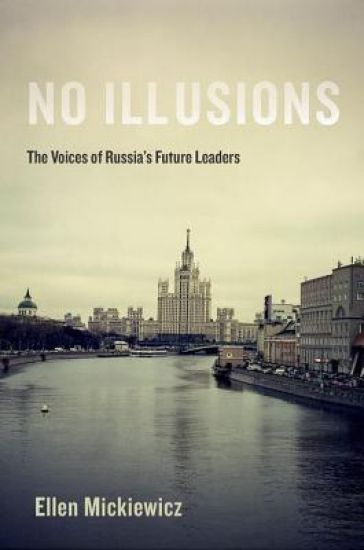
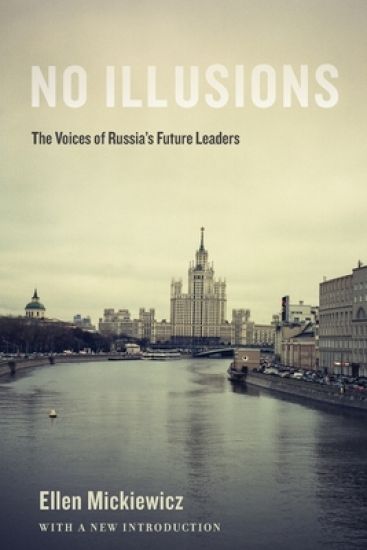
No Illusions

No Illusions

Ellen Mickiewicz

Oxford University Press Inc
2017
nidottu
How will the future leaders of Russia regard the world scene? How will they regard the United States, democracy, free speech, and immigration? What do they think of their current leaders? And what sorts of tactics will they bring to international negotiating tables, political and otherwise? Featuring a new introduction to the paperback that critiques the emerging theory of media weaponization, No Illusions: The Voices of Russia's Future Leaders provides an engaging, intimate, and unprecedented window into the mindsets of the next generation of leaders in Russian politics, business, and economics. In this book, one hundred and eight students in Russia's three most elite universities, the training grounds for the nation's leadership, reveal their thoughts on international relations, neighboring countries, domestic and international media, democratic movements, and their government in focus groups; they speak candidly, passionately, and sometimes sardonically about the United States. As well, Ellen Mickiewicz, one of the world's foremost experts on Russian media, politics, and culture, shows how their total immersion in the world of the internet -- an immersion that sets them apart from the current generation of Russian leadership and much of the rest of the country -- frames the way that they think and affects their trust in their leaders, the media, and their colleagues. Their worldviews are complex and often contradictory, reflecting complicated personalities that are adaptable yet also subject to much internal strife and "splintering." For example, while many of them are planning to go into politics, they express ambivalence about voting; they have favorable views of democracy, but not of the American model; they are shrewd critics of government propaganda and yet have clearly absorbed residue of Cold War defensiveness. Mickiewicz also looks at the nation's massive protests and nascent political movements to show how they came about and to consider what promise they might hold even in times of narrowing opportunities. She profiles several of Russia's up-and-coming leaders, including charismatic and controversial activist and politician Aleksei Navalny, who, even during his legal trials and house arrest, remains the face of the opposition to the Putin regime. As this book shows, the next generation of Russian leadership promises to hold a rather different worldview from that of the current one, yet it is not a worldview that readily embraces American democracy. No Illusions is a thought-provoking and often surprising glimpse into the future of Russia's foreign relations.
Split Signals

Split Signals

Ellen Mickiewicz

Oxford University Press Inc
1992
nidottu
Television has changed drastically in the Soviet Union over the last three decades. In 1960, only five percent of the population had access to TV, but now the viewing population has reached near total saturation. Today's main source of information in the USSR, television has become Mikhail Gorbachev's most powerful instrument for paving the way for major reform. Containing a wealth of interviews with major Soviet and American media figures and fascinating descriptions of Soviet TV shows, Ellen Mickiewicz's wide-ranging, vividly written volume compares over one hundred hours of Soviet and American television, covering programs broadcast during both the Chernenko and Gorbachev governments. Mickiewicz describes the enormous significance and popularity of news programs and discusses how Soviet journalists work in the United States. Offering a fascinating depiction of the world seen on Soviet TV, she also explores the changes in programming that have occurred as a result of glasnost.
Changing Channels

Changing Channels

Ellen Mickiewicz

Oxford University Press Inc
1997
sidottu
At 7:20 pm on October 3, 1993, a nervous and shaky anchor broke into coverage of a soccer match to tell Russian viewers that their state television was shutting down. In the opening salvos of the parliamentary revolt against Boris Yeltsin's government, a mob had besieged the station's headquarters. A man had just been killed in front of the news director. Moments later, screens all across Russia went blank, leaving audiences in the dark. But in less than an hour, Russia's second state channel went on the air. Millions watched as Sergei Torchinsky anchored thirteen straight hours of coverage, often with the sound of shooting clearly audible in the background. Streams of politicians, trade union leaders, writers, television personalities, and other well-known figures braved gunfire to reach Channel Two's makeshift studios and speak directly to the nation. In one stunning moment, a famous actress extemporaneously pleaded with viewers not to return to the horrors of Stalinism. Boris Yeltsin, who had been glued to his television set like everyone else, later recalled, "For the rest of my life I will remember the anxious but resolute and courageous expression of Liya Akhedzhakova. . . her hoarse, cracking voice remains in my memory." In that time of crisis, television bound the nation together, a continuing emblem of legitimate authority which lent an image of stability and credibility to Yeltsin's besieged government. "Television saved Russia," the Russian president said. Changing Channels vividly recreates this exciting time, as television both helped and hindered the Russian nation's struggle to create a new democracy. From the moribund, state-controlled television broadcasts at the end of the Soviet Union, through Mikhail Gorbachev's glasnost, up to Yeltsin's victory in the most recent Russian presidential elections of 1996, Mickiewicz charts the omnipresent role of television, drawing on interviews, public opinion surveys, research, and the television programming itself. Analyzing the rise of political advertising (sometimes with controversial US participation), the birth of journalists as opinionated television personalities, and the changing news coverage of coups, elections, and wars, she shows both how the gradual development of private, independent stations has begun to make real pluralism possible and how the authoritarian legacy of the Soviet state structure continues to affect Russian television even today. With television in 97% of all Russian households, and the nightly news watched by a viewership matching that for the Super Bowl in the US, the struggle for control over television became the struggle for control over the nation. Mickiewicz illuminates the efforts of those both in and out of power to control the media. Behind the momentous political changes are the stories of the men and women who chose to resist, test, or submit to the system. Mickiewicz offers brilliant sketches of these individuals: Yegor Ligachev, Gorbachev's second in command, a man of strongly held opinions who, in retirement, still orated loudly, even over tea; Boris Yeltsin, having not even put on his shirt yet, watching the early morning coverage of the attempted coup against Gorbachev; or the new breed of Russian journalists covering the war in Chechnya with footage of bombed out streets and charred corpses for privately owned NTV, despite continuing government intimidation. In vivid interviews, all the key players, including Gorbachev himself, offered Mickiewicz their unique insights and frank personal commentary. Drawing on these interviews and on her extensive research on the interactions of politics, economics, and society, Mickiewicz presents a rich and authoritative analysis of television in Russia. In many ways, Mickiewicz writes, no other country in the world offers television a greater opportunity and a greater role. Changing Channels tells the fascinating story of a truly modern phenomenon: the struggle to create genuine political pluralism, helped and hindered by the barrage of information, advertisements, and media-created personalities that make up modern television.
No Illusions

No Illusions

Ellen Mickiewicz

Oxford University Press Inc
2014
sidottu
What will the next generation of Russian leaders be like? How will they regard the United States, democracy, free speech, and immigration? What do they think of their current leaders? And what sorts of tactics will they bring to international negotiating tables, political and otherwise? No Illusions provides an engaging, intimate, and unprecedented window onto the mindsets of the next generation of leaders in Russian politics, business, and economics. In it, Ellen Mickiewicz, one of the world's foremost experts on Russian media, politics and culture, draws on interviews with students in Russia's three most elite universities, the training grounds for all of the nation's leadership. Allowing these students to speak in their own words, she shares their thoughts on international relations, the domestic and international media, democracy, and their government. She also shows how their total immersion in the world of the internet -- an immersion that sets them apart from the current generation of Russian leadership and much of the rest of the country -- frames the way that they think and affects their trust in their leaders, the media, and their colleagues. They view the world around themselves with soberness and deep skepticism. Their worldviews are complex and often contradictory, reflecting complicated personalities who are adaptable, yet also subject to much internal strife. Many plan for future careers in politics while expressing ambivalence about the political process; they proclaim cosmopolitan worldviews and deeply xenophobic attitudes at the same time; they have favorable views of democracy, but not of the American model; they are shrewd critics of government propaganda and yet clearly have absorbed residue of Cold War paranoia. Mickiewicz also looks at the nation's recent protests and nascent political movements to show how they came about and to consider what promise they might hold for a more democratic Russia. She profiles several of Russia's up-and-coming leaders, including charismatic and controversial activist and politician Aleksei Navalny, perhaps one of the more formidable threats to the Putin regime. As this book shows, the next generation of Russian leaders will almost certainly hold a worldview different from the current one, but it is not likely to be a worldview that readily embraces American democracy. No Illusions is a thought-provoking and often surprising glimpse into the future of Russia's foreign relations.
International Security and Arms Control

International Security and Arms Control

Ellen Mickiewicz

Praeger Publishers Inc
1986
sidottu
International Security and Arms Control examines the impact of arms control and nuclear strategy issues on the relationship between the United States and the Soviet Union. Based on a conference held at Emory University, this book's contributors include former Presidents Ford and Carter, as well as Henry Kissinger, Anatoly Dobrynin, and other current or former important American and foreign government officials and academic experts. They explore the interaction between regional conflicts and superpower policies, how new technologies affect the status quo, and the past record and future prospects for negotiations. Including an examination of U.S. allies and non-nuclear nations, this important and timely new work will appeal to the specialist or layman interested in this critical issue.
Television, Power, and the Public in Russia

Television, Power, and the Public in Russia

Ellen Mickiewicz

Cambridge University Press
2008
pokkari
The Russian media are widely seen to be increasingly controlled by the government. Leaders buy up dissenting television channels and pour money in as fast as it haemorrhages out. As a result, TV news has become narrower in scope and in the range of viewpoints which it reflects: leaders demand assimilation and shut down dissenting stations. Using original and extensive focus group research and new developments in cognitive theory, Ellen Mickiewicz unveils a profound mismatch between the complacent assumption of Russian leaders that the country will absorb their messages, and the viewers on the other side of the screen. This is the first book to reveal what the Russian audience really thinks of its news and the mental strategies they use to process it. The focus on ordinary people, rather than elites, makes a strong contribution to the study of post-communist societies and the individual's relationship to the media.
Television, Power, and the Public in Russia

Television, Power, and the Public in Russia

Ellen Mickiewicz

Cambridge University Press
2008
sidottu
The Russian media are widely seen to be increasingly controlled by the government. Leaders buy up dissenting television channels and pour money in as fast as it haemorrhages out. As a result, TV news has become narrower in scope and in the range of viewpoints which it reflects: leaders demand assimilation and shut down dissenting stations. Using original and extensive focus group research and new developments in cognitive theory, Ellen Mickiewicz unveils a profound mismatch between the complacent assumption of Russian leaders that the country will absorb their messages, and the viewers on the other side of the screen. This is the first book to reveal what the Russian audience really thinks of its news and the mental strategies they use to process it. The focus on ordinary people, rather than elites, makes a strong contribution to the study of post-communist societies and the individual's relationship to the media.
Changing Channels

Changing Channels

Ellen Mickiewicz

Duke University Press
1999
pokkari
New in paperbackRevised and expandedDuring the tumultuous 1990s, as Russia struggled to shed the trappings of the Soviet empire, television viewing emerged as an enormous influence on Russian life. The number of viewers who routinely watch the nightly news in Russia matches the number of Americans who tune in to the Super Bowl, thus making TV coverage the prized asset for which political leaders intensely-and sometimes violently-compete. In this revised and expanded edition of Changing Channels, Ellen Mickiewicz provides many fascinating insights, describing the knowing ways in which ordinary Russians watch the news, skeptically analyze information, and develop strategies for dealing with news bias. Covering the period from the state-controlled television broadcasts at the end of the Soviet Union through the attempted coup against Gorbachev, the war in Chechnya, the presidential election of 1996, and the economic collapse of 1998, Mickiewicz draws on firsthand research, public opinion surveys, and many interviews with key players, including Gorbachev himself. By examining the role that television has played in the struggle to create political pluralism in Russia, she reveals how this struggle is both helped and hindered by the barrage of information, advertisements, and media-created personalities that populate the airwaves. Perhaps most significantly, she shows how television has emerged as the sole emblem of legitimate authority and has provided a rare and much-needed connection from one area of this huge, crisis-laden country to the next. This new edition of Changing Channels will be valued by those interested in Russian studies, politics, media and communications, and cultural studies, as well as general readers who desire an up-to-date view of crucial developments in Russia at the end of the twentieth century.
ellen

ellen

Aimee Hughes

Createspace Independent Publishing Platform
2013
nidottu
Mama, when I grow up I'm going to dance on TV. Read along and see what Ellen tells her mom she is going to be.
Ellen

Ellen

Coral McCallum

Createspace Independent Publishing Platform
2018
nidottu
Ellen"I vowed to prove them wrong."Tailz "I believe this is about where we got to before."Luke "You mess this up and you're history Hear me?"Nana "You should be soulmates not lovers."Emotions run high when Ellen Lloyd steps up to the mic as the new vocalist for rock band After Life. Will she prove to be heaven sent or will her arrival see the band descend into the depths of hell? Ellen is a standalone contemporary rock star romance but is also a spin off from the Silver Lake series by the same author
Ellen!

Ellen!

Leena Virtanen

Teos
2019
sidottu
Ellen on vasta nuori nainen, mutta hän tietää jo, että hän haluaa olla taiteilija. Ellen tietää myös, että hän on siinä hyvä. Että kukaan muu ei näe maailmaa niin kuin hän. ”Taulun nimeksi tulee Kaiku. Kun sitä katsoo, voi melkein kuulla tytön kirkkaan äänen, joka palaa kaikuna takaisin hänen luokseen. Tyttö sulautuu maisemaan kuin olisi sen sylissä.” Ellen! on kuvitettu elämäkerta suomalaisesta taiteilijasta ja naisesta, joka eli itsenäisen elämän ja toi suomalaiseen kuvataiteeseen uudet värit. Kirjassa Ellen kalastaa miesten vaatteissa Muroleessa kosken rannalla, istuu Firenzen kahvilassa ja matkustaa sodan jaloista Euroopan läpi. Kirja on jatkoa Suomen supernaisia -lastenkirjasarjalle, jonka ensimmäinen osa kertoi Minna Canthista. Sen on kuvittanut Sanna Pelliccioni ja kirjoittanut Leena Virtanen. Minna! -kirja valittiin yhdeksi vuoden 2018 kauneimmista kirjoista.
Ellen

Ellen

Taru Väyrynen

BoD - Books on Demand
2025
sidottu
Äitini äiti Ellen Prosi syntyi Karijoella vuonna 1894. Hänen koulutiensä johti vuonna 1906 perustettuun Kristiinan suomalaiseen yhteiskouluun ja siellä löytyneen elämänkumppanin Toivo Järvilehdon kanssa keskelle kansamme murrosvaihetta, jonka myllerrystä hän seurasi läheltä ja kuitenkin sivullisena.
Ellen Harmon White

Ellen Harmon White

Oxford University Press Inc
2014
sidottu
In America, as in Britain, the Victorian era enjoyed a long life, stretching from the 1830s to the 1910s. It marked the transition from a pre-modern to a modern way of life. Ellen White's life (1827-1915) spanned those years and then some, but the last three months of a single year, 1844, served as the pivot for everything else. When the Lord failed to return on October 22, as she and other followers of William Miller had predicted, White did not lose heart. Fired by a vision she experienced, White played the principal role in transforming a remnant minority of Millerites into the sturdy sect that soon came to be known as the Seventh-day Adventists. She and a small group of fellow believers emphasized a Saturday Sabbath and an imminent Advent. Today that flourishing denomination posts twenty million adherents globally and one of the largest education, hospital, publishing, and missionary outreach programs in the world. Over the course of her life White generated 50,000 manuscript pages and letters, and produced 40 books that have enjoyed extremely wide circulation. She ranks as one of the most gifted and influential religious leaders in American history, and Ellen Harmon White tells her story in a new and remarkably informative way. Some of the contributors identify with the Adventist tradition, some with other Christian denominations, and some with no religious tradition at all. Taken together their essays call for White to be seen as a significant figure in American religious history and for her to be understood her within the context of her times.
Ellen Harmon White

Ellen Harmon White

Oxford University Press Inc
2014
nidottu
In America, as in Britain, the Victorian era enjoyed a long life, stretching from the 1830s to the 1910s. It marked the transition from a pre-modern to a modern way of life. Ellen Harmon White's life (1827-1915) spanned those years and then some, but the last three months of a single year, 1844, served as the pivot for everything else. When the Lord failed to return on October 22, as she and other followers of William Miller had predicted, White did not lose heart. Fired by a vision she experienced, White played the principal role in transforming a remnant minority of Millerites into the sturdy sect that soon came to be known as the Seventh-day Adventists. She and a small group of fellow believers emphasized a Saturday Sabbath and an imminent Advent. Today that flourishing denomination posts eighteen million adherents globally and one of the largest education, hospital, publishing, and missionary outreach programs in the world. Over the course of her life White generated 70,000 manuscript pages and letters, and produced 40 books that have enjoyed extremely wide circulation. She ranks as one of the most gifted and influential religious leaders in American history and this volume tells her story in a new and remarkably informative way. Some of the contributors identify with the Adventist tradition, some with other Christian denominations, and some with no religious tradition at all. Their essays call for White to be seen as a significant figure in American religious history and for her to be understood within the context of her times.