Kirjojen hintavertailu. Mukana 11 699 587 kirjaa ja 12 kauppaa.

Kirjahaku

Etsi kirjoja tekijän nimen, kirjan nimen tai ISBN:n perusteella.

1000 tulosta hakusanalla Ellen Wohl

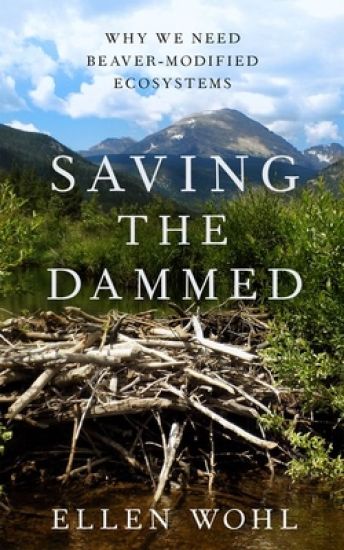
Saving the Dammed

Saving the Dammed

Ellen Wohl

Oxford University Press Inc
2019
sidottu
The ability of beavers to create an abundant habitat for a diverse array of plants and animals has been analyzed time and again. The disappearance of beavers across the northern hemisphere, and what this effects, has yet to be comprehensively studied. Saving the Dammed analyzes the beneficial role of beavers and their dams in the ecosystem of a river, focusing on one beaver meadow in Colorado. In her latest book, Ellen Wohl contextualizes North St. Vrain Creek by discussing the implications of the loss of beavers across much larger areas. Saving the Dammed raises awareness of rivers as ecosystems and the role beavers play in sustaining the ecosystem surrounding rivers by exploring the macrocosm of global river alteration, wetland loss, and the reduction in ecosystem services. The resulting reduction in ecosystem services span things such as flood control, habitat abundance and biodiversity, and nitrate reduction. Allowing readers to follow her as she crawls through seemingly impenetrable spaces with slow and arduous movements, Wohl provides a detailed narrative of beaver meadows. Saving the Dammed takes readers through twelve months at a beaver meadow in Colorado's Rocky Mountain National Park, exploring how beavers change river valleys and how the decline in beaver populations has altered river ecosystems. As Wohl analyzes and discusses the role beavers play in the ecosystem of a river, readers get to follow her through tight, seemingly impenetrable, crawl spaces as she uncovers the benefit of dams.
A World of Rivers

A World of Rivers

Ellen Wohl

University of Chicago Press
2012
nidottu
"A World of Rivers" explores the confluence of human and environmental change on ten of the great rivers of the world. Ranging from the Yellow River in China to Central Europe's Danube, the book journeys down the most important rivers in all corners of the globe. Wohl shows us how pollution, such as in the Ganges and in the Ob of Siberia, has affected biodiversity in the water. But rivers are also resilient, and Wohl stresses the importance of conservation and restoration to help reverse the effects of human carelessness and hubris. What these diverse rivers share is a critical role in shaping surrounding landscapes and biological communities, and Wohl's book ultimately makes a strong case for the need to steward positive change in the world's great rivers.
A World of Rivers

A World of Rivers

Ellen Wohl

University of Chicago Press
2010
sidottu
Far from being the serene, natural streams of yore, modern rivers have been diverted, dammed, dumped in, and dried up, all in efforts to harness their power for human needs. But these rivers have also undergone environmental change. The old adage says you can't step in the same river twice, and Ellen Wohl would agree - natural and synthetic change are so rapid on the world's great waterways that rivers are transforming and disappearing right before our eyes. "A World of Rivers" explores the confluence of human and environmental change on ten of the great rivers of the world. Ranging from the Murray-Darling in Australia and the Yellow River in China to Central Europe's Danube and the Mississippi, the book journeys down the most important rivers in all corners of the globe. Wohl shows us how pollution, such as in the Ganges and in the Ob of Siberia, has affected biodiversity in the water. But rivers are also resilient, and Wohl stresses the importance of conservation and restoration to help reverse the effects of human carelessness and hubris. What all these diverse rivers share is a critical role in shaping surrounding landscapes and biological communities, and Wohl's book ultimately makes a strong case for the need to steward positive change in the world's great rivers.
Virtual Rivers

Virtual Rivers

Ellen Wohl

Yale University Press
2011
pokkari
Sparsely settled mountain areas of the world, such as Colorado’s Front Range, give an impression of wild, untouched, and unchanging nature. Yet in many cases mountain rivers that appear to be pristine natural systems actually have been impaired as a result of human activities. In this timely and accessible book, Ellen Wohl documents two hundred years of land-use patterns on the Front Range and their wide-ranging effects on river ecosystems. If we hope to manage river resources effectively and preserve functioning river ecosystems, the author warns, we must recognize how beaver trapping, placer mining, timber harvesting, flow regulation, road and railroad construction, recreation, cattle grazing, and other human activities have impaired rivers--and continue to do so. The rivers of the Colorado Front Range are representative of mountain rivers throughout the world: land-use patterns affecting their form and function are little-recognized or -understood. This book fills an important gap with a clear and comprehensive explanation of how rivers are changed by human activity and includes a generous selection of striking historical and contemporary photographs, maps, and diagrams.
Disconnected Rivers

Disconnected Rivers

Ellen Wohl

Yale University Press
2012
pokkari
This important and accessible book surveys the history and present condition of river systems across the United States, showing how human activities have impoverished our rivers and impaired the connections between river worlds and other ecosystems.Ellen Wohl begins by introducing the basic physical, chemical, and biological processes operating in rivers. She then addresses changes in rivers resulting from settlement and expansion, describes the growth of federal involvement in managing rivers, and examines the recent efforts to rehabilitate and conserve river ecosystems. In each chapter she focuses on a specific regional case study and describes what happens to a particular river organism—a bird, North America’s largest salamander, the paddlefish, and the American alligator—when people interfere with natural processes.
Following the Bend

Following the Bend

Ellen Wohl

PRINCETON UNIVERSITY PRESS
2025
sidottu
An engaging and thought-provoking introduction to river scienceWhen we look at a river, either up close or while flying over a river valley, what are we really seeing? Following the Bend takes readers on a majestic journey by water to find answers, along the way shedding light on the key concepts of modern river science, from hydrology and water chemistry to stream and wetland ecology.In this accessible and uniquely personal book, Ellen Wohl explains how to “read” a river, blending the latest science with her own personal experiences as a geologist and naturalist who has worked on rivers for more than three decades. She charts how water travels through the hydrologic cycle around the globe and downstream to distribute energy, move sediment, and shape river channels, and how living organisms adapt to life in flowing water to create vibrant river ecosystems. Wohl looks at the role of disturbances such as floods and droughts and discusses how geologists interpret the sedimentary records of past river processes. She illustrates how river networks interact with Earth’s surface and considers issues for rivers in the future, such as progressive drying, river restoration, and advocating for the legal personhood of a river to maintain its distinctive spirit, identity, and integrity.Sharing a new understanding of how rivers function as both physical systems and ecosystems, Following the Bend enables us to observe rivers with fresh eyes and more fully appreciate the beauty, vibrancy, and complexity of our planet’s vital waterways.
Something Hidden in the Ranges

Something Hidden in the Ranges

Ellen Wohl

Oregon State University
2021
nidottu
Something Hidden in the Ranges is designed for readers interested in natural and environmental history and specifically the natural history of Rocky Mountain National Park in Colorado. We all see the largest features of ecosystems - the impressively rugged mountain peaks, the clear blue lakes, and the extensive forests - but each of these readily visible features depends on largely invisible creatures and flows of material and energy. This book draws on a wide array of scientific research to tell stories such as how streams provide energy to the adjacent forest, how lake sediments record the history of pollutants entering the lake with wind-blown dust, and how a network of fungi keeps forests healthy. Individual chapters explore forests at lower and higher elevations and how trees rely on microbes in the soil, in the forest canopy, and even within individual pine needles to obtain the food they need. Other chapters focus on subalpine lakes, mountain streams, beaver meadows, and alpine tundra. Written to be easily understood by any reader, this book will change the way you perceive and think about natural landscapes.
Dead Wood

Dead Wood

Ellen Wohl

Oregon State University
2022
nidottu
Dead Wood explores the life and afterlife of three trees growing along a river: a spruce in the Colorado Rockies, a western red cedar in Washington, and a balsam poplar in Canada. Each tree is enmeshed in a biological community during its lifetime and continues to support other forms of life after death as the fallen tree enters a floodplain, a beach, or the open ocean.
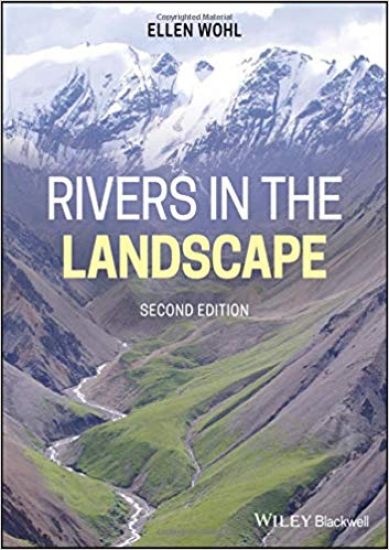
Rivers in the Landscape

Rivers in the Landscape

Ellen Wohl

Wiley-Blackwell
2020
nidottu
Rivers are the great shapers of terrestrial landscapes. Very few points on Earth above sea level do not lie within a drainage basin. Even points distant from the nearest channel are likely to be influenced by that channel. Tectonic uplift raises rock thousands of meters above sea level. Precipitation falling on the uplifted terrain concentrates into channels that carry sediment downward to the oceans and influence the steepness of adjacent hill slopes by governing the rate at which the landscape incises. Rivers migrate laterally across lowlands, creating a complex topography of terraces, floodplain wetlands and channels. Subtle differences in elevation, grain size, and soil moisture across this topography control the movement of ground water and the distribution of plants and animals. Rivers in the Landscape, Second Edition, emphasizes general principles and conceptual models, as well as concrete examples of each topic drawn from the extensive literature on river process and form. The book is suitable for use as a course text or a general reference on rivers. Aimed at advanced undergraduate students, graduate students, and professionals looking for a concise summary of physical aspects of rivers, Rivers in the Landscape is designed to: emphasize the connectivity between rivers and the greater landscape by explicitly considering the interactions between rivers and tectonics, climate, biota, and human activities;provide a concise summary of the current state of knowledge for physical process and form in rivers;reflect the diversity of river environments, from mountainous, headwater channels to large, lowland, floodplain rivers and from the arctic to the tropics;reflect the diverse methods that scientists use to characterize and understand river process and form, including remote sensing, field measurements, physical experiments, and numerical simulations;reflect the increasing emphasis on quantification in fluvial geomorphology and the study of Earth surfaces in general;provide both an introduction to the classic, foundational papers on each topic, and a guide to the latest, particularly insightful and integrative references.
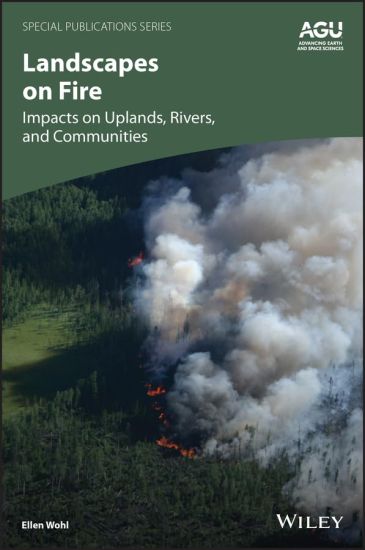
Landscapes on Fire

Landscapes on Fire

Ellen Wohl

JOHN WILEY SONS INC
2025
sidottu
Explores the effects of wildfires on land, water, vegetation, wildlife, and humans Across the world, wildfires are increasing in frequency, extent, and severity, driven by changes in land use and climate. After the immediate hazards of fire and smoke have passed, landscapes and ecosystems can be left altered for decades. Landscapes on Fire: Impacts on Uplands, Rivers, and Communities presents an overview of wildfires and their after-effects on different parts of the natural, biological, and human landscape, bringing together perspectives from different disciplines. Volume highlights include: Causes, mechanics, and patterns of wildfireEffects of fire on uplands and river networksPredicting and mitigating fire-related hazardsProjected trends in wildfire patterns and effects due to climate changeCase studies from across the world The American Geophysical Union promotes discovery in Earth and space science for the benefit of humanity. Its publications disseminate scientific knowledge and provide resources for researchers, students, and professionals.
Sustaining River Ecosystems and Water Resources

Sustaining River Ecosystems and Water Resources

Ellen Wohl

Springer International Publishing AG
2017
nidottu
This work is designed to broaden the scope with which many people regard a river. Rivers are commonly regarded from a very simplistic perspective as conduits for downstream flows of water. In this context, it may be considered acceptable and necessary to engineer the channel to either facilitate such flows (e.g., channelization, levees) or limit flows and store water (e.g., water supply reservoirs, flood control). The book presents the concept of a river as a spatially and temporally complex ecosystem that is likely to be disrupted in unexpected and damaging ways by direct river engineering and by human activities throughout a drainage basin. Viewing a river as a complex ecosystem with nonlinear responses to human activities will help to promote a more nuanced and effective approach to managing river ecosystems and to sustaining the water resources that derive from rivers. In this context, water resources refers to ecosystem services including water supply, water quality, flood control, erosion control, and riverine biota (e.g., freshwater fisheries). Chapters in this book draw extensively on existing literature but integrate this literature from a fresh perspective. General principles are expanded upon and illustrated with photographs, line drawings, tables, and brief, site-specific case studies from rivers around the world.
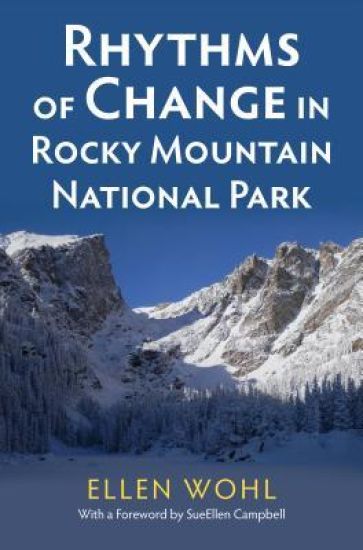
Rhythms of Change in Rocky Mountain National Park

Rhythms of Change in Rocky Mountain National Park

Ellen Wohl; SueEllen Campbell

University Press of Kansas
2016
sidottu
To contemplate an alpine lake or a ribbon of white water twisting down the face of the Rocky Mountains is to appreciate the majesty of this block of bedrock thrust up from Earth's interior, weathering eons of nature's assaults. To learn what humans, in our brief lifespan, have done here is to acquire a sobering sense of our place in the natural world. Ellen Wohl's account of a year in the life of Rocky Mountain National Park reflects a lifelong interest in these rhythms and disruptions. Informed by a deep and intimate understanding of the landscape, her Rocky Mountain journal is a lyrical distillation of experience and knowledge that shows us the century-old national park as a microcosm of the natural world in the thrall of time and humanity. Conducting readers through the park's seasons, Wohl describes the processes that unfold over the ages as continents drift and mountain ranges rise, as glaciers carve the land and profound changes in the atmosphere alter the environment. Working on the landscape in a humbler way are beavers and elk, beetles and, not so humbly, humans, who tinker with natural rhythms in ways big and small, as obvious as logging, road building, and feedlot run-off, and as subtle in the short run as climate change. Along the way, we observe the effects of nature's more violent moments: flash floods that wash out roads and inflict damage downstream, high winds that flatten whole hillsides in minutes, wildfires that strip the woods in an instant or smolder all winter long. A work of quiet power, Rhythms of Change in Rocky Mountain National Park traces Wohl's year-long journey, deftly guiding us through the changing seasons of one of America's most awe-inspiring natural places in all its curiosity and wonder-and in its exposure to the larger forces inexorably altering the natural world.
Snap out of It

Snap out of It

Ellen Teitelman Wohl

Archway Publishing
2022
pokkari
In Snap Out of It: An Unexpected Caregivers Way to Self-Care, Stability, and Survival, author Ellen Teitelman Wohl shares her honest, emotional?-?sometimes funny?-?memoir of the continuing struggle to keep life whole while her husband Jack's health falls apart, over and over again: bipolar disorder, coronary artery disease, lung cancer, diabetes, and normal pressure hydrocephalus, among other medical conditions. While Jack has a remarkable team of doctors treating him, Ellen only has herself to rely on. As the unexpected caregiver, she deals with anxiety, frustration, and exhaustion day after day. She thinks something is wrong with her, but she eventually learns that caregiver burnout is real. Her inner-strength and resilience emerge through the personal discovery of "snap out of it" relief routines, self-care concepts, and ideas. The "snaps," interspersed throughout the narrative, share light-hearted stories, personal experiences, and techniques that form the basis of her mental getaways that include cooking, gardening, reading, exercising, laughing, and more. Ellen finally discovers support groups and guidance, which she shares in this memoir. Her curated resource guide leads you to websites, apps, and support groups dedicated to caregivers.
Snap out of It

Snap out of It

Ellen Teitelman Wohl

Archway Publishing
2022
sidottu
In Snap Out of It: An Unexpected Caregivers Way to Self-Care, Stability, and Survival, author Ellen Teitelman Wohl shares her honest, emotional?-?sometimes funny?-?memoir of the continuing struggle to keep life whole while her husband Jack's health falls apart, over and over again: bipolar disorder, coronary artery disease, lung cancer, diabetes, and normal pressure hydrocephalus, among other medical conditions. While Jack has a remarkable team of doctors treating him, Ellen only has herself to rely on. As the unexpected caregiver, she deals with anxiety, frustration, and exhaustion day after day. She thinks something is wrong with her, but she eventually learns that caregiver burnout is real. Her inner-strength and resilience emerge through the personal discovery of "snap out of it" relief routines, self-care concepts, and ideas. The "snaps," interspersed throughout the narrative, share light-hearted stories, personal experiences, and techniques that form the basis of her mental getaways that include cooking, gardening, reading, exercising, laughing, and more. Ellen finally discovers support groups and guidance, which she shares in this memoir. Her curated resource guide leads you to websites, apps, and support groups dedicated to caregivers.
Of Rock and Rivers

Of Rock and Rivers

Ellen E. Wohl

University of California Press
2009
sidottu
This beautifully written and deeply personal collection of essays paints a progressive view of the American West as seen by a geologist. Ellen Wohl traces her twenty years of living and conducting research in the natural landscapes of the West as she investigates the conflict between environmental history and widely held romanticized views of the region. Wohl grew up in Ohio, subscribing to a common perception of the American West as an unchanged frontier. Moving to Arizona, she became enthralled with how the landscapes and ecosystems of the West have undergone change, both through geologic time and during the historical era of European settlement.These essays tell of her early training as a geomorphologist and provide a memorable account of her research in the rivers of the West. As the lessons accrue, Wohl gives us the benefit of her experience and shows how years of studying and living in the Colorado Rockies have enhanced her understanding of landscape change through time. Building on the literary tradition of Joseph Wood Krutch, Terry Tempest Williams, and John McPhee, Wohl provides an up-to-date portrait of the West and brings a new urgency to the call for conservation of the region's land, water, and resources.
Island of Grass

Island of Grass

Ellen E. Wohl

University Press of Colorado
2009
sidottu
Island of Grass tells the story of the Cathy Fromme Prairie Natural Area, a 240-acre preserve surrounded by housing developments in Fort Collins, Colorado. This small grassland is a remnant of the once-vast prairies of the West that early European explorers and settlers described as seas of grass.Agricultural land use and urban expansion during the past two centuries have fragmented and altered these prairies. All that remains today are small islands. These remnants cannot support some of the larger animals that once roamed the prairie, but they continue to support a diverse array of plants and animals and can still teach us much about grassland ecology. Through her examinations of daily changes during walks across the Fromme Prairie over the course of a year, Ellen Wohl explores one of the more neglected ecosystems in North America, describing the geology, soils, climate, ecology, and natural history of the area, as well as providing glimpses into the lives of the plants, animals, and microbes inhabiting this landscape. Although small in size, pieces of preserved shortgrass prairie like the Cathy Fromme Prairie Natural Area are rich, diverse, and accessible natural environments deserving of awareness, appreciation, and protection. Anyone concerned with the ecology and conservation of grasslands in general, the ecology and conservation of open space in urban areas, or the natural history of Colorado will be interested in this book.
Wide Rivers Crossed

Wide Rivers Crossed

Ellen E. Wohl

University Press of Colorado
2013
sidottu
In Wide Rivers Crossed, Ellen Wohl tells the stories of two rivers—the South Platte on the western plains and the Illinois on the eastern—to represent the environmental history and historical transformation of major rivers across the American prairie. Wohl begins with the rivers’ natural histories, including their geologic history, physical characteristics, ecological communities, and earliest human impacts, and follows a downstream and historical progression from the use of the rivers’ resources by European immigrants through increasing population density of the twentieth century to the present day. During the past two centuries, these rivers changed dramatically, mostly due to human interaction. Crops replaced native vegetation; excess snowmelt and rainfall carried fertilizers and pesticides into streams; and levees, dams, and drainage altered distribution. These changes cascaded through networks, starting in small headwater tributaries, and reduced the ability of rivers to supply the clean water, fertile soil, and natural habitats they had provided for centuries. Understanding how these rivers, and rivers in general, function and how these functions have been altered over time will allow us to find innovative approaches to restoring river ecosystems. The environmental changes in the South Platte and the Illinois reflect the relentless efforts by humans to control the distribution of water: to enhance surface water in the arid western prairie and to limit the spread of floods and drain the wetlands along the rivers in the water-abundant east. Wide Rivers Crossed looks at these historical changes and discusses opportunities for much-needed protection and restoration for the future.
Transient Landscapes

Transient Landscapes

Ellen E. Wohl

University Press of Colorado
2015
sidottu
Landscape—the unique combination of landforms, plants, animals, and weather that compose any natural place—is inherently transient. Each essay in Transient Landscapes introduces this idea of a constantly metamorphosing global landscape, revealing how to see the ubiquity of landscape transience, both that which results through Earth’s natural environmental and climatological processes and that which comes from human intervention. The essays are grouped by type of environmental change: long-term, large-scale transformation driven by geologic forces such as tectonic uplift and volcanism; natural variability at shorter time scales, such as seasonal flooding; and modifications resulting from human activities, such as timber harvest, land drainage, and pollution. Each essay is set in a unique geographic location—including such diverse places as New Zealand, Northern California, Costa Rica, and the Scottish Highlands—and is largely drawn from Wohl’s personal experience researching in the field. A combination of travel writing, nature writing, and science writing, Transient Landscapes is a beautiful and thoughtful journey through the natural world.