

Kirjahaku
Etsi kirjoja tekijän nimen, kirjan nimen tai ISBN:n perusteella.
1000 tulosta hakusanalla Emilio Comba


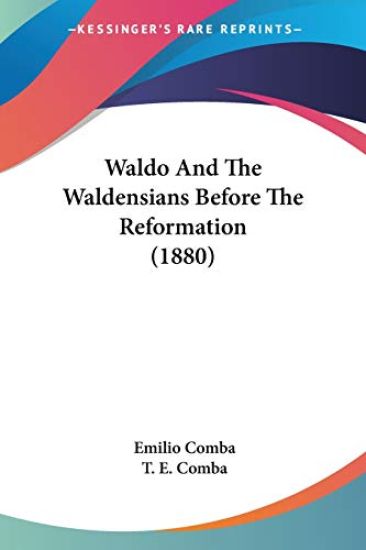
Waldo And The Waldensians Before The Reformation (1880)
Emilio Comba
KESSINGER PUBLISHING, LLC
2009
pokkari



Waldo And The Waldensians Before The Reformation (1880)
Emilio Comba
KESSINGER PUBLISHING, LLC
2010
sidottu

Henri Arnaud: Sa Vie Et Ses Lettres, Avec Gravures Et Facsimilé
Emilio Comba
Hachette Livre - BNF
2013
pokkari
Henri Arnaud: sa vie et ses lettres, avec gravures et facsimile / par Em. CombaDate de l'edition originale: 1889Sujet de l'ouvrage: Arnaud, Henri (1643-1721)Ce livre est la reproduction fidele d'une oeuvre publiee avant 1920 et fait partie d'une collection de livres reimprimes a la demande editee par Hachette Livre, dans le cadre d'un partenariat avec la Bibliotheque nationale de France, offrant l'opportunite d'acceder a des ouvrages anciens et souvent rares issus des fonds patrimoniaux de la BnF.Les oeuvres faisant partie de cette collection ont ete numerisees par la BnF et sont presentes sur Gallica, sa bibliotheque numerique.En entreprenant de redonner vie a ces ouvrages au travers d'une collection de livres reimprimes a la demande, nous leur donnons la possibilite de rencontrer un public elargi et participons a la transmission de connaissances et de savoirs parfois difficilement accessibles.Nous avons cherche a concilier la reproduction fidele d'un livre ancien a partir de sa version numerisee avec le souci d'un confort de lecture optimal. Nous esperons que les ouvrages de cette nouvelle collection vous apporteront entiere satisfaction.Pour plus d'informations, rendez-vous sur www.hachettebnf.fr
Ristampa immutata dell'edizione originale del 1869.

Ristampa immutata dell'edizione originale del 1869.




A Guy who gets caught up in life with LOVE, MONEY, & BETRAYAL, Who than tries to escape the reality of his actions after dealing with some real life situations when it came down to his WOMEN, POWER, & HUSTLE

JEAN JACQUES ROUSSEAU Escritor Franc s del Siglo XVIII
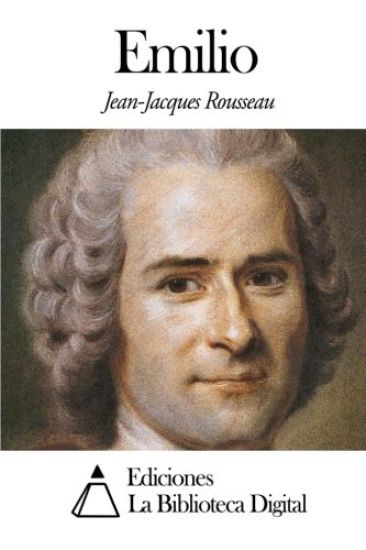
"Emilio", de Jean-Jacques Rousseau. Jean-Jacques Rousseau fue un escritor, fil sofo, m sico, bot nico y naturalista (1712-1778)
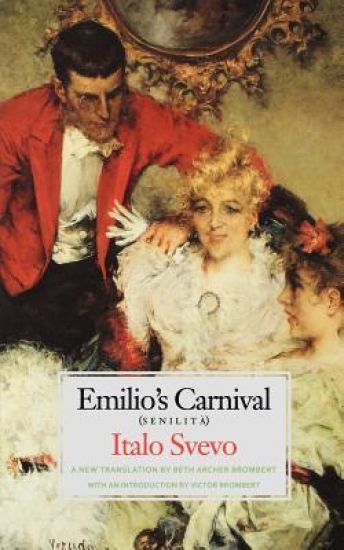
Italo Svevo’s early novel Senilità (1898) remained unknown for many years until James Joyce encountered the novelist in Trieste and came to admire Senilità as a preeminent modern Italian novel. Joyce helped to launch Svevo’s career, and years later Svevo achieved great fame with his masterpiece, Confessions of Zeno. In Senilità, Svevo tells the story of the amorous entanglement of Emilio, a failed writer already old at thirty-five, and Angiolina, a seductively beautiful but promiscuous young woman. A study in jealousy and self-torment, the novel traces the intoxicating effect of a narcissistic and amoral woman on an indecisive daydreamer who vacillates between guilt and moral smugness. The novel is suffused with a tragic sense of existence, and the unbreachable distance between one consciousness and another. Svevo’s unmistakably modern voice subtly captures rapid shifts in mood and intention, exploiting irony, indirection, and multiple points of view to reveal Emilio’s increasing anguish as he comes to recognize the dissonance between himself and his world.
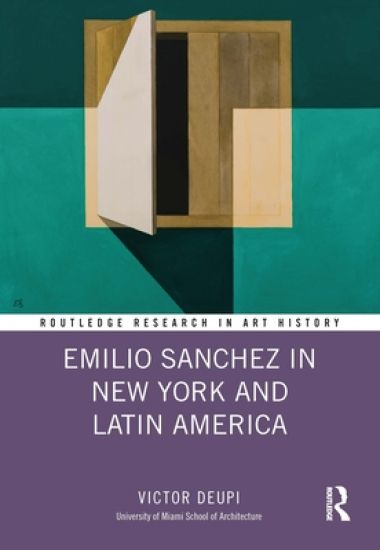
This book focuses on the life and artistic activities of Emilio Sanchez (1921–1999) in New York, and Latin America in the 1940s and 1950s. More specifically, the book will consider Sanchez in the wider context of mid-century Cuban artists, and cross-cultural exchange between New York, Cuba, and the Caribbean. The book reflects on why Sanchez chose to be a mobile observer of the American and Caribbean vernacular at a time when such an approach seemed at odds with the mainstream avant-garde. The book includes a foreword by Dr. Ann Koll, former Executive Director/Curator of the Emilio Sanchez Foundation, and an introduction by Dr. Nathan J. Timpano, University of Miami Department of Art and Art History. This book will be of interest to scholars in modern art, Caribbean studies, architectural history, and Latin American and Hispanic studies.

This book focuses on the life and artistic activities of Emilio Sanchez (1921–1999) in New York, and Latin America in the 1940s and 1950s. More specifically, the book will consider Sanchez in the wider context of mid-century Cuban artists, and cross-cultural exchange between New York, Cuba, and the Caribbean. The book reflects on why Sanchez chose to be a mobile observer of the American and Caribbean vernacular at a time when such an approach seemed at odds with the mainstream avant-garde. The book includes a foreword by Dr. Ann Koll, former Executive Director/Curator of the Emilio Sanchez Foundation, and an introduction by Dr. Nathan J. Timpano, University of Miami Department of Art and Art History. This book will be of interest to scholars in modern art, Caribbean studies, architectural history, and Latin American and Hispanic studies.