

Kirjahaku
Etsi kirjoja tekijän nimen, kirjan nimen tai ISBN:n perusteella.
1000 tulosta hakusanalla Eric Mounts



Who we are and what we do as moral persons are shaped by the institutional and organizational environments we inhabit; the images and metaphors with which we perceive problems, people, and ourselves; the worldviews of myths that situate us in an ultimate frame of reference; and the personal stories through which we live. All of these things influence moral development and choice. In this book, Eric Mount Jr. shows that what we see is fundamental to what we do.
The Mount Everest Reconnaissance Expedition, 1951
Eric 1907-1977 Shipton
Hassell Street Press
2021
sidottu
This work has been selected by scholars as being culturally important and is part of the knowledge base of civilization as we know it.This work is in the public domain in the United States of America, and possibly other nations. Within the United States, you may freely copy and distribute this work, as no entity (individual or corporate) has a copyright on the body of the work.Scholars believe, and we concur, that this work is important enough to be preserved, reproduced, and made generally available to the public. To ensure a quality reading experience, this work has been proofread and republished using a format that seamlessly blends the original graphical elements with text in an easy-to-read typeface.We appreciate your support of the preservation process, and thank you for being an important part of keeping this knowledge alive and relevant.

The Mount Everest Reconnaissance Expedition, 1951
Eric 1907-1977 Shipton
Hassell Street Press
2021
nidottu
This work has been selected by scholars as being culturally important and is part of the knowledge base of civilization as we know it.This work is in the public domain in the United States of America, and possibly other nations. Within the United States, you may freely copy and distribute this work, as no entity (individual or corporate) has a copyright on the body of the work.Scholars believe, and we concur, that this work is important enough to be preserved, reproduced, and made generally available to the public. To ensure a quality reading experience, this work has been proofread and republished using a format that seamlessly blends the original graphical elements with text in an easy-to-read typeface.We appreciate your support of the preservation process, and thank you for being an important part of keeping this knowledge alive and relevant.

The Mount Everest Reconnaissance Expedition is a book written by Eric Shipton, detailing his experiences in exploring the world's highest mountain peak, Mount Everest. The book recounts the events of the 1951 expedition, during which Shipton and his team set out to map the mountain and identify potential routes for future ascents.Throughout the book, Shipton provides vivid descriptions of the harsh terrain and extreme weather conditions that he and his team encountered during their journey. He also shares his personal reflections on the challenges and rewards of mountaineering, and the importance of teamwork and perseverance in achieving one's goals.The book includes numerous photographs and illustrations, as well as detailed maps and diagrams of the mountain and its surrounding areas. It offers a fascinating glimpse into the history of mountaineering and the early attempts to conquer Mount Everest, as well as the personal experiences of one of the most renowned explorers of his time.Overall, The Mount Everest Reconnaissance Expedition is a compelling and informative read for anyone interested in mountaineering, exploration, or adventure. It is a testament to the human spirit of exploration and the enduring allure of the world's highest peaks.This scarce antiquarian book is a facsimile reprint of the old original and may contain some imperfections such as library marks and notations. Because we believe this work is culturally important, we have made it available as part of our commitment for protecting, preserving, and promoting the world's literature in affordable, high quality, modern editions, that are true to their original work.

Ancient canonical narratives from Mesopotamia, Greece, and the Hebrew Bible fused landscapes (topographic space) and human bodies (corporeal space) when personifying mountains. Built environments (architectonic space) also correlated with these anthropomorphic landscapes. As blends of fundamental spatial categories, such mountains exemplified mythic space and minimally counter-intuitive concepts characteristic of religious cognition. In so far as these personified mountains expressed such "mythic thinking," they invite a re-reading informed by spatial and mythological analysis. Taking up this invitation, Eric J. P. Wagner focuses on the Epic of Gilgameš, Homeric epic (the Iliad and Odyssey), and Genesis-2 Kings to identify and analyze personified mountains in each corpus. Ultimately, he traces the meaning(s) and function(s) of these "living landscapes" across each ancient narrative.
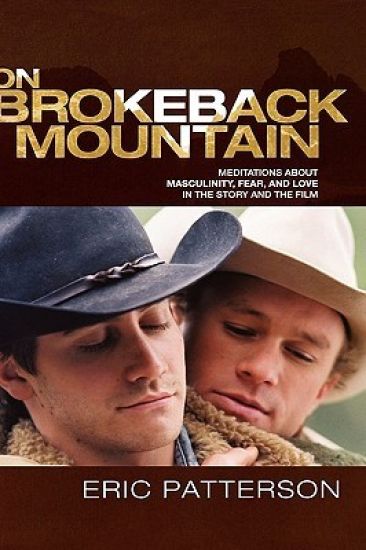
On Brokeback Mountain: Meditations About Masculinity, Fear, and Love in the Story and the Film provides a close, detailed, comparative discussion of the short story and the film in relation to ways of understanding masculinity and love between men in American culture. It uses analytical ideas from gay and lesbian/queer studies, American studies, social history, film history, and literary history, but avoids specialized theoretical language in order to be accessible to the many people interested in the story and the film. Original, interdisciplinary, and engaging, On Brokeback Mountain is intended to be not only useful to academic specialists but also accessible and readable for any interested, educated reader. The two versions of Brokeback Mountain are significant for taking readers and audiences inside the perspectives of men who love men, showing what physical and emotional passion, and hostility toward that passion, may be like for them. The story and the film help in understanding the many men who love men and who don't fit stereotypes of gay men or participate in the gay/queer worlds of urban/academic communities, especially men in rural areas and in working class contexts. This book examines the presentation of friendship, sex, and love between men in Brokeback Mountain, as well as the depiction of homophobia and its effects on men who love men and their families. It relates the story and the film to the literary tradition of the homoerotic pastoral, the literary/movie tradition of the Western, and the tradition of the tragic romantic love story.
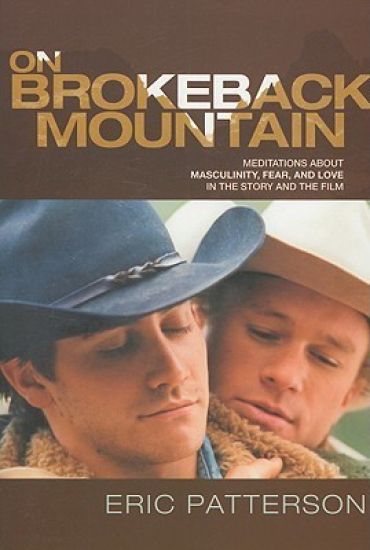
On Brokeback Mountain: Meditations About Masculinity, Fear, and Love in the Story and the Film provides a close, detailed, comparative discussion of the short story and the film in relation to ways of understanding masculinity and love between men in American culture. It uses analytical ideas from gay and lesbian/queer studies, American studies, social history, film history, and literary history, but avoids specialized theoretical language in order to be accessible to the many people interested in the story and the film. Original, interdisciplinary, and engaging, On Brokeback Mountain is intended to be not only useful to academic specialists but also accessible and readable for any interested, educated reader. The two versions of Brokeback Mountain are significant for taking readers and audiences inside the perspectives of men who love men, showing what physical and emotional passion, and hostility toward that passion, may be like for them. The story and the film help in understanding the many men who love men and who don't fit stereotypes of gay men or participate in the gay/queer worlds of urban/academic communities, especially men in rural areas and in working class contexts. This book examines the presentation of friendship, sex, and love between men in Brokeback Mountain, as well as the depiction of homophobia and its effects on men who love men and their families. It relates the story and the film to the literary tradition of the homoerotic pastoral, the literary/movie tradition of the Western, and the tradition of the tragic romantic love story.

Mountain Biking Northern Arkansas: Guide to the Ozarks and Arkansas River Valley
Eric Howerton; Donald West
Butterfield Publishing
2005
nidottu
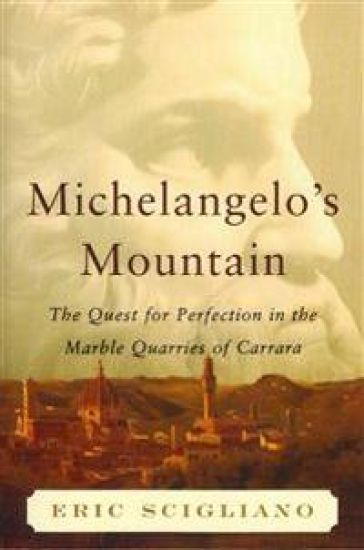
Discover the fascinating, crucial, and often dangerous relationship between Michelangelo and the stone quarries of Carrara in this clear-eyed and well-researched exploration that “recounts the artist's large life and lasting works with care and reverence” (Booklist).No artist looms so large in Western consciousness and culture as Michelangelo Buonarroti, the most celebrated sculptor of all time. And no place on earth provides a stone so capable of simulating the warmth and vitality of human flesh and incarnating the genius of a Michelangelo as the statuario of Carrara, the storied marble mecca at Tuscany's northwest corner. It was there, where shadowy Etruscans and Roman slaves once toiled, that Michelangelo risked his life in dozens of harrowing expeditions to secure the precious stone for his Pietà, Moses, and other masterpieces. Many books have recounted Michelangelo’s achievements in Florence and Rome. Michelangelo’s Mountain goes beyond all of them, revealing his escapades and ordeals in the spectacular landscape that was the third pole of his tumultuous career and the third wellspring of his art. Eric Scigliano brings this haunting place and eternally fascinating artist to life in a sweeping tale peopled by popes and poets, mad dukes and mythic monsters, scheming courtiers and rough-hewn quarrymen. He recounts the saga of the David, the improbable masterpiece that Michelangelo created against all odds, of the twin Hercules that he tried to erect beside it, and of the Salieri-like nemesis who snatched away the commission, turning a sculptural testament to liberty into a bitter symbol of tyranny and giving Florence the colossus it loves to hate. In showing how the artist, land, and stone transformed one another, Scigliano brings fresh insight to Michelangelo's most cherished works and illuminates his struggles with the princes and potentates of Carrara, Rome, and Medici Florence, who raised intrigue to a high art.

This book is about the great doctrine of justification by faith alone and how it relates to pneumatology, regeneration, sanctification, and glorification. The book investigates many aspects of soteriology and reveals how hamartiology as a branch of Christian theology relates to justification and glorification in the eschaton. We examine the history of the holiness movement. This work is about our identity and our destiny and how Christ's magnificent work can help us to overcome guilt and depression. This work presents the gospel message as it relates to other branches of Christian theology. We look at the supernatural and how to mount up with wings like the eagle. Eric A. Folds, PhD is the Dean of Christian University and Theological Seminary and the Pastor of The Christian Church of God, Inc. for the past 25 years. He has authored numerous books. He has studied Theology, Quantum Physics, Ancient History, Ministry, Apologetics, Behavioral Psychology, Ministry, and Pastoral Counseling. He has worked with people who were traumatized for 30 years. Eric Folds was selected for the Marquis Who's Who in America for the 2022 edition and for the Marquis Who's Who Humanitarian Award. He is a gulf war veteran and helps those who were traumatized as both a Pastoral Counselor and a Nouthetic Counselor.

Upon that Mountain
Eric Shipton; Stephen Venables; Geoffrey Winthrop Young
Vertebrate Publishing Ltd
2019
pokkari
Upon that Mountain is the first autobiography of the mountaineer and explorer Eric Shipton. In it, he describes all his pre-war climbing, including his Everest bids of the 1930s, and his second Karakoram survey in 1939, when he returned to Snow Lake to complete the mapping of the ranges flanking the Hispar and Choktoi glacier systems around the Ogre.Crossing great swathes of the Himalaya, the book, like so many of Shipton’s works, is both entertaining and an important addition to the mountain literature genre. It captures an important period in mountaineering history – that just before the Second World War – an ends on an elegiac note as Shipton describes his last evening at the starkly-beautiful snow lake, before he returns to a ‘civilisation’ about to embark on a cataclysmic war.


Out of the Mount: 19 from New Play Project
Eric Samuelsen; Melissa Leilani Larson
Peculiar Pages
2010
nidottu