Kirjojen hintavertailu. Mukana 12 390 323 kirjaa ja 12 kauppaa.

Kirjahaku

Etsi kirjoja tekijän nimen, kirjan nimen tai ISBN:n perusteella.

1000 tulosta hakusanalla Erica Kramer

Grace

Grace

Erica Kramer

Monarch Books
2017
sidottu
Grace is more than a colouring book, it also contains short meditations to fuel your quiet time in a creative way. Beautifully presented as a gift book, this makes an ideal present or a wonderful keepsake. Enjoy themes such as grace and happiness as you create a haven in which to contemplate and relax.
Postmodernism and Race

Postmodernism and Race

Eric Kramer

Praeger Publishers Inc
1997
sidottu
This collection brings together a dozen academics from diverse racial, ethnic, and gender perspectives to explore race in a postmodern way. Postmodernism and Race articulates the differences between modern and postmodern discourses. It then offers a third alternative based on comparative civilizational studies, which suggest a multidimensional approach to power, identity, and social order. Also drawing on Western and non-Western interpretations, the discursive nature of race as a cultural product and semiotic marker is explored. The collection seeks to achieve three tasks: To present a uniquely kynical approach to truth-saying presented by modernists and sophisticated so-called postmodernists (with their faith in lingualism); to explore what modernism is in the context of race; and to investigate the concept of race in an aperspectival way, including the language-gaming of racism. The obsession with racial measurement and its correlation with measures of intelligence is explored, as is the mythology of racial homogeneity in Japan. Also examined are the discursive nature of racial reality and power, and racial identity in Africa. All those concerned with issues of race and/or postmodern civilization, as well as those interested in operational definition, scalar phenomena, relativism, and postmodern views of truth, justice, and power, will find this a provocative collection.
Modern/Postmodern

Modern/Postmodern

Eric Kramer

Praeger Publishers Inc
1997
sidottu
In this book Eric Kramer introduces his theory of dimensional accrual/dissociation to explain the difference between modernity and postmodernity. He also argues that social scientific operational definitions are useful but very often arbitrary. Thus, realities based on them are available for creative (alternative) validities. Kramer then concentrates on the concepts of modernity and postmodernity to analyze how they have been defined and structured and, in the end, he offers clear definitions of these concepts and a better understanding of the work of those who have shaped these ideas. Kramer applies this position to the concepts of modernity and postmodernity, providing a painstaking review of the origins, key thinkers, and current status of these ideas.By reviewing the development of these ideas and providing clear definitions of these concepts, Kramer helps scholars and researchers in the social sciences and humanities better understand applications and limitations of these key approaches in late twentieth-century scholarship.
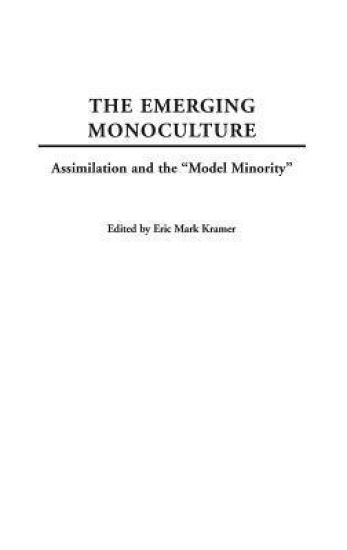
The Emerging Monoculture

The Emerging Monoculture

Eric Kramer

Praeger Publishers Inc
2003
sidottu
Kramer brings together experts from a variety of minority backgrounds and from around the world to give their perspectives on the most pervasive ideology today, globalism. The basic premise is that a developed country is different from a developed community. They need not be mutually exclusive, but neither is it assumed that they are necessarily consonant. The various essays offer answers to such vital questions as What does it mean to become a 'global citizen'? and What does it mean to be a 'model minority' in a global economy? The process of becoming a mainstream person involves being first marginalized with the implication that something is inadequate about one's self. The process of assimilationism is manifested as various forms of enforced and/or rewarded acculturation. With the vast human migration currently underway, the notion of assimilation has become a global phenomenon. What is occurring, Kramer and his colleagues demonstrate, is a worldwide shift from the village milieu to the city lifestyle. This migration is seen as a polycentric and global phenomenon whereby the promised land is nowhere in particular, but, instead, a way of life and mindset, an urban lifestyle. This process is far more than a simple change in geography. Moving from the village to the cityscape involves a mutation in worldview and self-identity. Additional questions asked throughout the collection are What set of persuasive assumptions are leading the world in this direction? and What might be lost in the process? A provocative collection for scholars, students, and other researchers involved with development studies, multiculturalism, and urbanization.
Consciousness and Culture

Consciousness and Culture

Eric Kramer

Praeger Publishers Inc
1992
sidottu
One of the most original and influential thinkers of the twentieth century was Jean Gebser, whose varied writings on the philosophy of culture gave birth to postmodernist thought. In spite of his prominence internationally, much of his work has not been translated into English. This book is the first collection of essays on Gebser to appear in English. The contributors, who are experts in architecture, philosophy, modern languages, fine arts, communications studies, and other diverse fields, offer a striking examination of the pervasive and wide ranging impact of Gebser on all aspects of modern culture. The opening chapters of this multidisciplinary study provide a solid theoretical foundation by analyzing the essence of Gebser's mode of inquiry and by noting the distinguishing features of his theory of culture. The chapters that follow assess his influence on the physical sciences, popular culture, fine art, politics, and other aspects of civilization. The volume convincingly demonstrates that Gebser is among the first postmodernist theorists, and it shows that he predicted the emergence and shortcomings of postmodernism long before McLuhan, Derrida, Foucault, and others. This valuable and original text will be of great interest to anyone concerned with the phenomenology of culture and the birth of postmodernist thought.
Permission To Die

Permission To Die

Eric Kramer; Kellie L Kintz; Stuart Bagatell

Seak Publishing
2017
pokkari
How does a conversation begin about a topic that we can't talk about--that no one really talks about? Where is the jumping off point to cut through the intellectual definitions and the sterile antiseptic medical terminology to reach a place in which real words, experiences and feelings can be used to speak about the unspeakable? Who has the capability, the depth of experience, the sensitivity, knowledge, or even more, the audacity to give themselves license to discuss our universally shared last act on the planet? All of our respective cultures acknowledge the magnitude of death as the major event it is with structured behaviors and traditions. Afterlives, reincarnation, heaven and hell are all constructs that may help us deal with the consuming emotions of loss and humanly unanswerable questions surrounding the permanence of our souls. We would like to present for consideration, from a perspective of our own personal experience and that as healthcare workers, the idea that since death is inevitable, reasonable and appropriate we should embrace the concept and give ourselves and our loved ones the opportunity to die in a well-planned, dignified manner. Without any pomp or ceremony, and with considerable humility, the authors of this volume attempt to advance the conversation that we've all never had about death--not someone else's death--not the stages of dealing with death--not the objective chemical reactions associated with death--and certainly not the legal definitions or issues of outside agencies' involvement in death--but of our own, not be denied, impending exit from this life. We, who live with death each day of our professional careers, want to reach and speak out. Beyond our own individual indoctrinations, we, who have seen untold unnecessary suffering of patients and their families, want an opportunity to contribute to changing the conversation from life at all emotional, physical, spiritual and financial costs toward a release from fear and guilt and acceptance and celebration of life's natural conclusion. We offer: Permission to Die.
Butcher Block Green: An Artificial Life In Four Parts

Butcher Block Green: An Artificial Life In Four Parts

Eric Kramer

Anthropic Publishing Cooperative
2017
nidottu
"One has to pay dearly for immortality; one has to die several times while one is still alive." - Friedrich Nietzsche "Bear in mind, when stowing your weapon, an artificial mind breaks down after just a few months without social stimulation. Complete sensory deprivation is something engineering has been unable to overcome. Always perform a safety check before deploying your weapon." - Tesla-Hawkins Ballistics A.I. Maintenance and Service Handbook, 3rd Edition, page 142.
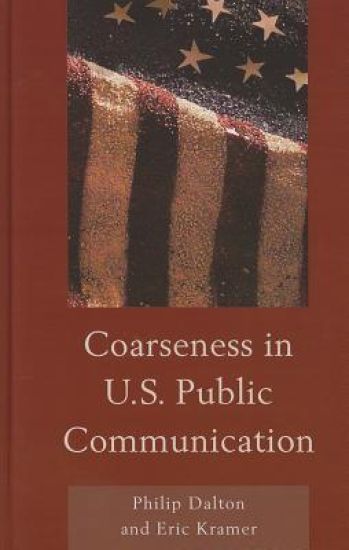
Coarseness in U.S. Public Communication

Coarseness in U.S. Public Communication

Philip Dalton; Eric Mark Kramer

Fairleigh Dickinson University Press
2012
sidottu
Public expression in the United States has become increasingly coarse. Whether it’s stupid, rude, base, or anti-intellectual talk, it surrounds us. Popular television, film, music, art, and even some elements of religion have become as coarse, we argue, as our often-disparaged political dialogue. This book’s contention is that the U.S. semantic environment is governed by tactics, not tact. We craft messages that work—that perform their desired function. We are instrumental, strategic communicators. As such, entertainment and journalism that draw an audience, for instance, are “good.” This follows the logic that the marketplace, an aggregate of hedonically motivated individuals, decides what’s good. Market logic, when unencumbered by what some characterize as quaint human sentimentalities, liberates us to cynically communicate whatever and however we want. Whatever improves ratings, web traffic, ticket sales, concession sales, repeat purchases, and earnings is good. Embracing this communicative paradigm more fully necessitates the culture’s abandonment of collective notions of both taste and veracity, thus weakening the forces that keep individual desires in check. Our present communication environment is one that invites the hypertrophic expression of the ego, enabling elites to erode public communication standards and repeal laws and regulations resulting in immeasurable individual fortunes. Meanwhile, perpetual plutocratic rule is made even more certain by the cacophonous public noise the rest of us are busy making, leaving us incapable, disinterested, and unwilling to listen to one another.
Coarseness in U.S. Public Communication

Coarseness in U.S. Public Communication

Philip Dalton; Eric Mark Kramer

Fairleigh Dickinson University Press
2015
nidottu
Public expression in the United States has become increasingly coarse. Whether it’s stupid, rude, base, or anti-intellectual talk, it surrounds us. Popular television, film, music, art, and even some elements of religion have become as coarse, we argue, as our often-disparaged political dialogue. This book’s contention is that the U.S. semantic environment is governed by tactics, not tact. We craft messages that work—that perform their desired function. We are instrumental, strategic communicators. As such, entertainment and journalism that draw an audience, for instance, are “good.” This follows the logic that the marketplace, an aggregate of hedonically motivated individuals, decides what’s good. Market logic, when unencumbered by what some characterize as quaint human sentimentalities, liberates us to cynically communicate whatever and however we want. Whatever improves ratings, web traffic, ticket sales, concession sales, repeat purchases, and earnings is good. Embracing this communicative paradigm more fully necessitates the culture’s abandonment of collective notions of both taste and veracity, thus weakening the forces that keep individual desires in check. Our present communication environment is one that invites the hypertrophic expression of the ego, enabling elites to erode public communication standards and repeal laws and regulations resulting in immeasurable individual fortunes. Meanwhile, perpetual plutocratic rule is made even more certain by the cacophonous public noise the rest of us are busy making, leaving us incapable, disinterested, and unwilling to listen to one another.
Intercultural Communication and Global Integration

Intercultural Communication and Global Integration

Eric M. Kramer; L. Clark Callahan; S. David Zuckerman

Kendall/Hunt Publishing Co ,U.S.
2013
nidottu
Most of the literature dealing with intercultural communication presupposes that communication is a tool for some other purpose like selling shoes or making a personal relationship ""work."" Such an assumption is what has given rise to the idea that intercultural communication can be ""problematic.Much of the justification for doing intercultural communication research is that business, world peace, and security are contingent on our ability to communicate effectively across cultural and national boundaries (which are not the same thing as evinced by ethnic civil wars within national boundaries).Intercultural Communication and Global Integration presents the reader with a three-part approach to intercultural communication; communication, culture, and consciousness. Intercultural Communication and Global Integration argues that communication, culture, and consciousness combine to form one's intercultural perspectives. The tool of language is central to understanding the relationships between these three elements.While most tend to view these three areas as separate parts, the reader will see they are much more integrated than most typically think. For example, the relationship between communication and culture is so close that there are those who have argued that principles of communication are virtually identical with anthropological descriptions.Intercultural Communication and Global Integration includes student centered pedagogical features in each chapter, such as:Topics/ObjectivesPre-Chapter questions that help the reader focus his/her readingReferencesCharts, photos, and diagrams
Rethinking Culture in Health Communication

Rethinking Culture in Health Communication

Elaine Hsieh; Eric M. Kramer

John Wiley Sons Inc
2021
nidottu
Rethinking Culture in Health Communication An interdisciplinary overview of health communication using a cultural lens—uniquely focused on social interactions in health contexts Patients, health professionals, and policymakers embody cultural constructs that impact healthcare processes. Rethinking Culture in Health Communication explores the ways in which culture influences healthcare, introducing new approaches to understanding social relationships and health policies as a dynamic process involving cultural values, expectations, motivations, and behavioral patterns. This innovative textbook integrates theories and practices in health communication, public health, and medicine to help students relate fundamental concepts to their personal experiences and develop an awareness of how all individuals and groups are shaped by culture. The authors present a foundational framework explaining how cultures can be understood from four perspectives—Magic Consciousness, Mythic Connection, Perspectival Thinking, and Integral Fusion—to examine existing theories, social norms, and clinical practices in health-related contexts. Detailed yet accessible chapters discuss culture and health behaviors, interpersonal communication, minority health and healthcare delivery, cultural consciousness, social interactions, sociopolitical structure, and more. The text features examples of how culture can create challenges in access, process, and outcomes of healthcare services and includes scenarios in which individuals and institutions hold different or incompatible ethical views. The text also illustrates how cultural perspectives can shape the theoretical concepts emerged in caregiver-patient communication, provider-patient interactions, social policies, public health interventions, and other real-life settings. Written by two leading health communication scholars, this textbook: Highlights the sociocultural, interprofessional, clinical, and ethical aspects of health communication Explores the intersections of social relationships, cultural tendencies, and health theories and behaviors Examines the various forms, functions, and meanings of health, illness, and healthcare in a range of cultural contexts Discusses how cultural elements in social interactions are essential to successful health interventions Includes foundational overviews of health communication and of culture in health-related fields Discusses culture in health administration, moral values in social policies, and ethics in medical development Incorporates various aspects and impacts of the COVID-19 pandemic as a cultural phenomenon through the lens of health communication Rethinking Culture in Health Communication is an ideal textbook for courses in health communication, particularly those focused on interpersonal communication, as well as in cross-cultural communication, cultural phenomenology, medical sociology, social work, public health, and other health-related fields.
Ung man med kamera

Ung man med kamera

Hans-Eric Hellberg

Saga Egmont
2019
nidottu
Den gamle olympiske medaljören Sturnils Jon Jonsson ska fylla 90 år och den lokala tidningen vill gärna skriva ett reportage om honom. Men dagen innan försvinner han! Janne Kumm, springpojke på tidningen, bestämmer sig för att lösa mysteriet. Har gubben blivit konstig? Har ett brott blivit begånget? Jannes efterforskningar leder honom i alla fall in på ett spår som verkar lovande ... -