Kirjahaku
Etsi kirjoja tekijän nimen, kirjan nimen tai ISBN:n perusteella.
1000 tulosta hakusanalla Fiona MacCarthy
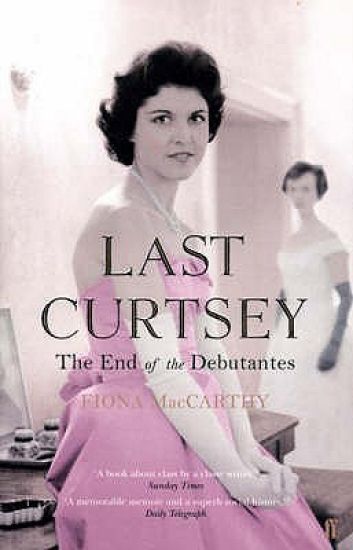
Once upon a time the well-bred daughters of Britain's aristocracy took part in a female rite of passage: curtseying to the Queen. But in 1958 this ritual was coming to an end. Under pressure to shine - not least from their mothers - the girls became the focus for newspaper diarists and society photographers in a party season that stretched for months among the great houses of England, Ireland and Scotland. Fiona MacCarthy traces the stories of the girls who curtseyed that year, and shows how their lives were to open out in often very unexpected ways - as Britain itself changed irreversibly during the 1960s, and the certainties of the old order came to an end.
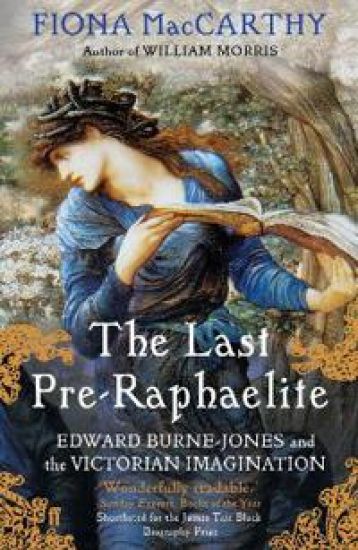
Winner of the James Tait Black Memorial Prize, this is the biography of celebrated nineteenth-century artist Edward Burne-Jones, who - with William Morris - connects Victorian and modern art.'A triumph of biographical art.' Independent'Magnificent.' Guardian 'Rarely are biographies both as authoritative and engaging as this.' Literary Review The angels on our Christmas cards, the stained glass in our churches, the great paintings in our galleries - Edward Burne-Jones's work is all around us. The most admired British artist of his generation, he was a leading figure with Oscar Wilde in the aesthetic movement of the 1880s, inventing what became an iconic 'Burne-Jones look'. Widely recognised as the bridge between Victorian and modern art, he influenced not just his immediate circle but European artists such as Klimt and Picasso.In this gripping book, award-winning biographer Fiona MacCarthy dramatically re-evaluates his art and life - his battle against vicious public hostility, the romantic susceptibility to female beauty that would inspire his work but ruin his marriage, his ill health and depressive sensibility, and the devastating rift with his great friend and collaborator, William Morris, when their views on art and politics diverged. Blending new research with a fresh historical perspective, The Last Pre-Raphaelite tells the extraordinary story of Burne-Jones: a radical artist, landmark of Victorian society - and peculiarly captivating man.
Winner of the Wolfson History Prize, and described by A.S.Byatt as 'one of the finest biographies ever published', this is Fiona MacCarthy's magisterial biography of William Morris, legendary designer and father of the Victorian Arts and Crafts movement. 'Thrilling, absorbing and majestic.' Independent'Wonderfully ambitious ... The definitive Morris biography.' Sunday Times 'Delicious and intelligent, full of shining detail and mysteries respected.' Daily Telegraph'Oh, the careful detail of this marvellous book! . . . A model of scholarly biography'. New StatesmanSince his death in 1896, William Morris has been celebrated as a giant of the Victorian era. But his genius was so multifaceted and so profound that its full extent has rarely been grasped. Many people may find it hard to believe that the greatest English designer of his time - possibly of all time - could also be internationally renowned as a founder of the socialist movement, and ranked as a poet with Tennyson and Browning.In her definitive biography - insightful, comprehensive, addictively readable - the award-winning Fiona MacCarthy gives us a richly detailed portrait of Morris's complex character for the first time, shedding light on his immense creative powers as artist and designer of furniture, fabrics, wallpaper, stained glass, tapestry, and books; his role as a poet, novelist and translator; on his psychology and his emotional life; his frenetic activities as polemicist and reformer; and his remarkable circle of friends, literary, artistic and political, including Dante Gabriel Rossetti and Edward Burne-Jones. It is a masterpiece of biographical art.
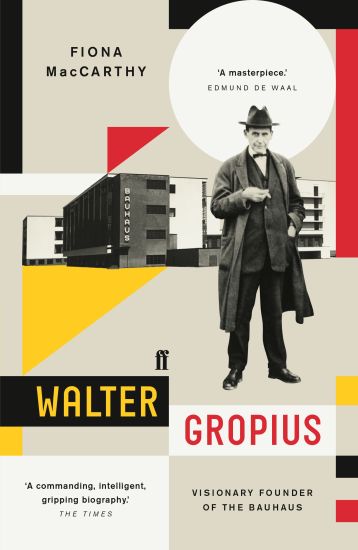
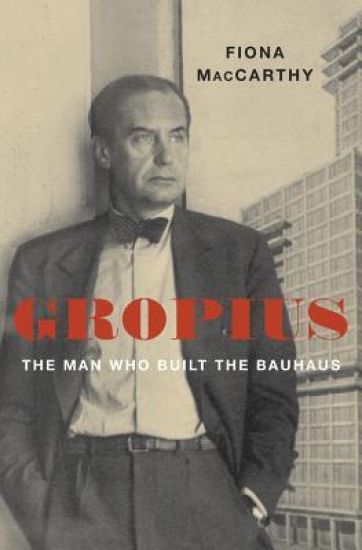
* A Times and New Statesman Book of the Year ** BBC Radio 4 Book of the Week ** Illustrated with over 130 colour photographs and drawings *'A masterpiece.' Edmund de Waal'Commanding, intelligent, gripping.' The TimesFrom 1910 to 1930 Gropius was at the very centre of European modern art and design, as the founder of the German art school, the Bauhaus. Yet Gropius's beliefs and affiliations left him little choice but to leave Germany when Hitler came to power. In this riveting book, Fiona MacCarthy draws on new research to re-evaluate Gropius's work and life. From his shattering experiences in the First World War to his turbulent marriage to the notorious Alma Mahler and the tragic early death of their daughter, MacCarthy leads us through his disorientating years in London, to his final peaceful and productive life in America. This is biography at its finest and most vivid.
The Simple Life (1981) was Fiona MacCarthy's first book, written while she was the Guardian's design correspondent (and before her acclaimed lives of Eric Gill, William Morris, and Edward Burne-Jones.) It tells of a venturesome effort to enact an Edwardian Utopia in a small town in the Cotswolds.The leader of this endeavour was progressive-minded architect Charles Robert Ashbee, who in 1888 founded the Guild of Handicraft in Whitechapel, specialising in metalworking, jewellery and furniture and informed by the desire to improve society. In 1902 Ashbee and his East London comrades removed the Guild to Chipping Campden in Gloucestershire, hoping to construct a socialistic rural idyll. MacCarthy explores the impact of the experiment on the lives of the group and on the little town they occupied - tracing the Guild's fortunes and misfortunes, hilarious and grave, and the many fellow idealists and artists who were involved (among them William Morris, Roger Fry, and Sidney and Beatrice Webb.)
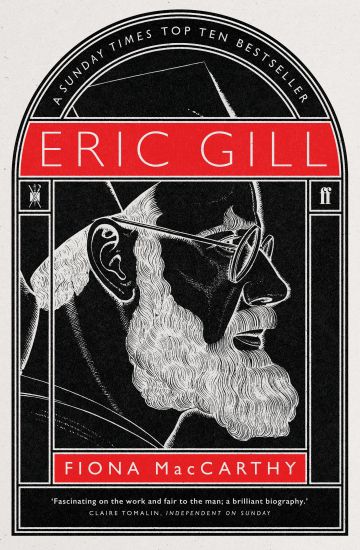
A gorgeous new edition of Fiona MacCarthy's ground-breaking biography of the artist-craftsman, typographer, and lettercutter, master wood-engraver, and sculptor: Eric Gill.'Fascinating on the work and fair to the man; a brilliant biography.' Independent'Scrupulous and sensitive . . . A wise and foolish English eccentric in full glory.' Observer'Full of insight and interest . . . A considerable addition to modern biography.' TimesEric Gill was the greatest English artist-craftsman of the twentieth century: a typographer and lettercutter of genius and a master in the art of sculpture and wood-engraving. He was a devoted family man and key figure in three Catholic art and craft communities: yet he also believed in complete sexual freedom. In her controversial, landmark biography, originally published in 1989, celebrated biographer Fiona MacCarthy delves into the complex, dark, and contradictory sides of the man and the artist for the first time - and the result is his definitive portrait.
The Last Pre-Raphaelite: Edward Burne-Jones and the Victorian Imagination
Fiona MacCarthy
HARVARD UNIVERSITY PRESS
2012
sidottu
While still a student at Oxford, Edward Burne-Jones formed a friendship and made a renunciation that would shape art history. The friendship was with William Morris, with whom he would occupy the social and intellectual center of the era's cult of beauty. The renunciation was of his intention to enter the clergy, when he-together with Morris-vowed to throw over the Church in favor of art. In Fiona MacCarthy's riveting account of Burne-Jones's life, that exchange of faith for art places him at the intersection of the nineteenth century and the Modern, as he leads us forward from Victorian mores and attitudes to the psychological, sexual, and artistic audacity that would characterize the early twentieth century. In MacCarthy's hands, Burne-Jones emerges as a great visionary painter, a master of mystic reverie, and a pivotal late nineteenth-century cultural and artistic figure. Lavishly illustrated with color plates, The Last Pre-Raphaelite shows that Burne-Jones's influence extended far beyond his own circle to Freudian Vienna and the delicately gilded erotic dream paintings of Gustav Klimt, the Swiss Symbolist painter Ferdinand Hodler, and the young Pablo Picasso and the Catalan painters. Drawing on extensive research, MacCarthy offers a fresh perspective on the achievement of Burne-Jones, a precursor to the Modern, and tells the dramatic, fascinating story of this peculiarly captivating and elusive man.
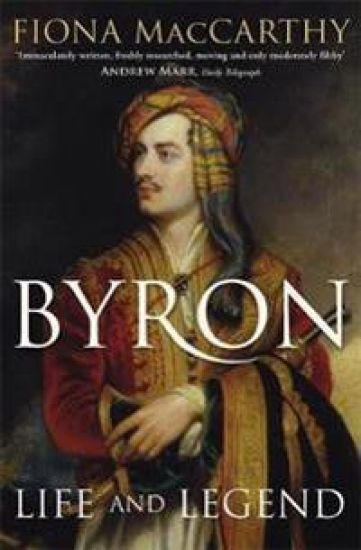
Fiona MacCarthy makes a breakthrough in interpreting Byron's life and poetry drawing on John Murray's world-famous archive.She brings a fresh eye to his early years: his childhood in Scotland, embattled relations with his mother, the effect of his deformed foot on his development. She traces his early travels in the Mediterranean and the East, throwing light on his relationships with adolescent boys - a hidden subject in earlier biographies.While paying due attention to the compelling tragicomedy of Byron's marriage, his incestuous love for his half-sister Augusta and the clamorous attention of his female fans, she gives a new importance to his close male friendships, in particular that with his publisher John Murray. She tells the full story of their famous disagreement, ending as a rift between them as Byron's poetry became more recklessly controversial.Byron was a celebrity in his own lifetime, becoming a 'superstar' in 1812, after the publication of Childe Harold. The Byron legend grew to unprecedented proportions after his death in the Greek War of Independence at the age of thirty-six. The problem for a biographer is sifting the truth from the sentimental, the self-serving and the spurious. Fiona MacCarthy has overcome this to produce an immaculately researched biography, which is also her refreshing personal view.
"This is an absolute triumph--ideas, lives, and the dramas of the twentieth century are woven together in a feat of storytelling. A masterpiece." --Edmund de Waal, ceramic artist and author of The White Road The impact of Walter Gropius can be measured in his buildings--Fagus Factory, Bauhaus Dessau, Pan Am--but no less in his students. I. M. Pei, Paul Rudolph, Anni Albers, Philip Johnson, Fumihiko Maki: countless masters were once disciples at the Bauhaus in Berlin and at Harvard. Between 1910 and 1930, Gropius was at the center of European modernism and avant-garde society glamor, only to be exiled to the antimodernist United Kingdom during the Nazi years. Later, under the democratizing influence of American universities, Gropius became an advocate of public art and cemented a starring role in twentieth-century architecture and design. Fiona MacCarthy challenges the image of Gropius as a doctrinaire architectural rationalist, bringing out the visionary philosophy and courage that carried him through a politically hostile age. Pilloried by Tom Wolfe as inventor of the monolithic high-rise, Gropius is better remembered as inventor of a form of art education that influenced schools worldwide. He viewed argument as intrinsic to creativity. Unusually for one in his position, Gropius encouraged women's artistic endeavors and sought equal romantic partners. Though a traveler in elite circles, he objected to the cloistering of beauty as "a special privilege for the aesthetically initiated." Gropius offers a poignant and personal story--and a fascinating reexamination of the urges that drove European and American modernism.
Collecting, Ordering, Governing
Tony Bennett; Fiona Cameron; Nélia Dias; Ben Dibley; Rodney Harrison; Ira Jacknis; Conal McCarthy
Duke University Press
2017
sidottu
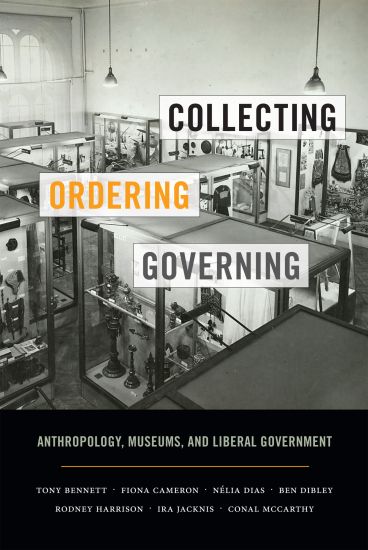
The coauthors of this theoretically innovative work explore the relationships among anthropological fieldwork, museum collecting and display, and social governance in the early twentieth century in Australia, Britain, France, New Zealand, and the United States. With case studies ranging from the Musée de l'Homme's 1930s fieldwork missions in French Indo-China to the influence of Franz Boas's culture concept on the development of American museums, the authors illuminate recent debates about postwar forms of multicultural governance, cultural conceptions of difference, and postcolonial policy and practice in museums. Collecting, Ordering, Governing is essential reading for scholars and students of anthropology, museum studies, cultural studies, and indigenous studies as well as museum and heritage professionals.
Collecting, Ordering, Governing
Tony Bennett; Fiona Cameron; Nélia Dias; Ben Dibley; Rodney Harrison; Ira Jacknis; Conal McCarthy
Duke University Press
2017
pokkari
The coauthors of this theoretically innovative work explore the relationships among anthropological fieldwork, museum collecting and display, and social governance in the early twentieth century in Australia, Britain, France, New Zealand, and the United States. With case studies ranging from the Musée de l'Homme's 1930s fieldwork missions in French Indo-China to the influence of Franz Boas's culture concept on the development of American museums, the authors illuminate recent debates about postwar forms of multicultural governance, cultural conceptions of difference, and postcolonial policy and practice in museums. Collecting, Ordering, Governing is essential reading for scholars and students of anthropology, museum studies, cultural studies, and indigenous studies as well as museum and heritage professionals.
Lower Secondary Maths Student’s Book: Stage 9
Michele Conway; Belle Cottingham; Alastair Duncombe; Amanda George; Deborah McCarthy; Fiona Smith
Collins
2018
nidottu
This brand new, three-level series, provides coverage of the Cambridge Secondary 1 maths curriculum framework. Written by an experienced author team, the series comprises a comprehensive Student Book, extensive Workbook and supportive Teacher Guide. Student Book 9 provides comprehensive coverage of the Secondary 1 syllabus through 9 topic-based units. The series is influenced by a mastery approach, with topics being thoroughly embedded before learners move on. • New concepts are presented through worked examples, which lead learners, step-by-step, through the concepts, with clear and detailed explanations. • Links are made between topics, encouraging learners to build on relevant fluency from previously learnt topics, and practise mathematical concepts in a different context. • Learners build 21st-century skills such as mental maths strategies, pattern spotting and problem solving, enabling them to talk about mathematics with confidence. • With challenge questions integrated throughout, learners can deepen their understanding. • Learners are encouraged to reflect on their learning, in order to build learner independence. • The series builds on the foundations laid down in primary maths, and prepares learners for embarking on IGCSE maths. Provides learner support as part of a set of resources for the Cambridge Lower Secondary Mathematics curriculum framework from 2011. This title is endorsed by Cambridge Assessment International Education.
In 1966 Jim Scott, aged 22, qualified as a veterinary surgeon and landed the job of his dreams working in Kenya. Just before leaving, he fell in love with Fiona, a Scottish girl, but there was no chance of a lasting relationship and they agreed to part. Three and a half years later, Jim is mentally and physically scarred by a lion, which he kills with a 'panga', but not before it kills a woman he cares about. At his wit's end working through the tragedy, Fiona comes out to Kenya. They find their love has not died, but Jim is too hung up on the past. Fi takes the lead and loves his fears away and they start planning a wedding and a family and their lives together. Then, persuaded by a senior MI6 officer to gather information on their travels in Kenya and in other African countries, they face danger that could threaten everything they've worked for and dreamed of.
This book highlights the imagination of a six-year-old girl who wants to be a doctor. In this book, she shares some knowledge about the solar system to convince the reader that she will someday provide medical services to our astronauts and their furry companion.
The week of New Year's Eve and New Year's Day has always been one of my favorite weeks of the year. Besides my birthday, Thanksgiving, and Christmas, I look forward to this week with a passion. This is do the fact that my family and I spend the week in our large beach house in Henley Beach, Florida, with our lifelong best friends, the Harris's. While Mom and Dad have been best friends with Rhoda and Timothy, since they were babies, their hot son, Jeremiah, whom I am secretly in love with, and I have been best friends since we were babies.As our plane touched down at Orlando International Airport, excitement filled my chest. The week long vacation in Henley Beach had officially begun
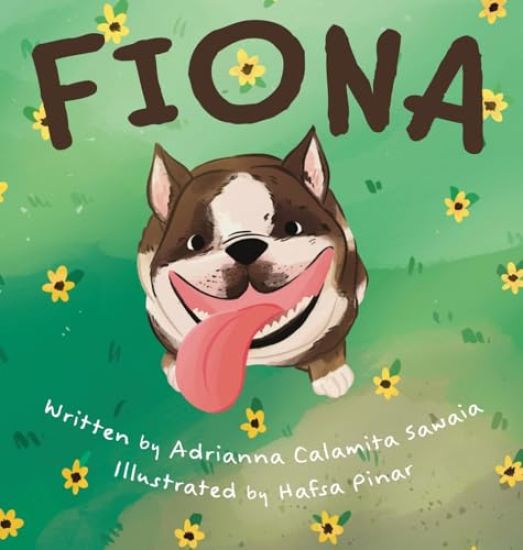
Fiona is a short and stout, lovable ball of energy who spends her days cuddling on the couch with her parents and visiting schools with her mom. But Fiona didn't always live this luxurious life. Read along as the story Fiona unfolds to reveal a dog and her friends' heart-wrenching journey with a happy ending, showing just what it takes for shelters across the country to truly save our pets.
Fiona likes her job as counselor at the Women's Crisis Center and she loves training Off Track Thoroughbreds during the evenings at the show barn where she lives. Some would say for a horse-loving women's rights activist, she has a perfect life, so why all of a sudden this quest, this epiphany? In a week's time Fiona's world is turned upside down. A nostalgic search for her birth mother takes her down country roads to a forgotten coal-mining town in Southern Ohio, where she uncovers decades old secrets and long lost relatives and comes face to face with a bully sheriff in this tug-at-your-heart magical adventure.
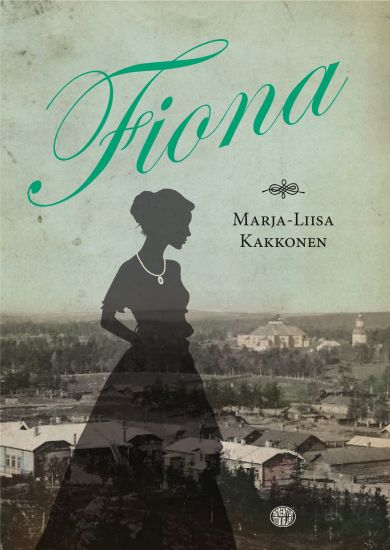
Fiona on vielä 23-vuotiaana isänsä holhouksen alainen. Hän uhmaa isänsä suunnitelmaa, jonka mukaan hänen pitäisi naida isän valitsema varakas kauppias. Hän on päättänyt aiemmin, ettei mene naimisiin eikä tee itse lapsia, vaan haluaa opettaa heitä. Fiona saa suostuteltua isänsä lykkäämään häitä vuodella sekä päästämään hänet opettajaksi Mikkeliin Antellin neitien kouluun. Hän haaveilee pääsystä pienen kaupungin seurapiireihin, mutta tapahtumat eivät etene hänen toiveidensa mukaisesti. Hän joutuu muuttamaan suunnitelmiaan useiden yllätysten ja vastoinkäymisten jälkeen niin opettajana toimimisessa kuin henkilökohtaisessa elämässään. Lopulta hän tekee ratkaisun, jolla pyrkii itse muuttamaan elämänsä kulkua.FIONA on historiallinen romaani 1800-luvun lopun Mikkelistä. Lukijalle piirtyy miljöö ajankuvasta, vastateollistuneista maisemista sekä erilaisista ihmiskohtaloista.Marja-Liisa Kakkonen on kauppatieteiden ja kasvatustieteiden tohtori, jolla on pitkä ura opetus-, hallinnointi- ja esimiestehtävissä korkeakoulusektorilla sekä monipuolinen kokemus tietokirjoittajana. Hän vaihtoi lajia kaunokirjoittamiseen Kirjoittamisen opintojen kautta ja maaliskuussa 2022 julkaisi omakustanteena suomenkielisen KESÄMÖKKI-esikoisromaanin, joka kertoo perintöriidoista ja neljän myöhäiskeski-ikäisen sisaruksen suhteista sekä heidän perheensä salaisuuksista. FIONA-romaani perustuu kirjailijan historian kiinnostukseen ja erityisesti naisen asemaan 1800-luvulla, joihin liittyviä tietoja hän hyödyntää fiktiivisessä tarinassa.