Kirjojen hintavertailu. Mukana 11 244 527 kirjaa ja 12 kauppaa.

Kirjahaku

Etsi kirjoja tekijän nimen, kirjan nimen tai ISBN:n perusteella.

714 tulosta hakusanalla Fogeli

Tintistä Fogeliin

Tintistä Fogeliin

Timo Ronkainen

Kustantamo Helmivyö
2021
nidottu
Matkoja sarjakuvan maailmoihin kolmelta vuosikymmeneltä. Pitkän linjan sarjakuvatoimija Timo Ronkainen on valikoinut kirjaansa tekemiään sarjakuva-arvosteluja ranskalais-belgialaisista ja amerikkalaisista klassikkosarjakuvista sekä suomalaisia nykysarjakuvista ja alan tietoteoksista. Kirjan loppuun on valikoitu muutamia sarjakuva-aiheisia esseitä.
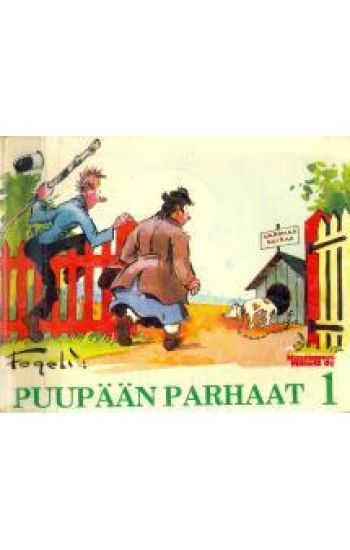
Puupään parhaat 1

Puupään parhaat 1

Fogeli

KUSTANNUS-MÄKELÄ
1994
nidottu
Pekka Puupää on klassikko, ikivihreä sarjakuvahahmo. Ola Fogelbergin sarjakuvat ovat nasevia, niissä on ajatusta ja kultaista huumoria. Lisäviehätystä ne saavat tuomalla häivähdyksen jo kadonneesta ajasta ja sen pehmeistä arvoista. Sarjakuvakokoelmaan on poimittu parhaita paloja Fogelin tuotannosta 1940- ja 1950-luvuilta.
Pekka Puupää alusta loppuun

Pekka Puupää alusta loppuun

Ola) Fogeli (Fogelberg

Jalava
2023
sidottu
Pekka Puupää oli alun alkaen sarjakuva osuuskauppaliikkeen lehdissä vuodesta 1925 alkaen. Lehdillä oli paljon lukijoita ja sarja sai suuren suosion. Sarjaa julkaistiin suomeksi ja ruotsiksi.Sarjaa julkaistiin albumeina 1940-luvulta 1970-luvulle saakka ja uusintoina 1990-luvulla. Kuitenkin uusinnat olivat pääosin Fogelin tyttären Toto Kailan piirtämiä.Ville Hänninen kokoaa tässä kirjassa legendaarisen sarjakuvahahmon vaiheet 1920-luvulta taiteilijan kuolemaan 1952 saakka. Teos paljastaa asioita niin hahmon synnystä, asuinpaikasta, Justiinan ja Pekan ensikohtaamisesta, että sarjan suhteista aikansa politiikkaan ja osuuskauppaliikkeeseen.Erityistä painoa on pantu sotavuosiin, Pekka ei lähtenyt rintamalle, mutta elää kotirintaman arkea säännöstelyjen ja niukkuuden aikaa..Kirjassa on paljon materiaalia, jota ei ole aikaisemmin julkaistu albumeissa eikä edes lehdissä.Mukana on myös OTK:n mainospäällikkö Fogelbergin muita sarjakuvia, kuvituksia ja mainoksia, joissa Pekka mainostaa osuuskauppojen tuotteita.Myös Fogelbergin elämäkertaa käydään lyhyesti lävitse.
Harhateillä (näköispainos)

Harhateillä (näköispainos)

Ola Fogeli Fogelberg

Turbator
2011
nidottu
Ola Fogelberg alias Fogeli tunnetaan ennen kaikkea Pekka Puupäästä, mutta hän oli myös monipuolinen taiteilija, toimittaja ja kirjailija, ja innokas maailmanmatkaaja. Fogelin 1910-luvulla tekemistä lukuisista matkoista maailmalla koottiin vuonna 1921 matkakirja Harhateillä, joka nykylukijalle on herkullinen kurkistus muinaiseen maailmaan ja maailmankuvaan. Fogeli ei selosta nähtävyyksiä, hän kulkee takapihoilla ja ihmisten parissa ja kertoo kokemastaan varsin raadollisesti ja humoristisesti, ei juuri kunnioita herroja eikä valtaa, vaan kertoo niidenkin takapajuisuudesta railakkain sanoin. Kirja on paikoin hillittömän hauska, ja suomalaisnäkökulmainen: maailma muualla näyttää hullunkuriselta ja ihmiset omituisilta, täit hotelleissa vierasmaalaisilta ilkiöiltä ja rahanvaihtajat ahneilta varkailta - joita kaikkialla muutenkin piisaa liiaksi asti. Fogelin paikan päällä tarinoihinsa tekemät piirroskuvat kertovat lisää: eivät nähtävyyksistä, vaan ihmisistä, kansan elämästä ja sellaisista maisemista joita ei enää ole. Kirja alkuperäisine kuvineen on sarjakuvan juhlavuoden juhlatapaus, ja suomalaisen matkakirjallisuuden huikea kaunokirjallinen klassikko - matkakirja ajalta jolloin ei lennetty, vaan matkustettiin höyryveturin vetämällä junalla, laivalla, hevoskieseillä ja jalan patikoiden.
Walking the Tightrope of Reason

Walking the Tightrope of Reason

Robert Fogelin

Oxford University Press Inc
2005
nidottu
Human beings are both supremely rational and deeply superstitious, capable of believing just about anything and of questioning just about everything. Indeed, just as our reason demands that we know the truth, our skepticism leads to doubts we can ever really do so. In Walking the Tightrope of Reason, Robert J. Fogelin guides readers through a contradiction that lies at the very heart of philosophical inquiry. Fogelin argues that our rational faculties insist on a purely rational account of the universe, yet at the same time, the inherent limitations of these faculties ensure that we will never fully satisfy that demand. As a result of being driven to this point of paradox, we either comfort ourselves with what Kant called "metaphysical illusions" or adopt a stance of radical skepticism. No middle ground seems possible and, as Fogelin shows, skepticism, even though a healthy dose of it is essential for living a rational life, "has an inherent tendency to become unlimited in its scope, with the result that the edifice of rationality is destroyed." In much Postmodernist thought, for example, skepticism takes the extreme form of absolute relativism, denying the basis for any value distinctions and treating all truth-claims as equally groundless. How reason avoids disgracing itself, walking a fine line between dogmatic belief and self-defeating doubt, is the question Fogelin seeks to answer. Reflecting upon the ancient Greek skeptics as well as such thinkers as Hume, Kant, Wittgenstein, Nietzsche, and Whitman, this book takes readers into--and through--some of philosophy's most troubling paradoxes.
Figuratively Speaking

Figuratively Speaking

Robert Fogelin

Oxford University Press Inc
2011
nidottu
In this updated edition of his brief, engaging book, Robert J. Fogelin examines figures of speech that concern meaning-irony, hyperbole, understatement, similes, metaphors, and others-to show how they work and to explain their attraction. Building on the ideas of Grice and Tversky, Fogelin contends that figurative language derives its power from its insistence that the reader participate in the text, looking beyond the literal meaning of the figurative language to the meanings that are implied. With examples ranging from Shakespeare, John Donne, and Jane Austen to e.e. cummings, Bessie Smith, and Monty Python, Fogelin demonstrates that the intellectual and aesthetic force of figurative language is derived from the opportunity it provides for unlimited elaboration. Fogelin presents a modern restatement of the view, first put forward by Aristotle, that metaphors are to be treated as elliptical similes. He then offers a detailed defense of this "comparativist" view of metaphors in response to criticisms that have been brought against it by a series of eminent philosophers. This new edition is updated to reflect more recent work on the topic and will interest philosophers, linguists, and literary theorists.
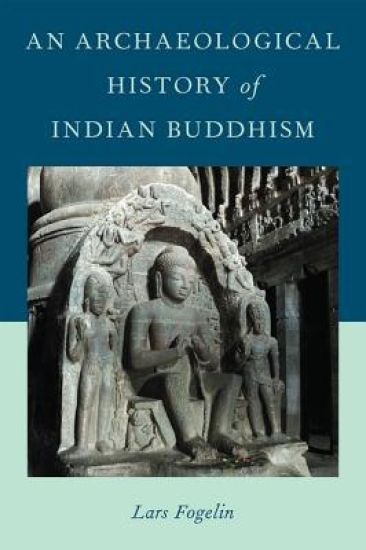
An Archaeological History of Indian Buddhism

An Archaeological History of Indian Buddhism

Lars Fogelin

Oxford University Press Inc
2015
sidottu
An Archaeological History of Indian Buddhism is a comprehensive survey of Indian Buddhism from its origins in the 6th century BCE, through its ascendance in the 1st millennium CE, and its eventual decline in mainland South Asia by the mid-2nd millennium CE. Weaving together studies of archaeological remains, architecture, iconography, inscriptions, and Buddhist historical sources, this book uncovers the quotidian concerns and practices of Buddhist monks and nuns (the sangha), and their lay adherents--concerns and practices often obscured in studies of Buddhism premised largely, if not exclusively, on Buddhist texts. At the heart of Indian Buddhism lies a persistent social contradiction between the desire for individual asceticism versus the need to maintain a coherent community of Buddhists. Before the early 1st millennium CE, the sangha relied heavily on the patronage of kings, guilds, and ordinary Buddhists to support themselves. During this period, the sangha emphasized the communal elements of Buddhism as they sought to establish themselves as the leaders of a coherent religious order. By the mid-1st millennium CE, Buddhist monasteries had become powerful political and economic institutions with extensive landholdings and wealth. This new economic self-sufficiency allowed the sangha to limit their day-to-day interaction with the laity and begin to more fully satisfy their ascetic desires for the first time. This withdrawal from regular interaction with the laity led to the collapse of Buddhism in India in the early-to-mid 2nd millennium CE. In contrast to the ever-changing religious practices of the Buddhist sangha, the Buddhist laity were more conservative--maintaining their religious practices for almost two millennia, even as they nominally shifted their allegiances to rival religious orders. This book also serves as an exemplar for the archaeological study of long-term religious change through the perspectives of practice theory, materiality, and semiotics.
An Archaeological History of Indian Buddhism

An Archaeological History of Indian Buddhism

Lars Fogelin

Oxford University Press Inc
2015
nidottu
An Archaeological History of Indian Buddhism is a comprehensive survey of Indian Buddhism from its origins in the 6th century BCE, through its ascendance in the 1st millennium CE, and its eventual decline in mainland South Asia by the mid-2nd millennium CE. Weaving together studies of archaeological remains, architecture, iconography, inscriptions, and Buddhist historical sources, this book uncovers the quotidian concerns and practices of Buddhist monks and nuns (the sangha), and their lay adherents--concerns and practices often obscured in studies of Buddhism premised largely, if not exclusively, on Buddhist texts. At the heart of Indian Buddhism lies a persistent social contradiction between the desire for individual asceticism versus the need to maintain a coherent community of Buddhists. Before the early 1st millennium CE, the sangha relied heavily on the patronage of kings, guilds, and ordinary Buddhists to support themselves. During this period, the sangha emphasized the communal elements of Buddhism as they sought to establish themselves as the leaders of a coherent religious order. By the mid-1st millennium CE, Buddhist monasteries had become powerful political and economic institutions with extensive landholdings and wealth. This new economic self-sufficiency allowed the sangha to limit their day-to-day interaction with the laity and begin to more fully satisfy their ascetic desires for the first time. This withdrawal from regular interaction with the laity led to the collapse of Buddhism in India in the early-to-mid 2nd millennium CE. In contrast to the ever-changing religious practices of the Buddhist sangha, the Buddhist laity were more conservative--maintaining their religious practices for almost two millennia, even as they nominally shifted their allegiances to rival religious orders. This book also serves as an exemplar for the archaeological study of long-term religious change through the perspectives of practice theory, materiality, and semiotics.
Wittgenstein-Arg Philosophers

Wittgenstein-Arg Philosophers

Robert Fogelin

Routledge
1999
sidottu
First Published in 1999. The purpose of this series is to provide a contemporary assessment and history of the entire course of philosophical thought. Each book constitutes a detailed, critical introduction to the work of a philosopher of major influence and significance. Except for the two closing chapters, this book is a careful examination of Wittgenstein's chief works: Part One considers the Tractatus Logico Philosophicus; Part Two considers the Philosophical Investigations.
Routledge Philosophy GuideBook to Berkeley and the Principles of Human Knowledge
George Berkeley is one of the most prominent philosophers of the eighteenth century. His Principles of Human Knowledge has become a focal point in the understanding of empiricist thought and the development of eighteenth century philosophy.This volume introduces and assesses:* Berkeley's life and the background to the Principles* The ideas and text in the Principles* Berkeley's continuing importance to philosophy.
Routledge Philosophy GuideBook to Berkeley and the Principles of Human Knowledge
George Berkeley is one of the most prominent philosophers of the eighteenth century. His Principles of Human Knowledge has become a focal point in the understanding of empiricist thought and the development of eighteenth century philosophy.This volume introduces and assesses:* Berkeley's life and the background to the Principles* The ideas and text in the Principles* Berkeley's continuing importance to philosophy.
Wittgenstein-Arg Philosophers

Wittgenstein-Arg Philosophers

Robert Fogelin

Routledge
2012
nidottu
First Published in 1999. The purpose of this series is to provide a contemporary assessment and history of the entire course of philosophical thought. Each book constitutes a detailed, critical introduction to the work of a philosopher of major influence and significance. Except for the two closing chapters, this book is a careful examination of Wittgenstein's chief works: Part One considers the Tractatus Logico Philosophicus; Part Two considers the Philosophical Investigations.
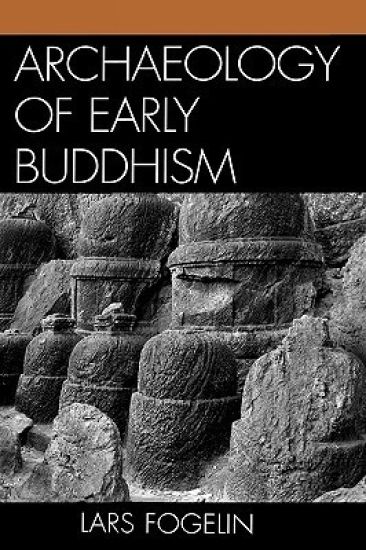
Archaeology of Early Buddhism

Archaeology of Early Buddhism

Lars Fogelin

AltaMira Press,U.S.
2006
sidottu
How do archaeologists explore the various dimensions of religion? Lars Fogelin uses archaeological work at Thotlakonda in Southern India as his lens in a broader examination of Buddhist monastic life. He discovers the tension between the desired isolation of the monastery and the mutual engagement with neighbors in the Early Historic Period. He also sketches how religious architectural design and use of landscape helped to shaped these relationships. Drawing on historical accounts, religious documents, and inscriptions, as well as results of his systematic archaeological survey, Fogelin is able to shed new light on the ritual and material workings of Early Buddhism in this region, and shows how archaeology can contribute to our understanding of religious practice.
Crossing Jordan

Crossing Jordan

Adrian Fogelin

Peachtree Publishers
2002
nidottu
Twelve-year-old Cassie's life is changed when Jemmie, a Black girl, and her family move in next door. Can she and Jemmie overcome family prejudice and cultural differences in a small, working-class town? Cass is dreading a long, lonely summer until Jemmie and her family move in next door. The only problem: their families don't want them socializing with each other and they have deeply help prejudices, exemplified by the fence Cassie's father builds between their two houses. Despite their parents' warnings, Cassie and Jemmie start communicating through a hole in the fence and find they share more similarities than differences. Mutual interests in reading and running draw them together, and their wariness of each other disappears. But when their parents find out about the burgeoning friendship, each girl is forbidden to see the other. A family crisis and celebration provide opportunities for the families to reach an understanding. With unforgettable characters, author Adrian Fogelin addresses the complex issues of bigotry and tolerance with sensitivity and intelligence, poignantly reminding readers of fences that too often separate us from one another.
Anna Casey's Place in the World

Anna Casey's Place in the World

Adrian Fogelin

Peachtree Publishers
2003
nidottu
How do you face life without a place to call home? Anna Casey is learning to deal with the loss of her family and adjust to living in a foster home with Miss Dupree. Feeling abandoned and alone, Anna turns to her closest companion, her explorer journal filled with drawn maps of her earlier neighborhoods and all the places that she has called home. Anna is determined to become part of a real family, and with the help of a scrawny new friend named Eb, an unconventional biology teacher in cowboy boots, a homeless Vietnam vet, and a motley crew of kids from the neighborhood, Anna discovers a sense of belonging...and her own place in the world. With warmth and humor, award-winning author Adrian Fogelin follows up her critically acclaimed novel Crossing Jordan with the story of a young girl's trials and triumphs as she tries to find a home.
The Big Nothing

The Big Nothing

Adrian Fogelin

Peachtree Publishers
2004
sidottu
Bored and restless after his brother joins the Army, his father leaves the family, and his best friend gets a new girlfriend, thirteen-year-old Justin feels alone in the world until he finds a new friend in Jemmie who, with the help of her grandmother, teaches him the power of expression through music.
My Brother's Hero

My Brother's Hero

Adrian Fogelin

Peachtree Publishers
2005
nidottu
An unexpected turn of events pushes Ben Floyd out of his normal small neighborhood routine, and into an unexpected appreciation for his old life.Ben Floyd has a lot on his mind. In only eighteen months he will be old enough to get a learner's permit to drive, but that seems like a lifetime away. Ben enjoys the close-knit group of friends in his small neighborhood, but lately he has been longing for a taste of adventure. Keeping an eye on his younger brother Cody is getting to be a big responsibility. And he is confused by complicated feelings he has for his lifelong friend, Cass.When the Floyd family ends up in the Florida Keys over Christmas vacation, Ben gains a welcome opportunity to escape his routines. He meets Mica, an independent, strong-willed girl who lives a nomadic life aboard a boat with her marine biologist father. Together Ben, Cody, and Mica explore the interior canals and coastal waterways, but Ben soon realizes that adventure sometimes brings danger, and that at the center of Mica's seemingly charmed life lies a mysterious loneliness.Young readers will relate to Ben's conflicting feelings and growing restlessness as they experience this realistic, thoughtful, and sometimes humorous portrait of adolescence by award-winning author Adrian Fogelin.
The Real Question

The Real Question

Adrian Fogelin

Peachtree Publishers
2006
sidottu
When Fisher tries to escape from the responsibilities of his overachieving life, he gains a new understanding of the dangers of neglecting his connections and commitments to others. For Fisher Brown, bearing responsibility for the well-being and happiness of the people around him is a heavy burden. Not long after his mother's sudden departure, Fisher lost interest in school. But now--under the strict supervision of his high school counselor father--he is jockeying for position at the top of his high school class. It's a challenging role, but as long as Fisher single-mindedly prepares for college and practices for the SATs, he can keep his father happy. When Fisher meets Lonnie Traynor, whose rootless, carefree existence is so markedly different from his own, he is drawn to his take-life-as-it-comes attitude. But Lonnie's footloose ways come with a long history of letting down the people he loves. As Fisher becomes an unwitting participant in Lonnie's hapless adventures, he begins to rethink what it means to be responsible for other people. Award-winning author Adrian Fogelin once again offers readers an emotionally charged story featuring a sympathetic adolescent trying to make sense of the people and world around him.