Kirjahaku
Etsi kirjoja tekijän nimen, kirjan nimen tai ISBN:n perusteella.
1000 tulosta hakusanalla Forrest Roth
In this dazzling collection of miniature tales and poetic prose, Forrest Roth presents six galleries of enigmatic humans drifting across great distances for our consideration, including a suburban neighbor cooking only beets to distract his dark impulses, a detached mother whose child vanishes in an art museum, a lonely Japanese man using his nose to sign letters to his married lover, and many more. Hovering over themes of nature, family, joy, desire and death, Skeletal Lights from Afar carries along the remnants of accidental lives, continuing their mysterious voyage towards a destination as yet unknown.In Skeletal Lights from Afar, Forrest Roth's language forms murmurations, each pulsing with interiorities of struggling narrators whose experiences unfold into one another, reflecting infinite impossibilities of a life lived in service of and service to. Roth asks us to think about our relationship to art, duty, the environment, love, strangers, music, and the frailty of human certainty. There are rumbles of Marcus' The Age of Wire and String and Dostoyevsky's Notes from Underground echoing with each strike of Roth's approach; it is as if the work exists in three spheres, the experience of the past, the relevance of the present, and the narrative methodology of a time not yet seen. Skeletal Lights from Afar is a bold artistic vision, one you may not be able to put down until you've read it to completion and begun again. - Duncan Barlow, author of A Dog Between Us and The City, AwakeDear Reader, you will never have read anything quite like the luminous Skeletal Lights from Afar, I can promise you that. Within these pieces, you are on a journey through startlingly fresh and exciting territory, which leads you through the natural world, the intellectual world, the small town, and the small room. Within these pieces there is humor and artfulness, but more than that even there is an examination of what it means to feel alone and observational in an ever crowded world. A master of voice, Roth's words become a ghost voice implanted in your psyche which remains long after you reach the end, offering you birds and flesh and bone. Indeed, they offer you the cycle of life, children climbing into bed between their parents to reclaim that shining moment of safety that is so fleeting to the last breath that awaits us all. - Myfanwy Collins, author of I Am Holding Your Hand and EcholocationReading this new book by Forrest Roth, I kept thinking, "Here is an original voice." Not exactly microfictions or prose poems, they blur those distinctions with meditation and observation and intellect, yet retain movement enough to sustain the tension of story. Forrest Roth has produced an accessible, yet challenging collection that will find an audience. - Gary Fincke, author of The Corridors of Longing and The SorrowsEach of these magnificently strange pieces is a world in itself. Together they create a shimmering matrix of expression, insistent as a dream that won't let go. - Dawn Raffel, author of The Strange Case of Dr. Couney and In the Year of Long Division
The Forest Charmer a Dictionary of Verse is about ethics, science, war and love. There are poems on ethics, and on the theme of the value of life.

Stratification of a tropical forest as seen in dispersal types
Ingrid Roth
Kluwer Academic Publishers
1987
sidottu
Our knowledge of the structure and dispersal of "Plants, seeds and currents" in the Westindies tropical fruits and seeds is very limited up to the and Azores. Van der Pijl with his extensive know present day, though richness of species and variety ledge of tropical plants offers a great selection of of forms is overwhelming in the tropical forests. detailed information on the subject" Principles of Morphology of tropical fruits and seeds has always dispersal in higher plants" (1972, and earlier pa of botanists from many pers). The author who has earned most merits in attracted the curiosity countries and information may be obtained from the field of seed and fruit predation, chemical defenses of plants, and animal-plant interactions is books and publications concerned with taxonomy. Ulbrich's "Biologie der Friichte und Samen" Janzen. He and his collaborators have thrown new of tropical fruits and seeds (1928) gives examples light on this subject. Nonetheless, a large unknown and their dispersal methods. The two volumes by field still remains ahead of us, especially regarding Van der Roosmalen (1977) dealing with the de a detailed knowledge of fruit and seed dispersal of scription of tropical plants were of utmost value to tropical plant species. me, as the area considered, Surinam, is close to The great opportunity for my own studies was Venezuelan Guiana and because both regions have the fruit and seed collection of Dr.

Our knowledge of the structure and dispersal of "Plants, seeds and currents" in the Westindies tropical fruits and seeds is very limited up to the and Azores. Van der Pijl with his extensive know present day, though richness of species and variety ledge of tropical plants offers a great selection of of forms is overwhelming in the tropical forests. detailed information on the subject" Principles of Morphology of tropical fruits and seeds has always dispersal in higher plants" (1972, and earlier pa of botanists from many pers). The author who has earned most merits in attracted the curiosity countries and information may be obtained from the field of seed and fruit predation, chemical defenses of plants, and animal-plant interactions is books and publications concerned with taxonomy. Ulbrich's "Biologie der Friichte und Samen" Janzen. He and his collaborators have thrown new of tropical fruits and seeds (1928) gives examples light on this subject. Nonetheless, a large unknown and their dispersal methods. The two volumes by field still remains ahead of us, especially regarding Van der Roosmalen (1977) dealing with the de a detailed knowledge of fruit and seed dispersal of scription of tropical plants were of utmost value to tropical plant species. me, as the area considered, Surinam, is close to The great opportunity for my own studies was Venezuelan Guiana and because both regions have the fruit and seed collection of Dr.

Bialowieza Primeval Forest: Nature and Culture in the Nineteenth Century
Tomasz Samojlik; Anastasia Fedotova; Piotr Daszkiewicz; Ian D. Rotherham
Springer Nature Switzerland AG
2020
sidottu
Understanding the current state and dynamics of any forest is extremely difficult - if not impossible - without recognizing its history. Bialowieza Primeval Forest (BPF), located on the border between Poland and Belarus, is one of the best preserved European lowland forests and a subject of myriads of works focusing on countless aspects of its biology, ecology, management. BPF was protected for centuries (15th-18th century) as a game reserve of Polish kings and Lithuanian grand dukes. Being, at that time, a part of the Grand Duchy of Lithuania, BPF was subject to long-lasting traditional, multi-functional utilisation characteristic for this part of Europe, including haymaking on forest meadows, traditional bee-keeping and fishing in rivers flowing through forest. This traditional model of management came to an abrupt end due to political change in 1795, when Poland and Grand Duchy of Lithuania ceased to exist in effect of partitioning by neighbouring countries, and the territory ofBPF was taken over by the Russian Empire. The new Russian administration, influenced by the German trends in forestry, attempted at introducing the new, science-based forestry model in the BPF throughout the 19th century. The entire 19th century in the history of BPF is a story of struggle between new trends and concepts brought and implemented by new rulers of the land, and the traditional perception of the forest and forest uses, culturally rooted in this area and originating from mediaeval (or older) practices.The book will show the historical background and the outcome of this struggle: the forest’s history in the long 19th century focusing on tracking all cultural imprints, both material (artificial landscapes, introduced alien species, human-induced processes) and immaterial (traditional knowledge of forest and use of forest resources, the political and cultural significance of the forest) that shaped the forest’s current state and picture. Our book will deliver a pictureof a crucial moment in forest history, relevant not only to the Central Europe, but to the continent in general. Moment of transition between a royal hunting ground, traditional type of use widespread throughout Europe, to a modern, managed forest. Looking at main obstacles in the management shift, the essential difference in perceptions of the forest and goods it provides in both modes of management, and the implications of the management change for the state of BPF in the long 19th century could help in better understanding the changes that European forests underwent in general.
Bialowieza Primeval Forest: Nature and Culture in the Nineteenth Century
Tomasz Samojlik; Anastasia Fedotova; Piotr Daszkiewicz; Ian D. Rotherham
Springer Nature Switzerland AG
2021
nidottu
Understanding the current state and dynamics of any forest is extremely difficult - if not impossible - without recognizing its history. Bialowieza Primeval Forest (BPF), located on the border between Poland and Belarus, is one of the best preserved European lowland forests and a subject of myriads of works focusing on countless aspects of its biology, ecology, management. BPF was protected for centuries (15th-18th century) as a game reserve of Polish kings and Lithuanian grand dukes. Being, at that time, a part of the Grand Duchy of Lithuania, BPF was subject to long-lasting traditional, multi-functional utilisation characteristic for this part of Europe, including haymaking on forest meadows, traditional bee-keeping and fishing in rivers flowing through forest. This traditional model of management came to an abrupt end due to political change in 1795, when Poland and Grand Duchy of Lithuania ceased to exist in effect of partitioning by neighbouring countries, and the territory ofBPF was taken over by the Russian Empire. The new Russian administration, influenced by the German trends in forestry, attempted at introducing the new, science-based forestry model in the BPF throughout the 19th century. The entire 19th century in the history of BPF is a story of struggle between new trends and concepts brought and implemented by new rulers of the land, and the traditional perception of the forest and forest uses, culturally rooted in this area and originating from mediaeval (or older) practices.The book will show the historical background and the outcome of this struggle: the forest’s history in the long 19th century focusing on tracking all cultural imprints, both material (artificial landscapes, introduced alien species, human-induced processes) and immaterial (traditional knowledge of forest and use of forest resources, the political and cultural significance of the forest) that shaped the forest’s current state and picture. Our book will deliver a pictureof a crucial moment in forest history, relevant not only to the Central Europe, but to the continent in general. Moment of transition between a royal hunting ground, traditional type of use widespread throughout Europe, to a modern, managed forest. Looking at main obstacles in the management shift, the essential difference in perceptions of the forest and goods it provides in both modes of management, and the implications of the management change for the state of BPF in the long 19th century could help in better understanding the changes that European forests underwent in general.
The modern classic that inspired the beloved movie starring Tom Hanks. Six foot six, 242 pounds, and possessed of a scant IQ of 70, Forrest Gump is the lovable, surprisingly savvy hero of this classic comic tale. His early life may seem inauspicious, but when the University of Alabama's football team drafts Forrest and makes him a star, it sets him on an unbelievable path that will transform him from Vietnam hero to world-class Ping-Pong player, from wrestler to entrepreneur. With a voice all his own, Forrest is telling all in a madcap romp through three decades of American history.

At 6'6", 240 pounds, Forrest Gump is a difficult man to ignore, so follow Forrest from the football dynasties of Bear Bryant to the Vietnam War, from encounters with Presidents Johnson and Nixon to powwows with Chairman Mao.
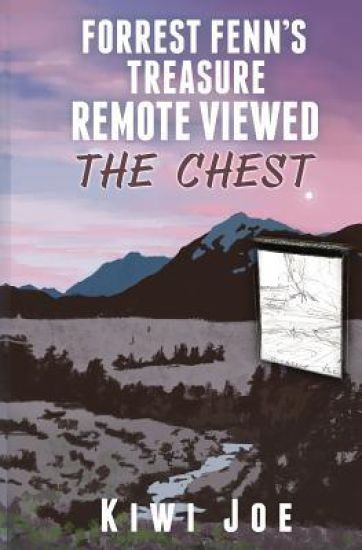
Important update: Forrest Fenn has confirmed to the Santa Fe New Mexican the treasure chest has been found (reported June 07, 2020). Well done, 'Back East' Kiwi Joe I am a remote viewer tasked to help a client find Forrest Fenn's treasure chest. I have for some time been looking for a popular mystery to demonstrate the power of remote viewing. Forrest Fenn's treasure hunt is perfect for the project, and with the agreement of my client, I have released a two-book series using the session work I completed for myself. The detailed remote viewing maps and accompanying data I share are significant. This first book alone might be enough to provide you with the last piece of the puzzle you need to crack Forrest Fenn's cryptic clues. It will certainly help you to verify your solutions and strategies, and should also help you to rethink them. Inside, you will find answers to critical questions you might not have thought to ask yourself. You learn how Mr. Fenn hid the chest at the site and how to find the hiding place once you are close enough to throw a rock at it. I include a bird's eye view of the immediate area to help those of you thinking of using a drone. As a bonus, I give you a peek inside the chest. The book includes 16 full-page illustrations from five remote view sessions, together with my analysis of the data and conclusions. Additionally, there's a resource list that includes literature as well as online sources for both treasure hunters and remote viewers. The book is divided into two parts with all illustrations included in the second part. NB: Remote Viewing uses an ESP ability found in all of us to view a distant or unseen object by means of a disciplined approach originally developed under the auspices of the Defence Intelligence Agency (DIA) and the Stanford Research Institute (SRI) in the 1970s. You can find my contact details in the back of the books if you have any questions or suggestions for me. If you find the chest, please send me an email and attach photos of the area, and also the chest in the original place and state you found it, that's if you have the presence of mind at the time... I will publish your photos next to the relevant session drawings in a revised version of the book along with full acknowledgement of you as the source of the pics. Most Secret Weapons of Nations Remote Viewed is now available to pre-order
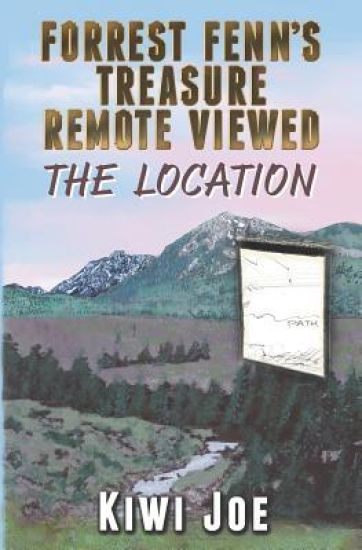
Important update: Forrest Fenn has confirmed to the Santa Fe New Mexican the treasure chest has been found (reported June 07, 2020). Well done, 'Back East' Kiwi Joe Book II in the two-book series shows the results of 7 remote viewing sessions that targeted the location of Forrest Fenn's treasure chest. The many illustrations and other collected information will help you to verify strategies and rethink them where necessary. You may well find answers to critical questions you have not have yet considered. I show you the meaning of two important clues in the poem, and the site of the hiding place in more than a 1-and-a-half-mile radius of the local terrain. I include bird's-eye views, and from much higher. Finally, I show you how the data point to the specific region where the chest is hidden. Both the Kindle and paperback version include 24 full-page illustrations together with my analysis of the data and conclusions. I also include a resource list of literature and links to online sources for both treasure hunters and remote viewers. Remote Viewing uses an ESP ability found in all of us to view a distant or unseen object by means of a disciplined approach originally developed under the auspices of the Defence Intelligence Agency (DIA) and the Stanford Research Institute (SRI) in the 1970s. You can find my contact details in the back of the books if you have any questions or suggestions for me. If you find the chest, please send me an email and attach photos of the area, and also the chest in the original place and state you found it, that's if you have the presence of mind at the time... I will publish your photos next to the relevant session drawings in a revised version of the book along with full acknowledgement of you as the source of the pics. Most Secret Weapons of Nations Remote Viewed is now available to pre-order