Kirjojen hintavertailu. Mukana 11 699 587 kirjaa ja 12 kauppaa.

Kirjahaku

Etsi kirjoja tekijän nimen, kirjan nimen tai ISBN:n perusteella.

1000 tulosta hakusanalla Francis Bacon

Francis Bacon

Francis Bacon

Mark Stevens; Annalyn Swan

HARPERCOLLINS PUBLISHERS
2022
pokkari
The Times Art Book of the Year 2021 'Must surely be the definitive life of Francis Bacon ... A biography that no Bacon fan - or indeed foe - can afford to overlook ... Mesmerising' THE TIMES 'A magnificent triumph ... I was captivated by every line' OBSERVER
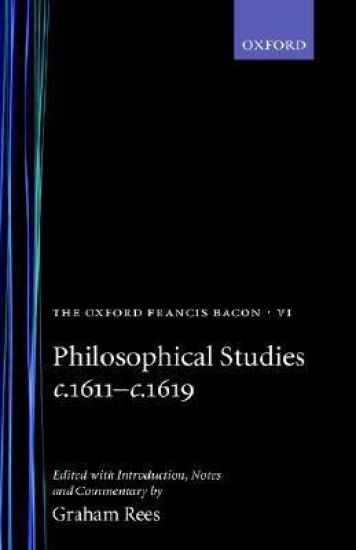
The Oxford Francis Bacon VI

The Oxford Francis Bacon VI

Francis Bacon

Clarendon Press
1996
sidottu
This volume inaugurates a new critical edition of the writings of the great English philosopher and sage Francis Bacon (1561-1626) - the first such complete edition for more than a hundred years. It contains six of Bacon's Latin scientific works, each accompanied by entirely new facing-page translations which, together with the extensive introduction and commentaries, offer fresh insights into one of the great minds of the early seventeenth century.
The Oxford Francis Bacon IV

The Oxford Francis Bacon IV

Francis Bacon

Clarendon Press
2000
sidottu
This is the first critical edition since the nineteenth century of Bacon's principal philosophical work in English, The Twoo Bookes of Francis Bacon. Of the proficience and advancement of Learning, divine and humane - traditionally known as The Advancement of Learning.
The Oxford Francis Bacon XIII

The Oxford Francis Bacon XIII

Francis Bacon

Clarendon Press
2000
sidottu
This volume belongs to the first new critical edition of the works of Francis Bacon (1561-1626) to have been produced since the nineteenth century. The edition presents the works in broadly chronological order and according to the best principles of modern textual scholarship. The seven works in the present volume belong to the final completed stages (Parts III-V) of Bacon's hugely ambitious six-part sequence of philosophical works, collectively entitled Instauratio magna (1620-6). All are presented in the original Latin with new facing-page translations. Three of the seven texts (substantial works in two cases, and all sharing a startlingly improbable textual history) are published and translated here for the first time: these are an early version of the Historia densi, the 'lost' Abecedarium, and the Historia de animato & inanimato. Another - the Prodromi sive anticipationes philosophiae secundae - has likewise never been translated before. Together with their commentaries and the introduction they open the way to important new understandings of Bacon's mature philosophical thought.
The Oxford Francis Bacon XV

The Oxford Francis Bacon XV

Francis Bacon

Clarendon Press
2000
sidottu
Bacon's essays reflect the experience and wide reading of a Renaissance man - philosopher, historian, judge, politician, adviser to the Prince - above all, astute observer of human nature. With uncompromising candour, he exposes man as he is, not as he ought to be, examining such givens of Renaissance power as negotiating for position, expediting a personal suit, speaking effectively, and the role of dissimulation in social and political situations. He scrutinizes judicial prerogatives and probes the causes and dangers of atheism and superstition. Even such topics as boldness or love or deformity have a practical bent. In Bacon's own phrase, these essays 'come home to Mens Businesse and Bosomes.' It is especially through their matchless style that they come home–with imaginative vigour, concrete language, and the colloquial force of individual sentences. An introduction places the essays in their original context, examines their evolution over Bacon's lifetime, and elucidates their form and prose style; a commentary examines his sources and relates essays to his other writings; a glossary and index are also included.
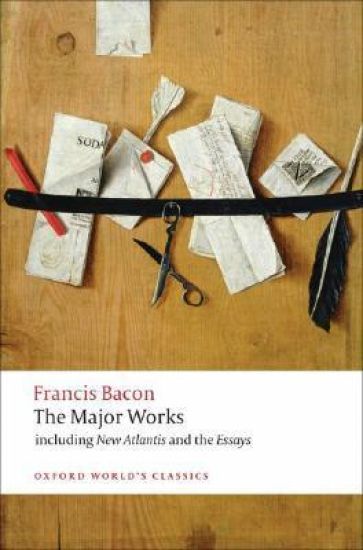
Francis Bacon

Francis Bacon

Francis Bacon

Oxford University Press
2008
nidottu
This authoritative edition was originally published in the acclaimed Oxford Authors series under the general editorship of Frank Kermode. It brings together an extensive collection of Bacon's writing - the major prose in full, together with sixteen other pieces not otherwise available - to give the essence of his work and thinking. Although he had a distinguished career as a lawyer and statesman, Francis Bacon's lifelong goal was to improve and extend human knowledge. In The Advancement of Learning (1605) he made a brilliant critique of the deficiencies of previous systems of thought and proposed improvements to knowledge in every area of human life. He conceived the Essays (1597, much enlarged in 1625) as a study of the formative influences on human behaviour, psychological and social. In The New Atlantis (1626) he outlined his plan for a scientific research institute in the form of a Utopian fable. In addition to these major English works this edition includes 'Of Tribute', an important early work here printed complete for the first time, and a revealing selection of his legal and political writings, together with his poetry. A special feature of the edition is its extensive annotation which identifies Bacon's sources and allusions, and glosses his vocabulary. ABOUT THE SERIES: For over 100 years Oxford World's Classics has made available the widest range of literature from around the globe. Each affordable volume reflects Oxford's commitment to scholarship, providing the most accurate text plus a wealth of other valuable features, including expert introductions by leading authorities, helpful notes to clarify the text, up-to-date bibliographies for further study, and much more.
Francis Bacon

Francis Bacon

Mathews Nieves

Yale University Press
1996
sidottu
Beyond his own country Francis Bacon is remembered as a great man, founder of modern science and philosophy, a just judge and a teacher of kings. In England and America, however, he is more commonly seen as a cruel, corrupt and power-hungry politician. Which appraisal is correct? In this re-evaluation of one of Britain's most significant figures, Nieves Mathews examines the charges against Bacon and reveals how distorted facts can be recast as historical truths. In 1621 Bacon fell from power as Lord Chancellor, the highest position in the land. Charged with accepting bribes, he was convicted, fined, imprisoned and exiled from the Court. He died five years later, disgraced and deeply in debt. In this study of the Jacobean administration - a system which depended on corruption at every level - Nieves Mathews shows Bacon to have been among the least tainted of the king's officials, the scapegoat in a political conspiracy aimed at dislodging the royal favourite. The destruction of Bacon's reputation followed Thomas Babington Macaulay's eloquent "Essay on Bacon", published in 1837. Macaulay's depiction launched a search among Bacon's biographers for evidence of malice and corruption. Now Nieves Mathews in her reaappraisal portrays a man both single-minded and fallible, with qualities and flaws.
Francis Bacon

Francis Bacon

Michael Peppiatt

Routledge
2019
sidottu
This book, a biography on Francis Bacon, is inspired by the friendship the author had with Bacon and based on records of the conversations that took place since 1963. The book forms the first comprehensive account of the artist's life and his work.
Francis Bacon

Francis Bacon

Michael Peppiatt

Routledge
2020
nidottu
This book, a biography on Francis Bacon, is inspired by the friendship the author had with Bacon and based on records of the conversations that took place since 1963. The book forms the first comprehensive account of the artist's life and his work.
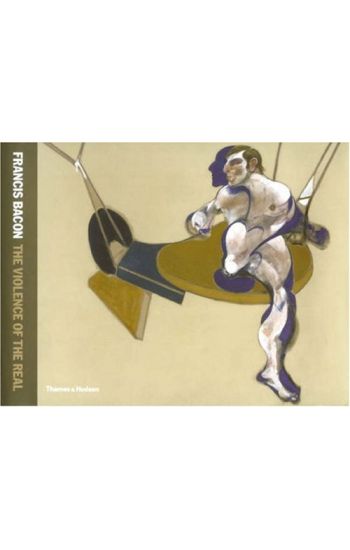
Francis Bacon

Francis Bacon

Thames Hudson Ltd
2006
sidottu
Francis Bacon (1909–1992) was renowned for his dramatic depictions of the human form; he portrayed the ordeal of the vulnerable, defencelessly exposed body like no other artist of his generation. At the centre of this volume are about sixty of Bacon’s disturbing yet captivating studies of the human figure, encompassing works from the late 1940s until his death. Texts by a range of experts on the artist offer new insights into these radical and often discomfiting images, so brilliantly reproduced on the pages of this book.
Francis Bacon

Francis Bacon

Thames Hudson Ltd
2015
nidottu
Francis Bacon (1909-1992) was one of the great figurative painters of the twentieth century. This book, newly available in paperback, provides a thorough account of the life and work of this complex and conflicted artist, whose paintings retain their visceral impact and relevance today. Essays by international scholars provide new insights into Bacon's art and life, and some fifty art works from every decade of his career – from the pensive and shocking works of the 1940's to the exuberantly coloured and visceral large paintings of the 1970s and 80's – show Bacon' unique representations of the human body through his mastery of paint. Over 150 additional illustrations portray his studio, friends and lovers, and reveal the diversity of his source materials, from Velázquez to the motion photos of Eadweard Muybridge.
Francis Bacon

Francis Bacon

Brian Harvey Goodwin Wormald

Cambridge University Press
2006
pokkari
In the centuries since his death, Francis Bacon has been perceived as a promoter and prophet of 'natural science'. Certainly Bacon expected to fill the vacuum which he saw existing in the study of nature; but he also saw himself as a clarifier and promoter of what he called 'policy', that is, the study and improvement of the structure and function of civil states including the then new British state. In this major study, Brian Wormald's first since his work on Clarendon, Bacon is shown resolving this conflict by attending assiduously to both fields, arguing that work on one would help progress in the other. In his teaching, in his practice and in terms of what was actually achieved, the junction between the two enterprises was affected by Bacon's work in history - civil and natural. In this fundamental reappraisal of one of the most complex and innovative figures of the age, Brian Wormald reveals how Bacon's conception and practice of history provided an answer to his strivings in both policy and natural philosophy.
Francis Bacon

Francis Bacon

Brian Harvey Goodwin Wormald

Cambridge University Press
1993
sidottu
In the centuries since his death, Francis Bacon has been perceived as a promoter and prophet of ‘natural science’. Certainly Bacon expected to fill the vacuum which he saw existing in the study of nature; but he also saw himself as a clarifier and promoter of what he called ‘policy’, that is, the study and improvement of the structure and function of civil states including the then new British state. In this major new study, Brian Wormald’s first since his work on Clarendon, Bacon is shown resolving this conflict by attending assiduously to both fields, arguing that work on one would help progress in the other. In his teaching, in his practice, and in terms of what was actually achieved, the junction between the two enterprises was affected by Bacon’s work in history - civil and natural. In this fundamental reappraisal of one of the most complex and innovative figures of the age, Brian Wormald reveals how Bacon’s conception and practice of history provided an answer to his strivings in both policy and natural philosophy.
Francis Bacon: The New Organon

Francis Bacon: The New Organon

Francis Bacon

Cambridge University Press
2000
sidottu
When the New Organon appeared in 1620, part of a six-part programme of scientific inquiry entitled 'The Great Renewal of Learning', Francis Bacon was at the high point of his political career, and his ambitious work was groundbreaking in its attempt to give formal philosophical shape to a new and rapidly emerging experimentally-based science. Bacon combines theoretical scientific epistemology with examples from applied science, examining phenomena as various as magnetism, gravity, and the ebb and flow of the tides, and anticipating later experimental work by Robert Boyle and others. His work challenges the entire edifice of the philosophy and learning of his time, and has left its mark on all subsequent philosophical discussions of scientific method. This volume presents a new translation of the text into modern English by Michael Silverthorne, and an introduction by Lisa Jardine that sets the work in the context of Bacon's scientific and philosophical activities.
Francis Bacon: The New Organon

Francis Bacon: The New Organon

Bacon Francis

Cambridge University Press
2000
pokkari
When the New Organon appeared in 1620, part of a six-part programme of scientific inquiry entitled ‘The Great Renewal of Learning’, Francis Bacon was at the high point of his political career, and his ambitious work was groundbreaking in its attempt to give formal philosophical shape to a new and rapidly emerging experimentally-based science. Bacon combines theoretical scientific epistemology with examples from applied science, examining phenomena as various as magnetism, gravity, and the ebb and flow of the tides, and anticipating later experimental work by Robert Boyle and others. His work challenges the entire edifice of the philosophy and learning of his time, and has left its mark on all subsequent philosophical discussions of scientific method. This volume presents a new translation of the text into modern English by Michael Silverthorne, and an introduction by Lisa Jardine that sets the work in the context of Bacon’s scientific and philosophical activities.
Francis Bacon

Francis Bacon

Christine Leonard; Sara Lee Langsam

Amerissis Press
2021
pokkari
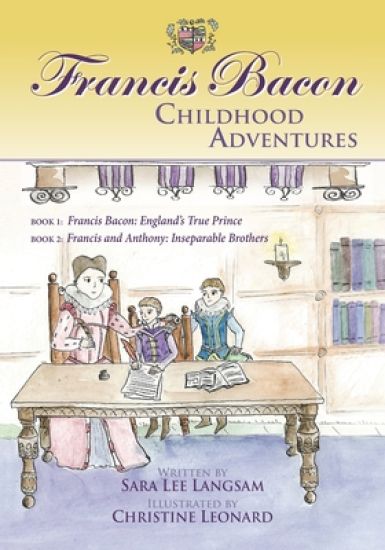
Join the Bacon brothers in their childhood adventures in 16th century England. Francis Bacon and his older brother Anthony grow up in a loving household and become inseparable in their everyday activities. Watch how Francis is so curious that he wants to know all there is to know in the whole wide world. What are you curious about? What would you like to know? With whom would you share it?Francis and Anthony spend many happy hours standing by the river's edge watching the boats move slowly downstream. They also enjoy watching many workers building their new home on a beautiful country estate outside of St. Albans.
Francis Bacon

Francis Bacon

Perez Zagorin

Princeton University Press
1999
pokkari
Francis Bacon (1561-1626), commonly regarded as one of the founders of the Scientific Revolution, exerted a powerful influence on the intellectual development of the modern world. He also led a remarkably varied and dramatic life as a philosopher, writer, lawyer, courtier, and statesman. Although there has been much recent scholarship on individual aspects of Bacon's career, Perez Zagorin's is the first work in many years to present a comprehensive account of the entire sweep of his thought and its enduring influence. Combining keen scholarly and psychological insights, Zagorin reveals Bacon as a man of genius, deep paradoxes, and pronounced flaws. The book begins by sketching Bacon's complex personality and troubled public career. Zagorin shows that, despite his idealistic philosophy and rare intellectual gifts, Bacon's political life was marked by continual careerism in his efforts to achieve advancement. He follows Bacon's rise at court and describes his removal from his office as England's highest judge for taking bribes. Zagorin then examines Bacon's philosophy and theory of science in connection with his project for the promotion of scientific progress, which he called "The Great Instauration." He shows how Bacon's critical empiricism and attempt to develop a new method of discovery made a seminal contribution to the growth of science. He demonstrates Bacon's historic importance as a prophetic thinker, who, at the edge of the modern era, predicted that science would be used to prolong life, cure diseases, invent new materials, and create new weapons of destruction. Finally, the book examines Bacon's writings on such subjects as morals, politics, language, rhetoric, law, and history. Zagorin shows that Bacon was one of the great legal theorists of his day, an influential philosopher of language, and a penetrating historian. Clearly and beautifully written, the book brings out the richness, scope, and greatness of Bacon's work and draws together the many, colorful threads of an extraordinarily brilliant and many-sided mind.