Kirjahaku
Etsi kirjoja tekijän nimen, kirjan nimen tai ISBN:n perusteella.
1000 tulosta hakusanalla Friedman Lester D.
Bonnie and Clyde (Arthur Penn, 1967) changed American cinema, reinvigorating the gangster genre with European, New Wave techniques and radically candid view of sex and violence.
This work presents an insight into the 1967 film "Bonnie and Clyde". The film is said to have changed American cinema, reinvigorating the gangster genre with European, New Wave techniques and a radically candid view of sex and violence.
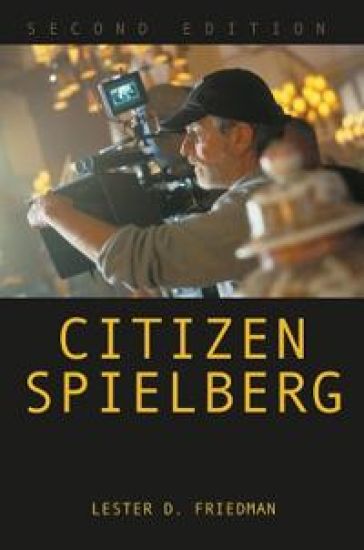
Steven Spielberg's extraordinary career redefined Hollywood, but his achievement goes far beyond shattered box office records. Rejecting the view of Spielberg as a Barnumesque purveyor of spectacle, Lester D. Friedman presents the filmmaker as a major artist who pairs an ongoing willingness to challenge himself with a widely recognized technical mastery. This new edition of Citizen Spielberg expands Friedman's original analysis to include films of the 2010s like Lincoln and Ready Player One. Breaking down the works by genre, Friedman looks at essential aspects of Spielberg's art, from his storytelling concerns and worldview to the uncanny connection with audiences that has powered his longtime influence as a cultural force. Friedman's examination reveals a sustained artistic vision--a vision that shows no sign of exhausting itself or audiences after Spielberg's nearly fifty years as a high-profile filmmaker. Incisive and discerning, Citizen Spielberg offers a career-spanning appraisal of a moviemaking icon.
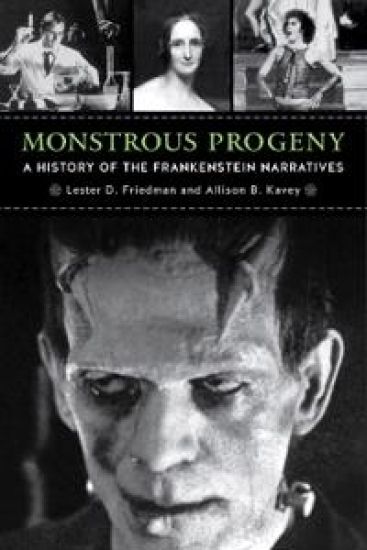
Mary Shelley’s 1818 novel Frankenstein is its own type of monster mythos that will not die, a corpus whose parts keep getting harvested to animate new artistic creations. What makes this tale so adaptable and so resilient that, nearly 200 years later, it remains vitally relevant in a culture radically different from the one that spawned its birth? Monstrous Progeny takes readers on a fascinating exploration of the Frankenstein family tree, tracing the literary and intellectual roots of Shelley’s novel from the sixteenth century and analyzing the evolution of the book’s figures and themes into modern productions that range from children’s cartoons to pornography. Along the way, media scholar Lester D. Friedman and historian Allison B. Kavey examine the adaptation and evolution of Victor Frankenstein and his monster across different genres and in different eras. In doing so, they demonstrate how Shelley’s tale and its characters continue to provide crucial reference points for current debates about bioethics, artificial intelligence, cyborg lifeforms, and the limits of scientific progress. Blending an extensive historical overview with a detailed analysis of key texts, the authors reveal how the Frankenstein legacy arose from a series of fluid intellectual contexts and continues to pulsate through an extraordinary body of media products. Both thought-provoking and entertaining, Monstrous Progeny offers a lively look at an undying and significant cultural phenomenon.
From Rocky to Field of Dreams, sports movies are among the most beloved of American films. Revolving around familiar narratives like the underdog story, these movies have generated modern-day legends, reinforcing and disseminating our national myths about the American Dream. In Sports Movies, Lester D. Friedman describes the traditional formulas that have made these movies such crowd-pleasers, including stock figures like the disgraced athlete on a quest for redemption, or the wise old coaches who help mentor the heroes to victory. He also explores how the genre’s attitudes have changed over time, especially in key issues like class, race, masculinity, and women in sports. Along the way, he takes stock of sports films from the dawn of cinema’s silent era to the present day, including classic baseball movies like Pride of the Yankees and Bull Durham, basketball movies like Hoosiers and He’s Got Game, football movies like Friday Night Lights and Rudy, and boxing movies like Raging Bull and Million Dollar Baby. As Friedman’s analyses reveal, not only do sports movies influence our perceptions about the drama of real-life sports, but they also help to shape our attitudes toward the competitive ethos in American life.
Hitting the Right Notes: Film Directors and Composers in Harmony is a unique, multi-disciplinary volume co-authored by scholars from both media studies and music theory. The book features a chronological and systematic approach that concentrates on analyzing representative scenes from a broad spectrum of mainstream movies as exemplars. With a distinctive focus on versatile analytical tools from film studies, music cognition, and music theory, each chapter supplies background on the time period, director, composer, and their working relationship, then a close reading incorporates both visual analysis and musical elements beyond pitch and harmony. Robust yet accessible, Hitting the Right Notes highlights up-to-date ways of understanding film music, directly demonstrates their application across eras and genres, and displays the artistic magic directors and composers create together. It is essential reading for those interested in film and music.
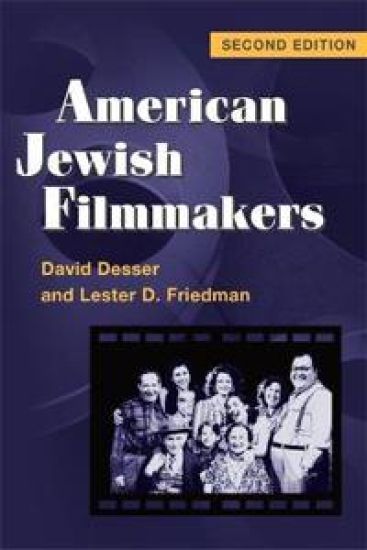
American Jewish Filmmakers
David Desser; Lester D. Friedman
University of Illinois Press
2003
nidottu
Woody Allen, Mel Brooks, Sidney Lumet, and Paul Mazursky, all sons of East European Jews, remain among the most prominent contemporary American film directors. In this revised, updated second edition of American Jewish Filmmakers, David Desser and Lester D. Friedman demonstrate how the Jewish experience gives rise to an intimately linked series of issues in the films of these and other significant Jewish directors. The effects of the Holocaust linger, both in gripping dramatic form (Mazursky's Enemies, a Love Story) and in black comedy (Brooks's The Producers). In his trilogy consisting of Serpico, Prince of the City, and Q&A, Lumet focuses on the failure of society's institutions to deliver social justice. Woody Allen portrays urban life and family relationships (Manhattan and Hannah and Her Sisters), sometimes with a nostalgic twist (Radio Days). This edition concludes with a newly written discussion of the careers of other prominent Jewish filmmakers such as Steven Spielberg, Barry Levinson, Brian Singer, and Darren Aronofsky.
An Introduction to Film Genres
Lester Friedman; David Desser; Sarah Kozloff; Martha Nochimson; Stephen Prince

WW Norton Co
2013
nidottu
An Introduction to Film Genres, written by leading film scholars specifically for undergraduates who are new to the study of film, provides an introduction that helps students see thirteen film genres in a new light---to help them identify the themes, iconography, and distinctive stylistic traits of each genre.
Fires Were Started – British Cinema and Thatcherism 2e
Lester Friedman
Wallflower Press
2007
sidottu
Photonics Rules of Thumb
John Lester Miller; Edward J. Friedman; John N. Sanders-Reed; Katie Schwertz; Brian K. McComas
SPIE Press
2020
nidottu
Updated and expanded, the third edition of Photonics Rules of Thumb represents an evolving, idiosyncratic, and eclectic toolbox intended to allow any engineer, scientist, manager, marketeer, or technician (regardless of specialty) to make rapid and accurate guesses at solutions in a wide range of topics during system design, modeling, or fabrication. This book will help any electro-optics team to make quick assessments, generally requiring no more than a calculator, so that they can quickly find the right solution for a design problem.This book has been assembled to introduce anyone working in the optics and photonics community to a wide range of critical topics through simple calculations, graphics, equations, and explanations. Useful design principles and rules, simple-to-implement calculations, and numerous graphs and tables of important basic information allow you to rapidly pinpoint trouble spots, ask the right questions at meetings, and are perfect for quick checks of last-minute specifications or performance feature additions. Offering a convenient arrangement according to specialty, this unique reference spans the spectrum of photonics. Eighteen chapters cover optics, atmospherics, radiometry, focal plane arrays, degraded visual environments, economics, and photogrammetry, as well as technologies related to security and surveillance systems, infrared, lasers, electro-optics, phenomenologies, self-driving vehicles, and many others.
Eggbert: Cartoons by LAF
Judi Quelland; Lester a. Friedman
Createspace Independent Publishing Platform
2010
nidottu
HE'S BACK and just as mischievous as ever as Eggbert and his twin Eggberta are brought back to amuse expectant moms and those who love them. This time, Eggbert's wonderful cartoons are included in a DIARY that the Mom-to-Be can use to record all the things she is feeling and experiencing during a wondrous time while awaiting the birth of her baby. Eggbert's wit and wisdom will keep you laughing through your entire pregnancy.
A Storybook Alphabet: Original rhymes and silhouettes from well-known tales, one for each letter of the alphabet, plus a bonus Draw and Tell Story
Barbara Freedman-De Vito
Independently Published
2019
nidottu
Math for the Very Young
Lydia Polonsky; Dorothy Freedman; Susan Lesher; Kate Morrison
John Wiley Sons Inc
1995
nidottu
Four experienced teachers, who have written math curricular materials for the University of Chicago School Mathematics Project, present a comprehensive collection of innovative and fun activities easy enough for even the most math-phobic parents. Covers all math concepts appropriate for children ages 3-7 including measurement, counting, telling time and temperature, comparisons, arrays, shapes and patterns. Organized by type of activity such as cooking, taking a trip, playing games and making crafts.
Edwin H. Friedman has woven 24 illustrative tales that offer fresh perspectives on familiar human foibles and reflect the author's humor, pathos, and understanding. Friedman takes on resistance and other "demons" to show that neither insight, nor encouragement, nor intimidation can in themselves motivate an unmotivated person to change. These tales playfully demonstrate that new ideas, new questions, and imagination, more than accepted wisdom, provide each of us with the keys to overcoming stubborn emotional barriers and facilitating real change both in ourselves and others. Thought-provoking discussion questions for each fable are included. See also the downloadable audiobook, Friedman's Fables: Favorites Read by the Author, featuring 15 of the tales narrated in Dr. Friedman's inimitable style.
Friedman Papers 2019
Connor Court Publishing Pty Ltd
2019
pokkari
The Friedman Papers is a selection of essays, book chapters and op-eds from a handpicked selection of our top ALS Friedman Conference speakers, and covers a diverse range of topics from basic libertarian principles to taxation, economics and psychology.
The Friedman House is a modernist icon, designed by Frederic Lasserre, founder of the UBC School of Architecture, and landscaped by Cornelia Oberlander. Faced with demolition, it was saved by purchasers who understood its architectural value and historical significance. This book reflects on the possibility of its destruction, remarking on what has been salvaged by its continued existence, and what could have potentially been lost.