Kirjojen hintavertailu. Mukana 12 390 323 kirjaa ja 12 kauppaa.

Kirjahaku

Etsi kirjoja tekijän nimen, kirjan nimen tai ISBN:n perusteella.

1000 tulosta hakusanalla Fry Roger

The Last Lectures by Roger Fry

The Last Lectures by Roger Fry

Fry Roger

Cambridge University Press
2015
pokkari
Originally published in 1939, this book contains a series of unfinished lectures written by Roger Fry, the Slade Professor of Fine Arts at the University of Cambridge. Fry's lectures cover a wide range of artistic styles, from the art of Ancient Greece and Egypt to American and Chinese art, as well as a review of art history as an academic study. The text is accompanied by over three hundred photographic plates of many important artworks. This book will be of value to anyone with an interest in art history.
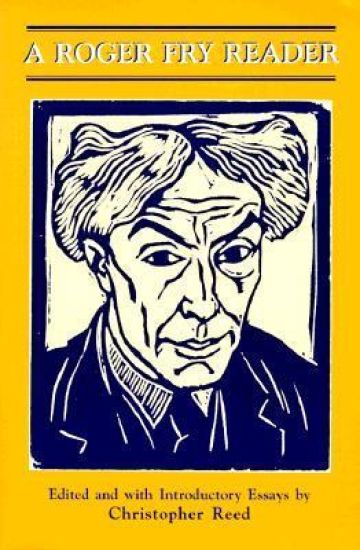
A Roger Fry Reader

A Roger Fry Reader

Roger Fry

University of Chicago Press
1996
nidottu
In the first decades of the 20th century, the art critic Roger Fry introduced English-speaking audiences to modern French art and formalist aesthetic theory. this text, edited by Christopher Reed, brings together for the first time a comprehensive selection of Fry's essays. Most appear here for the first time since their original publication in scholarly journals and art magazines, while some have never been published before. Representing 40 years of engagement with the arts, the essays cover a broad spectrum of topics, from Fry's influential promotion of Post-Impressionism to art education, museums, architecture, decorative art, and the implications of literature and dance for the visual arts. Reed also provides valuable historical background and considers Fry's legacy for the present.
A Roger Fry Reader

A Roger Fry Reader

Roger Fry

University of Chicago Press
1996
sidottu
In the first decades of the 20th century, the art critic Roger Fry introduced English-speaking audiences to modern French art and formalist aesthetic theory. this text, edited by Christopher Reed, brings together for the first time a comprehensive selection of Fry's essays. Most appear here for the first time since their original publication in scholarly journals and art magazines, while some have never been published before. Representing 40 years of engagement with the arts, the essays cover a broad spectrum of topics, from Fry's influential promotion of Post-Impressionism to art education, museums, architecture, decorative art, and the implications of literature and dance for the visual arts. "A Roger Fry Reader" affords an opportunity to examine both the foundations of modern art criticism from the point of view of one of its foremost practitioners and current debates about the nature ofart and aesthetic experience.
Roger Fry

Roger Fry

Virginia Woolf

Vintage
2003
pokkari
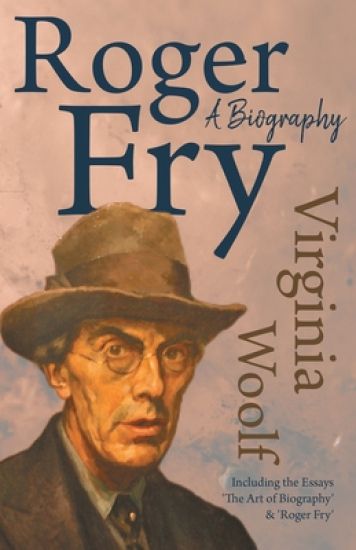
After his death, Woolf wrote a loving account of Roger Fry's passion for art and his challenging critical theories. Born in 1866, Fry was primarily responsible for introducing the post-Impressionists to Britain, and establishing the Omega workshops. He was also curator of New York's MOMA.
Roger Fry: A Biography

Roger Fry: A Biography

Virginia Woolf

HOUGHTON MIFFLIN
1976
nidottu
Virginia Woolf's only true biography, written to commemorate a devoted friend and one of the most renowned art critics of this century, who helped to bring the Postimpressionist movement from France to England and America. Index; illustrations.
Roger Fry, Clive Bell and American Modernism

Roger Fry, Clive Bell and American Modernism

David Maddock

Peter Lang International Academic Publishers
2020
nidottu
When the Bloomsbury critics Roger Fry and Clive Bell introduced an aesthetically conservative English public to recent Parisian avant-garde painting, they explained its disconcerting imagery by way of a late nineteenth-century metaphysical tradition which had long intrigued musicians and Symbolist writers on the European continent. The Post-Impressionist aesthetic they devised advocated a direct response to the formal ingenuity of the work of art without recourse to prior knowledge and emphasized the significance of visionary genius, albeit to the detriment of narrative acuity and technical accomplishment, values hitherto upheld by the Edwardian art establishment. The provocation was calculated, the author suggests, and its domestic ramifications were predictable: the reaction of an Anglo-conformist public in New York, on the other hand, was anything but. Recreating an Anglo-American dialogue inspired by Fry and Bell, and framed within a period encompassing Fry’s Manet and the Post-Impressionists exhibition in 1910 and Alfred Barr Jr’s Cubism and Abstract Art exhibition in 1936, the author demonstrates how key components of Bloomsbury’s aesthetic bypassed a pre-existent modernist practice in New York and were instead taken up by an urban intelligentsia which adapted them to the requirements of an increasingly professionalized institutional practice during the 1920s.
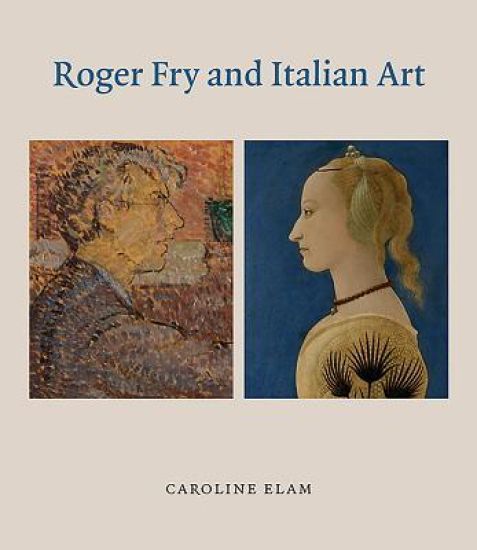
Roger Fry and Italian Art

Roger Fry and Italian Art

Caroline Elam

Ad Ilissum
2019
sidottu
Roger Fry (1866–1934) is best known as a champion of Post-Impressionism and a pioneer of Modernist art criticism. But his fi rst love was early Italian painting, on which he became a recognized authority, publishing a monograph on Giovanni Bellini in 1899. Even after the Post-Impressionist exhibitions in 1910 and 1912 and the foundation of the Omega Workshops, Fry continued to write and lecture on Italian art right up until his death. He looked at modernism through Quattrocento eyes rather than the other way around, as is often wrongly assumed. It is impossible not to be struck by how fresh and immediately readable his writings are, how pioneering in some ways his approach remains. His work on Italian art modifi es the received view of him as a pure formalist. Apart from a famous article on Giotto which Fry republished in Vision and Design (1920), the writings on Italian art are relatively little known, and a selection of the best of them is republished here, thus introducing an important aspect of Fry’s many-sided work to a new audience. The fi rst part of the book sets Fry’s writing on Italian art into context by combining intellectual biography with the history of art history, art criticism and art institutions. It draws on new documentary material, including Fry’s travel notebooks, which contain sketches and brilliant observations taken down in front of works of art. By exploring the whole range of Fry’s published and unpublished writings, the author is able to refute erroneous received ideas – that he was uninterested in colour, for example. The infl uence of his Italian lectures and publications on such fi gures as E.M. Forster, Kenneth Clark and Michael Baxandall is also examined. The second part consists of writings by Fry – each with an introductory text by the author and fully illustrated in colour. Included in this volume are some of the unpublished lectures that his biographer Virginia Woolf suggested would make a fascinating book of extracts. Four long pieces are of outstanding interest – on Uccello, Piero della Francesca, Baldovinetti and Piero di Cosimo, all artists whose critical status was radically re-examined in the twentieth century. Fry had a close and lifelong connection with The Burlington Magazine, as cofounder, contributor, saviour-fundraiser, editor (1909-1919) and adviser. Roger Fry and Italian Art is appropriately the fi rst in a series of books on art history to be published by The Burlington Magazine and Ad Ilissvm in association - to be announced in due course.
Roger Fry’s ‘Difficult and Uncertain Science’

Roger Fry’s ‘Difficult and Uncertain Science’

Adrianne Rubin

Peter Lang AG, Internationaler Verlag der Wissenschaften
2013
nidottu
This new study traces the development and evolution of the writings of Roger Fry (1866-1934), a highly influential art critic who introduced modern French painting to Britain in the early twentieth century. Through close analysis of his writings, the author examines the role that emerging psychological theories played in the formulation and expression of Fry’s aesthetic theories. She also discusses aspects of physiological psychology, Gestalt theory, psychoanalysis and adaptive psychology, arguing that detailed analyses of aesthetic perception comprise the core of Fry’s writings. Though he has rarely been credited with this goal, this volume shows that Fry sought to make art accessible to a wide audience and that highlighting the universal aspects of aesthetic perception was a means to this end. The book offers a chronological study of select essays and lectures, both published and unpublished, written by Roger Fry between the 1890s and his death in 1934. Where relevant his writings are juxtaposed with those of other art critics and theorists to identify factors that shaped his thinking and his use of terminology and to clarify the critical context in which he was working. Since Fry’s work as a visual artist ran alongside his critical thinking, some attention is given to his paintings as a method of illustrating his practical experimentation with aesthetic principles, particularly formalist concepts.
Last Lectures

Last Lectures

Roger Fry; Kenneth Clark

Literary Licensing, LLC
2013
sidottu
""Last Lectures"" is a collection of lectures delivered by the renowned art historian and critic, Roger Fry, in the final years of his life. Fry was a leading figure in the Bloomsbury Group, a circle of writers, artists, and intellectuals who exerted a significant influence on British culture in the early 20th century. The lectures cover a wide range of topics related to art, including the history of painting, the principles of composition, and the role of art in society. Fry's insights are informed by his deep knowledge of art history and his own experiences as a painter and critic. The lectures are presented in a clear and engaging style, making them accessible to both scholars and general readers. This book is a valuable resource for anyone interested in the history and theory of art, as well as the intellectual and cultural milieu of the Bloomsbury Group.This scarce antiquarian book is a facsimile reprint of the old original and may contain some imperfections such as library marks and notations. Because we believe this work is culturally important, we have made it available as part of our commitment for protecting, preserving, and promoting the world's literature in affordable, high quality, modern editions, that are true to their original work.
Cezanne: A Study of His Development

Cezanne: A Study of His Development

Roger Fry

Literary Licensing, LLC
2013
sidottu
Cezanne: A Study Of His Development is a book written by Roger Fry that provides an in-depth analysis of the artistic career of the French post-impressionist painter, Paul Cezanne. The book traces the development of Cezanne's style and technique, from his early years as a student in Aix-en-Provence to his later years in Paris. Fry examines Cezanne's use of color, form, and composition, and how his work influenced the development of modern art. The book includes numerous illustrations of Cezanne's paintings, drawings, and watercolors, as well as photographs of the artist and his studio. Fry's writing is accessible and engaging, making this book a valuable resource for art students, scholars, and enthusiasts alike.This is a new release of the original 1927 edition.This scarce antiquarian book is a facsimile reprint of the old original and may contain some imperfections such as library marks and notations. Because we believe this work is culturally important, we have made it available as part of our commitment for protecting, preserving, and promoting the world's literature in affordable, high quality, modern editions, that are true to their original work.