

Kirjahaku
Etsi kirjoja tekijän nimen, kirjan nimen tai ISBN:n perusteella.
1000 tulosta hakusanalla G.W. Patton

The enigmatic science of military intelligence is examined in this personal record, written by Brig.Gen. Oscar W. Koch, who served during World War II as chief of intelligence for General George S. Patton, Jr., one of the most colorful military leaders in American history. General Koch traces the growth and development of the infant science through detailed accounts of the intelligence role in some of the most celebrated battles of the war, and through his personal remembrances of Patton and his relationships with members of his intelligence staff. His story moves from the African campaign through Sicily, into France on D-Day and on to the Battle of the Bulge, pointing out how the work of the intelligence staff made the differences in the final reckoning. General Koch’s book is more than a historical study, however. It is the exciting story of the operations behind the cloak and dagger illusions.


Eminent Women of the Age Being Narratives of the Lives and Deeds of the Most Prominent Women of the Present Generation. by James Parton, Horace Greeley, T. W. Higginson, J. S. C. Abbott, Prof. James M. Hoppin, William Winter, theodore Tilton, Fanny Fern, G
James Et Al Parton
University of Michigan Library
2006
pokkari
Voices of the Border; Comprising Songs of the Field, Songs of the Bower, indian Melodies, and Promiscuous Poems. by Lt. Col. G. W. Patten.
George Washington Patten
University of Michigan Library
2006
pokkari
G.W.M. Reynolds Reimagined
TAYLOR FRANCIS LTD
2023
sidottu
This essay collection proposes that G.W.M. Reynolds’s contribution to Victorian print culture reveals the interrelations between authorship, genre, and radicalism in popular print culture of the nineteenth century. As a best-selling author of popular fiction marketed to the lower classes, and a passionate champion of radical politics and "the industrious classes," Reynolds and his work demonstrate the relevance of Victorian Studies to topics of pressing contemporary concern including populism, working-class fiction, the concept of ‘originality’, and the collective scholarly endeavour to ‘widen’ and ‘undiscipline’ Victorian Studies. Bringing together well-known and newly-emerging scholars from across different disciplinary perspectives, the volume explores the importance of Reynolds Studies to scholarship on the nineteenth-century. This book will appeal to students and scholars of the nineteenth-century press, popular culture, and of authorship, as well as to Victorian Studies scholars interested in the translation of Victorian texts into new and indigenous markets.
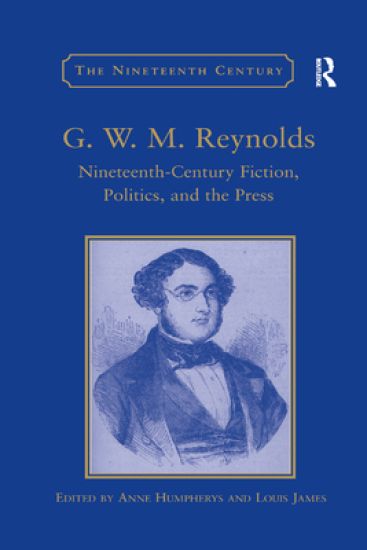
G.W.M. Reynolds (1814-1879) had a major impact on the mid-Victorian era that until now has been largely unacknowledged. A prolific novelist whose work had a massive circulation, and an influential journalist and editor, he was a man of contradictions in both his life and writing: a middle-class figure who devoted his life to working class issues but seldom missed a chance to profit from the exploitation of current issues; the founder of the radical newspaper Reynolds Weekly, as well as a bestselling author of historical romances, gothic and sensation novels, oriental tales, and domestic fiction; a perennial bankrupt who nevertheless ended his life prosperously. A figure of such diversity requires a collaborative study. Bringing together a distinguished group of scholars, this volume does justice to the full range of Reynolds's achievement and influence. With proper emphasis on new work in the field, the contributors take on Reynolds's involvement with Chartism, serial publication, the mass market periodical, commodity culture, and the introduction of French literature into British consciousness, to name just a few of the topics covered. The Mysteries of London, the century's most widely read serial, receives the extensive treatment this long-running urban gothic work deserves. Adding to the volume's usefulness are comprehensive bibliographies of Reynolds's own writings and secondary criticism relevant to the study of this central figure in mid-nineteenth-century Britain.

G.W.F. Hegel
Routledge
1993
muu
G.W.F. Hegel(1770-1831), arguably the greatest philosopher of the nineteenth century, decisively influenced the direction of all subsequent European thought. Variously understood as a theist and an atheist, a conservative and a liberal, an essentialist and a proto-existentialist, a rationalist and an irrationalist, the ambiguities of Hegel's position mean that `interpreting Hegel means taking a stand on all the philosophical, political and religious problems of our century'(Merleau-Ponty). This collection of writings on Hegel reflects the many-sided nature of Hegel's reception from 1831 onwards, and also offers critical studies on the full range of his work. The four volumes incorporate the classic readings of Hegel, from both the continental and analytic traditions, and also include the central twentieth century readings of his work. Each volume is provided with a clear and helpful introduction which sets the articles in their historical context and highlights the central philosophical issues that they raise.
G.W. Leibniz
Routledge
1993
muu
Gottfried Wilhelm Leibniz (1646-1716) was one of the seventeenth century's most important thinkers. A philosopher, mathematician and scientist, his work is comparable in scope and importance only to that of Newton and Descartes. His work dominated German philosophy until Kant, and was revived in the early part of this century when his important work on logic was re-discovered. This four volume set contains 97 of the most important essays ever written about Leibniz's work. The selection has been made to bring out the scope of Leibniz's work in all the areas he wrote upon, as well as its importance to contemporary philosophy and the history of philosophy. It will be an essential reference work for anyone concerned with seventeenth century philosophy and science, as well as to all Leibniz specialists.
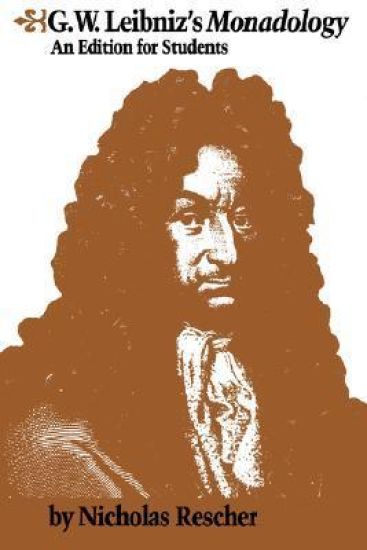
G.W. Leibniz's Monadology , one of the most important pieces of the Leibniz corpus, is at once one of the great classics of modern philosophy and one of its most puzzling productions. Because the essay is written in so condensed and compact a fashion, for almost three centuries it has baffled and beguiled those who have read it for the first time. Nicholas Rescher accompanies the text of the Monadology section-by-section with relevant excerpts from other Leibnizian writings. Using these brief sections as an outline, Rescher collects together some of Leibniz's widely scattered discussions of the matters at issue. The result serves a dual purpose of providing a commentary on the Monadology by Leibniz himself, while at the same time supplying an exposition of his philosophy using the Monadology as an outline.

G.W.F Hegel
T. T.Clark Ltd
1999
nidottu

A collection of the Great Western Railway: Names, Numbers, Types and Classes book editions spanning the middle of the 20th century from the detailed work of W. G. Chapman.

G.W.F. Hegel
Ashgate Publishing Limited
2009
sidottu
Hegel is notable for his distinctive contribution to the perennial concerns of political philosophy. He outlines a powerful account of freedom as both a personal and social achievement, discussing theories of personal rights, private property and punishment. He articulates a social analysis of human action and criticizes Kantian ethics. His theory of self-actualization locates our social identities within 'Ethical Life' - the institutions of family life, civil society and the state - expressing a unique variety of rationalist conservatism. In this volume some of the finest interpreters of Hegel writing in English explore this distinguished heritage and explain its contemporary relevance.
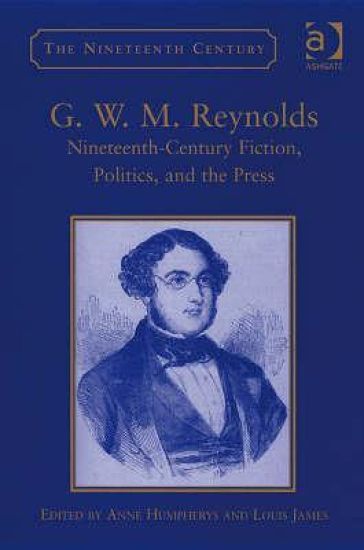
G.W.M. Reynolds (1814-1879) had a major impact on the mid-Victorian era that until now has been largely unacknowledged. A prolific novelist whose work had a massive circulation, and an influential journalist and editor, he was a man of contradictions in both his life and writing: a middle-class figure who devoted his life to working class issues but seldom missed a chance to profit from the exploitation of current issues; the founder of the radical newspaper Reynolds Weekly, as well as a bestselling author of historical romances, gothic and sensation novels, oriental tales, and domestic fiction; a perennial bankrupt who nevertheless ended his life prosperously. A figure of such diversity requires a collaborative study. Bringing together a distinguished group of scholars, this volume does justice to the full range of Reynolds's achievement and influence. With proper emphasis on new work in the field, the contributors take on Reynolds's involvement with Chartism, serial publication, the mass market periodical, commodity culture, and the introduction of French literature into British consciousness, to name just a few of the topics covered. The Mysteries of London, the century's most widely read serial, receives the extensive treatment this long-running urban gothic work deserves. Adding to the volume's usefulness are comprehensive bibliographies of Reynolds's own writings and secondary criticism relevant to the study of this central figure in mid-nineteenth-century Britain.

Dallmayr argues that G W F Hegel is perhaps the leading philosopher of modernity and explores his philosophy as it pertains to the meaning of modernity and postmodernity: its celebration of individual freedom and the importance of a network of social relationships, public justice and civic virtue. This important text explains Hegel's work in the context of current theoretical and philosophical debates about modernity, illustrating his response to contemporary issues and recognizing him as a major figure in the history of political thought.
G.W. Stewart
Birkhauser Boston Inc
2010
sidottu
Published in honor of his 70th birthday, this volume explores and celebrates the work of G.W. (Pete) Stewart, a world-renowned expert in computational linear algebra. It is widely accepted that Stewart is the successor to James Wilkinson, the first giant in the field, taking up the perturbation theory research that Wilkinson so ably began and using it as a foundation for algorithmic insights. Stewart’s results in many areas of computational linear algebra broke new ground and are still widely used in an increasing number of applications. Stewart’s papers, widely cited, are characterized by elegance in theorems and algorithms and clear, concise, and beautiful exposition. His six popular textbooks are excellent sources of knowledge and history. Stewart is a member of the National Academy of Engineering and has received numerous additional honors, including the Bauer Prize. This volume includes: forty-four of Stewart's most influential research papers in two subject areas: matrix algorithms, and rounding and perturbation theory; a biography of Stewart; a complete list of his publications, students, and honors; selected photographs; and commentaries on his works in collaboration with leading experts in the field. G.W. Stewart: Selected Works with Commentaries will appeal to graduate students, practitioners, and researchers in computational linear algebra and the history of mathematics.
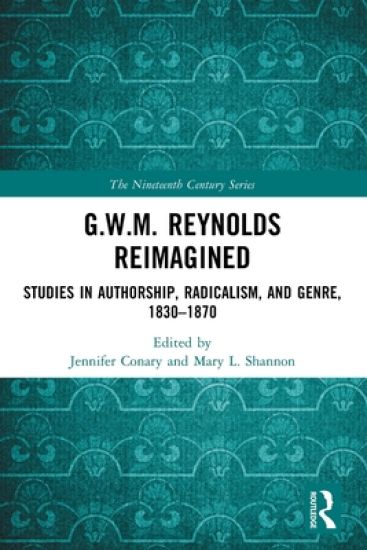
G.W.M. Reynolds Reimagined
TAYLOR FRANCIS LTD
2023
nidottu
This essay collection proposes that G.W.M. Reynolds’s contribution to Victorian print culture reveals the interrelations between authorship, genre, and radicalism in popular print culture of the nineteenth century. As a best-selling author of popular fiction marketed to the lower classes, and a passionate champion of radical politics and "the industrious classes," Reynolds and his work demonstrate the relevance of Victorian Studies to topics of pressing contemporary concern including populism, working-class fiction, the concept of ‘originality’, and the collective scholarly endeavour to ‘widen’ and ‘undiscipline’ Victorian Studies. Bringing together well-known and newly-emerging scholars from across different disciplinary perspectives, the volume explores the importance of Reynolds Studies to scholarship on the nineteenth-century. This book will appeal to students and scholars of the nineteenth-century press, popular culture, and of authorship, as well as to Victorian Studies scholars interested in the translation of Victorian texts into new and indigenous markets.


G.W. Leibniz's Monadology , one of the most important pieces of the Leibniz corpus, is at once one of the great classics of modern philosophy and one of its most puzzling productions. Because the essay is written in so condensed and compact a fashion, for almost three centuries it has baffled and beguiled those who have read it for the first time. Nicholas Rescher accompanies the text of the Monadology section-by-section with relevant excerpts from other Leibnizian writings. Using these brief sections as an outline, Rescher collects together some of Leibniz's widely scattered discussions of the matters at issue. The result serves a dual purpose of providing a commentary on the Monadology by Leibniz himself, while at the same time supplying an exposition of his philosophy using the Monadology as an outline.