Kirjojen hintavertailu. Mukana 11 529 702 kirjaa ja 12 kauppaa.

Kirjahaku

Etsi kirjoja tekijän nimen, kirjan nimen tai ISBN:n perusteella.

1000 tulosta hakusanalla Garba

Garbage Wars

Garbage Wars

David Naguib Pellow

MIT Press
2004
pokkari
A study of the struggle for environmental justice, focusing on conflicts over solid waste and pollution in Chicago.In Garbage Wars, the sociologist David Pellow describes the politics of garbage in Chicago. He shows how garbage affects residents in vulnerable communities and poses health risks to those who dispose of it. He follows the trash, the pollution, the hazards, and the people who encountered them in the period 1880-2000. What unfolds is a tug of war among social movements, government, and industry over how we manage our waste, who benefits, and who pays the costs.Studies demonstrate that minority and low-income communities bear a disproportionate burden of environmental hazards. Pellow analyzes how and why environmental inequalities are created. He also explains how class and racial politics have influenced the waste industry throughout the history of Chicago and the United States. After examining the roles of social movements and workers in defining, resisting, and shaping garbage disposal in the United States, he concludes that some environmental groups and people of color have actually contributed to environmental inequality.By highlighting conflicts over waste dumping, incineration, landfills, and recycling, Pellow provides a historical view of the garbage industry throughout the life cycle of waste. Although his focus is on Chicago, he places the trends and conflicts in a broader context, describing how communities throughout the United States have resisted the waste industry's efforts to locate hazardous facilities in their backyards. The book closes with suggestions for how communities can work more effectively for environmental justice and safe, sustainable waste management.
Garbage Land: On the Secret Trail of Trash

Garbage Land: On the Secret Trail of Trash

Elizabeth Royte

Back Bay Books
2006
nidottu
Out of sight, out of mind ... Into our trash cans go dead batteries, dirty diapers, bygone burritos, broken toys, tattered socks, eight-track cassettes, scratched CDs, banana peels.... But where do these things go next? In a country that consumes and then casts off more and more, what actually happens to the things we throw away? In Garbage Land, acclaimed science writer Elizabeth Royte leads us on the wild adventure that begins once our trash hits the bottom of the can. Along the way, we meet an odor chemist who explains why trash smells so bad; garbage fairies and recycling gurus; neighbors of massive waste dumps; CEOs making fortunes by encouraging waste or encouraging recycling-often both at the same time; scientists trying to revive our most polluted places; fertilizer fanatics and adventurers who kayak amid sewage; paper people, steel people, aluminum people, plastic people, and even a guy who swears by recycling human waste. With a wink and a nod and a tightly clasped nose, Royte takes us on a bizarre cultural tour through slime, stench, and heat-in other words, through the back end of our ever-more supersized lifestyles. By showing us what happens to the things we've disposed of, Royte reminds us that our decisions about consumption and waste have a very real impact-and that unless we undertake radical change, the garbage we create will always be with us: in the air we breathe, the water we drink, and the food we consume. Radiantly written and boldly reported, Garbage Land is a brilliant exploration into the soiled heart of the American trash can.
Garbage

Garbage

A. R. Ammons

WW Norton Co
2003
nidottu
"A. R. Ammons's poem with the unforgettable title is a defense of meaning—'this,' the poet says, 'are awash in ideality.' Garbage is an epic of ideas: all life—not that of human beings alone, but every species—is shown to be part of an ultimate reality. Eternity is here and now. The argument ranges widely with a wealth of images taken from science, and the world around us, the writing by turns impassioned and witty. For power of the thought and language, the poem takes its place alongside Whitman's Song of Myself—an American classic."—Citation for the 1993 National Book Award for Poetry
Garbage Collection

Garbage Collection

Richard Jones; Rafael Lins

John Wiley Sons Inc
1996
sidottu
Modern software places increasing reliance on dynamic memory allocation, but its direct management is not only notoriously error-prone. Garbage collection eliminates many of these bugs. This reference presents each of the most important algorithms in detail, often with illustrations of its characteristic features and animations of its use.
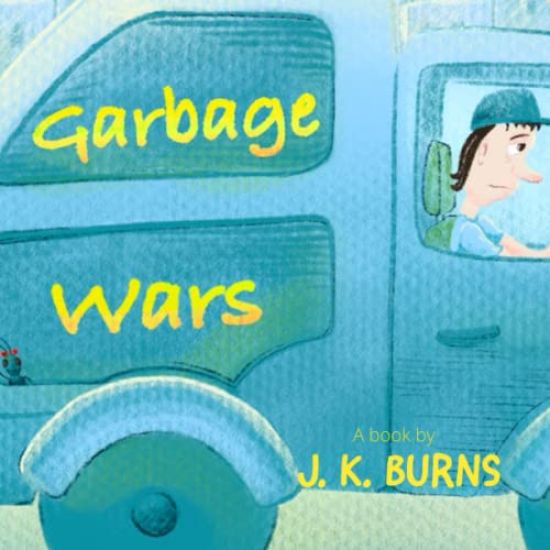
Garbage Wars

Garbage Wars

J K Redman; J K Burns

978-0-620-96003-8
2021
pokkari
A funny story about two little bin bugs who go on adventures every day to learn about recycling. But there is always some kind of disaster when these bugs are around And when Ted and Terry come to pick up all the smelly leftovers of the week They are in for the ride of their lives A funny book for both children and parents
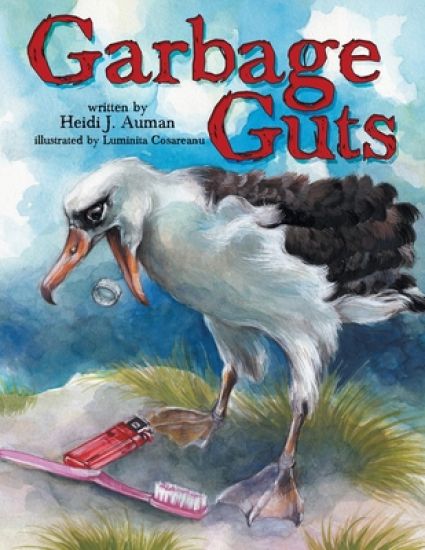
Garbage Guts

Garbage Guts

Heidi J. Auman

Heidi J. Auman
2020
nidottu
Aria the Albatross has a problem: she and her seabird friends are throwing up our discarded garbage. Determined to find out why, she sets out on a long-distance flight across the Pacific Ocean. On her journey, she meets other wildlife troubled by trash. Sea Turtle is choking on a plastic bag, Seal is trapped in a strapping band, and Whale is tangled in ghost fishing nets.Aria masters both wind and waves, seeking the causes of marine debris and witnessing its tragic effects. Humans, she learns, are both the culprits and the solution. Learn through the eyes of an albatross as you follow Aria's adventure while she finds courage and hope amid an ocean of garbage.The causes and effects of our pollution in oceans are revealed as a compelling message that is not only delightfully illustrated but also poetically memorable. When the result of our collective consumerism ends up fouling some of the most elegant, endangered, and remote-living of wildlife, our sense of responsibility to the oceans and its creatures must be questioned.Garbage Guts was inspired by Dr. Heidi J. Auman's research on the effects of marine debris on Midway Atoll's Laysan albatross.
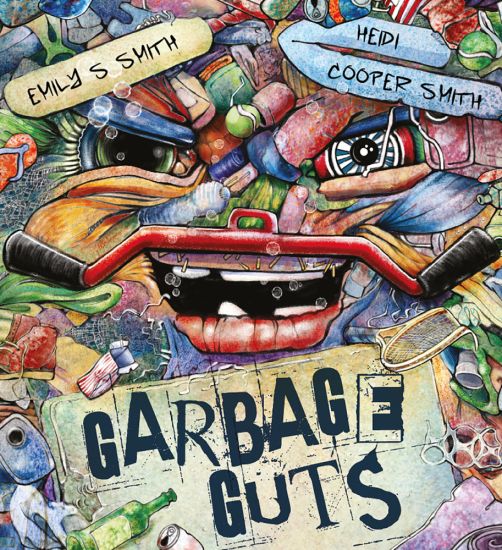
Garbage Guts

Garbage Guts

Emily Smith

Larrikin House
2020
pokkari
In the North Pacific Ocean lives a monster made of trash, A hungry, greedy meanie with a handlebar moustache. And though his name is Garbage Guts, he’s often called Big G. He blobs about destroying all the oceans and the seas. Garbage Guts is determined to have the ocean all for himself, and will do just about anything to get his way. How on Earth will this beast be stopped? This action-packed story explores the impact of our waste on the environment, and ways we can help save our planet. This fun and engaging story about recycling and the environment encourages mindfulness and awareness. It features an easy-to-follow fun, rhyming text keeps little ones excited and curious and teaches children the importance of caring for our planet and their environment.
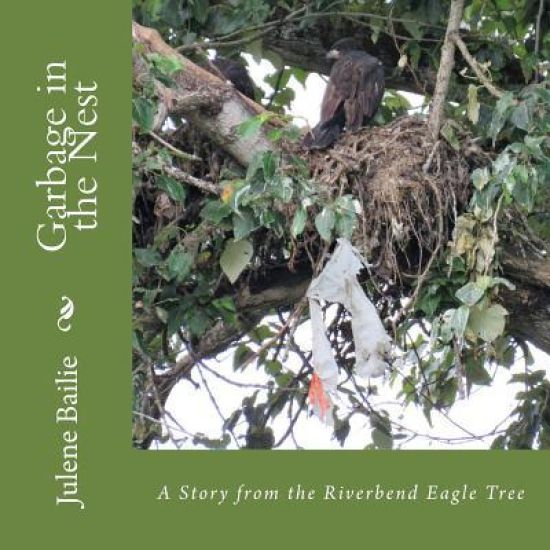
Garbage in the Nest: A Story from the Riverbend Eagle Tree
The Riverbend eagles have two more baby eaglets that need to learn life lessons as they grow up and prepare to leave the nest. This children's story, based on the 2016 Riverbend eagle nesting season, focuses on the garbage in and around the eagle family nest. How did the garbage get in the nest? What other garbage did the eaglets encounter during their adventures? Learn about eagles and the environment through actual pictures of the Riverbend eagle family, and hear the story from the eaglet's perspective.
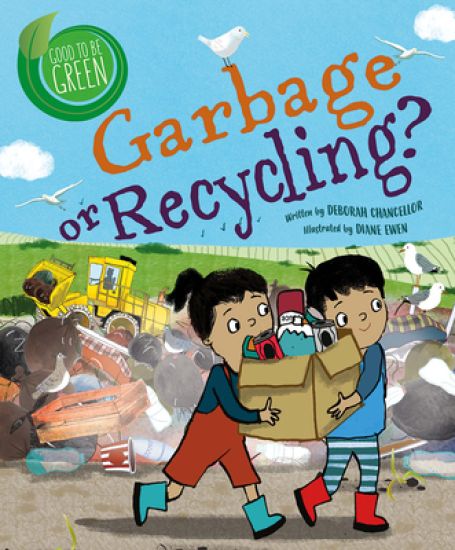
Garbage or Recycling?

Garbage or Recycling?

Deborah Chancellor

Crabtree Publishing Company
2020
sidottu
Nasir and Nadir are making a robot for their school's junk model competition. They must use garbage that can be recycled. So just what can they use, and what will happen to the garbage they throw away? Follow their story to find out why we should use less plastic, what happens at landfill sites, and how we can reduce, reuse, and recycle.
Garbage or Recycling?

Garbage or Recycling?

Deborah Chancellor

Crabtree Publishing Company
2020
nidottu
Nasir and Nadir are making a robot for their school's junk model competition. They must use garbage that can be recycled. So just what can they use, and what will happen to the garbage they throw away? Follow their story to find out why we should use less plastic, what happens at landfill sites, and how we can reduce, reuse, and recycle.
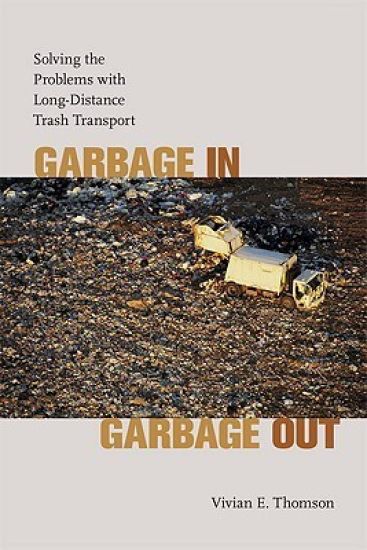
Garbage in, Garbage Out

Garbage in, Garbage Out

Vivian E. Thomson

University of Virginia Press
2009
sidottu
Your garbage is going places you'd never imagine. What used to be sent to the local dump now may move hundreds of miles by truck and barge to its final resting place. Virtually all forms of pollution migrate, subjected to natural forces such as wind and water currents. The movement of garbage, however, is under human control. Its patterns of migration reveal much about power sharing among state, local, and national institutions, about the Constitution's protection of trash transport as a commercial activity, and about competing notions of social fairness. In ""Garbage In, Garbage Out"", Vivian Thomson looks at Virginia's status as the second-largest importer of trash in the United States and uses it as a touchstone for exploring the many controversies around trash generation and disposal. Political conflicts over waste management have been felt at all levels of government. Local governments who want to manage their own trash have fought other local governments hosting huge landfills that depend on trash generated hundreds of miles away. State governments have tried to avoid becoming the dumping grounds for cities hundreds of miles away. The constitutional questions raised in these battles have kept interstate trash transport on Congress' agenda since the early 1990s. Whether the resulting legislative proposals actually address our most critical garbage-related problems, however, remains in question. Thomson sheds much-needed light on these problems. Within the context of increased interstate trash transport and the trend toward privatization of waste management, she examines the garbage issue from a number of perspectives - including considering the links between environmental justice and trash management, offering a critical evaluation of the theoretical and empirical relationship between economic growth and environmental improvement, and highlighting the ways in which waste management practices in the United States differ from those in the European Union and Japan. Thomson then provides specific, substantive recommendations for our own policy makers. Everything eventually becomes trash. As we explore the long, often surprising, routes our garbage takes, we begin to understand that it is something more than a mere nuisance that regularly 'disappears' from our curbside. Rather, trash generation and management reflect patterns of consumption, political choices over whether garbage is primarily pollution or commerce, the social distribution of environmental risk, and how our daily lives compare with those of our counterparts in other industrialized nations.
Garbage in, Garbage Out

Garbage in, Garbage Out

Vivian E. Thomson

University of Virginia Press
2009
nidottu
Your garbage is going places you'd never imagine. What used to be sent to the local dump now may move hundreds of miles by truck and barge to its final resting place. Virtually all forms of pollution migrate, subjected to natural forces such as wind and water currents. The movement of garbage, however, is under human control. Its patterns of migration reveal much about power sharing among state, local, and national institutions, about the Constitution's protection of trash transport as a commercial activity, and about competing notions of social fairness. In ""Garbage In, Garbage Out"", Vivian Thomson looks at Virginia's status as the second-largest importer of trash in the United States and uses it as a touchstone for exploring the many controversies around trash generation and disposal. Political conflicts over waste management have been felt at all levels of government. Local governments who want to manage their own trash have fought other local governments hosting huge landfills that depend on trash generated hundreds of miles away. State governments have tried to avoid becoming the dumping grounds for cities hundreds of miles away. The constitutional questions raised in these battles have kept interstate trash transport on Congress' agenda since the early 1990s. Whether the resulting legislative proposals actually address our most critical garbage-related problems, however, remains in question. Thomson sheds much-needed light on these problems. Within the context of increased interstate trash transport and the trend toward privatization of waste management, she examines the garbage issue from a number of perspectives - including considering the links between environmental justice and trash management, offering a critical evaluation of the theoretical and empirical relationship between economic growth and environmental improvement, and highlighting the ways in which waste management practices in the United States differ from those in the European Union and Japan. Thomson then provides specific, substantive recommendations for our own policy makers. Everything eventually becomes trash. As we explore the long, often surprising, routes our garbage takes, we begin to understand that it is something more than a mere nuisance that regularly 'disappears' from our curbside. Rather, trash generation and management reflect patterns of consumption, political choices over whether garbage is primarily pollution or commerce, the social distribution of environmental risk, and how our daily lives compare with those of our counterparts in other industrialized nations.
Garbage In The Cities

Garbage In The Cities

Martin Melosi

University of Pittsburgh Press
2004
nidottu
As recently as the 1880s, most American cities had no effective means of collecting and removing the mountains of garbage, refuse, and manure-over a thousand tons a day in New York City alone-that clogged streets and overwhelmed the senses of residents. In his landmark study, Garbage in the Cities, Martin Melosi offered the first history of efforts begun in the Progressive Era to clean up this mess. Since it was first published, Garbage in the Cities has remained one of the best historical treatments of the subject. This thoroughly revised and updated edition includes two new chapters that expand the discussion of developments since World War I. It also offers a discussion of the reception of the first edition, and an examination of the ways solid waste management has become more federally regulated in the last quarter of the twentieth century. Melosi traces the rise of sanitation engineering, accurately describes the scope and changing nature of the refuse problem in U.S. cities, reveals the sometimes hidden connections between industrialization and pollution, and discusses the social agendas behind many early cleanliness programs. Absolutely essential reading for historians, policy analysts, and sociologists, Garbage in the Cities offers a vibrant and insightful analysis of this fascinating topic.
Garbageout: Get Serious about Living Your Life
"Why Do We Keep Things We Do Not Want and Hold Onto Things We Do Not Need" SIMPLY LET GO Life has a way of piling up, worries, fears, doubts and insecurities-just as the garbage that fills your trash cans, thoughts and pressures fill your mind and heart with garbage. Letting go cleanses your mental space-refreshes, renews and rejuvenates your passion for life. "GarbageOut" is crafted in an easy to read style, guiding you to think in a way that ignites change, helping you clear the garbage that is blocking your path. Each chapter presents a lesson that gives you the opportunity to release the garbage cluttering your life. There are questions and insights; advice and thought provoking queries that will enable you to dig deep and find you. It's time to get serious about living your life. It all starts with being mindful of how you think, thoughts you hold onto, the decisions you make and how you respond to life. Your thoughts are the beginning of your story. The first step to finding your true story is to remove the garbage from your life. Letting go frees up space to grow, so that you can begin to discover you Commit to tidying up your mind and life. Take charge and discover the joys that come with living your true story. The truth is we all are living a story. The question is are you living your true story?
Garbage Boy

Garbage Boy

Michael McMullen

Friesenpress
2023
pokkari
Garbage Boy-a.k.a. Scarface, a.k.a. William-has had it rough his entire life. Facing off against a deadbeat dad and his mom's abusive boyfriend, he's had to fight every step of the way just to survive. Not only that, his family's low social status makes him an object of ridicule and abuse among his peers and the community at large. That all begins to change when Garbage Boy meets up with Mister and Stone Pony, two mysterious men who enlist his aid in their growing sanitation enterprise. Who would have thought picking up garbage would be the road to redemption, never mind riches? But not even that comes easily for Garbage Boy. Although Garbage Boy's situation improves remarkably at first, the deeper his involvement with Mister and Stone Pony, the more complicated his life becomes, to the point he risks losing everything he's fought so hard to gain. The book implies an ethical question "Does a wrong become right if you have been wronged all along?"