Kirjojen hintavertailu. Mukana 12 459 402 kirjaa ja 12 kauppaa.

Kirjahaku

Etsi kirjoja tekijän nimen, kirjan nimen tai ISBN:n perusteella.

1000 tulosta hakusanalla Gavin Alexander

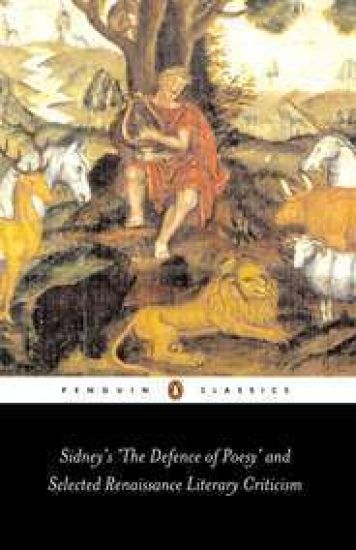
Sidney's 'The Defence of Poesy' and Selected Renaissance Literary Criticism
Controversy raged through England during the 1570-80s as Puritans denounced all manner of games & pastimes as a danger to public morals. Writers quickly turrned their attention to their own art and the first & most influential response came with Philip Sidney's Defense. Here he set out to answer contemporary critics &, with reference to Classical models of criticism, formulated a manifesto for English literature. Also includes George Puttenham's Art of English Poesy, Samuel Daniel's Defence of Rhyme, & passages by writers such as Ben Jonson, Francis Bacon & George Gascoigne.
Writing after Sidney

Writing after Sidney

Gavin Alexander

Oxford University Press
2006
sidottu
Writing After Sidney examines the literary response to Sir Philip Sidney (1554-86), author of the Arcadia, Astrophil and Stella, and The Defence of Poesy, and the most immediately influential writer of the Elizabethan period. It does so by looking closely both at Sidney and at four writers who had an important stake in his afterlife: his sister Mary Sidney, his brother Robert Sidney, his best friend Fulke Greville, and his niece Mary Wroth. At the same time as these authors wrote their own works in response to Sidney they presented his life and writings to the world, and were shaped by other writers as his literary and political heirs. Readings of these five central authors are embedded in a more general study of the literary and cultural scene in the years after Sidney's death, examining the work of such writers as Spenser, Jonson, Daniel, Drayton, and Herbert. The study uses a wide range of manuscript and printed sources, and key use is made of perspectives from Renaissance literary theory, especially Renaissance rhetoric. The book aims to come to a better understanding of the nature of Sidney's impact on the literature of the fifty or so years after his death in 1586; it also aims to improve our understanding both of Sidney and of the other writers discussed by developing a more nuanced approach to the questions of imitation and example so central to Renaissance literature. It thereby adds to the general store of our understanding of how writing of the English Renaissance offered examples to later readers and writers, and of how it encountered and responded to such examples itself.
Writing after Sidney

Writing after Sidney

Gavin Alexander

Oxford University Press
2010
nidottu
Writing After Sidney examines the literary response to Sir Philip Sidney (1554-86), author of the Arcadia, Astrophil and Stella, and The Defence of Poesy, and the most immediately influential writer of the Elizabethan period. It does so by looking closely both at Sidney and at four writers who had an important stake in his afterlife: his sister Mary Sidney, his brother Robert Sidney, his best friend Fulke Greville, and his niece Mary Wroth. At the same time as these authors wrote their own works in response to Sidney they presented his life and writings to the world, and were shaped by other writers as his literary and political heirs. Readings of these five central authors are embedded in a more general study of the literary and cultural scene in the years after Sidney's death, examining the work of such writers as Spenser, Jonson, Daniel, Drayton, and Herbert. The study uses a wide range of manuscript and printed sources, and key use is made of perspectives from Renaissance literary theory, especially Renaissance rhetoric. The book aims to come to a better understanding of the nature of Sidney's impact on the literature of the fifty or so years after his death in 1586; it also aims to improve our understanding both of Sidney and of the other writers discussed by developing a more nuanced approach to the questions of imitation and example so central to Renaissance literature. It thereby adds to the general store of our understanding of how writing of the English Renaissance offered examples to later readers and writers, and of how it encountered and responded to such examples itself.
Cliffside

Cliffside

Gavin Alexander

Andrews UK Limited
2021
nidottu
Katie Petherick is young, beautiful and successful, but not content. For three years she has been earning a good living as an upmarket monthly live-in maternity nurse, working closely with wealthy couples and gaining their trust. It is not enough. Now it is decision time. Katie has a devious plan to make some serious cash, but there is considerable risk. She knows she is playing with fire, and she realises people are likely to get hurt - not least her boyfriend, Peter Dunkett. He is crazy about her, and he is too scrupulous ever to be happy about what she has in mind, but his need for money is even more pressing than Katie's.
The Leibniz-Clarke Correspondence

The Leibniz-Clarke Correspondence

Robert Gavin Alexander

Manchester University Press
1977
nidottu
n 1715 Leibniz wrote to his friend the Princess of Wales to warn her of the dangers Newton's philosophy posed for natural religion. Seizing this chance of initiating an exchange between the two greatest minds in Europe, the princess showed his letter to the eminent Newtonian scientist and natural theologian, Samuel Clarke. From his reply developed an exchange of papers which was published in 1717. The correspondence was immediately seen as a crucial discussion of the significance of the new science, and it became one of the most widely read philosophical works of its time.In this edition, an introduction outlines the historical background, and there is a valuable survey of the subsequent discussions of the problem of space and time in the philosophy of science. Significant references to the controversy in Leibniz's other correspondence have also been collected, and the relevant passages from Newton's Principia and Opticks are appended. In 1715 Leibniz wrote to his friend the Princess of Wales to warn her of the dangers Newton's philosophy posed for natural religion. Seizing this chance of initiating an exchange between two of the greatest minds in Europe, the princess showed his letter to the eminent Newtonian scientist and natural theologian, Samuel Clarke. From his reply developed an exchange of papers which was published in 1717. The correspondence was immediately seen as a crucial discussion of the significance of the new science, and it became one of the most widely read philosophical works of its time. Kant developed his theory of space and time from the problems at issue, and the post-Newtonian physics of the twentieth century has brought a revival of interest in Leibniz's objections: some of the problems are still not finally resolved. In this edition an introduction outlines the historical background, and there is a valuable survey of the subsequent discussions of the problem of space and time in the philosophy of science. Significant references to the controversy in Leibniz's other correspondence have also been collected, and the relevant passages from Newton's "Principia" and "Opticks" are appended.
Alexander Dennis Buses

Alexander Dennis Buses

Gavin Booth

KEY PUBLISHING LTD
2024
nidottu
Dennis and Alexander both grew separately. Dennis was very much a specialist chassis builder with a list of regular customers, while Alexander’s roots were in building bodies for a group of Scottish bus companies. Alexander broadened its customer base from the 1950s and was soon supplying bodies for bus operators throughout the UK and in several export markets. Dennis expanded dramatically in the 1980s with its best-selling Dart model. Since the two companies came together as Alexander Dennis Ltd in 2004, it has concentrated on designing and building a range of best-selling bus models. The coachbuilder Plaxton, established in 1907, joined Alexander Dennis in 2007, mainly producing coaches, but doubling up with Falkirk to produce the bus range. Alexander Dennis is one of the very few manufacturers building buses in the United Kingdom. With over 180 images, this book provides the history of the company and its subsequent emergence as a clear market leader.
Alexander Boddy: Pentecostal Anglican Pioneer
European Pentecostalism was fortunate in having the wise and balanced leadership of the evangelical Anglican Alexander Boddy at its disposal during the formative years of the early 1900s. This well-researched and vivid book tells the story of how Boddy helped to define the doctrine and stance of the first generation of Pentecostals. Wakefield brings to life the vigorous discussion of charisma that occupied the minds of early Spirit-filled believers. He charts Boddy's training, explains his beliefs and his spirituality, records his personal and pastoral work in northeastern England and explains the style and direction of his leadership. Boddy was an important figure, even a great man and now for the first time a full-length biography of his life and work is available.
Alexander the Great: Man, Myth or Monster?

Alexander the Great: Man, Myth or Monster?

Jamila Gavin

WALKER BOOKS LTD
2024
nidottu
The compelling story of the greatest warrior hero of ancient times, from award-winning writer, Jamila Gavin.Alexander the Great is hailed as the world’s greatest leaders of all time, renowned for his bravery, his loyalty and his generosity towards his enemies. Jamila Gavin’s vivid narrative brings the ancient world to life, as she follows Alexander’s campaign from Greece to India. From his taming of the wild horse Bucephalus, to the cutting of the Gordian Knot, through to his great battles and confrontations with Darius III, King of Persia, Alexander was a legend in his own lifetime. Alongside his campaigning feats, the legends from ancient Greece, Egypt, Persia and India told around the army campfires create a vivid and exciting picture of life under this great hero.
An Illustrated Guide to Samurai History and Culture

An Illustrated Guide to Samurai History and Culture

Gavin Blair; Alexander Bennett

TUTTLE PUBLISHING
2022
sidottu
The ultimate visual guide to Samurai history and culture! The Samurai are continuously celebrated as the greatest warriors the world has ever seen. They ruled Japan for centuries, finally uniting the nation after a prolonged period of brutal war and bloodshed. Though famed for their loyalty, honor, and chivalry, they could also be treacherous, bloodthirsty, and merciless.This book tells the story of their rise and eventual demise through carefully curated images, both historical and contemporary, with an engaging and authoritative text by Gavin Blair—a noted commentator on all things Japanese. It exposes the myths surrounding the Samurai and reveals their many secrets, while examining their enduring influence on global culture in anime, manga, books, and video games. Gorgeously illustrated with color prints, paintings, and photos throughout, this book features detailed chapters on: The rise of the Japanese warrior class and how they established their grip on political power Rival clans, legendary Samurai, the unification of warlord states, and famous female Samurai Samurai "tools of the trade"—swords, bows, spears, guns, castles, and armor The cult of Bushido, the fabled warrior's code The transformation of Samurai into cultured "gentlemen" warriors, poets, and aristocrats Their legacy in modern world literature, media, film, and popular culture And so much more!A foreword by leading Samurai historian Alexander Bennett, the celebrated translator of works such as The Complete Musashi and Hagakure, introduces readers to these fascinating warriors, who continue to captivate modern audiences.
A Primer for Mathematics Competitions

A Primer for Mathematics Competitions

Alexander Zawaira; Gavin Hitchcock

Oxford University Press
2008
sidottu
The importance of mathematics competitions has been widely recognised for three reasons: they help to develop imaginative capacity and thinking skills whose value far transcends mathematics; they constitute the most effective way of discovering and nurturing mathematical talent; and they provide a means to combat the prevalent false image of mathematics held by high school students, as either a fearsomely difficult or a dull and uncreative subject. This book provides a comprehensive training resource for competitions from local and provincial to national Olympiad level, containing hundreds of diagrams, and graced by many light-hearted cartoons. It features a large collection of what mathematicians call "beautiful" problems - non-routine, provocative, fascinating, and challenging problems, often with elegant solutions. It features careful, systematic exposition of a selection of the most important topics encountered in mathematics competitions, assuming little prior knowledge. Geometry, trigonometry, mathematical induction, inequalities, Diophantine equations, number theory, sequences and series, the binomial theorem, and combinatorics - are all developed in a gentle but lively manner, liberally illustrated with examples, and consistently motivated by attractive "appetiser" problems, whose solution appears after the relevant theory has been expounded. Each chapter is presented as a "toolchest" of instruments designed for cracking the problems collected at the end of the chapter. Other topics, such as algebra, co-ordinate geometry, functional equations and probability, are introduced and elucidated in the posing and solving of the large collection of miscellaneous problems in the final toolchest. An unusual feature of this book is the attention paid throughout to the history of mathematics - the origins of the ideas, the terminology and some of the problems, and the celebration of mathematics as a multicultural, cooperative human achievement. As a bonus the aspiring "mathlete" may encounter, in the most enjoyable way possible, many of the topics that form the core of the standard school curriculum.
A Primer for Mathematics Competitions

A Primer for Mathematics Competitions

Alexander Zawaira; Gavin Hitchcock

Oxford University Press
2008
nidottu
The importance of mathematics competitions has been widely recognised for three reasons: they help to develop imaginative capacity and thinking skills whose value far transcends mathematics; they constitute the most effective way of discovering and nurturing mathematical talent; and they provide a means to combat the prevalent false image of mathematics held by high school students, as either a fearsomely difficult or a dull and uncreative subject. This book provides a comprehensive training resource for competitions from local and provincial to national Olympiad level, containing hundreds of diagrams, and graced by many light-hearted cartoons. It features a large collection of what mathematicians call "beautiful" problems - non-routine, provocative, fascinating, and challenging problems, often with elegant solutions. It features careful, systematic exposition of a selection of the most important topics encountered in mathematics competitions, assuming little prior knowledge. Geometry, trigonometry, mathematical induction, inequalities, Diophantine equations, number theory, sequences and series, the binomial theorem, and combinatorics - are all developed in a gentle but lively manner, liberally illustrated with examples, and consistently motivated by attractive "appetiser" problems, whose solution appears after the relevant theory has been expounded. Each chapter is presented as a "toolchest" of instruments designed for cracking the problems collected at the end of the chapter. Other topics, such as algebra, co-ordinate geometry, functional equations and probability, are introduced and elucidated in the posing and solving of the large collection of miscellaneous problems in the final toolchest. An unusual feature of this book is the attention paid throughout to the history of mathematics - the origins of the ideas, the terminology and some of the problems, and the celebration of mathematics as a multicultural, cooperative human achievement. As a bonus the aspiring "mathlete" may encounter, in the most enjoyable way possible, many of the topics that form the core of the standard school curriculum.
Text, Cases and Materials on Public Law and Human Rights

Text, Cases and Materials on Public Law and Human Rights

Helen Fenwick; Gavin Phillipson; Alexander Williams

Routledge
2016
sidottu
This book interweaves an authoritative authorial commentary – significantly expanded from the last edition - with extracts from a diverse and contemporary collection of cases and materials from three leading academics in the field. It provides an all-encompassing student guide to constitutional, administrative and UK human rights law.This fourth edition provides comprehensive coverage of all recent developments, including the Fixed Term Parliaments Act 2011, restrictions on judicial review (Criminal Justice and Courts Act 2015), changes to judicial appointments (Crime and Courts Act 2013), the 2014 Scottish Independence Referendum, Scotland Act 2016 and draft Wales Bill 2016. Recent devolution cases in the Supreme Court, including Imperial Tobacco (2012) and Asbestos Diseases (2015) are fully analysed, as is the 2015 introduction of English Votes for English Laws. The remarkable Evans (2015) ‘Black Spider memos’ case is considered in a number of chapters. The common law rights resurgence seen in Osborn (2013), BBC (2014) and Kennedy (2014) is analysed in several places, along with other key developments in judicial review such as Keyu (2015) and Pham (2015). Ongoing parliamentary reform in both Lords and Commons, including major advances in controlling prerogative powers, are fully explained, as is the adaptation of the core Executive to Coalition Government (2010-2015). There is comprehensive coverage of key Strasbourg and HRA cases (Horncastle (2010), Nicklinson (2014), Moohan (2014), Carlile (2014)), and those in core areas of freedom of expression, police powers and public order (Animal Defenders (2013), Beghal (2015), Roberts (2015), Miranda (2016)) and the prisoners’ voting rights saga, up to Chester (2015).
Text, Cases and Materials on Public Law and Human Rights

Text, Cases and Materials on Public Law and Human Rights

Helen Fenwick; Gavin Phillipson; Alexander Williams

Routledge
2016
nidottu
This book interweaves an authoritative authorial commentary – significantly expanded from the last edition - with extracts from a diverse and contemporary collection of cases and materials from three leading academics in the field. It provides an all-encompassing student guide to constitutional, administrative and UK human rights law.This fourth edition provides comprehensive coverage of all recent developments, including the Fixed Term Parliaments Act 2011, restrictions on judicial review (Criminal Justice and Courts Act 2015), changes to judicial appointments (Crime and Courts Act 2013), the 2014 Scottish Independence Referendum, Scotland Act 2016 and draft Wales Bill 2016. Recent devolution cases in the Supreme Court, including Imperial Tobacco (2012) and Asbestos Diseases (2015) are fully analysed, as is the 2015 introduction of English Votes for English Laws. The remarkable Evans (2015) ‘Black Spider memos’ case is considered in a number of chapters. The common law rights resurgence seen in Osborn (2013), BBC (2014) and Kennedy (2014) is analysed in several places, along with other key developments in judicial review such as Keyu (2015) and Pham (2015). Ongoing parliamentary reform in both Lords and Commons, including major advances in controlling prerogative powers, are fully explained, as is the adaptation of the core Executive to Coalition Government (2010-2015). There is comprehensive coverage of key Strasbourg and HRA cases (Horncastle (2010), Nicklinson (2014), Moohan (2014), Carlile (2014)), and those in core areas of freedom of expression, police powers and public order (Animal Defenders (2013), Beghal (2015), Roberts (2015), Miranda (2016)) and the prisoners’ voting rights saga, up to Chester (2015).
The Story of Whisky

The Story of Whisky

Charles Maclean; Gavin D. Smith; Sir Alexander McCall Smith

HARPERCOLLINS PUBLISHERS
2025
sidottu
‘For the reader who knows little about whisky, this is a book that will easily and enjoyably fill that gap.’ Sir Alexander McCall Smith This stylish, comprehensive guide takes the reader from the origins of distilling in 1200BC, through remarkable stories of the pioneers and inventors that have helped shape the story of whisky, to the issues surrounding whisky production today: from sustainability concerns to the use of heritage barley and corn and the problem of fake whiskys. Award-winning writers Charles MacLean and Gavin D. Smith offer a rollocking narrative; describing the adventures of legendary characters who shaped the whisky industry, from John Jameson in Dublin to ‘Nearest Green’ and Jack Daniels in Tennessee; they explore its cultural heritage and journey across the world: from Ernest Shackleton in the South Antarctic to today’s growth of single malt in the USA; and find out how only three basic ingredients – grain, yeast and water ­– combine to make a drink with so many different flavours. The loose chronological approach starts with the origins of distilling, mainly in China and India, and follows through whisky’s early origins as an illicit alcohol made in the hills of Scotland and Ireland, to the exciting small batch whiskies being produced today by craft distillers and master blenders all over the world. The Story of Whisky immerses the reader in over 100 stories, legends and anecdotes, illustrated with historical images and stunning photographs of landscapes and iconic distilleries: inside and out, and is designed to entertain as well as educate. Learn how whisky came to be the global success story of today and understand how to appreciate exactly what is in your glass. With flavour influenced as much by history, craft and tradition as it is by science, in The Story of Whisky, readers can find out why their drink tastes the way it does, where whisky flavours come from and how they are changing to embrace the future. The Story of Whisky is the essential guide for any aficionado.
Aspire High

Aspire High

Quaglia Russell J.; Corso Michael J.; Kristine Fox; Gavin A. (Alexander) Dykes

Corwin Press Inc
2017
nidottu
Aspire High (School) is written for educators and is designed to challenge current thinking about high schools from how they are built, to how they are organized, to how they function to promote learning. In the recently released book Student Voice: The Instrument of Change, Dr. Quaglia and Dr. Corso provide educators with detailed information and research about the importance of Student Voice and Aspirations. Aspire High offers next steps to help educators and policy members alike to literally build from the ground up a dynamic school that promotes aspirations and meaningful learning for all.
Frihet : evolutionen av en idé

Frihet : evolutionen av en idé

Kemi Badenoch; John Bew; Adrian Bradshaw; Hal Brands; Richard Chartres; Christopher Coker; Marie Kawthar Daouda; Peter Frankopan; Jessica Frazier; Francis Gavin; Matthew Goodwin; Katja Hoyer; Jeremy Jennings; Robert Johnson; Alexander Lee; Margaret MacMillan; Janne Haaland Matláry; Richard Miles; Fraser Nelson; Jesse Norman; Iuliia Osmolovska; Charly Salonius-Pasternak; Agnès C. Poirier; Alina Polyakova; Sergey Radchenko; Juliet Samuel; Mary Sarotte; Kori Schake; Mark J. Schiefsky; Brendan Simms; Alexander McCall Smith

Bokförlaget Stolpe
2024
sidottu
Hur har idén om frihet utvecklats och förändrats under århundradena? Vad betyder frihet idag och vad behöver vi göra för att behålla de friheter som generationer män och kvinnor har kämpat, och till och med dött, för? Frihet är en grundförutsättning för att ett samhälle ska frodas och utvecklas. Dess historia är brokig: mänsklighetens eviga kamp mot ödet, våra förfäder som outtröttligt stred för att upprätta tanke- och religionsfrihet, demokratiska friheter i samhället i stort och kampen mot auktoritära regimer och tyranner världen över. I denna essäsamling utforskar ledande akademiker, författare och historiker vad frihet har betytt genom tiderna. De reflekterar över detta ständigt pågående drama och varför vi så villigt offrar oss för friheten när den hotas.
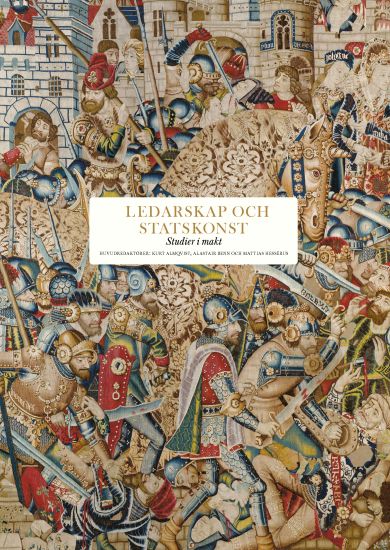
Ledarskap och statskonst : studier i makt

Ledarskap och statskonst : studier i makt

Philip Zelikow; Anna Wieslander; Lucy Ward; Edward Stringer; Nathan Shachar; Michael Scott; Kori Schake; Andreas Rödder; Iskander Rehman; Sergey Radchenko; Alina Polyakova; Gudrun Persson; Kenneth Payne; Charles Moore; Munira Mirza; Henrik Meinander; Rory Medcalf; James Marriott; Fredrik Logevall; Alexander Lee; Julian Jackson; Katja Hoyer; Oleksii Goncharenko; Francis J. Gavin; Kentaro Fujimoto; Daisy Dunn; Claire Coutinho; J.C.D. Clark; David Butterfield; Kristin Ven Bruusgaard; Elisabeth Braw; John Bew; Benedetta Berti

Bokförlaget Stolpe
2025
sidottu
Machiavellis observation om ledarskapets svåra balansgång är lika relevant i vår tid, som den en gång var i 1500-talets Florens. Kinas framväxt, Rysslands attack mot Ukraina och den växande politiska och ekonomiska närvaron i den globala södern har aktualiserat frågan om vikten av kompetent ledarskap inom politiskt styre. Denna antologi utforskar utmaningarna för ledarskap och statskonst i en allt mer komplex värld och ställer frågan huruvida vi kan skapa politiska eliter som är kapabla att på ett säkert vis vägleda väst genom de många prövningar vi står inför. Genom att se till vårt förflutna såväl som till vår samtid undersöker världsledande forskare och skribenter hur ledarskapsidéer har utvecklats genom historien för att ge oss en större förståelse för statskonsten och för vilka färdigheter och organisationer som krävs för att driva små stater, stora imperier och allt däremellan. Boken finns även i engelsk utgåva.
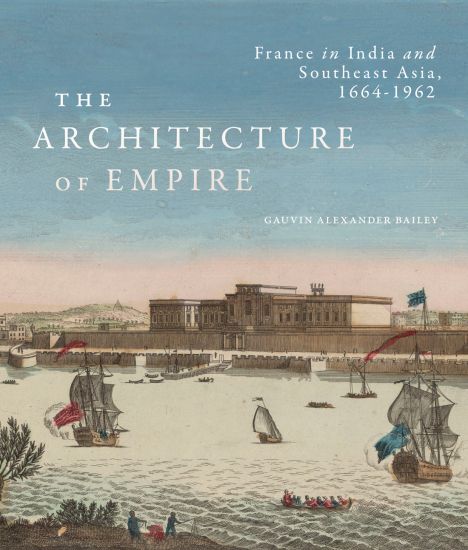
The Architecture of Empire

The Architecture of Empire

Gauvin Alexander Bailey

MCGILL-QUEEN'S UNIVERSITY PRESS
2022
sidottu
Most monumental buildings of France’s global empire – such as the famous Saigon and Hanoi Opera Houses – were built in South and Southeast Asia. Much of this architecture, and the history of who built it and how, has been overlooked.The Architecture of Empire considers the large-scale public architecture associated with French imperialism in seventeenth- and eighteenth-century India, Siam, and Vietnam, and nineteenth- and twentieth-century Indochina, the largest colony France ever administered in Asia. Offering a sweeping panorama of the buildings of France’s colonial project, this is the first study to encompass the architecture of both the ancien régime and modern empires, from the founding of the French trading company in the seventeenth century to the independence and nationalist movements of the mid-twentieth century. Gauvin Bailey places particular emphasis on the human factor: the people who commissioned, built, and lived in these buildings. Almost all of these architects, both Europeans and non-Europeans, have remained unknown beyond – at best – their surnames. Through extensive archival research, this book reconstructs their lives, providing vital background for the buildings themselves. Much more than in the French empire of the Western Hemisphere, the buildings in this book adapt to indigenous styles, regardless of whether they were designed and built by European or non-European architects.The Architecture of Empire provides a unique, comprehensive study of structures that rank among the most fascinating examples of intercultural exchange in the history of global empires.
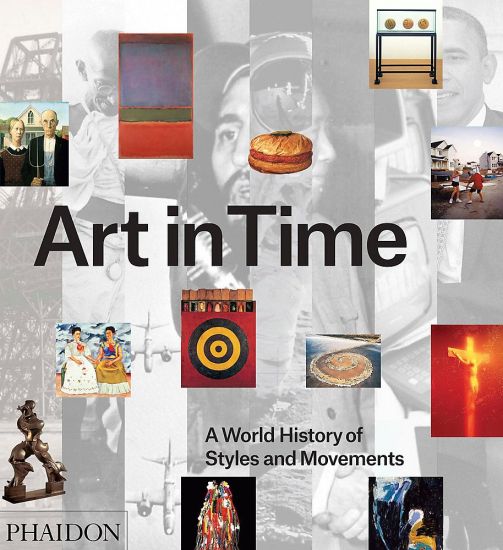
Art in Time

Art in Time

Gauvin Alexander Bailey; Alistair Rider; Matthew McKelway

Phaidon Press Ltd
2014
sidottu
An up-to-date and comprehensive guide to 150 of the most significant styles and movements that have shaped art history through time. All art is of its time, and this book is the first survey that explicitly embeds styles, schools and movements within the politics and culture in which they arose, by means of timelines, textual references and the unique present-to-past arrangement of the book. An essential guide to art styles and movements and a history of world art from the present day to Greek antiquity, this book places the reader in the art historian's seat, offering an opportunity to work backwards from our own time and reconnect the dots, or even find new dots to connect. It revives art history, for both the specialist and the general reader coming to the subject with limited knowledge – it shows graphically that art history is a living thing, not dead.