Kirjojen hintavertailu. Mukana 11 244 527 kirjaa ja 12 kauppaa.

Kirjahaku

Etsi kirjoja tekijän nimen, kirjan nimen tai ISBN:n perusteella.

1000 tulosta hakusanalla Gay Talese

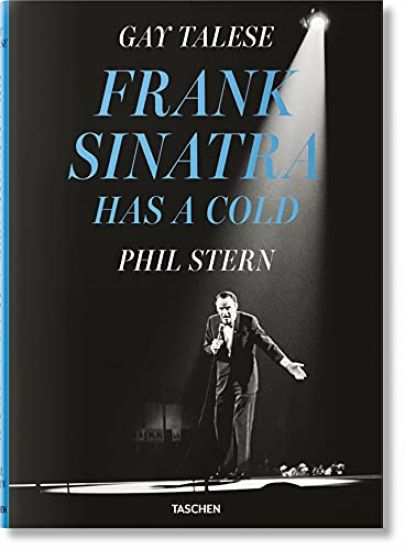
Gay Talese. Phil Stern. Frank Sinatra Has a Cold
“Sinatra with a cold is Picasso without paint, Ferrari without fuel—only worse. For the common cold robs Sinatra of that uninsurable jewel, his voice, cutting into the core of his confidence.” — Gay Talese In the winter of 1965, writer Gay Talese set out for Los Angeles with an assignment from Esquire to write a major profile on Frank Sinatra. When he arrived, he found the singer and his vigilant entourage on the defensive: Sinatra was under the weather, not available, and not willing to be interviewed. Undeterred, Talese stayed, believing Sinatra might recover and reconsider, and used the meantime to observe the star and to interview his friends, associates, family members, and hangers-on. Sinatra never did grant the one-on-one, but Talese’s tenacity paid off: his profile Frank Sinatra Has a Cold went down in history as a tour de force of literary nonfiction and the advent of New Journalism. In this illustrated edition, Frank Sinatra Has a Cold is published with an introduction by Talese, reproductions of his manuscript pages, and correspondence. Interwoven are photographs from the legendary lens of Phil Stern, the only photographer granted access to Sinatra over four decades, as well as from top photojournalists of the ’60s, including John Bryson, John Dominis, and Terry O’Neill. The photographs complement Talese’s character study, painting an incisive portrait of Sinatra in the recording studio, on location, out on the town, and with the eponymous cold, which reveals as much about a singular star persona as it does about the Hollywood machine.
Gay Talese. Phil Stern. Frank Sinatra Has a Cold
“Sinatra with a cold is Picasso without paint, Ferrari without fuel—only worse. For the common cold robs Sinatra of that uninsurable jewel, his voice, cutting into the core of his confidence.” — Gay Talese In the winter of 1965, writer Gay Talese set out for Los Angeles with an assignment from Esquire to write a major profile on Frank Sinatra. When he arrived, he found the singer and his vigilant entourage on the defensive: Sinatra was under the weather, not available, and not willing to be interviewed. Undeterred, Talese stayed, believing Sinatra might recover and reconsider, and used the meantime to observe the star and to interview his friends, associates, family members, and hangers-on. Sinatra never did grant the one-on-one, but Talese’s tenacity paid off: his profile Frank Sinatra Has a Cold went down in history as a tour de force of literary nonfiction and the advent of New Journalism. In this illustrated edition, Frank Sinatra Has a Cold is published with an introduction by Talese, reproductions of his manuscript pages, and correspondence. Interwoven are photographs from the legendary lens of Phil Stern, the only photographer granted access to Sinatra over four decades, as well as from top photojournalists of the ’60s, including John Bryson, John Dominis, and Terry O’Neill. The photographs complement Talese’s character study, painting an incisive portrait of Sinatra in the recording studio, on location, out on the town, and with the eponymous cold, which reveals as much about a singular star persona as it does about the Hollywood machine.
Honor Thy Father

Honor Thy Father

Gay Talese

Ecco Press
2009
nidottu
A classic masterwork newly updatedThe electrifying true story of the rise and fall of New York's notorious Bonanno crime familyOn New York's Park Avenue on a rainy Tuesday night in October 1964, the famous Mafia chieftain Joseph Bonanno was kidnapped by two mobsters and reported by the police as dead on the following morning. More than a year later, Bonanno mysteriously reappeared, setting off a bloody mob feud that came to be known as the "Banana War."In this monumental work--packed with intimate details and brilliant reporting--bestselling author Gay Talese first brought to the American consciousness a world and a life previously known to only a few. No other book has done more to acquaint readers with the secrets, structure, wars, power plays, family lives, and fascinating, frightening personalities of the Mafia.
Thy Neighbor's Wife

Thy Neighbor's Wife

Gay Talese

Ecco Press
2009
nidottu
The provocative classic work newly updatedAn intimate personal odyssey across America's changing sexual landscapeWhen first published, Gay Talese's 1981 groundbreaking work, Thy Neighbor's Wife, shocked a nation with its powerful, eye-opening revelations about the sexual activities and proclivities of the American public in the era before AIDS. A marvel of journalistic courage and craft, the book opened a window into a new world built on a new moral foundation, carrying the reader on a remarkable journey from the Playboy Mansion to the Supreme Court, to the backyards and bedrooms of suburbia--through the development of the porn industry, the rise of the "swinger" culture, the legal fight to define obscenity, and the daily sex lives of "ordinary" people. It is the book that forever changed the way Americans look at themselves and one another.
A Town Without Time

A Town Without Time

Gay Talese

HARPERCOLLINS PUBLISHERS INC
2025
sidottu
From legendary journalist Gay Talese, a collection of his greatest reporting on New York City.“Along with Joan Didion, Norman Mailer, Tom Wolfe and others, Mr. Talese has been acclaimed as a virtuoso of the novelistic New Journalism.” —Wall Street Journal“They fly in quietly—unnoticed, like the cats, the ants, the doorman with three bullets in his head, and most of the other offbeat wonders in this town without time.” —from “New York Is a City of Things Unnoticed,” Talese’s first Esquire story, 1960For over six decades, Gay Talese has told New York stories. They are the stories of daring bridge builders, disappearing gangsters, intrepid Vogue editors, unassuming doormen who’ve seen too much. They are set in the star-studded salons of George Plimpton’s apartment, in the tense newsroom of a still burgeoning New York Times, in an electric studio session with Tony Bennett and Lady Gaga recording their debut.With the wit, elegance, and depth of insight that has long characterized his work, Talese’s New York reporting showcases a master of the form at his finest, making intelligible the city’s vibrant beating pulse, capturing the charming, the eccentric, and the overlooked. Whether prowling the night streets to discover the social hierarchy of alley cats, or uncovering the triumph and terror of building the Verrazano-Narrows Bridge, or plunging into the hidden, sordid world of a recently blown-up apartment building, Talese excavates the city around him with a reporter’s eye and an artist’s flair, crafting delightful, profound, indelible portraits of the people who live there. Spanning the 1950s to today, the fourteen pieces in this collection are a time capsule of what New York once was and still is—Talese proves time and time again that, even as the city changes, his view of it remains as timeless as ever.
A Town Without Time

A Town Without Time

Gay Talese

HARPERCOLLINS PUBLISHERS INC
2026
nidottu
From legendary journalist Gay Talese, a collection of his greatest reporting on New York City.“Along with Joan Didion, Norman Mailer, Tom Wolfe and others, Mr. Talese has been acclaimed as a virtuoso of the novelistic New Journalism.” —Wall Street Journal“They fly in quietly—unnoticed, like the cats, the ants, the doorman with three bullets in his head, and most of the other offbeat wonders in this town without time.” —from “New York Is a City of Things Unnoticed,” Talese’s first Esquire story, 1960For over six decades, Gay Talese has told New York stories. They are the stories of daring bridge builders, disappearing gangsters, intrepid Vogue editors, unassuming doormen who’ve seen too much. They are set in the star-studded salons of George Plimpton’s apartment, in the tense newsroom of a still burgeoning New York Times, in an electric studio session with Tony Bennett and Lady Gaga recording their debut.With the wit, elegance, and depth of insight that has long characterized his work, Talese’s New York reporting showcases a master of the form at his finest, making intelligible the city’s vibrant beating pulse, capturing the charming, the eccentric, and the overlooked. Whether prowling the night streets to discover the social hierarchy of alley cats, or uncovering the triumph and terror of building the Verrazano-Narrows Bridge, or plunging into the hidden, sordid world of a recently blown-up apartment building, Talese excavates the city around him with a reporter’s eye and an artist’s flair, crafting delightful, profound, indelible portraits of the people who live there. Spanning the 1950s to today, the fourteen pieces in this collection are a time capsule of what New York once was and still is—Talese proves time and time again that, even as the city changes, his view of it remains as timeless as ever.
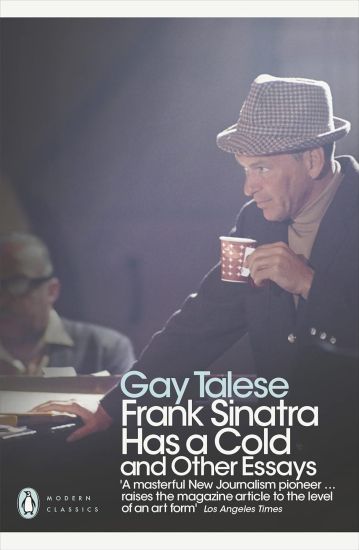
Frank Sinatra Has a Cold

Frank Sinatra Has a Cold

Gay Talese

Penguin Classics
2011
pokkari
A selection of witty and provocative essays from the father of New Journalism, Gay Talese's Frank Sinatra Has a Cold and Other Essays is published in Penguin Modern Classics.Gay Talese is the father of American New Journalism, who transformed traditional reportage with his vivid scene-setting, sharp observation and rich storytelling. His 1966 piece for Esquire, one of the most celebrated magazine articles ever published, describes a morose Frank Sinatra silently nursing a glass of bourbon, struck down with a cold and unable to sing, like 'Picasso without paint, Ferrari without fuel - only worse'. The other writings in this selection include a description of a meeting between two legends, Fidel Castro and Muhammad Ali; a brilliantly witty dissection of the offices of Vogue magazine; an account of travelling to Ireland with hellraising actor Peter O'Toole; and a profile of fading baseball star Joe DiMaggio, which turns into a moving, immaculately-crafted meditation on celebrity. Gay Talese (b. 1932) is an American author. He wrote for The New York Times in the early 1960s and helped to define literary journalism or 'new nonfiction reportage', also known as New Journalism. His most famous articles are about Joe DiMaggio, Dean Martin and Frank Sinatra. He lives in New York with his wife, Nan Talese.If you enjoyed Frank Sinatra has a Cold, you might like George Orwell's Essays, also published in Penguin Modern Classics.'The best American prose of the second half of the twentieth century' Atlantic Monthly'The best non-fiction writer in America' Mario Puzo, author of The Godfather'A masterful New Journalism pioneer ... raises the magazine article to the level of an art form'Los Angeles Times
Unto the Sons

Unto the Sons

Gay Talese

Ballantine Books
1995
nidottu
"An Italian ROOTS." --The Washington Post Book World At long last, Gay Talese, one of America's greatest living authors, employs his prodigious storytelling gifts to tell the saga of his own family's emigration to America from Italy in the years preceding World War II. Ultimately it is the story of all immigrant families and the hope and sacrifice that took them from the familiarity of the old world into the mysteries and challenges of the new.
The Voyeur's Motel

The Voyeur's Motel

Gay Talese

Black Cat
2017
nidottu
On January 7, 1980, in the run-up to the publication of his landmark bestseller Thy Neighbor's Wife, Gay Talese received an anonymous handwritten letter from a man in Colorado. "Since learning of your long-awaited study of coast-to-coast sex in America," the letter began, "I feel I have important information that I could contribute to its contents or to contents of a future book." The man went on to tell Talese an astonishing secret: he had bought a motel outside Denver to satisfy his voyeuristic desires. Underneath the roof of his motel, the man had built an "observation platform," fitted with vents, through which he could watch his unwitting guests. Unsure what to make of this confession, Talese traveled to Colorado where he met the man--Gerald Foos--and verified his story in person. But because Foos insisted on remaining anonymous, preserving for himself the privacy he denied his guests, Talese filed his reporting away, assuming the story would remain untold. Over the ensuing years, Foos occasionally reached out to Talese to fill him in on the latest developments in his life. He also sent Talese hundreds of pages of notes on his guests and their habits, work that Foos believed made him a pioneering researcher into American society and sexuality. America in microcosm had passed through the Voyeur's motel, and he witnessed and recorded the harsh effects of the war in Vietnam, the upheaval in gender roles, the decline of segregation, and much more. But Foos continued to insist on anonymity. Now, after thirty-five years, he's ready to go public and Gay Talese can finally tell his story. The Voyeur's Motel is an extraordinary work of narrative journalism, at once a portrait of one complicated man, and an examination of secret lives and shifting mores in a culturally-evolving country.
Unto the Sons

Unto the Sons

Gay Talese

Random House Trade
2006
nidottu
"An Italian ROOTS." --The Washington Post Book World At long last, Gay Talese, one of America's greatest living authors, employs his prodigious storytelling gifts to tell the saga of his own family's emigration to America from Italy in the years preceding World War II. Ultimately it is the story of all immigrant families and the hope and sacrifice that took them from the familiarity of the old world into the mysteries and challenges of the new.
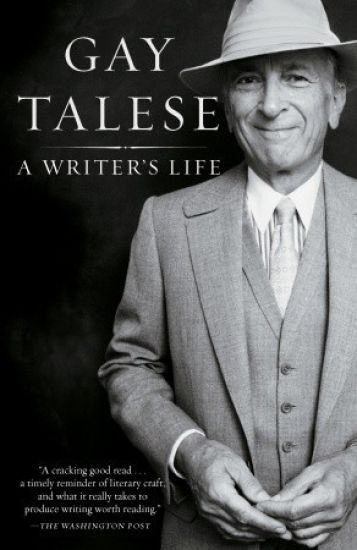
A Writer's Life

A Writer's Life

Gay Talese

Random House Trade
2007
nidottu
The inner workings of a writer's life, the interplay between experience and writing, are brilliantly recounted by a master of the art. Gay Talese now focuses on his own life--the zeal for the truth, the narrative edge, the sometimes startling precision, that won accolades for his journalism and best-sellerdom and acclaim for his revelatory books about The New York Times (The Kingdom and the Power), the Mafia (Honor Thy Father), the sex industry (Thy Neighbor's Wife), and, focusing on his own family, the American immigrant experience (Unto the Sons). How has Talese found his subjects? What has stimulated, blocked, or inspired his writing? Here are his amateur beginnings on his college newspaper; his professional climb at The New York Times; his desire to write on a larger canvas, which led him to magazine writing at Esquire and then to books. We see his involvement with issues of race from his student days in the Deep South to a recent interracial wedding in Selma, Alabama, where he once covered the fierce struggle for civil rights. Here are his reflections on the changing American sexual mores he has written about over the last fifty years, and a striking look at the lives--and their meaning--of Lorena and John Bobbitt. He takes us behind the scenes of his legendary profile of Frank Sinatra, his writings about Joe DiMaggio and heavyweight champion Floyd Patterson, and his interview with the head of a Mafia family.But he is at his most poignant in talking about the ordinary men and women whose stories led to his most memorable work. In remarkable fashion, he traces the history of a single restaurant location in New York, creating an ethnic mosaic of one restaurateur after the other whose dreams were dashed while a successor's were born. And as he delves into the life of a young female Chinese soccer player, we see his consuming interest in the world in its latest manifestation.In these and other recollections and stories, Talese gives us a fascinating picture of both the serendipity and meticulousness involved in getting a story. He makes clear that every one of us represents a good one, if a writer has the curiosity to know it, the diligence to pursue it, and the desire to get it right.Candid, humorous, deeply impassioned--a dazzling book about the nature of writing in one man's life, and of writing itself.
The Kingdom and the Power: Behind the Scenes at the New York Times: The Institution That Influences the World
The former reporter and best-selling author of Unto the Sons journeys behind the scenes of the world's most powerful newspaper to examine the public and private lives of the paper's founders, the power struggles and intrigues that nearly destroyed it, and the turnaround that led it to new success and influence. Reprint. 15,000 first printing.
The Voyeur's Motel

The Voyeur's Motel

Gay Talese

Atlantic
2016
nidottu
On January 7, 1980, in the run-up to the publication of Thy Neighbor's Wife, Gay Talese received an anonymous letter from a man in Colorado. 'Since learning of your long awaited study of coast-to-coast sex in America,' the letter began, 'I feel I have important information that I could contribute to its contents or to contents of a future book.' The man went on to tell Talese a remarkable, shocking secret, so compelling that Talese travelled to Colorado to verify it in person. But because the letter-writer insisted on remaining anonymous, Talese filed his reporting away, certain the story would remain untold. Over the next thirty-five years, the man occasionally reached out to Talese to fill him in on the latest developments in his life, but he continued to insist on anonymity. Finally, after thirty-five years, he's ready to go public. In the tradition of Thy Neighbor's Wife, Talese's landmark, best-selling exploration of the sexual revolution in America, this will be a provocative, eye-opening and much-talked-about book.
Bartleby Y Yo: Retratos de Nueva York / Bartleby and Me: Reflections of an Old Scrivener
La despedida de una «leyenda literaria . (New York Magazine) Una mirada atr s a su carrera y una ltima historia para el futuro de una gran ciudad. «Un cl sico moderno . El Pa s «Un paseo por placer. ...] Una trama para la eternidad . New York Times Book Review «Nueva York es una ciudad de cosas que se pasan por alto , escribi hace sesenta a os un joven reportero llamado Gay Talese, que pasar a el resto de su carrera desafiando su propia afirmaci n al prestar atenci n a aquellos detalles que los dem s escog an ignorar y convirti ndose as en uno de los padres del Nuevo Periodismo. Ahora, a sus m s de noventa a os e inspirado en el memorable personaje de Melville, Talese echa la vista atr s para recordar a todas esas personas an nimas que definen una ciudad como Nueva York, desde el escritor de obituarios del New York Times hasta el entorno de Frank Sinatra, o el doctor Nicholas Bartha, un moderno Bartleby que prefiri volar por los aires su edificio en el Upper East Side, muriendo y matando en el acto, antes que renunciar al sue o americano. Retratos agudos de aspirantes a ricos, inmigrantes en apuros, magnates rusos e incluso un traidor durante la Guerra de la Independencia que configuran una ciudad caleidosc pica y suponen una ltima mirada atr s en esta obra de despedida del gran maestro en el arte de contar historias. ENGLISH DESCRIPTION "Literary Legend" (New York) Gay Talese retraces his pioneering career, marked by his fascination with the world's hidden characters. In the concluding act of this "incomparable" (Air Mail) capstone book, Talese introduces readers to one final unforgettable story: the strange and riveting all new tale of Dr. Nicholas Bartha, who blew up his Manhattan brownstone--and himself--rather than relinquish his claim to the American dream. "New York is a city of things unnoticed," a young reporter named Gay Talese wrote sixty years ago. He would spend the rest of his legendary career defying that statement by celebrating the people most reporters overlooked, understanding that it was through these minor characters that the epic story of New York and America unfolded. Inspired by Herman Melville's great short story "Bartleby, the Scrivener," Talese now revisits the unforgettable "nobodies" he has profiled in his celebrated career--from the New York Times's anonymous obituary writer to Frank Sinatra's entourage. In the book's final act, a remarkable piece of original reporting titled "Dr. Bartha's Brownstone," Talese presents a new "Bartleby," an unknown doctor who made his mark on the city one summer day in 2006. Rising within the city of New York are about one million buildings. These include skyscrapers, apartment buildings, bodegas, schools, churches, and homeless shelters. Also spread through the city are more than 19,000 vacant lots, one of which suddenly appeared some years ago--at 34 East 62nd Street, between Madison and Park Avenues--when the unhappy owner of a brownstone at that address blew it up (with himself in it) rather than sell his cherished nineteenth-century high-stoop Neo-Grecian residence in order to pay the court-ordered sum of $4 million to the woman who had divorced him three years earlier. This man was a physician of sixty-six named Nicholas Bartha. On the morning of July 10, 2006, Dr. Bartha filled his building with gas that he had diverted from a pipe in the basement, and then he set off an explosion that reduced the five-story premises into a fiery heap that would injure ten firefighters and five passersby and damage the interiors of thirteen apartments that stood to the west of the crumbled brownstone. Talese has been obsessed with Dr. Bartha's story and spent the last seventeen years examining this single 20 x 100 foot New York City building lot, its serpentine past, and the unexpected triumphs and disasters encountered by its residents and owners--an unlikely cast featuring society wannabes, striving immigrants, Gilded Age powerbrokers, Russian financiers, and even a turncoat during the War of Independence--just as he has been obsessed with similar "nobodies" throughout his career. Concise, elegant, tragic, and whimsical, Bartleby and Me is the valedictory work of a master journalist.
Gay Tales: Puerto Vallarta

Gay Tales: Puerto Vallarta

Don Beaudreau

Independently Published
2019
nidottu
Recently retired to Puerto Vallarta, Mexico on the "Mexican Riviera" with his Mexican partner Juan, and their rescued dog Lacy, Beaudreau seeks new adventures after serving as a liberal minister for many years. This is his story of that first year of retirement in one of the top gay destinations in the world. His observations of the Mexican culture, the gay world of Vallarta, the Gringo expat community, and his attempts to adapt to them are viewed through a comic, no-holds-barred lens. Even when he discovers he must have a heart operation or die, he contemplates his situation with cutting wit. The book is one of a comic series of memoirs that the author is in the process of writing.