Kirjojen hintavertailu. Mukana 11 627 630 kirjaa ja 12 kauppaa.

Kirjahaku

Etsi kirjoja tekijän nimen, kirjan nimen tai ISBN:n perusteella.

1000 tulosta hakusanalla Georg Forster

Georg Forster

Georg Forster

Jurgen Goldstein

University of Chicago Press
2019
sidottu
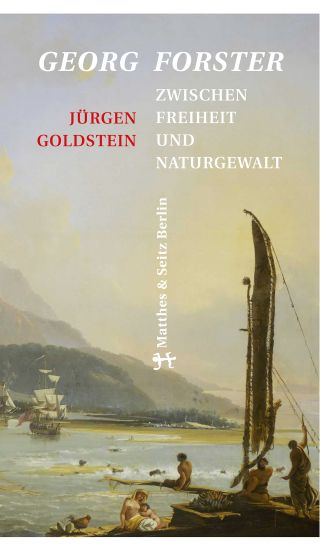
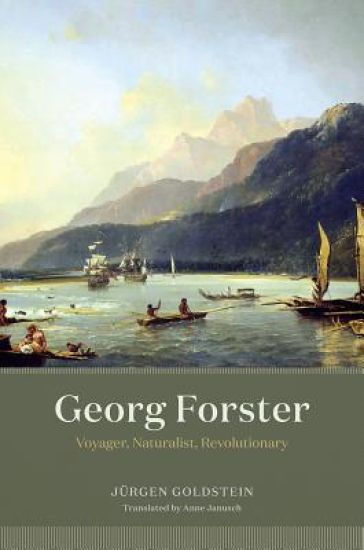
“Marvelous. . . . Wonderfully imaginative. . . . Sparkling.”—Wall Street Journal “Stunning. . . . Read this book: in equal measure it will give you hope and trouble your dreams.”—Laura Dassow Walls, author of Henry David Thoreau: A Life and Passage to Cosmos: Alexander von Humboldt’s Shaping of America Georg Forster (1754–94) was in many ways self-taught and rarely had two cents to rub together, but he became one of the most dynamic figures of the Enlightenment: a brilliant writer, naturalist, explorer, illustrator, translator—and a revolutionary. Granted the extraordinary opportunity to sail around the world as part of Captain James Cook’s fabled crew, Forster touched icebergs, walked the beaches of Tahiti, visited far-flung foreign nations, lived with purported cannibals, and crossed oceans and the equator. Forster recounted the journey in his 1777 book A Voyage Round the World, a work of travel and science that not only established Forster as one of the most accomplished stylists of the time—and led some to credit him as the inventor of the literary travel narrative—but also influenced other German trailblazers of scientific and literary writing, most notably Alexander von Humboldt. A superb essayist, Forster made lasting contributions to our scientific—and especially botanical and ornithological—knowledge of the South Seas. Having witnessed more egalitarian societies in the southern hemisphere, Forster returned after more than three years at sea to a monarchist Europe entering the era of revolution. When, following the French Revolution of 1789, French forces occupied the German city of Mainz, Forster became a leading political actor in the founding of the Republic of Mainz—the first democratic state on German soil. In an age of Kantian reason, Forster privileged experience. He claimed a deep connection between nature and reason, nature and politics, nature and revolution. His politics was radical in its understanding of revolution as a natural phenomenon, and in this often overlooked way his many facets—as voyager, naturalist, and revolutionary—were intertwined. Yet, in the constellation of the Enlightenment’s trailblazing naturalists, scientists, political thinkers, and writers, Forster’s star remains relatively dim today: the Republic of Mainz was crushed, and Forster died in exile in Paris. This book is the source of illumination that Forster’s journey so greatly deserves. Tracing the arc of this unheralded polymath’s short life, Georg Forster explores both his contributions to literature and science and the enduring relationship between nature and politics that threaded through his extraordinary four decades.
Georg Forster

Georg Forster

Todd Kontje

Pennsylvania State University Press
2022
sidottu
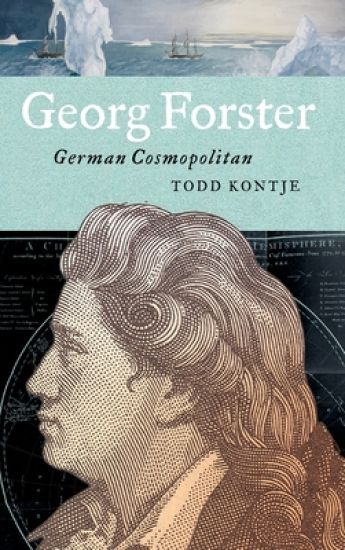
Georg Forster (1754–1794) was famous during his lifetime, notorious after his death, and largely forgotten by the later nineteenth century. Remembered today as the young man who sailed around the world with Captain Cook and as one of the leading figures in the revolutionary Republic of Mainz, Forster was also a prolific writer and translator who left behind two travelogues, a series of essays on diverse topics, and numerous letters. This in-depth look at Forster’s work and life reveals his importance for other writers of the age. Todd Kontje traces the major intellectual themes and challenges found in Forster’s writings, interweaving close textual analysis with his rich but short life. Each chapter engages with themes that reflect the current debates in eighteenth-century literary and cultural studies, including changing notions of authorship, multilingualism, the representation of so-called primitive societies, Enlightenment ideas about race, and early forms of ecological thinking. As Kontje shows, Forster’s peripatetic life, malleable sense of national identity, and fluency in multiple languages contrast with the image of the solitary genius in the “age of Goethe.” In this way, Forster provides a different model of authorship and citizenship better understood in the context of an increasingly globalized world.Compellingly argued and engagingly written, this book restores Forster to his rightful place within the German literary tradition, and in so doing, it urges us to reconsider the age of Goethe as multilingual and malleable, local and cosmopolitan, dynamic and decentered. It will be welcomed by specialists in German studies and the Enlightenment.
Georg Forster

Georg Forster

Todd Kontje

Pennsylvania State University Press
2024
pokkari
Georg Forster (1754–1794) was famous during his lifetime, notorious after his death, and largely forgotten by the later nineteenth century. Remembered today as the young man who sailed around the world with Captain Cook and as one of the leading figures in the revolutionary Republic of Mainz, Forster was also a prolific writer and translator who left behind two travelogues, a series of essays on diverse topics, and numerous letters. This in-depth look at Forster’s work and life reveals his importance for other writers of the age. Todd Kontje traces the major intellectual themes and challenges found in Forster’s writings, interweaving close textual analysis with his rich but short life. Each chapter engages with themes that reflect the current debates in eighteenth-century literary and cultural studies, including changing notions of authorship, multilingualism, the representation of so-called primitive societies, Enlightenment ideas about race, and early forms of ecological thinking. As Kontje shows, Forster’s peripatetic life, malleable sense of national identity, and fluency in multiple languages contrast with the image of the solitary genius in the “age of Goethe.” In this way, Forster provides a different model of authorship and citizenship better understood in the context of an increasingly globalized world.Compellingly argued and engagingly written, this book restores Forster to his rightful place within the German literary tradition, and in so doing, it urges us to reconsider the age of Goethe as multilingual and malleable, local and cosmopolitan, dynamic and decentered. It will be welcomed by specialists in German studies and the Enlightenment.
Georg Forster

Georg Forster

Elisa Maier

Anatiposi Verlag
2023
pokkari
Unver nderter Nachdruck der Originalausgabe. Der Verlag Anatiposi gibt historische B cher als Nachdruck heraus. Aufgrund ihres Alters k nnen diese B cher fehlende Seiten oder mindere Qualit t aufweisen. Unser Ziel ist es, diese B cher zu erhalten und der ffentlichkeit zug nglich zu machen, damit sie nicht verloren gehen.
Georg Forster

Georg Forster

Elisa Maier

Anatiposi Verlag
2023
sidottu
Unver nderter Nachdruck der Originalausgabe. Der Verlag Anatiposi gibt historische B cher als Nachdruck heraus. Aufgrund ihres Alters k nnen diese B cher fehlende Seiten oder mindere Qualit t aufweisen. Unser Ziel ist es, diese B cher zu erhalten und der ffentlichkeit zug nglich zu machen, damit sie nicht verloren gehen.
Georg Forster

Georg Forster

Elisa Maier

Antigonos Verlag
2025
pokkari
Unver nderter Nachdruck der Originalausgabe von 1856. Der Verlag Antigonos spezialisiert sich auf die Herausgabe von Nachdrucken historischer B cher. Wir achten darauf, dass diese Werke der ffentlichkeit in einem guten Zustand zug nglich gemacht werden, um ihr kulturelles Erbe zu bewahren.
Georg Forster: Deutsche 'Antheilnahme' an der europäischen Expansion über die Welt
Als 'den durchschnittlichen deutschen Schriftsteller des achtzehnten Jahrhunderts' hat sich Georg Forster einmal bezeichnet. In zweierlei Hinsicht war er das gewiss nicht: Kein anderer deutscher Schriftsteller hat an James Cooks zweiter Reise um die Welt teilgenommen, kein anderer wurde Deputierter im Konvent. Forsters Schriften fordern zu einer Bestimmung der Stellung heraus, die einem noch nicht als Nationalstaat konstituierten Deutschland in Europa und seiner Expansion ber die au ereurop ische Welt zugeschrieben wird. Der Entdeckungsreisende Forster und der revolution re Demokrat Forster sind in der Rezeptionsgeschichte kaum je zugleich 'entdeckt' worden. Die leitende Frage der in diesem Band zusammengefassten Studien erschlie t das Gesamtwerk von Forster in der Breite seiner Genres, indem einzelne Aspekte des Generalthemas Deutschland, Europa und die Welt fokussiert werden: ffentlichkeit und Adressaten, sthetik und geschichtsphilosophische Reflexion, Revolution als Emanzipation - auch der Kolonien. Die einschl gigen Schriften Forsters werden in ihren Beziehungen zur deutschen Literatur der siebziger bis neunziger Jahre des 18. Jahrhunderts analysiert: von Wieland ber Herder und Goethe bis zu Schiller und Friedrich Schlegel.
Georg Forster, Johann Gottfried Seume, Alexander Von Humboldt
Diese Arbeit zieht einen Vergleich zwischen drei Werken: Georg Forsters "Reise um die Welt", Johann Gottfried Seumes "Spaziergang nach Syrakus" und Alexander von Humboldts "Die Reise nach Sudamerika". Es geht um Gemeinsamkeiten und Unterschiede in diesen Reiseberichten, betreffend den Reisezielkontrast und gegensatzliche Fortbewegungsmittel. Mehrere Aspekte, wie Apodemik, Authentizitat und Reportage, fuhren zur zentralen Forschungsfrage: Kann man Forster, Seume und Humboldt als Vorlaufer des (heutigen) Journalismus sehen? Numerische Ergebnisse werden mittels Kodieranweisungen, Kategoriensystemen und Kategoriedefinitionen interpretiert. Das Resumee: Forster, Seume und Humboldt verfassten tatsachlich authentische Reportagen in Form von Reiseberichten und sind grundsatzlich als Vorlaufer des (heutigen) Journalismus zu sehen.